Learning to enjoy life to the full

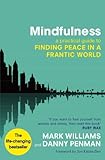
This is my review of Mindfulness: A practical guide to finding peace in a frantic world by Prof Mark Williams,Dr Danny Penman.

In the spate of self-help and pop psychology books now widely available, I selected this because it is jargon-free, concise and to the point, practical in approach as claimed on the cover, free of any author's ego trip or hidden agenda.

Many sentences stand out for their unarguable common sense or the fact that they chime with your past experience. To quote from the end of Chapter 2: "You can't stop the triggering of unhappy memories, negative self-talk and judgmental ways of thinking….You can stop the negative cycle from feeding off itself and triggering the next spiral of negative thoughts. And you can do this by harnessing an alternative way of relating to yourself and the world." A bit later, "Happiness is looking at the same thing with different eyes." Meditation is promoted as a way of achieving this, although you can gain a good deal just by reading the book.

I find that its main benefit is to restore a sense of proportion, rather the way a compass will orientate you when you drift off a course that you basically know. It also develops the capacity to take pleasure in the surrounding world and the daily living of an "ordinary life", also perhaps the mental energy to change that life.

The growing practice of teaching mindfulness in schools seems to me very positive, although one worries a little about private companies cashing in. However, I am unsure how much this book can help people who need mindfulness most i.e. those diagnosed as mentally sick. If you have gone beyond a certain point, it may be hard to motivate oneself to make the necessary connections and act on them. The book may be a revelation to some, but in the main it is probably preaching to the converted, those who just need to be "reminded of mindfulness" which they may already have discovered, perhaps without giving it a name.

I agree with reviewers who argue that references to the CD are so integral to the book, that those who purchase it on video are short-changed. I also accept that it may be a pale shadow of the more detailed research-based publications on which it is based, although being simplified may make it more accessible. It's a useful addition to your shelves, a kind of secular bible.

Unlikely to do any harm, this should do many readers some good. (N.b. I was a bit worried by the heading on page 37, "How to double your life expectancy".)

⭐⭐⭐⭐ 4 Stars

Going berserker

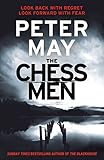
This is my review of The Chessmen (The Lewis Trilogy Book 3) by Peter May.

The chessmen of the title are a reference to the medieval pieces carved by Norsemen mainly from walrus ivory and discovered on Lewis in the C19.

Peter May continues the winning formula of his vivid portrayal of the Outer Hebrides, battered by the elements, suffused with continually changing light, the source of strange legends and a rich but little-known social history. How is it that we have heard of the Tay Bridge disaster in which about 60 people died, but not of the wreck of the Iolaire which caused the death of more than 200 men who survived World War 1 only to perish on the rocks of their native island of Lewis? And I was prepared to suspend my disbelief over the disappearance of a loch in the opening chapter, since I knew that May must have researched examples of this occurrence.

The final part of a trilogy which leaves enough scope for at least another in the series, sees ex-policeman Fin returned to Lewis to live with his long-suffering childhood sweetheart Marsaili. His job to oversee security for a local estate brings him into troubled contact with poacher Whistler, the best friend from his youth whom we never knew he had. Further drama is supplied by the discovery of the murdered corpse of the former local pop star who also dominated another part of Fin's early life of which we have not heard before. Herein lies the problem of a series which, rather than move forward with fresh adventures, is rooted in flashbacks to recall the past. Some unfamiliar characters and new plot lines seemed to override and confuse my perception of Fin's early life, presumably in order to support the latest book.

Despite this, and the implausibility of some key aspects of the denouement, which is a feature of most thrillers, May produces an imaginative story which becomes ever more gripping as he builds up to the dramatic and unpredictable twists of the final chapters. He is better than most popular thriller writers at creating flawed characters for which one can feel some empathy, although I wish his "romantic" passages were a bit less corny.

⭐⭐⭐⭐⭐ 5 Stars

Utile jusqu’à un certain point

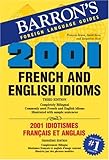
This is my review of 2001 French and English Idioms (Barron’s Foreign Language Guides) (2001 Idioms Series) by David Sices,Jacqueline Sices.

It's always fascinating to dip into a book of French/English idioms, finding some surprisingly similar as opposed to others which are quirkily different. Why, for instance, is "knee-high to a grasshopper" the equivalent of "haut comme trois pommes"?

With a continually changing language, there is, however, the practical problem of including and accessing easily all the idioms in use. To be fair, this book is quite good at covering traditional idioms of the "butter wouldn't melt in her mouth" or "butterfingers" variety. Yet, when I looked up "cool" or "heels" in the main text or the index, I did not get "to cool one's heels".

So, despite being a little too thick to handly easily and including a rather tortous double method of finding key words, both in alphabetical order and via an index for each language, the book seems a bit "hit and miss" and arbitrary in its selection of idioms.

When I tried to look up a series of idioms I have learned recently from the French TV news (Le 20 heures), I was often unable to locate them in this book e.g. "mettre à l'index" which means to blacklist or boycott, or "avoir le moral en berne" which is to feel downcast, as when a flag is at half-mast. This suggests the book may not reflect current French language "as it is spoken".

I think that online searches of idioms are more likely to yield results quickly. Idioms are probably best absorbed "in context" with a computer on hand to check them out, but I suppose there's no harm in using this book for an occasional browse. Perhaps 2001 idioms aren't quite enough!

⭐⭐⭐ 3 Stars

“Fragile Empire: How Russia Fell In and Out of Love with Vladimir Putin” by Ben Judah – Is Russia somehow cursed?

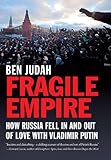
This is my review of Fragile Empire: How Russia Fell In and Out of Love with Vladimir Putin by Ben Judah.

Aged barely three when the Soviet Union collapsed, how did Ben Judah manage to interview so many people, from oligarchs and former leading politicians to the destitute unemployed of the failed collective farms near the Chinese border? Clearly, he must have enormous energy and confidence, aided by fluency in Russian.

He covers quite effectively Putin’s sudden and unexpected rise to power. For years an unremarkable KGB official, Putin was in the “right place at the right time” when Russia needed a strong leader after the “Wild West” capitalism of the 1990s in which many people lost their secure jobs or savings to become destitute, law and order broke down and outlying republics began to revolt. “After ten years of total chaos….he brought social order and economic stability”, with a marked rise in living standards for many, aided by the rising revenue from oil exports.

The strongest section is the very topical information on how Russians have fallen out of love with their modern “Tsar”. The opposition slogan, “a party of crooks and thieves” has adhered firmly to Putin’s “United Russia”. Shocked by corruption and the inefficiency of the over-centralised “vertical” control of power from Moscow, with its lack of concern for peripheral regions treated like colonies, many people have become disgusted by Putin’s personal enrichment, his transparently devious moves to wangle a third term or more as President. They begin to see through the PR fantasies which portray him as an athletic sex symbol catching outsize pike and guiding flocks of geese to safety.

Judah does not try to conceal the flaws and divisions in the opposition. The charismatic Navalny sounds like a bigoted skinhead in his Islamophobia. He is bitterly attacked for his lack of interest in visiting neglected areas like Birobidzhan near the Chinese border. Demonstrators in Moscow are widely dismissed as privileged middle classes who feel more in common with Europe where they holiday frequently than with the rest of Russia. To show how “Moscow is not Russia,” Judah travels to some of the least developed areas like Siberian Tuva, where male life expectancy is lower than Gabon in Africa, and murder rates exceed those of Central America. “To stay in power Putin knows he must divide the nation, preventing the Moscow opposition from linking up with the discontent in the rest of the country”. Portraying Russia as one of history’s greatest failures, he makes fascinating comparisons with China which he sees as managing its economic transition more effectively.

Too young to be saddled with baggage from the Soviet era, Judah’s focus on the last two decades gives the book a sense of immediacy. However, there is a need for a bit more context, as regards explaining more clearly why communism collapsed with such apparent speed, the reasons for Gorbachev’s sudden demise, the policies of the main “opposition” parties and the names of their leaders. A glossary would have been useful.

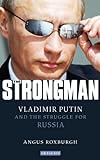
The main and rather serious shortcoming of this book is the slapdash journalistic style. The lack of editing is revealed where some paragraphs are repeated verbatim, but it matters more where the meaning is obscured by dodgy syntax, non sequiturs and misuse of words. I’m sure Ben Judah has a great future but he could learn a thing or two from the style of “the old Russian hand”, Angus Roxburgh’s “The Strongman” to which I have now resorted to fill some of the gaps. We need more of the coherent analysis evident in Judah’s concluding chapter.

⭐⭐⭐⭐ 4 Stars

Still dicing with death

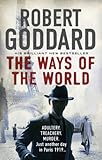
This is my review of The Ways of the World: (The Wide World – James Maxted 1) by Robert Goddard.

This old-style escapist page-turner contains Goddard's trademarks of a serpentine plot and cast of mainly stereotyped characters with apparent "goodies" who can never quite be trusted and "baddies" who sometimes come unexpectedly to the rescue.

Perhaps because he is at heart a historian, his books seem to work best when set in the past, as here in the Paris of the 1919 Peace Conference where aristocratic pilot Max pursues the mystery of his diplomat father's sudden violent death. After surviving World War 1 against the odds, Max discovers a kind of addiction to risk-taking, which will carry him on to further adventures in the planned trilogy.

Having recently visited Paris, I appreciated Goddard's attention to detail in the geographical setting of every scene – as when Max and a colleague drive down to the Seine by the Trocadero to look across at the Eiffel Tower. He even checked the weather to know that the Paris spring for 1919 was exceptionally cold and snowy.

I was unconvinced by Max's relationship with the Moriaty-type arch villain in the background, but it is best not to expect every twist to be plausible. Also, his driven courting of death eventually makes Max a less appealing hero, but perhaps this gives the plot a little more depth.

Goddard has clearly taken a risk himself with his loyal readers by ending the book "to be continued" with so many loose strands for two future novels. After the rollercoaster of his plots one is always left feeling a little let down at the last page. In this case, he contrives to resolve enough mystery to satisfy the reader "for the time being" but dangle sufficient intrigue to encourage them to return for more. It's a moot point whether it would have been better to make the novel appear more "self-contained".

⭐⭐⭐⭐ 4 Stars

No holds barred

This is my review of May We Be Forgiven by A. M. Homes.

When Harry breaks a taboo by having sex with his sick brother's wife, he has to deal with the chain of consequences. The author pulls no punches in presenting them all, be they macabre or mundane, with the same deadpan delivery, which may account for the emotional coldness of the book which some reviewers have noted.

After the ghoulish hook of the almost casually shocking opening chapters, the book settles down into a meandering farce, a kind of black sitcom in which Harry drifts through the often callous and smutty world of a series of quirky incidents, some of his own making but others the result of fate, which could be spawned indefinitely. Depending on your sense of humour, these may be sufficient to entertain you, but I was troubled by the hollowness of it all. This novel may be intended as a biting satire on contemporary American society, plus the back-cover blurb speaks of the two brothers' search for absolution, but I looked in vain for the thought-provoking insights, pyrotechnic displays of brilliant writing, or clever plot twists which would have made this clearly worth reading.

Holmes has a vivid imagination coupled with a remarkable lack of inhibition and a sharp sense of comedy, but even with the small font size, the book reaches its surprisingly soft-centred ending perhaps 150 pages too late.

⭐⭐⭐ 3 Stars

How things might have been different

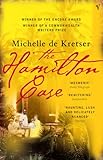
This is my review of The Hamilton Case by Michelle de Kretser.

Although unlikeable in many respects and clearly an unreliable narrator, as in the portrayal of his charismatic rival Jaya, Stanley Alban Marriott Obeysekere, nicknamed "Sam", gripped me from the first page with his account of growing up in the early C20 as the grandson of a "mudaliyar" who had gained wealth and influence by assisting the British colonial administration of Ceylon. A successful lawyer with hopes of being the first "native" to be appointed as a judge by the British, Sam's decision to involve himself in "The Hamilton Case" has unforeseen consequences. In all this he remains wedded to his perception of the British way of life: "his veins have run with Bovril".

From the outset, an unexpected wry or brutal observation hits home, as when we are told how Sam's grandfather met his death after gallantly leaping into a lake to save a young English girl who had fallen overboard. In "extreme distress at seeing her … a sweet girl on the threshold of womanhood, being manhandled by a native," a friend "in understandable terror, confusion and distress…brought her oar crashing down" on his skull. For this she was of course absolved of all blame.

On reaching Part 3, I seemed to have strayed into a different book which had lost the plot. The short chapters cease to be so alluring as they flit between characters: Sam's eccentric mother, his wife, son, several servants, etcetera. Substance gives way to form, in a style that begins to pall – too wordy and contrived, over-poetical. Sometimes the prose is beautiful and striking, but too often it appears self-indulgent padding.

The book would have been strengthened by more frequent, ongoing release of information, "true" or otherwise, about "The Hamilton Case", the personality of Sam's enigmatic sister Claudia and the nature of their relationship, to establish these aspects as key underlying threads.

De Kretser has been original and ambitious in seeking to work on several levels to produce: a "good yarn" reminiscent of Somerset Maugham; a whodunnit; an exploration of a complex family; an examination of the cultural effects of colonialism. This even extends to capturing Sam's "perfect mimicry" of the British in such a phrase as, "in cahoots with some ne'er-do-wells". As a colleague bitterly observes, "at some point quotation had become our native mode. There was no original." The author is also bold in experimenting with the structure and style of the novel. In all this, I am not sure she succeeds, but I admire her for the attempt.

⭐⭐⭐⭐ 4 Stars

Incarcerated in the wrong life

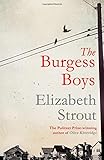
This is my review of The Burgess Boys by Elizabeth Strout.

Brothers Jim and Bob Burgess escape the provincial world of Shirley Falls, Maine for employment as New York lawyers. In contrast to the ambitious high-flyer Jim, Bob is "a nice guy" but portrayed as a bit of a failure (despite being a qualified lawyer), whose borderline alcoholism may have its roots in his early childhood, when he played a part in the tragic event that blighted his family. When the brothers' dysfunctional nephew commits a criminal act against the Somali immigrants who have begun to arouse the suspicious resentment of the conservative white community of Shirley Falls, Jim and Bob are forced to revisit the town, and old memories.

The strongest aspect for me is the core of the book, the portrayal of the complex relationship between the two brothers, and there are some wry, realistic dialogues. On the other hand, my enthusiasm was eroded from the outset by the to my mind unnecessary device of using a prologue to provide a narrator's advance summary of some of the key facts of the book (more than I have above), with the implication that the following chapters are her "story of the Burgess kids", possibly including a degree of speculation since, "Nobody ever knows anyone".

The story tends to lack dramatic tension, since opportunities to develop or explore situations are frequently missed. Yet plots are probably less important to Elizabeth Strout than people's thoughts and behaviour. Although it is probably meant to be a kind of "stream of consciousness", the many long, rambling sentences with banal word repetition grated on me. This may be a cultural thing – a British reader's criticism of a style that is accepted as the norm in modern American writing. Also, the continual switching between at least six points of view make the story often seem unfocused.

So, I swung between thinking this either "in the mould of Anne Tyler" or "soft-centred women's magazine material". My doubts were allayed in Book 4 which, with an increase in pace and improvement in the quality of the writing, brings the threads together for the unpredictable ending which proves satisfying for those who like to be left with a little room to imagine what they wish.

⭐⭐⭐⭐ 4 Stars

Fear, hope and uncertainty

This is my review of Northline by Willy Vlautin.

Allison has missed out on her education, has low self-esteem and uses alcohol as an escape. When she is drunk, bad things happen to her, although her tragedy is limited by her ability to get paid work easily and to display a surprising competence when sober. In her imaginary conversations with the actor Paul Newman which never fail to draw her out of the darkest despair, he is always the voice of her revived reason and commonsense.

At first, I was predisposed to dislike a book which I expected to be a lightweight reworking of the well-worn theme of losers and drifters with "their hearts in the right place". In fact, the simple prose conveys a vivid sense of the life of ordinary people trying to make a living in cities like Las Vegas or Reno. In their resilience and acts of unexpected kindness to each other, they arouse sympathy and respect. Even Allison's abusive lover Jimmy has redeeming features – his thirst for knowledge, even if it leads to bigoted opinions, or his desire to make a fresh start in a state like Montana beyond a "northline".

Vlautin's measured development of a succession of personalities and gradual release of details is quite skilful. A short work, you could call it an example of "less is more". I also like the way that, at the end of a carefully constructed book, Vlautin avoids sentimentality by leaving certain points unresolved, rather like life.

Although the inclusion of a CD of the author's music designed to reflect the feel of the book seems at first a little self-indulgent and gimmicky, it proves slow, rhythmic, rather melancholy. Quite pleasant to listen to, it lacks the darker, more violent moments of the story, and seems to cover less varied emotions than the book itself.

⭐⭐⭐⭐ 4 Stars

Not as effective as I’d hoped

This is my review of Paris Must Sees Guide (Michelin Must Sees) (Michelin Must Sees Guide) by Michelin.

Relatively inexpensive and easy to carry round, I thought this would be a useful guide with its businesslike approach of:

– dividing central Paris into areas with a map for each and suggested walking tours with highlights noted

– classifying Paris by attractions on a one to three star scale, and by places of interest such as galleries, markets or parks and gardens.

In fact, I found it quite hard to use. The maps proved too small – a double-page spread for each would have been better. The routes proved an unsatisfactory way of exploring an area since I (or my companion!) was constantly attracted by more interesting alleys and buildings off to the sides. In such a "bitty" book in which information is so fragmented, a fuller index is necessary. For instance, you cannot find the Pantheon or the Latin Quarter in the index, which is annoying when you are trying to obtain details quickly.

I wondered at times how well the author(s) really knew Paris. How can you write about say, le Pont des Arts without mentioning that its glittering appearance is due to the thousands of padlocks attached to it in an informal ritual practised by couples? How can you write about the Pantheon without mentioning the long-term plans for its renovation and the beautiful church of St. Etienne nearby, and the tower which is all that remains of an adjacent church which was abandoned and destroyed because the Pantheon was meant to replace it – until it was decided to make it a secular building? Why not mention the fact that the Jardin des Plantes adjoins a zoo, and that quite a few sections of the area seem closed or run down?

On a more practical note, when mentioning boat trips, why omit some of the alternatives to the famous Bateaux-mouches such as the Bateaux Parisiens which seem very popular and why not be precise about where to pick up the useful Batobus, for which the eight stops could easily be listed?

In short, although there is a good deal of information in this book, it is too brief and chopped up to be readily absorbed and easily used.

⭐⭐⭐ 3 Stars