This site will share with you hundreds of book and film reviews written since 2009. Also a chance to discuss these reviews together with some of my creative writing to be added.
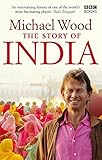
With many colourful illustrations, this serves as an attractive souvenir of the BBC series, although the DVD is obviously better. The chapters themed by chronological time periods provide much intriguing information if you have the time and patience to tease it out of the somewhat rambling text: the followers of the Jain religion who gather annually to pour "great vats of milk, paste, saffron and vermilion over the giant statue" of their guru Babuballi; the ruler Ashoka, advised that he had to be "cruel to be great", who converted to Buddhism in later life, leaving his kingdom scattered with carved pillars instructing his subjects on how to live as he removed the death penalty, calling for the conservation of forests and respect for the beliefs and practices of others and so on.
I was looking for a book that would combine history with culture and politics, but to be fair this does not claim to be more than a history. With friends and contacts to ease his path, Wood presents a somewhat rose-tinted view of India: the squalor, dirt and pollution are cunningly omitted from all his pictures, and the ancient monuments and paintings gleam with colour, with little sign of the ravages of time. If you are reading this for a standard sightseeing tour, you may be a little disappointed by the often harsh and worn reality.
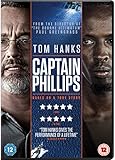
Paul Greengrass is well-known for his dramatization of real-life events, in this case opting for a mainstream cinema action adventure format which may give scope for more dramatic licence than the constraints of a documentary to cover the topical theme of the threats from Somali pirates.
Their target is an American container ship, ironically loaded in part with food aid for Africa, under the command of the stern, courageous but also humane Captain Phillips, who in the midst of his personal trauma is capable of feeling compassion, even sympathy for the pirates. For, beneath the suspense and menace of the plot, lies the director’s concern to show both sides of the question, understand the pressures which drive the pirates: poverty, resentment against foreign powers like America which they perceive as having taken resources from them, the tribal leaders/corrupt gang masters who force simple former fishermen to seize money through piracy, very little of which they get to keep for themselves. The two main characters are developed most fully: Phillips and the pirate leader Muse, violent when scared but clearly not innately so and capable of seeing the American captain’s decency and natural powers of leadership. He reveals in a poignant moment that all he would really like to do is escape to a “better” life in the States. However, a combination of fear and chewing of the narcotic “khat” kindles the pirates’ unpredictability, while the tight-deadlines and ruthlessness of the US rescuers add to the tension of the brew.
I was a little frustrated to be unable to hear what anyone was saying in much of the dramatic denouement, but overall this is an absorbing film which adds to one’s understanding of a serious problem. It was fascinating to see the procedures followed in the attempt to shake off the pirates, although I was left wondering why all shipping off the Somali coast does not travel in convoys with 24/7 lookouts and powerful guns for defence.
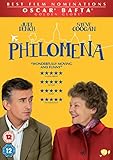
Depressed by the collapse of his high-flying career as a Labour spin doctor, Martin Sixsmith tries to distract himself with a “human interest story”. Philomena Lee wishes to make contact with the son taken from her nearly fifty years ago by Irish nuns, after they had allowed her to bond with him while slaving in the now notorious convent laundries to pay for their “charity” in giving shelter to an unmarried teenage mother.
Excellent as regards quality of script, acting and direction, this film is by turns unbearably sad and hilarious. Admittedly there are some stereotypes: the bigoted nun who feels that since she has kept her vow of chastity, anyone who has succumbed to sex outside marriage must pay the price for ever, or the hard-bitten editor who wants a good story at any price. There has probably been a good deal of dramatic licence in transferring the real characters of Martin Sixsmith and Philomena to the screen, but played by Steve Coogan and Judi Dench their personalities are strongly developed and complex. Coogan plays a man angered by injustice and determined to root it out, won over by the warm, frank and at times surprisingly broad-minded and perceptive Philomena, who does not hold back from commenting on his frequent cynicism, arrogance and dismissive attitude to those he regards as less intelligent. Dench portrays a still deeply religious yet fun-loving woman, whose simplicity and fondness for trashy TV series and happy-ever-after romantic fiction mask shrewd insight and tolerance. She realises the need to forgive others for one’s own sake, but is not above passing up the chance to expose wrongdoing. Greater love has no woman than to think her child might have achieved a better life without her, after worrying for decades that he might be suffering somewhere, perhaps a hopeless tramp. What counts as a “good outcome” when the essential tragedy of separation for decades has been suffered?
Philomena seems too old to have a son born in 1952 when she must still have been in her teens, but this is a minor point, the price to be paid for casting Judi Dench in the role.
After spending more than two hours trying to absorb the twelve rooms of the Royal Academy’s impressive Autumn 2013 exhibition on Australia, I realised that there is a strong case for obtaining the official guide which covers the totality of exhibits, giving you time to digest at leisure the portrayal of Australian landscape and culture through paintings and photographs.
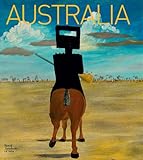
The official symbol of this striking exhibition is Sidney Nolan’s dramatic portrayal of the outlaw Ned Kelly, dehumanised by his helmet, rectangular and silhouetted in black, with only the sky visible through the visor. Yet, for me, the major discovery was the power and skill of Aboriginal art, initially applying to eucalyptus bark natural pigments of black, red, ochre and white in surprisingly sophisticated cross-hatchings to imitate sandhills, rivers, wildlife, dreams of rain and ancient legends. More recently, native artists have progressed to acrylic on canvas, whilst retaining their traditional themes, which have also been taken up and reinterpreted by the European artists who have settled in Australia.
I was also interested to see how movements such as impressionism and romanticism were developed in the late C19 to early C20 in a distinctive Australian style, influenced by the quality of the unrelenting and brilliant sunlight and the nature of the vegetation, the fronds giving rise to “fernomania” and the varieties of gum tree, relatively sparse-leaved but with branches forming strong patterns. European painters fell in love with the country, like Glover who painted a carefully tended and irrigated flower garden against the background of the natural bush.
Fascinating social history is revealed through the work of early convicts with an artistic bent, or McCubbin’s giant, moving tryptych of “The Pioneer”, arriving in a wagon, working with his wife to establish a holding, until she dies, leaving him to tend her grave. We see the colourful crowd on Manly Beach in 1913 after public bathing had been permitted, the confident “squatter’s daughter” in the 1920s. surveying in the brilliant sunshine the open woodland probably created by generations of aborigines following the practice of using fire to reduce the vegetation, and to bring it up to date, Howard Arkley’s luminously bright rendition of a prosperous suburban house, “Superb and Solid”.
Although there may be some justice in the charge that it would have been better to show more work by fewer artists, this begs the question of which one would choose. As it is, we are given a useful overview of the whole gamut of Australian art, leaving us to pick out and pursue what appeals to us as individuals.
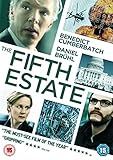
Since the business of online leaking is in fact quite dry and technically beyond most of us, the film attempts to divert the audience with flashing computer screens of mumbo-jumbo and noisy gatherings of uncertain purpose while flitting frenetically between capitals to show the international scope of Assange's operation.
The "hero" and central figure in terms of viewpoint is not Assange but his former colleague Daniel Domscheit-Berg. Drawing heavily on the latter's recent book, the film traces the course of his gradual alienation from admiration to bitter disenchantment over what is portrayed as Assange's capricious arrogance and narcissistic desire to control everything. The last straw for Domscheit-Berg seems to have been Assange's alleged cavalier attitude to protecting the anonymity and therefore safety of sources, to the extent of lying to obtain his agreement for the release of data to selected newspapers, but this important point is presented in too rushed a way for me to judge the justice of the charge.
I was left unsure what to believe and uneasy as to the truth and fairness of some of the attacks on Assange. For instance, he is portrayed as "borderline autistic" and psychologically damaged by childhood experiences, but how soundly based is this analysis? Although Benedict Cumberbatch puts in a compelling performance as Assange, and heads up a strong cast including David Thelwis, Laura Linney, Stanley Tucci and even Peter Capaldi (as a somewhat miscast Alan Rusbridger since it is impossible not to keep thinking of "The Thick of It" Malcolm Tucker) the actors seemed let down by the disjointed script and at times clumsy direction. It is implausible that so many hush-hush meetings should take place in bars or trains, all the while casting nervous glances at sinister onlookers, or that Assange would enter sensitive data on board a plane only to shout and hurl his PC around on receiving an unwelcome message. The film repeats too often the device of using a vast array of computers, at some times unmanned, at others operated by clones of Assange, to highlight the fact that what was virtually a one-man band could achieve so much. Also, surely Wikileaks must have involved a team of people, even if dominated by Assange?
In the case of Wikileaks and its founder Assange, truth seems more intriguing than fiction so that I realised too late that I would rather have watched a well-made documentary.
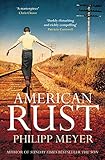
This impressive American "debut" novel must have flowered from the diverse influences of growing up with book-loving bohemian parents in a tough working-class suburb, dropping out of school to gain raw experiences but somehow getting to college, avidly reading Joyce, Faulkner and Woolf, and carrying first-hand research to the extent of riding freight trains and interviewing men on trial for murder.
Set against the backdrop of the crumbling American dream, as foreign competition knocks the heart out of once thriving steel-making towns, Meyer explores the drama of an unlikely friendship: on one hand, puny and eccentric but brilliant Isaac English, haunted by his mother's suicide and burdened by the task of caring for his cranky invalid father, on the other athletic but indolent Poe who has thrown away the chance to train as a football champion. Both share a confused desire to escape the depressed backwater of Buell, mixed with inertia and a love of the area's natural beauty. When one commits a serious crime, acting on impulse to save the life of the other, who will be blamed and with what outcomes?
After a dramatic opening, the story slips into a slow-paced cycle round the inner thoughts of six linked characters: Isaac, his favoured sister Lee who has managed to escape to Yale and a wealthy marriage, his crippled father Henry, Poe, his long-suffering mother Grace and Harris, the local police chief who fancies her, himself a survivor of the Vietnam war. Sometimes, Isaac's streams of consciousness become too obscure and tedious, the boozy sex between Grace and Harris a little repetitive, the minor scenes, as when Lee or Harris is socialising, too corny or banal. The strongest charge is that the denouement seems a little rushed and underdeveloped compared with the rest, although I liked the upbeat but open ending. Yet overall, this is gripping, with sufficient tension and unresolved drama to keep you reading in the belief that Meyer is ruthless enough to opt for tragedy, although it will never be unrelieved.
Less ambitious and "epic" than its successor "The Son", for me, "American Rust" is a technically better novel since the structure is tighter and the characters are more fully developed and therefore you care about their fate, with the possible exception of Lee who is the only one who might be regarded as successful, which perhaps is perhaps intentional on Meyer's part.
A good choice for a reading group as there is so much to discuss, it bridges the blurred gap between literary and popular fiction.
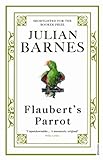
This quirky biography of Flaubert wrapped up in an eccentric almost plot-free novel from the viewpoint of Geoffrey Braithwaite, an uptight retired English doctor obsessed with the French author is unusual, often amusing and, as some reviewers have commented, at times too clever by half.
If I had not read in French "Madame Bovary" and "Un Coeur Simple", I would have found it much harder to appreciate this book, which further restricts an appeal already limited by its status as a "literary novel".
I have learned a good deal about Flaubert, which I wish I had known when studying him for A Level decades ago, only no doubt his penchant for whores, young foreign boys and smutty jokes would have been considered unsuitable by my teacher. I can see that he was an original and truly independent thinker, probably still don't quite grasp the contribution he made to the modern novel, but do not find him very likeable as a person. He comes across as immature and opinionated at times, perhaps because his epilepsy isolated him, although he seemed to think he needed to be set apart, an observer looking on, to be able to write.
With his quicksilver intellect, Julian Barnes lets slip in passing a host of fascinating details and anecdotes. Flaubert wished he could afford to burn every copy of the very successful but deemed scandalous Madame Bovary. Did he mean it? Flaubert was bothered by his tendency to use metaphors. Was the famous parrot one of these and, if so, was it meant to be a symbol of the writer's voice, his obsession with "the Word"? Sartre, in what I find a surprisingly intense desire to attack Flaubert, rebuked him for, as Barnes cleverly puts it, being the "parrot/writer" who "feebly accepts language as something received, imitative and inert".
Barnes's mouthpiece Braithwaite lambasts the critic who claimed that Flaubert was so careless about the outward appearance of his characters that he gave Emmma Bovary three different eye colours: deep black, brown and blue. Instead, he shows how Flaubert subtly described her eyes in different lights and situations. Barnes uses some entertaining devices, such as three different versions of the chronology of Flaubert's life, the first very positive, the second negative, the third a series of striking quotations from different years of his life – or I think it is, but it's hard to know when Barnes is quoting and when he is making things up, which the novel format permits him to do.
I particularly liked the chapter written from the viewpoint of Flaubert's longsuffering mistress Louise Colet, who seemed to want to be his wife rather than his Muse and confidante, although she must have had "better offers". In the excellent chapter, "Pure Story", the narrator Geoffrey Braithwaite explores with great poignancy his relationship with his wife, managing in the process to draw comparisons with Madame Bovary.
Although I found some of the middle chapters tedious and rambling to little purpose, the book contains so many sharp insights it deserves to be kept and read more than once.
This 7cm (2.75") wide black belt, completely elasticated apart from an imitation patent leather panel each side of the hook-and-snap plastic and metal buckle is likely to be loose-fitting but is quite effective in e.g. holding a loose-waisted skirt in place. Although quite stylish when closed, the belt is a little "fiddly" to fasten and quite hard to undo, but this may also mean that it is unlikely to come apart too easily! The quality e.g. of the buckle is not high, but for a relatively cheap belt perhaps you cannot expect more.
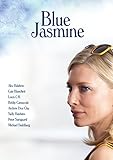
Penniless and mentally fragile after the collapse of her luxurious life as the wife of an East Coast businessman, Jasmine (Cate Blanchett) takes refuge in San Francisco with her goodhearted, dark-haired (did I miss something?) sister Ginger, the divorcee who works as a supermarket cashier to support her two young sons and now has to postpone plans for her new boyfriend to move in with her. The odd physical and social disparities between the two sisters are explained by the fact they were both adopted, but the more beautiful and stylish Jeanette who renamed herself Jasmine was favoured and given delusions of grandeur.
Will Jasmine succeed in making a fresh start? Will she ruin her sister's life, which she has already inadvertently damaged? My sympathy for Jasmine was reduced by her failure to learn from adversity. With no sense of irony, she continues to sneer at Ginger's choice of men, her lowly occupation and taste in clothes.
All the actors put in a good performance, with an Oscar nomination very likely for Cate Blanchett. I thought her abrupt switches from pill-popping, boozy craziness to calm, collected calculation were a little unlikely, but this was presumably part of the script.
You may feel that, although the film is tightly plotted and the characters have distinct personalities, they tend to be somewhat stereotyped, and no one really changes or progresses, apart perhaps from Jasmine's step-son Danny. Yet, Woody Allen has not lost his touch for concocting an entertaining brew of comedy and poignancy.
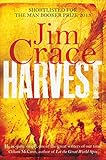
In a remote unnamed English hamlet at an unspecified location and time, somewhere around the 1600s, perhaps, the "accidental" burning of the master's dovecotes is blamed on a family of squatters. The ensuing chain of disastrous events plays out against the long-term tragedy of the inexorable forces of change, by which common land, felled woodland and cornfields are to be enclosed for sheep-farming, destroying in the process a stable community in which everyone has a place.
The sustained sense of tension makes this a page turner, even though I suspected the ending would be a will-o-the-wisp. Suspense combined with Crace's striking, original, often poetical language carries you along almost too quickly. You need to read more slowly, or more than once, to grasp the full force of his prose.
Narrator Walter Thirsk's insight and articulate flow of words is explained by a connection since childhood with kindly but weak Master Kent. In what proves a type of fable or morality tale, Thirsk symbolises the human flaw of good intentions rarely put into practice. He may also be an unreliable narrator, lying even to himself at times over the degree of his devious self-interest.
Crace captures the spirit of a lost way of life without glamorising it. Some wry snatches of humour and sharp character studies add spice to the tale. "Harvest" highlights the danger and skin-deep nature of civilisation in rural England, where "might was right", and a landowner could punish and mistreat tenants with impunity. Crace conveys a poignant sense of loss over the destruction of the harmony of people working together, as in the remarkable description of the harvest in the opening pages, and of their deep knowledge and appreciation of nature. At the same time, we are not spared the harsh reality of "Turd and Turf", the filth and hardship of daily life.
Although I would have liked a stronger dramatic conclusion to this tightly plotted tale, Crace is not concerned to impress us with a final twist. The terms "hallucinatory" and "hypnotic" used by professional reviewers are very apt. Claimed to be the last book in a highly regarded body of work, this deserves its place on the Man Booker shortlist.

 Antenna Reviews