Not safe in one’s mind

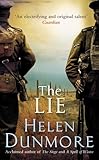
This is my review of The Lie by Helen Dunmore.

For the centenary marking the outbreak of the Great War, Helen Dunmore has developed one of the few remaining neglected themes: the aftermath of the return from the trenches. Bright working class Cornishman Daniel is already an outsider in that he has spent his childhood playing with the children of a local landowner. Too poor to attend grammar school, he is self taught from secretly borrowing books from the wealthy man's library. Outwardly uninjured but destitute, he is allowed to squat on the neglected land of the elderly Mary Paxton. In his rural solitude, Daniel is continually haunted by the presence of his childhood friend Frederick, killed at the Front, and he is prey to the panic attacks and irrational urges to commit acts of violence that inevitably arouse fear and rejection in those ignorant of either traumatic stress disorder or the sheer hell of trench warfare, that is, virtually everyone. What could be an unbearably sad story is transformed by the writer's skill in enabling the reader to feel a strong empathy with Daniel and to understand his attitude to life and the behaviour that deviates from the norms of his society, because of what he has experienced.

For me, this is a near perfect novel in style, structure, pace and meaning. My only slight reservation is that I think Dunmore goes on a bit about the central heating system – I suppose meant to be analogous to underground military tunnels.

Deceptively simple with a strong narrative drive and tight structure, the tale is interwoven skilfully with frequent flashbacks to Daniel's childhood and life as a soldier. I was also very taken by the tragically ludicrous bits of advice for soldiers culled from old army training manuals (I believe) for insertion at the start of each chapter. For instance, measures to prevent the disease of "trench foot" caused by standing in cold water and mud include: "taking every opportunity to have.. the feet dried, well rubbed and dry socks (of which each man should carry a pair) put on".

Despite knowing that I should be taking my time over the author's telling insights and striking descriptions, sparely poetic, of the Cornish landscape, I felt an exorable drive on to the ending, knowing that "the lie" Daniel has told to satisfy the narrow conventions of his society must be exposed: "The man has penance done, and penance more will do". There is of course another lie in the false or confused basis on which so many young men went to die in the first place.

⭐⭐⭐⭐⭐ 5 Stars

Off the rails

This is my review of The Railway Man [DVD] [2013].

Based on the 1995 memoir of Eric Lomax, the Royal Signals Officer who was tortured by the Japanese when deployed on the construction of the infamous Burma railway, this film uses flashbacks to show the reasons for his emotional repression with violent outbursts of post traumatic stress decades after the event. Colin Firth, a master in this kind of role, plays the older Lomax, with Jeremy Irvine putting in a strong performance as his younger self, earnest, floppy-haired and prepared with quiet bravery to take the rap for the assembly of an illicit radio receiver. Nicole Kidman assumes a convincing English accent to play the sympathetic new wife who is determined to extract Lomax from his mental agony. When Lomax discovers in the 1980s that Takashi Nagase, the young interpreter who played a key part in his torture, is still alive, working, of all things, as a guide at the Kanchanaburi War Museum (close to the famous bridge on the river Kwai) he is initially bent on revenge as a means of exorcising his demons.

I was disappointed by the first half: dialogues often seem stilted as in the "Brief Encounter" style meeting on a train between Lomax and his future wife Patti. Lomax looks much younger than the fellow officers with whom he has kept in contact, and he could have done with a few more scars and grey hairs. The sets "back home" have more of a 1950s feel than the 1980s as I remember them. Worst of all, the earlier scenes in the jungle are often confusing or hammy, apart from the final harrowing torture in the dreaded hut. Overall, the script and direction often appear wooden until the final resolution.

The film was saved for me by the second part of the film which is unpredictable, moving and well-developed. Throughout, the scenery is beautiful, both in the Kwai valley, despite the horror of the slave labour and brutality, and in the scenery around Lomax's stark grey house overlooking a golden beach and the sea at, I think, Berwick-upon-Tweed.

I have read that, in fact, Lomax had a first wife for the best part of forty years, whom he left for Patti, and two daughters, all largely omitted from his memoir. I understand why the director let this stand, in order perhaps to create a tighter and more focused drama, but this has been at the price of concealing and neglecting other lives directly blighted by what Lomax suffered.

The film may not do justice to the highly acclaimed autobiography.

⭐⭐⭐ 3 Stars

Exposing a dodgy dossier

This is my review of An Officer and a Spy by Robert Harris.

Robert Harris is a past master at historical fiction based on dramatic political situations: in this case the notorious Dreyfus case in which an uptight Jewish Major in the French army was framed for a minor act of espionage, for which relatively minor offence, blown up out of all proportion, he was transported to the remote former leper colony of Devil's island. Just when you might expect the passage of time to erode interest, it has been revived in a recent crop of books including this novel which follows historical evidence closely. Harris focuses on Colonel Picquart, the mildly anti-semitic officer whose realisation that the evidence has been trumped up in a "dodgy dossier" leads him to sacrifice his reputation, even his freedom to obtain justice for Dreyfus, since his sense of honour and conscience will not allow him to do otherwise.

This is a gripping version with well-developed characters and some tense or moving scenes. Harris digests a mountain of detail to present the tortuous process of court martials and trials in clear and easily digestible terms. If it all gets a bit exhausting towards the end, that only conveys the feelings of déjà vue which the protagonists must have suffered. Harris succeeds in conveying Picquart's growing frustration, his sense of foreboding changing to moments of fear, anger and resignation, as he realises the extent to which his enemies are prepared to restrict his activities and twist events, rather than see the public lose confidence in the army's integrity.

I could not help thinking that, good though this novel may be, truth is stranger than fiction, so that the non-fiction "The Dreyfus Affair" by Piers Paul Read, for instance, which I read first, actually proved more shocking, moving and informative as regards: the personality of Dreyfus; his brother's impressive events to prove his innocence; the background forces such as the divisions between traditional Catholic society and the Republican movement accused of working with influential Jewish financiers who attracted so much suspicion and hatred; last but not least, the inflated degree to which the French split into opposing camps over the case, with the "Dreyfusards" eventually gaining enough support from abroad to turn the tide.

⭐⭐⭐⭐ 4 Stars

“L’Étranger” or “The Outsider” by Camus: frappant sur la porte du malheur sous un soleil insoutenable

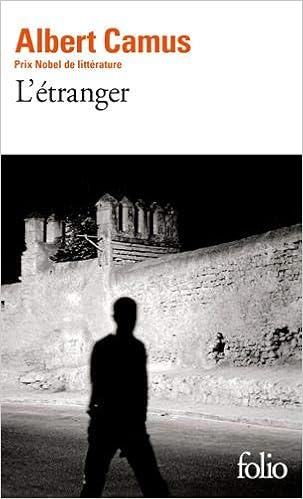
This is my review of “L’Étranger”, translated as  The Outsider (Penguin Modern Classics) by Albert Camus.

Meursault is a young Algerian `pied-noir’ given to observing the world with a clinical detachment. He enjoys a largely physical relationship with his girlfriend Marie who shares his love of swimming and, since Meursault does not judge others, he has an easy, tolerant acceptance of people, including his unsavoury neighbours the aged Salamano, dependent on the pathetic dog which he continually abuses, and the sadistic pimp Raymond.

From the outset there are somewhat chilling indicators of Meursault’s unusual and amoral attitude to life. He renews his relationship with Marie and goes to see a comedy film with her the day after attending his mother’s funeral. Then, on an afternoon of intense heat, in an almost hallucinatory state of mind, he commits a serious crime for which he appears to feel no remorse.

In the second part of the book largely given over to his very artificial, theatrical trial, we see how Meursault, the outsider, is incriminated as much for how he has behaved in the past – not weeping at his mother’s funeral – as for his offence. As he begins to reflect on his situation, we see him in a more sympathetic light.

This famous novel which has attracted a huge amount of attention, may be read on different levels. It could just be the tale, written in clear, minimalist prose, of a man whose lack of ‘normal’ emotions and values, combined with extreme honesty, seal his fate. On another plane, it illustrates Camus’s preoccupation with the absurdity of man’s desire for reasons and ‘rational behaviour’ in a world without meaning. Meursault’s accusers have set up arbitrary conventions and rules by which to judge him, but Meursault himself, although for a while afraid of death, is able to come to terms with the essential unimportance of everyone’s life, regardless of the value accorded to it by others.

It is also interesting to compare the simplicity of this first novel with the complexity and more self-conscious philosophical digressions of one of Camus’s last works, `La Chute’. Both culminate in very powerful final sections, and both need to be read more than once to appreciate them. Camus is a little too bleak for me, but definitely worth reading.

⭐⭐⭐⭐⭐ 5 Stars

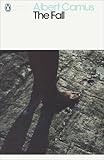
“The Fall” by Albert Camus: A false prophet in the desert

This is my review of The Fall (Penguin Modern Classics) by Albert Camus.

Although I read this in French, thus making it harder for me to understand Camus’s message yet also getting the benefit of the original language, I hope these comments may be of interest to those reading the book in the English translation.

Jean-Baptiste Clamence, his name a wordplay on “John the Baptist crying in the wilderness” buttonholes strangers in a seedy Amsterdam bar to tell them of his fall from grace as a successful Parisian lawyer to a man obsessed with his two-faced duplicity and his moral guilt worse in some ways than that of a common criminal. His psychological crisis has been triggered by another fall, that of a young woman into the Seine, whom he did nothing to save when he heard her cries. The question is, would he do any better if this incident were to be repeated?

The tale is full of digressions and twisted logic, witty, at times contradictory quotations. It is not surprising that there are differing, often opposed or confusing, interpretations of this philosophical fable, based on the ideas of absurdism, defined as the conflict between the human desire to find value and meaning in life and the inability to find it. A fascinating issue raised by Camus is how to lead a moral life if one is unable to believe in a god, but all attempts to make rules about right and wrong are arbitrary.

Having read some passages two or three times, I am still working to understand this book. For me it is a satire in which Clamence goes off the rails at the end as a kind of crazy, manic devil in a magnificently written final section. My take is that Clamence is on the wrong track with his desire to judge and control. The ability to accept one’s own inevitable shortcomings is clearly key, but what if one is given to the level of excess of the highly self-indulgent and unlikeable Clamence?

One’s understanding of this book is clearly increased by some knowledge of Christianity and the alternatives of communism, humanism and existentialism all of which Camus seems to lambast at some point, along with bourgeois complacency. This begs the question as to how much a truly great book should have some self-evident meaning without the aid of this knowledge. It seems to me that Camus was still working ideas out for himself in this book, and that at the end some were still incomplete.

⭐⭐⭐⭐ 4 Stars

In the land of the free

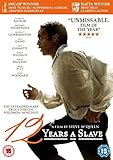
This is my review of 12 Years A Slave [DVD] [2013].

Solomon Northup, the son of a former slave, was a free man living in upstate New York when he was tricked, kidnapped and sold into slavery in 1841. He spent twelve years working for a series of masters in the sugar and cotton plantations of the swampy Louisiana bayou country until regaining his freedom against the odds. This film is based on the account of his experiences, written in conjunction with a white lawyer called David Wilson, and authenticated, including in part by the drunken and sadistic Mr Epps, his final master.

With his artist's eye , McQueen brings out the beauty of the natural landscape, red sunrise over the river, hanging branches draped in Spanish moss, or the rhythmic power of the paddle-steamer, carving furrows through the sparkling water as it transports the captives to their harsh destiny. This film renounces any sentimentality, ramming home the fact that slaves were regarded as property so could be treated without any consideration or mercy. The only reason for keeping them alive was because an owner had paid good money for them, and they could earn more for him through their labour. We see how Mr Epps could terrorise a female slave with whom he had become sexually obsessed, whilst his wife tormented the poor woman at the same time out of jealousy.

Everyone will learn something different from this drama. In my case, it was the extent to which slaves were punished for being literate, since this was seen as giving access to knowledge and revolt. Ironically, slaves were then despised for the ignorance in which they were held. Also, when their stories were written with the help of a white people, it was claimed that hardships had been exaggerated by abolitionists to strengthen their case.

The violent beatings are hard to witness. It's debatable whether these scenes are too long, the rationale being that this brings home the intolerable brutality endured. One striking moment is when the hero has to burn, out of fear of discovery, a letter which he has taken great pains to produce, in perhaps his last chance to get help. Another is when, having resolutely refused to sing the haunting spirituals, the only emotional outlet for slaves, Northup at last gives in, belting the song out lustily in his anger.

Chitwetel Ejiofor deserves all the praise that has been heaped on him, with his expressive face conveying in turn disbelief, fear, anger, despair, hope and even loss at the point of his release when he has to leave behind to suffer alone someone for whom he has come to care.

⭐⭐⭐⭐⭐ 5 Stars

“Rogue Male” by Geoffrey Household: Knowing one’s place in the white male playground

This is my review of Rogue Male by Geoffrey Household.

⭐⭐⭐ 3 Stars

In this celebrated classic yarn, considered groundbreaking by some, an unnamed big game hunter gets arrested on the point of taking a pot shot at a character who is probably Hitler, it being 1939, miraculously escapes death after horrible torture and spends the rest of the novel evading recapture.

So much anonymity combining with the stiff upper lip of the “anarchical aristocrat” narrator, the story often has a clinical and detached quality. Although there are some nail-biting moments, the potential drama of the tensest scenes is often reduced by the use of reported speech. The minute details in which the narrator’s somewhat implausible projects are described also become tedious. I realise that this view may enrage those identifying with Robert Macfarlane who wrote the introduction for this edition, and clearly retains a nostalgic love for a tale which he lapped up when an imaginative schoolboy hungry for adventurous fantasy.

For pages, all that kept my interest was spotting how the world has changed socially since 1939. Our forerunner of James Bond felt that man was not intended to travel at above 40 miles per hour, and was troubled by the litter from paper bags. What would he have made of plastic rubbish? His casual snobbery is jarring, as revealed in his complacent membership of “Class X” which he cannot quite define, because presumably it’s beneath a gentleman to do that. The helpful young man who belongs to “this new generation of craftsmen… definitely belongs in Class X ….but must learn to speak the part before being recognised by so conservative a nation”.

I had just decided to give up and skip the next book group meeting when, on page 126, our hero hits rock bottom with a striking description of the state to which he has been reduced: “Living as a beast, I had become as a beast”. The subsequent verbal sparring between the narrator and his pursuer not only proves that Household could do dialogue (so perhaps it’s a pity there isn’t more of it) but also clarifies the characters’ motivations.

Yes, it’s well-written with an eye for scenery, an evocation of a lost, unspoilt English countryside, conveys vividly the sense of being hunted, but is too dated and ludicrous for my taste.

Comment Comment | Permalink

At one with nature and at odds with man

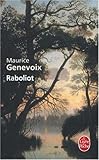
This is my review of Raboliot (Ldp Litterature) by Genevoix.

For Pierre Fouques, nicknamed "Raboliot", born and bred in rural Sologne, poaching is a way of life. Unable to accept that this is under threat, he becomes addicted to the challenge and risk of outwitting the malicious police officer Bourrel even at the price of neglecting his weak, gentle wife and three young children. The inexorable fate of this flawed yet sympathetic antihero reminds me of the novels of Thomas Hardy, together with the vivid descriptions of the landscape and rural life. Genevoix was a great admirer of Maupassant, which is reflected in his strong narrative drive and the clarity of his prose, despite a peppering of local dialect words not to be found in the dictionary.

Since I have no interest in poaching, still less hunting, I was surprised how absorbing I found the long, climactic description of a daring if not rash poaching expedition. The time Genevoix spent living in Sologne, mixing with the locals, has borne fruit in the authentic voice used to describe, for instance, the process of salvaging valuable young fish from dried up ponds, leaving the marauding "perches d'Amérique to perish; the branches silhouetted against changing patches of sky; the breeze rippling the gold-tipped rye; the sun setting over the undulating fields and lakes; the shapes of pheasants roosting in an oak tree at night, and so on.

As with Maupassant, the story is strong on the subtle changing relationships between people, and the shifting attitudes of various characters, as in real life. With wonderful descriptions of the father-in-law's house packed with expertly stuffed birds, we see how the eccentric taxidermist is at first prepared to shelter Raboliot from the law, urging him to act "honourably" and accept a short prison sentence, whilst at the same time recalling his own glory days as a youthful poacher.

Although I understand the views that this book is overlong and the endless mists, undergrowth and slaughter of small rabbits can get a bit tedious, there is a strong case for reading an old classic – this won the Prix Goncourt in 1925 – which has the power to transport you to an unfamiliar way of life with its ambience, sights, scents and sounds. Since Genevoix survived the brutality of World War 1 as a very young man, his immersion in the beauty of nature is understandable, and its redness in tooth and claw perhaps relatively minor.

In some academic studies, Raboliot the poacher has been elevated to provide a symbol in the debate over national versus regional identity in France, a symbol that rejects heroically the strong centralizing dogma of the Third Republic. However, I prefer to view "Raboliot" as a simple battle of wills between an obsessive, authoritarian townie policeman and a simple man with a deep love and knowledge of a countryside and way of life he fights to retain.

⭐⭐⭐⭐⭐ 5 Stars

The next liberal superpower?

This is my review of India Express: The Future of the New Superpower by Daniel Lak.

Before a recent trip, the few books available apart from tour guides were disappointing. Published in 2008 so still reasonably up-to date, Daniel Lak's "India Express" came closest to fitting the bill (although I have just found a couple of promising alternatives to be reviewed).

Although not a native of India which he first visited in 1989, Lak has the journalist's ability to observe with an open mind, to present information in an interesting and accessible way, taking time to analyse what lies beneath the surface. As each chapter is self-contained and clearly themed, you can pick and mix them.

Not primarily interested in India's unexpected expertise for sorting out the "millennium bug" which I remembered to have been an illusion, and thinking I knew enough about Indian call centres, the country's demographic problems, the fight for independence and tragedy of partition, I made first for some of the later chapters.

"Hinduism and its discontents" clarified a subject too often made obscure and dull. "According to its constitution, India is a secular country, but religion is omnipresent." The description of the holy city of Varanasi (Benares) proved very accurate: teeming bazaars, near-naked holy men in trances, sacred cows munching at vegetables stalls but not too revered to be shooed away with a shove or obscenity. Lak found a priest who bathes daily in the sacred water of the Ganges, knowing it to be poisoned by pollution, to explain the twenty-five branches of Hinduism ranging from belief in billions of gods, through monotheism to atheism. Hindus see the "essence of divinity in humans themselves" with deities serving largely as metaphors for people to grasp. "What passes for modern Hinduism can be traced to British and European scholars" who "applied their own familiar models……in the process of interpreting ancient writing….intended..for a different purpose". That says it all.

Lak covers the contradictions of India: intense cheating in the education system alongside the incorruptible Indian Institutes of Technology producing graduates to hold key positions in major companies worldwide. Then, despite its flaws, there is the survival of a vibrant democracy against the odds, prompting Lak to describe India as "Asia's America", although possibly too large and complex for this.

The gulf between rich and poor is illustrated by the fleets of hired taxis and vans used to transport programmers to and from work at HP India, to avoid a repetition of the rape and murder of a female staff member by a bogus driver. Another example is the attitude of higher castes that "if we throw our garbage over the wall of our compound, it no longer exists" because the low caste sweeper can be relied upon to take it away.

Regarding the international shock of nuclear tests in 1998, Lak suggests the prime motivation may have been to earn the respect on the world stage that India craves, by insisting on the right to self-defence. "Were India and Pakistan to reach some sort of settlement on Kashmir….other points of contention would easily be dealt with" through negotiation.

If revised, the book might include a chapter on the media – TV adverts for developing lighter skins and purchasing cleaning products, a far cry from the bustling life of the filthy streets. Another topic could be the space race in which a minister recently announced India's intention to lead the world and reject foreign aid. So what about investment in the public services so lacking in the grid-locked Delhi which I witnessed?

Lak is hard to fault, apart from a possible overoptimism over India's future in such an overpopulated world of booming demands and limited resources.

⭐⭐⭐⭐⭐ 5 Stars

Long endtime walk of Slaughterhouse Scandi-noir Roth

This is my review of Norwegian by Night by Derek B. Miller.

Aged eighty-two, a recent widower considered to be showing signs of dementia, former US Marine and Jewish watch repairer Sheldon Horowitz quits New York to live in Oslo with Rhea, the granddaughter he brought up, and her patient Norwegian husband Lars. Sheldon is caught up in the brutal murder of a neighbour, and goes on the run to save her son from being seized and possibly harmed by his violent father, a Kosovan refugee.

Original and more than yet another Scandinavian crime thriller, this is also a reflection on life, of the kind that perhaps one can only make when approaching the end of it. For Sheldon, it is only rational for the elderly to become more preoccupied with the past when their earthly future is limited. Throughout life, "sanity is the thick soup of distraction we immerse ourselves in to keep from remembering that we're gonna bite it". It can be "overwhelming and painful" to harbour "memories accompanied by too much nostalgia". And much more in this vein.

Sheldon appears not so much senile as from his youth eccentric, over-intense, too imaginative for his own good. His sharp, wisecracking wit pastes over the cracks of deep anguish and regret. Haunted by the holocaust, too young to enlist for World War Two, his spell of combat in Korea – if it really happened – only creates further demons, guilt over strangers killed in cold blood, and the pressure he places on his own son Saul to fight in Vietnam brings further grief. Although this sounds gloomy, the writing is peppered with quirky humour, a vivid sense of place and perceptive portrayal of relationships.

Admittedly, the tone adopted is often that of a thoughtful man with a PhD in international relations i.e. the author, rather than a non-intellectual watch repairer. I spotted some small glitches in the plot and implausible police practice, which I cannot reveal. Some of the minor characters, such as the "baddies" or Kosovan immigrants are very negative stereotypes, even if largely seen through the jaundiced eyes of a police officer. I would like to think that, in writing about America as "our champion and our future", Europeans as weak and the Norwegians as naïve in their liberalism, Miller simply portrays the viewpoints of his characters rather than some personal, often Jewish-centred hobby horses. I agree that his meshing of a crime thriller with psychological literary fiction, comedy with unremitting violence, is sometimes a little uneven.

The end is disappointing – too rushed after the detailed development of most scenes. I do not mind ambiguous endings, but felt that the last paragraph might have been added for the wrong reasons – a point which I hope will be clear when you reach the conclusion.

I could not help making comparisons with the Swedish bestseller, "The hundred- year- old man who climbed out of a window and disappeared", to the detriment of the latter. "Norwegian by Night" is much better written, more profound and genuinely funny. The sometimes unexpected switches between reality and fantasy, such as Sheldon's conversations with pawnbroker Bill, or his accompanying of Saul in Vietnam, made me think of "Slaughterhouse Five" so I was interested to see the inclusion of Vonnegut in the author's acknowledgements.

Five stars for the development of Sheldon's character and the use of imagined scenes to convey some powerful images or telling insights.

⭐⭐⭐⭐⭐ 5 Stars