No point if we’re not nice to each other

This is my review of The Free by Willy Vlautin.

Leroy, a damaged survivor of the Iraq war, uses a rare moment of lucidity to make a failed suicide attempt. As he lies in hospital, his surreal dreams of a dystopian world are intercut with the stories of those involved in caring for him: the moonlighting night warden Freddie, or nurse Pauline who always has time to talk to her patients with empathy.

Willy Vlautin writes about the daily lives of ordinary people with more than their fair share of bad luck, to which they may have added a few mistakes. Despite this, they manage to retain the will to persevere combined with decency and kindness. Some reviewers have commented that the frequent repetition of drinking Rainier beers or buying certain kinds of junk food in the supermarket serves as a kind of mantra, but for me, the banality often becomes oppressive and the book is just saved from tedium by a few dramatic or moving events, and the author’s ability to arouse sympathy, liking and even respect for people one might overlook or undervalue in real life. For a while, I feared the story might end in mawkish sentimentality, but it is in fact darker than Northline, the only other novel by Vlautin that I have read.

Vlautin’s style is simple and direct, focused on often minute description. For instance, not the first description of nurse Pauline’s feet: “She bent over and took off her shoes. She set her feet on top of them and leaned back in her chair”. Or, the description of Freddie packing up his beloved train set to sell for much needed cash, rather than of his grief over having to do this: “Freddie McCall found an empty cardboard box and began wrapping toy trains in newspaper. There were eight in total and he set those on the bottom of the box, and put all twenty boxcars on top of them. In another box he put his remaining track and switches, transformers and various wagons and buildings”…..and so on.

In some ways it is refreshing to encounter an author who clearly writes from the heart with a great natural enjoyment of the process, but does not appear to have set foot in a creative writing class, or to have paid any attention to it if he did. On the other hand, the narrative suitable for a reading age of eight, in vocabulary if not subject matter, often left me gasping for a metaphor or an introspective thought. Yet, the next novel I read will probably seem pretentious, and Vlautin’s portrayal of what lies beneath the surface of the fool's gold glitter of the world’s leading economy (for the time being) will stay in my mind for some time.

⭐⭐⭐⭐ 4 Stars

Le Goût Des Autres – The power of humour to enable us to understand life better

This is my review of Le Goût Des Autres [DVD].

In this film which deserves both its awards and to be better known in Britain, the talented Agnès Jaoui and Jean-Pierre Bacri co-wrote and acted two of the main parts. Bacri plays Jean-Jacques Castella, the wealthy factory-owner who comfort eats to replace an undefined hole in his life. A dabbler in interior design, his wife swathes their home in frills and competing flowery patterns, and obliges him to share her affections with a lap dog. On a reluctant visit to the theatre, he is smitten by the performance of an actress who happens to be earning extra cash as his English teacher to prepare him for an important business deal, and who could not be more different from his wife. In what looks like a doomed attempt to form a relationship, he latches on to her group of bohemian arty friends who have as much contempt for his taste as he is bemused by theirs.

The often funny yet moving main theme is underpinned by the triangular relationship between his naïve chauffeur who struggles to play the flute despite a lack of aptitude, his hard-bitten temporary bodyguard and the hash-dealing barmaid and borderline tart with a heart, played by Jaoui.

It’s a pity there are not more films like this near flawless work, with an ending that subtly avoids overstatement, pointing the audience in a certain direction, with a “feel good” factor which steers clear of any mawkish sentimentality.

⭐⭐⭐⭐⭐ 5 Stars

Does Series 3 need so many loose ends?

This is my review of Line of Duty Series 2 [DVD].

After the opening hook of a violent ambush of police escorting a protected witness, suspicion falls on the only officer to survive unscathed, DI Lindsay Denton. Three aspects set apart the ensuing complex drama: the powerful, well-scripted interrogation scenes, the high quality of acting in which body language reveals so much about personalities and relationships and, above all, the skilful portrayal of Denton by Keeley Hawes, who tantalisingly convinces us by turns of her guilt or innocence.

Perhaps you cannot award less than four stars to a series with such power to grip millions of viewers, and to trigger such large-scale speculation as to who is guilty of what and why. I understand why the author wanted to leave what I think he described as loosely tied bows to pave the way for a third series. However, it seems unsatisfactory to me if people are still asking fundamental questions at the end because they are confused about exactly what happened, and, insofar as they think they understand, there appear to be flaws and contradictions. Apparently, Mercurio himself spotted a vital omission at the last minute, just in time to insert another scene, but there seem to me to be quite a few that he missed from the viewer's angle. It may of course help if, unlike me, one has seen Series 1. At least one would have the advantage of knowing more about some of the characters, such as dodgy detective Dot Cottan or disabled DC Morton who makes a sudden unexplained appearance.

I agree with the many comments and critics who feel that the last episode is a serious let-down – rushed and disjointed, with scenes included too obviously "to sew things up", yet often failing to do so. I agree that it is a cop out to reveal the "truth" in a lengthy flashback, rather than let the facts emerge through ongoing scenes. This is in stark contrast to the development of characters in earlier episodes. There are at least two major flaws concerning Denton in the final weak "denouement".

Perhaps the series could have done with another episode or two to give time both to clarify the intricate plot and to expand on the dysfunctional private lives of the key characters, such as the adulterous Fleming whose family life is on the rocks.

This is, of course, first and foremost a commercial series. This was clear in the dramatic and shocking opening ambush, which after rewinding to watch at least three times, I still found inconsistent in a way that slightly insults the audience by suggesting watchers can be fobbed off with anything as long as it is exciting. Ironically, the fact that the first five episodes are mostly so good raises expectations too high, making the conclusion more of a disappointment.

⭐⭐⭐⭐ 4 Stars

Playing with fire

This is my review of Salamander: The Complete Season One [DVD] [2012].

After Scandi-noir, the Belgian "Salamander" series seems like a return to old-fashioned crime thriller form, with hero police detective Paul Gerardi: cussed, scruffy, middle-aged yet still somehow irresistible to women, his marriage almost on the rocks under the strain of work pressures. The attempted cover-up of the theft of compromising material from the safes of sixty-six establishment figures at the Jonkhere bank is more than Gerardi's sense of justice can overlook, and when he begins to pay a personal price for his persistence, it is only increased by the desire for revenge.

I was soon hooked on this fast-paced thriller by the spiral of suspense as to how Gerardi can possibly keep evading his pursuers. The tale is tightly plotted, but the sheer intensity of the early episodes means it is hard to retain enough gunpowder for a satisfying grand finale. Loose ends are tied up, but all in a bit of a rush in the last episode, with a few convenient plot twists that stretch credibility beyond its limits.

It is true that this series lacks some of the depth of recent Danish series, such as the exploration of the grief of parents after the murder of a teenage daughter in "The Killing". As a result, I was left less moved by some tragic events than I should have been. The villains in particular, the sinister leader of the bank heist, megalomaniac inheritor of the Jonkhere Bank, and over-ambitious young upstart Vincent, are pyschopathic stereotypes incapable of arousing any complex twinges of sympathy. How on earth can Gerardi win out against them all?

The deep corruption running through police and politics to the very palace left me wondering how the series is viewed by those wielding power and influence in Belgium, although perhaps the recent period of 589 days without an elected government has bred a certain amount of cynicism.

Will Series 2 manage to maintain the gripping excitement?

⭐⭐⭐⭐ 4 Stars

The perils of good intentions

This is my review of Can Intervention Work? (Amnesty International Global Ethics) (Norton Global Ethics Series) by Rory Stewart,Gerald Knaus.

Focusing on Afghanistan since 2001, Rory Stewart identifies reasons for the failure of intervention to achieve a "sustainable solution". Goals have been unclear, obscured by buzzwords and western-style "management speak". Leaders sent in to sort out the problems have stayed for only short periods, with foreign specialists remaining ignorant of the local culture since they rarely set foot outside protected compounds for security reasons. So, each successive surge of ever larger numbers of troops, with additional resources and revised policies, has failed to stabilise the situation.

Little heed was taken of McNamara's "lessons" from Vietnam, notably that "there may be no immediate solutions. We failed to recognise the limitations of modern high-technology military equipment, forces and doctrine…We viewed people and leaders of South Vietnam in terms of our own experiences. We do not have a God-given right to shape every nation in our own image or as we choose. We exaggerated the dangers to the United States".

In contrast to Stewart's somewhat rambling, anecdotal contribution which often seems overly concerned to display his literary style, Gerald Knaus produces a systematic, coherent and very informative analysis of the relatively successful restoration of peace in Bosnia from the late 1990s, although recent events may have undermined this. Triggered, some say too late, by shame over inaction in the face of genocide in Rwanda and Srebinica, intervention in Bosnia largely took the form of targeted bombing and training to support Croatian and Bosnian soldiers against the Serbs.

Knaus examines four interpretations of intervention in the Balkans. He is critical of the "planning school of nation-building" as developed by the American Rand Corporation think tank which argues that the number of troops and resources needed to subdue a population of a certain size can be calculated "scientifically" using formulae. It is a simple questions of inputs versus outputs. The fact that Vietnam at one point had more than 600,000 troops covering a population of 19 million suggests the inadequacy of this approach, which is also likely to be prohibitively expensive anyway for a large country.

At the other extreme is the "sceptical futility" school which Knaus finds too negative: "if you understand the culture, if you avoid counterproductive violence……… if you train the local forces well, if you pick your allies wisely, if you protect enough civilians and win their loyalty and more you might succeed," but that there are too many "ifs" to make this likely.

Knaus concedes that a period of tough, authoritarian "liberal imperialism" may be necessary as practised by Paddy Ashdown when High Representative in Bosnia, but he clearly favours what he calls "principled incrementalism", a kind of "muddling through with a sense of purpose" in, for instance, the process of enabling displaced groups to return with a degree of grassroots organisation.

Although very interesting and chastening reading, this book might have been more effective if ideas could have been integrated into a continuous whole, rather than presented in two separate sections by different authors with some repetition. Coverage of a wider range of war zones would also have been useful to demonstrate key points.

⭐⭐⭐⭐ 4 Stars

The price of progress

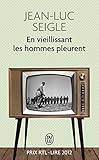
This is my review of En Vieillissant Les Hommes Pleurent (Prix Rtl-lire 2012) by Jean-Luc Seigle.

This is a poignant study of a family living in rural France near Clermont Ferrand in 1961 when France was undergoing a period of rapid change. Fifty-something Albert Chassaing has many reasons for his mid-life crisis. Descended from generations of peasant farmers, he has to work at the Michelin tyre factory to make ends meet. His smallholding is to be swallowed up in “remembrement”, sold off for amalgamation into a larger unit of operation. He is drifting apart from his glamorous much younger wife Suzanne, who seems to be over-friendly with the postman Paul. Whereas Albert clings to the past, Suzanne, an orphan with no roots, embraces modern consumer goods, the latest being the television on which she can watch an interview with beloved son Henri who has gone to fight in Algeria. This only serves to remind Albert of the humiliation of the German occupation of France, and his experiences defending the fortress of Schoenenbourg on the Maginot Line, about which he has remained unnaturally silent, being a man given to bottling up his emotions.

So it is that on the very first page, we learn of Albert’s desire “to finish it all”. How seriously should we take this, as he begins to plan for his end by, for instance, ensuring that the bookish son Gilles whom he loves but cannot really understand, will be well-supported? Will he find the motivation to overcome his “want of courage” to take his own life? Will the frequent moments of humour in the book eventually win out over the bleak undertow?

I am not sure that Seigle has developed the interesting plot as fully as he might have done. It seems a bit of a handicap to be unfamiliar with Balzac’s Eugenie Grandet, which bookworm Gilles uses to interpret his family life. There is a fair amount of “telling” in the narration and the final chapter is a didactic piece on the Maginot line which seems awkwardly tacked onto the novel, rather than integrated as a potentially fascinating and relevant part of the story. Despite this, there are some striking passages and thought-provoking observations, such as the scene where Albert revisits the field in which his father, as a robust child, was hitched to the plough in place of the horse which the family could not afford, and made to complete his task under cover of night so that none should see the shame of this. Yet, Albert values the image of his father’s work whereas his own sons have no idea how he spends his time on a production line, locked away indoors.

⭐⭐⭐⭐ 4 Stars

Born free, captivity borne

This is my review of Twelve Years a Slave – [ Stolen into Slavery: The True Story of Solomon Northup ] [Annotated & illustrated] [Free Audio Links] by Solomon Northup.

Although it is unclear to what extent this story was "ghosted" at the time, it is a vivid first-hand account of the experiences of Solomon Northup, born to a freed man in the New York area but tricked and kidnapped into slavery in the Louisiana of the early 1840s.

Having seen the film already, I knew what to expect plot-wise, and assumed that, since McQueen's drama is so powerful, I would gain little from reading the book, the reverse of what is normally the case i.e. books usually out-class the films on which they are based. In fact, I was impressed by the immediacy with which Northup's thoughts come through the language which, apart from occasional wording that seem quaint to us now, is for the most part a very articulate and engaging flow. I was also surprised and pleased how closely the director had kept to the book. There is a particularly powerful scene in the film where Northup is forced to beat Patsy, a young slave woman who is guilty only of going to obtain from a kindly neighbour soap denied her by a jealous mistress. I thought that McQueen must have exaggerated this incident for dramatic effect but found that it tallies with Northup's description. The latter's account of how Patsy is caught between a sexually abusive master and vengeful mistress makes almost unbearably moving reading even when one has seen the film.

I respected Northup's honesty, for instance, in regarding himself as superior to those born to slavery and reduced to a bestial state by their treatment, although at the same time he clearly respected and felt sympathy for those left in bondage after his release. He also conveys well the “catch-22” situation in which to reveal his past experience of freedom, and his ability to read and write, put him at greater risk of violence, since the slave-owners felt threatened by workers who did not conform to the stereotypes which seemed to justify their inhuman treatment.

The academic Sarah Churchwell wrote recently of the theory that Northup may have been a bit of a rogue in real life, colluding in his kidnapping in a money-making scam which backfired on him, but there is no evidence of this in the autobiography. Some of the interesting notes at the end of the book suggest that Northup may have fallen into drunkenness after his release, and been recaptured, but this cannot be proven. It could be that Northup became embittered, in view of the irony that, as a black man, he was not entitled, once free, to give evidence in court against those who had wrongfully sold him into slavery.

⭐⭐⭐⭐ 4 Stars

A Divided Nation

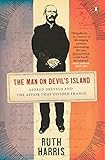
This is my review of The Man on Devil’s Island: Alfred Dreyfus and the Affair that Divided France by Ruth Harris.

It is hard to identify a modern event which has had as much impact on society as the trials and imprisonment of Alfred Dreyfus on what we now believe to be a trumped up espionage charge of relative insignificance. Having read recently Piers Paul Read's very detailed yet clear and moving account of this, from the arrest of Dreyfus in 1894 to his pardon and reinstatement in the army in 1906, I turned to Ruth Harris for a wider analysis of Dreyfusards versus anti-Dreyfusards.

In the promising introduction, Harris emphasises how families were divided by the Dreyfus affair, with people on both sides often holding contradictory and conflicting views about everything except the innocence or guilt of the man at the heart of it all, or at least his right to a retrial or declaration of innocence. The author presents "two Frances" fighting "for the nation's soul": on one hand, the Dreyfusards, mainly republicans, Protestants, or socialists, upholding Truth and Justice in their demands for a retrial versus the anti-Dreyfusards, often Catholic, anti-semitic, with monarchist sympathies, champions of Tradition and Honour, either convinced of the guilt of Dreyfus or prepared to sacrifice him rather than overthrow the ruling of a military court when they were concerned to support and build up the army after the humiliation of defeat in the Franco-Prussian War.

I do not mind that only brief sections of this book are devoted to Dreyfus himself. I admire the author's depth of research and evident deep knowledge, and perhaps, with 137 pages of notes and bibliography, this is not intended for a general reader. Much as I wanted to get absorbed, I found the reading of this excessively hard going. There is a surfeit of detail in an indigestible form, made worse by a fragmentation of information e.g. on the anti-Dreyfusard Maurice Barrès, and the inclusion of specialist terms with inadequate explanation for a non-expert e.g. page 137 (paperback version) references to revolutionary Blanquists and revanchists from the Ligue de la patrie française. In short, there is a failure to distinguish clear, major points from a morass of over-condensed detail on too many characters and attitudes.

I would like to find another book on this of period of French history, but was forced to the disappointed conclusion that it was not worth the expenditure of time to plough through this, referring to other sources for clarification on the way.

⭐⭐⭐ 3 Stars

A good way to start

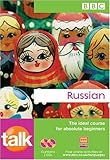
This is my review of TALK RUSSIAN (BOOK & CDS) NEW EDITION by Georgina Martin,Svetlana Furlong.

This course follows a standard format which I have already used for Italian. It is an attractive and accessible format, and I have not found a better way of starting a language quite cheaply, although I have a few complaints. If you have the discipline to work hard at the exercises, moving on to avoid getting bogged down but repeating them until the knowledge is embedded, you can learn a good deal from this book.

Bearing in mind the difficulty for an English speaker of learning the Russian alphabet, the approach used here is probably as good as any: showing the alphabet in full, but highlighting a few letters to learn at a time, starting with the easiest. It was probably a sensible decision to focus on the printed form of Russian and invite students to jot down the meanings of word in English, but I would have liked a lesson devoted to writing in Russian.

Again, the complexities of grammar are probably skirted round quite well at this basic stage e.g. saying that some words like "open" and "closed" must agree with the words they describe, and showing whether words are masculine, feminine or neuter.

I was a bit irritated by the need to keep flipping to the back to check the answers to exercises. I suppose this forces the student to make a real effort to answer without cheating, and it would probably add to the production cost to integrate answers clearly into the questions and tasks.

My main criticism is that I would like every Russian word or phrase in the booklet to be recorded for practice on the CD e.g. on page 52, a list of facilities in a town centre like supermarket or chemist is left for you to work out, possibly using the index, which is fine, but the words are not spoken for you to hear. Cutting out the repetitive jingle would give more space on the CD for this!

Also, some of the conversations are quite fast, which is good practice, but I would like a greater number of them to provide more opportunities to develop competence e.g. more examples of different types of drink you might order, more chance to practise numbers which I find quite hard, more opportunities to listen and talk about the things you may really need like directions, use of public transport, situations in hotels and restaurants.

⭐⭐⭐⭐ 4 Stars

There but for fortune

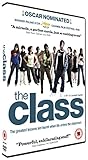
This is my review of The Class [DVD] [2008].

Based on the autobiography of an idealistic and individualistic young French teacher who plays himself in the film and drawing on many hours of improvisation with pupils in a "tough" multi-ethnic Parisian school, so skilfully directed that it makes a drama seem like a fly-on-the-wall documentary, "Entre les Murs" or "The Class" will strike a chord if not raise goose bumps in anyone who has taught in this environment. The film captures to perfection the claustrophobic, unrelenting, intense, absorbing, frustrating, exhausting, addictive world of teaching in an inner city secondary school. Most of the teachers are young and casually dressed by Govian standards. Yet perhaps unrealistic rules of iron lie beneath the velvet glove. By turns hilarious and disturbing, this could trigger many debates on teaching methods, what to teach adolescents, how far to accommodate different cultures, the pros and cons of integrating "bright kids" into diverse social groups at the price of failing to stretch them.

We see Monsieur Marin's patient persistence in encouraging his pupils to think and express themselves effectively, continually trying to find ways round their hostility to traditional French culture and realising that his ignorance of theirs is a frequent cause of misunderstanding. The camaraderie of the staffroom is often fractured by fundamental differences in opinion: the teacher who wants Marin's class to read a French novel to tie in with history lessons on the Enlightenment, which Marin tactfully suggests the students will find "tough"; the same teacher's absolute views of rules to be followed, whereas the liberal Marin prefers a more flexible approach. A staff meeting, demonstrates the familiar situation in which teachers seem more exercised over the cost of the coffee machine than agreement of a penalty system for naughty pupils.

There are examples of "political correctness" delivered with a mask of courteous objectivity which may unintentionally lead to injustice. In one scene, teachers discussing student grades are distracted by but do nothing to reprove two giggling student representatives elected to listen to the process, apparently without a clear code of conduct as to how they should behave in the meeting and afterwards. This seemed to me the one serious false note in the film. Or does it reflect French school practice?

A storyline gradually emerges, focusing on a moody Arab boy who cannot manage his anger. Despite Marin's empathy for him, and even a small heart-warming breakthrough on a piece of work, an unfortunate chain of events leads to a climax which Marin, in a rare lapse which I found a little hard to believe, has inadvertently helped to trigger.

A near perfect film, highly recommended.

⭐⭐⭐⭐⭐ 5 Stars