Too far out and not drowning

This is my review of Loss of Innocence by Davi Patterson,Richard North Patterson.

In a break from his tense courtroom scenes and alpha male political dramas, the author makes an effective stab at writing from the female viewpoint, even if his women in the America of 1968 are still under the influence of a benign but controlling WASP patriarch.

A bright young graduate, Whitney Dane chooses too lightly the conventional path of devoting herself to husband and children. Only muted warning bells suggest to her that fiancé Peter is a little too compliant, accepting from her father Charles a job in high finance that does not really suit him, acquiescing to string-pulling, again by Charles, to avoid the Vietnam draft. Charles even gives the couple an upmarket flat in New York as their future home, stifling any desire to find their own place. In sharp contrast to all this, the assassination of Bobbie Kennedy, following so soon on that of JFK and Martin Luther King, shocks Whitney into a more questioning line of thought. She is therefore ripe to fall under the influence of Ben Blaine, an unconventional young man from a different class who encourages her to think for herself.

This book will resonate with those old enough to remember 1968, but non-Americans and those under sixty-five would probably appreciate an appendix or two to explain the background politics, in particular of the Democrats divided over Vietnam.

It grated on me a little that all the main characters seem to be born wealthy and privileged or achieve these attributes in due course. Perhaps this is because the successful and well-connected author simply does not know about ordinary people.

Another slight weakness for me is the device of book-ending the main story between scenes of "I want to tell you a story" and "So this is how it worked out afterwards". In this case, we see Whitney in her sixties, encountering a younger woman who was Ben's last lover. I found the opening section rather trite, and the conclusion dotted i's and crossed t's too explicitly, leaving little to the imagination. This approach may have been used because the novel is a prequel (to a book I have not read) and is intended as part of a trilogy which effectively makes the whole into a kind of soap opera.

North Patterson is a seasoned producer of bestsellers. He knows how to write a page-turner with a strong, pacy plot, a well-judged ending (of the main story), engaging dialogues and sharp insights. The descriptions of sailing and of Martha's Vineyard are very vivid, although I know nothing about either. Yet, some passages cry out for rigorous editing to give a leaner and more edgy style rather than one that too often seems stilted or overblown.

⭐⭐⭐⭐ 4 Stars

Automatic assumptions

This is my review of The Expendable Man (New York Review Books Classics) by Dorothy B Hughes.

Hugh Densmore, a young American doctor on his way to his niece's wedding in Phoenix feels obliged, against his better judgement, to pick up a teenage hitchhiker. Who knows what will befall her if he does not? She proves to be both an unpleasant liar and a pathetic object of pity. When local newspapers report the discovery of a young girl's body in a canal, Hugh is convinced it belongs to the hitchhiker, and that the police will soon be knocking on his door. He is fatalistic, yet also determined not to spoil the wedding and to prove his innocence.

It is not until more than fifty pages in that the author delivers a master stroke by revealing a piece of information that stopped me in my tracks. Not only does it explain Hugh's previous almost paranoid fears, but completely alters the reader's perception of the situation. I was forced to look back to see if I had misread some details, but it was clear that I had made certain assumptions and was potentially as guilty of misjudgements as some of the characters in the book.

This book is partly a psychological crime thriller in which every step is developed in forensic detail. It is also a study of life in the western states of America in the early 1960s – the baking afternoon heat and traffic jams of Phoenix, the "startling growth" of the suburbs, the abrupt change from surfaced roads to rough tracks through the semi-desert landscape of "troglodyte rocks and spire cacti". Although Dorothy Hughes can be a little shaky on the flowering of romance, she is excellent on landscapes, cold starry nights and the burgeoning fast food culture as well as deeper issues in a world of racial prejudice and criminalisation of abortion.

The sustained sense of menace and very evident risk of Densmore being unjustly ruined, combined with occasional suspicions that he may go free at the end yet turn out to be a villain after all, make this a page turner. With so much suspense, it is perhaps inevitable that the final climax is a somewhat underwhelming, but overall this gripping tale deserves its recent revival. It stands the test of time as one of the best crime novels which everyone who enjoys this genre should read.

⭐⭐⭐⭐ 4 Stars

Let this cup pass

This is my review of Calvary [DVD] [2014].

On the bleakly beautiful coast of Sligo, Father Lavelle ministers to his eccentric flock of sinners with compassion leavened by dry wit, and tolerates his blinkered sidekick. A widower and former alcoholic, Lavelle is no unworldly paragon of virtue. In the opening scene, a disembodied voice in the confessional box calmly announces the intention of killing him on the beach the following Sunday, not in spite of but because of the fact that Lavelle is essentially a good man. This will be some kind of confused way of obtaining closure for childhood abuse at the hands of another priest. How should Lavelle respond to this threat?

The film follows the course of Lavelle's life for the following week with an element of "whodunnit" in advance. Can we guess the identity of the would-be assassin? This is not really the point, which is whether, in modern fractured and increasingly secular Ireland, the sacrifice or "Calvary" of a Catholic priest can have any meaning. By turns satirical and serious, and overall quite original, the film is patchily successful – some characters are too caricatured and the dialogue is at times somewhat contrived, as in the case of the local police chief's grotesquely camp and sinister lover – or that's what I took him to be.

The one small detail which grated on me was a local corrupt banker's apparent ownership of Holbein's painting "The Ambassadors", which everyone knows to be in the National Gallery, London – I accept this may have been intended as a touch of humour. Overall, the film is worth watching, although it takes a period of reflection to form a judgement on the ending. The musical soundtrack is also good.

⭐⭐⭐⭐ 4 Stars

Light shed

This is my review of Zennor in Darkness by Helen Dunmore.

Having read Helen Dunmore's spare and brilliant novel "Lies" focused on a shell-shocked young Cornishman in the aftermath of World War 1, I was interested in comparing it with her début novel published twenty years earlier, "Zennor in Darkness". Set in 1917, this describes how the tentacles of war have reached into rural Cornwall, with teenage boys conscripted from remote farmhouses, and cottage windows darkened with blackout curtains to deflect the German U-boats venturing near the coast to prey on British supply ships.

Since the author is also a poet, it is perhaps not surprising that "Zennor in Darkness" has a touch of Under Milk Wood with its array of local characters. The two who emerge most sharply in the foreground are at least to some extent outsiders: young would-be artist Clare Coyne, whose genteel Catholic father stayed on in Zennor after his wife's premature death, and the author D.H.Lawrence, who hoped in vain to find a refuge in Cornwall from the public outrage over his attacks on the war, and his marriage to Frieda, a German who had abandoned her husband and children to be with him.

The present tense which seems to have annoyed some reviewers did not trouble me at all. I hardly noticed it, and think that in fact it creates an increased sense of immediacy, and awareness of what each character is observing and feeling. However, the novel is clearly less taut and polished than "Lies". Several scenes, such as the opening chapter with three girls sunbathing on the beach is too rambling, with a confusion at times as to who is talking or who the identity of the main character – I thought at first it was Clare's cousin Hannah. There also seemed to be a bewildering excess of names to cope with at first. The writing sometimes seems over-intense.

This is a slow burning novel, a stream of impressions and thoughts. It conveys as far as I can tell a powerful and evocative sense of the Cornish landscape and the ambiance of a tightknit, closed community. Dunmore is also good at portraying relationships between people, their shifting emotions, misunderstandings and mutual criticism despite strong empathy, even love. Although in the main uneventful, requiring the reader to take time and savour the originality and beauty of Dunmore's prose, the novel shifts into a higher gear for the final third to reach a convincing conclusion.

⭐⭐⭐⭐ 4 Stars

Melodramama

This is my review of The Confidant by Hélène Grémillon,Alison Anderson (Translator).

A thirty-something book editor, Camille assumes that an unsigned manuscript has been sent to her through the post in error. When more arrive, she speculates that the author, "Louis" may be seeking a backdoor method of getting his work published. Ultimately, she is convinced that his story has some intimate connection with her own life.

Louis writes of his childhood sweetheart Annie, who offers naively to be the surrogate mother for "Madame M" the wealthy woman whose generosity to Annie is underlain by an obsessive desire to have a baby. This domestic drama coincides with the outbreak of World War 2 and the occupation of Paris.

Clearly, there are sufficient issues here for a novel that is both gripping and moving and many readers seem to have found this to be the case. So, since this is also a prizewinning French bestseller, translated into many languages, why did I dislike it? I think it is because, lacking much in the way of description, dialogue or subtle character development, this is reduced to a tedious telling of too often melodramatic, contrived and therefore unconvincing events.

I did not mind the use of four different "points of view", saved to some extent from confusion (at least in the French edition I read)by the use of alternating fonts for Louis and Camille, or a fancy line top and bottom of the page to denote "Madame M's" lengthy confession, but having Annie's account of her dealings with Madame M "revealed" to Camille through the third party Louis proves a clunky device.

The final pages resort to yet more ploys – a sudden lapse into free verse in order to tell yet again rather than reveal a last twist. This forced me to search back through earlier chapters to confirm clues that I had missed, perhaps because I was concentrating on reading in my second language of French, although I still think some of these should have been developed more strongly. Overall, I am left with the impression of a tale which, like an amateurishly knitted jumper, needed to be unravelled and remade prior to publication.

⭐⭐ 2 Stars

When doing harm is unavoidable

This is my review of Do No Harm: Stories of Life, Death and Brain Surgery by Henry Marsh.

"The idea that emotions and reason, that memories, dreams and reflections should consist of jelly is simply too strange to understand… Yet..if I stray into what neurosurgeons call eloquent brain, I will be faced with a damaged and disabled patient."

It is this kind of honesty that makes Henry Marsh's memoirs so compelling, overriding the initial concern that I might be reading the book solely out of a kind of ghoulish voyeurism. Henry Marsh was clearly drawn to this field by the challenge and element of danger, akin to what drives people to climb mountains. He describes with great clarity and insight the sense of shame when what should be a straightforward operation goes wrong, perhaps through a moment of hubris or distraction, but it could also be because one has given a more junior colleague the practice he needs in order to improve, or just bad luck, a sudden haemorrhage for no obvious reason. On the other hand, inexperience – or memories of a recent disaster- may make a surgeon over-cautious as regards something as simple as trying to adjust the clip on an aneurism.

Marsh patiently explains various medical conditions, mainly tumours, in terms a layman can grasp. I found it hard to read more than about three chapters at a time, not because the book is depressing – Marsh manages to weave in a surprising amount of humour – but because the experiences of many of his patients seemed to demand a certain amount of respectful reflection before rushing on to the next trauma.

Marsh reserves his bile for hospital management and government targets or cuts. He may be a bit of a dinosaur in some respects, but makes his case very convincingly. The 48 hour Working Time Directive causes more frequent shift changes so that staff often do not know the condition of patients they are treating as well as they used to. Bureaucratic rules enforced by junior staff no longer so in awe of consultants and senior surgeons often mean that patients have to wait longer for operations, and suffer more often the stress of last minute postponements. He condemns Private Finance Initiative (PFI) schemes as a "very expensive way of building second rate public buildings" which "some would consider to be an economic crime, although nobody is to be held responsible for it."

If anything, this book has eroded my confidence in the NHS as a whole, but has made me more understanding of the surgeon's dilemma. Often, he really does not know whether on balance it is better to operate or not. As regards patient consent, the percentage risk of death from the operation may equal that of eventually dying from a tumour, but if one survives the former, there is the incalculable benefit of peace of mind. Even such an eminent surgeon as Marsh may have to face charges of indefensible error, say for delay in diagnosing an infection: "it was painfully clear, as I had always known – that the case could not be defended… The final bill…was for six million" to settle it. One is left thankful that there are people with the courage and motivation to persevere in this complex medical field.

⭐⭐⭐⭐⭐ 5 Stars

Where is the enemy?

This is my review of Homage to Catalonia (Penguin Modern Classics) by George Orwell.

This vivid account of a few months spent fighting the Fascists in the Spanish Civil War reminded me that Orwell was a talented journalist as well as a writer of satirical fiction. He pulls no punches in describing the chaos and lack of resources in periods of mainly uncomfortable inaction punctuated with occasional hairy sorties.

My respect for his judgement was shaken a little by some of his observations – for instance, that he should find it “rather fun….in a boy-scoutish” kind of way to crawl about trying to take pot shots at the enemy without being hit himself, or the unconscious elitism of “Any public school OTC in England is far more like a modern army than we were.” He admits to longing for a powerful gun with which to pulverise the other side, but redeems himself with an admission of real fear when he has to expose himself to enemy fire. Similarly, his account of the experience of being wounded is interesting, together with such insights as the camaraderie between soldiers who know they would be shooting at each other in a different situation. His description of Barcelona as a briefly classless society in which there was no rank or status, and people treated each other as equals, is thought-provoking as regards “what might have been”, but clearly seemed too utopian to last, particularly since the bourgeoisie was simply lying low.

It is revealing that the chronic shortage of weapons may have been part of a deliberate government plan to prevent groups of anarchists or pro-revolutionary Marxists from gaining influence in the struggle. However, Orwell’s self-confessed lack of interest in the political side of the war is both surprising and disappointing, since it is clearly crucial to an understanding of what was going on in this complex struggle, and the outcome of events. Thus, the dramatic chapters on the counterproductive riots between anti-fascist groups in Barcelona – perhaps akin to fights between different revolutionary sects in modern-day Syria – are quite hard to understand. Orwell goes some way to redress this in the two Appendices, which were chapters integrated into the original text, but the result is needlessly disjointed and still somewhat unclear.

Although he produced this book in 1938, too early to judge the tragic outcome, at least Orwell had the prescience to predict that Franco would win, thus setting Spain back for decades.

⭐⭐⭐⭐ 4 Stars

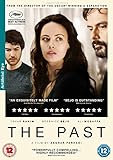
The Past – Ties that bind

This is my review of The Past [DVD].

Expectations raised by Iranian director Asghar Farhadi’s earlier film, “The Separation” are not disappointed. “The Past” is an absorbing, subtle and complex drama of relationships set in the everyday world of a Parisian suburb where ordinary people have to juggle the needs of work and childcare with sorting out their emotional lives. Shifting between the characters’ different perspectives, it manages to arouse empathy for them all in the process. Even with subtitles, the dialogue is excellent, reminding me of a very accessible Pinter play.

For reasons which are never fully explained, four years previously Iranian Ahmed left his French pharmacist wife Marie and her two daughters with whom he gets on well, although he is not their father. The film opens with his return to Paris at Marie’s request to sign their divorce papers. Yet it is clear from the outset that, although they both regard their marriage as over, a natural intimacy between them still remains, they know each other so well. Marie can instruct Ahmed to help her drive by changing gear, since her arm is too painful for this. She even asks him to find out what is bugging her teenage daughter Lucie. It is not surprising that Marie’s new lover Samir feels resentful and excluded. He is also trapped in the tragic effects of an ill-considered action taken by his wife, and the wonderfully acted scenes of his small son witnessing the drama of dysfunctional adult relationships and trying to make sense of them are poignant in the extreme. The little boy continually tries to apply the rules he has just learned only to find that some new factor contradicts them. Having learned the need to apologise for his bad behaviour, he then has to grasp that some adult breaches are simply too grave to be pardoned.

Despite the need to move on, the past creates a web of relationships, obligations and consequences of earlier actions which cannot be escaped. To what extent are we culpable if others misconstrue what we do or cannot accept our acts of selfishness? Is it necessary to confess to behaviour which has caused suffering, or are white lies sometimes the least damaging policy? Ahmed at times seems like living proof that “the way to hell is paid with good intentions” since his insistence on honesty risks making matters worse.

Rather like real life, the pain and anguish in this film are made bearable by touches of humour, curiosity as to how the plot will reveal its twists, the consistent high quality of the acting – the children’s performances are very realistic – the minutely observed details of the domestic scenes, and moments capturing the joy of living, as when Ahmed serves up his mouth-watering traditional Iranian dishes.

⭐⭐⭐⭐⭐ 5 Stars

Left the right to argument

This is my review of You Can’t Read This Book: Censorship in an Age of Freedom by Nick Cohen.

At the time of writing this, the Turkish leader Erdogan is clamping down on access to Twitter, Facebook and YouTube, modern "apples of knowledge" which he presumably fears are undermining his authority. Yet, if you regard the UK as a bastion of free expression, Nick Cohen will undermine your complacency.

Organising his material under the main heading of "God", "Money" and "State", Cohen moves from the ayatollah-supported death threats against Salman Rushdie, who dared to use fiction as a tool to satirise certain aspects of Islam, through the suppression of whistle-blowers who would have forewarned us of the recent Icelandic banking collapse foreshadowing those in the US and Britain, to the illusion that the web will sound the death knell of censorship in repressive regimes – the latter may become yet more successful by using technology to track down and crush opposition.

The author's subjective and polemical style often seems more suited to disillusioned-with-the-left-and-liberals popular journalism than a book in which one hopes to find balanced analysis. For instance, he describes British judges as being drawn from "the pseudo-liberal upper-middle class who have no instinctive respect for freedom of speech or gut understanding of its importance". Then there is his repeated attack on Western radicals who "either dismiss crimes committed by anti-Western forces as the inventions of Western propagandists or excuse them as the inevitable if regrettably blood-spattered consequences of Western provocation. The narcissism behind their reasoning is too glaring to waste time on". But Nick Cohen has found time to expand on the crimes of Charles Manson and Roman Polanski, salacious digressions from his main point, in this case to expose the excessive protection offered by British courts to those, often foreigners, rich enough to buy protection from criticism by exploiting libel laws and hiding behind super-injunctions.

Cohen seems particularly exercised by the Western liberals who appear to him to have put more emphasis on respecting Islam than on protecting the rights of individuals like Rushdie to freedom of expression. Although I tend to agree with Cohen's views, I was disappointed that he did not show more understanding over people's very understandable fear of losing their lives, or those of their loved ones, if they dare to take a stand. I was also troubled by his apparently somewhat partisan attitude to the rights of Israel, and lack of an at least even-handed examination of the role of Wikileaks overall.

This book covers important themes, it provides telling examples for those too young to have read about them in the press, but I had hoped for a more objective style together with a more systematic and synthesized approach to defining and discussing censorship, made all the more necessary by the inevitable "dating" of this kind of book, which, for instance, misses out on the potential debate over the role of Edward Snowden.

Quotations from some of the pioneers of tolerant thought make some of the best points, like Jefferson who wrote in 1776 with timeless clarity: "no man shall be compelled to support any religious worship.. nor suffer on account of his beliefs….but …all men shall be free by argument to maintain their opinions in matters of Religion."

Yet, of course, apart from the lack of specific reference to women, at the time, Jefferson still owned slaves……..

⭐⭐⭐⭐ 4 Stars

“Paris-Brest” by Tanguy Viel – A novel kind of crime story

This is my review of Paris-Brest by Tanguy Viel.

Brought up in provincial Brest, which he condemns as the most frightful in France (by reason of its postwar reconstruction in brutal concrete), Louis suffers the family shame of his once highly respected father being accused of some part in the embezzlement of fourteen million francs. These are offset by the eighteen million fortuitously inherited by his grandmother. Underlying this are Louis’s relationships with his cruel, snobbish and hypochondriac mother and with “le fils Kermeur”, son of the cleaner his grandmother inherits with her fortune. Kermeur is both a kind of Nemesis leading Louis astray, and a tool for him to wreak revenge on his mother.

This is an odd story, original and quirky, which, after a slow start, reveals the plot in layers of detail. It hooked me at last in Section 3, “Le fils Kermeur” in which the previous flippant humour is compounded with some moments of real tension. The style is distinctive, varying between passages of repetition and step-by-step logic, which chime with the book’s wry humour, and introspective streams of consciousness which are often striking and the source of the more moving passages.

This short novel manages to seem both lightweight and deep, which I found it hard to rate at first, although I have been encouraged to obtain more of Tanguy Viel’s short novels, “Insoupçonnable” and L’absolue . On a second reading, I was more impressed by the subtlety and coherence of the plot.

⭐⭐⭐⭐ 4 Stars