This site will share with you hundreds of book and film reviews written since 2009. Also a chance to discuss these reviews together with some of my creative writing to be added.
It is a fascinating and now little-remembered fact that, furious over not counting for the vote, many women threatened to opt out of being counted in the 1911 election, of particular importance to the Liberal government as a source of information for their welfare reforms. The researcher Jill Liddington provides only recently available examples of 1911 census forms from different parts of the country in which the mother of a household has mysteriously “vanished”. Her academic findings have been worked up into a book intended to remedy the tendency for the suffragettes to be given far too brief coverage in histories of early C20 Britain. This may appeal to those who can find evidence of specific communities or families of local interest to them. I, for instance, homed in on the Bristol-Bath area. However, I found that like most of the other chapters, in the course of shifting the focus from the general to the particular, the book becomes too disjointed and bitty, too much banal description rather than analysis. The book’s main achievement is to inspire me to go in search of a more coherent and profound study of the fight to get women the vote.
⭐⭐⭐ 3 Stars
Vanishing for the Vote: Suffrage, Citizenship and the Battle for the Census
"Apparently uninterested in sexual relationships…in music, art, society or modern languages and literature", Pitt the Younger does not prove a very engrossing subject for a near-600 page biography. The fascination lies in the late eighteenth century times though which he lived.
The stellar reputation of his father, "The Great Commoner" elevated to the title of the Earl of Chatham, and the hothouse classical education which honed his debating skills, gave Pitt the confidence and eloquence to take on the role of First Minister at the age of only twenty-four, although this was less remarkable at a time when the Commons was dominated by the sons of peers bent on advancing their fortunes and waiting to inherit titles.
One of Pitt's main talents was for prudent budget management and paying off national deficits, which chimes with present-day preoccupations. Sadly, the pressure of European wars and need to oppose the menace of Napoleon caused this to unravel into renewed debt and largescale borrowing, the invention of a form of income tax being one of Pitt's innovations.
Regarded as personally incorruptible "honest Billy", Pitt resorted from the outset to offering peerages as a way of getting supporters on side, on a scale which makes the recent MPs' expense scandal look like chicken feed. For a man with such an eye of administrative detail, the chaos of his personal finances is also surprising, but Hague explains this as the result of his workaholic obsession with the holding of power to serve his country. The excessive consumption of alcohol which contributed to his early death at forty-six may also have contributed to his negligence over personal affairs. This was not entirely his own fault, as from an early age he was encouraged to dose his frequent periods of ill-health with a daily bottle of port.
Although sociable within his circle of loyal friends, Pitt often seemed stiff and arrogant in public. It is tantalising that no explanation survives of the "decisive and insurmountable obstacles" which prevented him from marrying Eleanor Eden, the woman to whom he came closest to "courting".
Sadly, many of the Pitt's early causes – abolition of the slave trade, Catholic emancipation and parliamentary reform – foundered, either because he accepted the need to be pragmatic or perhaps lost his youthful idealism. Some of his patchy success seems to have been the chance benefit of indecision or procrastination. Perhaps it was inevitable that the sheer length of time in office was accompanied by a decline in his reputation, the final hammer-blow being the defeat of his fickle Europeans allies at Ulm in 1805. It was interesting to note how much support depended on the British providing subsidies for the armies of other nations.
There is much more meat in Hague's description of a Parliament without clear parties as we know them (although they are currently in a state of flux) and a King George III still retaining a considerable degree of power to obstruct matters – refusing to accept the republican thorn in the flesh Charles Fox as a minister, or sabotaging Pitt's attempts to give Irish Catholics the right to hold office. Pitt's dependence for political survival on the sanity and survival of the king is all too clear.
The minute detail, inclusion of many friends' and politicians' names, before and after ennoblement, and extensive quotations from the convoluted prose favoured in the C18, make this a demanding read at times. I would have liked a little more background context, say on the evolution of the "Whigs" and embryonic Tories; more on the prevailing political situation in the rest of Europe and its colonies and a "glossary" of contemporary politicians would have been useful.
Overall, it is an impressively researched if at times somewhat dry biography.
As a young girl, Maya Angelou was raped by one of her mother's partners, and later, barely into her teens, was knifed by her father's jealous lover. Such experiences were surely enough to drive her either mad or bad, but she was saved from her charismatic but rackety and self-absorbed parents' neglect by the more solid grounding of time spent with her grandmother. This industrious and enterprising women ran the general store in Stamps, an Arkansas backwater only a step away from slavery. Maya Angelou provides chilling descriptions of the local sheriff who thinks he's doing the family a good turn when he warns her crippled uncle to hide from a possible visit from the local Ku Klux Klan on a warpath of random revenge, or when a respected white dentist has no shame in refusing point black to treat her urgent dental problem, although her grandmother gave him credit during the worst years of the recession.
A varied succession of colourful, by turns funny, moving and violent events, are the tinder for the author's vivid and original prose. This must also have benefitted from the surprisingly good basic education she received against the odds. She describes how, when she was still very young, she wanted to perform a Shakespearean scene at home, but was deterred by the knowledge that her grandmother would winkle out of her the fact that he was not a black writer. That this may be one of many anecdotes which have gained in the telling does not really matter.
One forgives much from an author who, as a mature adult can write: "To be left alone on the tightrope of youthful unknowing is to experience the excruciating beauty of full freedom and the threat of eternal indecision…. Most surrender to the vague but murderous pressure of adult conformity. It becomes easier to die and avoid conflicts than to maintain a constant battle with the superior forces of maturity".
Although I am not sure I want to continue with her subsequent autobiographical works, since I suspect that the descriptions of Stamps may supply the most powerful and authentic passages, this book has increased my understanding and empathy for, as Maya Angelou puts it: " the Black female… caught in the tripartite crossfire of masculine prejudice, white illogical hate and Black lack of power".
This is the first book I have read by Colette and I gather it is not regarded as her best. Published in 1928 when she was in her fifties and established in her fame, this has a poetical, stream of consciousness style, beautiful and original when applied to the landscape and climate of coastal Provence, to her passion for gardening and cats, but somewhat precious, at times tedious, when the theme is the nature of love, and her relationship with her mother.
There is a good deal of falsity here, although it is hard to say to what extent Colette is deluding herself or deceiving the reader. The book begins, ends and is punctuated with letters from her deceased "muse" of a mother, yet I believe that Colette edited these letters to suit her purpose and, despite repeated claims of her admiration, apparently found her mother impossible in real life.
In a blurring of autobiography and fiction, Colette claims to have given up love, but her innate sensuality belies this, together with the vanity which makes her unable to resist seducing and encouraging for long enough to cause havoc, her handsome neighbour Vial, despite plans to marry him off to a young painter called Hélène who is besotted with him, but devastated by the belief that Colette is his mistress, which again Colette does not deny. This triangular love affair appears to be completely fictional and may have been intended as a cue for Colette to explore love and renunciation, although it mainly serves to show her as egotistical and capricious. This romantic thread is impressionistic and ambiguous, perhaps in keeping with the novel's style, and so open to different interpretations, which could be a strength although it may leave the reader frustrated by its lack of development.
This novel needs to be read more than once to appreciate it fully. It encourages discussion, assisted by a knowledge of Colette's life. It told me little about relationships, but is memorable – if read in the original French – for its sensual evocation of nature – "un jour qui coule en instants bleus et or…. une tristesse de soleil" – and of cats in all their fascinating movements and moods. I like the little touches of wry humour as when a neighbour protests over Hélène feeding Colette's cat with moths burnt in a lamp. To paraphrase: "Why not?" Colette snorts. "They're made of fat and roasted. Naturally I wouldn't set out to grill moths for cats, but you can't stop them flying into lamps".
My four stars were given after a period of reflection with a sense of relief at having finished the book. The reading of it in French (as a second language) was an ordeal, with the striking, evocative passages of prose obstructed by frustrating paragraphs I was unsure I had understood without the aid of a English translation, which only confirmed my lack of sympathy for her more over-the-top rants about ageing and love.
We are introduced to Mr Turner as a middle-aged man, with only hints of his past life as the talented son of a Cockney barber, or his rise to fame as a painter entertained by aristocrats and displayed at the Royal Academy. Nor is there any clear explanation of his messy personal life, with inconvenient visits from a shrewish ex-mistress, justifiably angry over his neglect of her and their two daughters, one now with a child of her own.
Timothy Spall portrays Turner as eccentric and boorish, yet capable of deep affection as shown to the jolly old father who mixes his paints and makes up picture frames, in between shopping for a pig's head in the local market. Perhaps Turner's misogyny, also suggested by the casual sexual exploitation of his downtrodden and doting servant Hannah, stems from the trauma of having a schizophrenic mother carted off to Bedlam when he was a small boy. However, painting is not the sole channel of his sensitivity and vision: he can be moved to tears by Dido's Lament, and, admittedly in a drunken haze, shows empathy for poor Effie, the oppressed wife of Ruskin, portrayed here as a ghastly prig whom Turner delights us by taking down a peg or two.
Although we are shown Turner ageing, pained to hear the public turning against his later more abstract works, and finding solace in a secretive relationship with the Widow Booth, this film is a series of scenes which combine to form a vivid impression not only of Turner as a man but also of early nineteenth century life. The film's attention to period detail is impressive with the inclusion of a myriad of characters who may appear only in passing. It is like being a fly on the wall, or bird in flight, observing Turner silhouetted against the kind of sunset light which endlessly fascinated him, leaning on the rail of a ferry bound for Margate, weaving his way along narrow crowded quays to Mrs Booths' lodging, greeting other great painters at the Royal Academy or being rowed towards the Temeraire as friends joke over the likelihood of his painting it: "I shall cogitate upon it," he drawls.
We see Turner's insatiable curiosity as when he visits a photographer for the first time, quizzing the supercilious man who mistakes him initially for an ignoramus. Or when, showing a respect for women when they demonstrate talent, he invites a natural philosopher home to demonstrate how nails may be magnetized by the colours of the spectrum – at the forefront of scientific thinking at the time.
Most scenes are low-key, often quirky yet revealing, such as Turner being pestered for money by an unsuccessful painter, or the pails set round his domestic display room to catch the drips of rainwater through the ceiling. There are also some powerful dramatic scenes, as when Turner rejects a wealthy businessman's offer to buy up his works for a vast sum, since he has resolved to leave them to the nation to be viewed "gratis". Sadly, they were not to be retained in one place as he had hoped.
On reflection, I decided this is an outstanding film which makes one think about Turner as a man, flawed and complex, and want to find out more about him and his times. Yet, the massive hyping made me expect to be impressed, so that some of the earlier scenes, such as the improbably atrocious music at an aristocratic soirée were a disappointment.
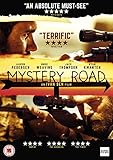
Of Aboriginal birth, Jay Swan has returned from a training course to work as a detective in a god forsaken outback Queensland community. Forced, ostensibly owing to staff shortages, to investigate alone the murder of a young “native” girl, Jay finds himself caught between the rock of his work colleagues’ prejudice and apparent desire to conceal some of their own shady dealings with local criminals, and the hard place of being regarded as a traitor by the native community where he grew up, everyone being a “cousin” or “brother” but reluctant to talk. He is even unable to get any information out of his daughter Crystal, now living with his estranged wife. A friend of the dead girl, it becomes painfully clear to Jay that Crystal is involved with the drug-dealing, even prostitution of the white low-lifes who are corrupting the vulnerable Aboriginal community already fractured by generations of mistreatment at the hands of white settlers.
In this slow-moving, understated film, with excellent acting from Aaron Pedersen as Jay, we are shown the workings of this outback community, with the growing evidence stacked against an honest law enforcer being able to obtain justice. The filming of the vast, flat, barren landscape with the occasional dramatic rocky scarp is very striking. Apart from a few brutal stereotypes, the characters of individuals, whether victims or villains, are often subtly developed: Jay’s bitter alcoholic ex- wife, a local drug-dealer whom he is rather unconvincingly allowed to question alone, or his boss, who may be a weak conniver or even an arch rogue. The tragedy of the Aborigines’ plight is portrayed with a conscious-churning clarity.
It was therefore a disappointment to me that the director chose to resolve Jay’s impasse with the climax of a stagy western shootout, of the kind where the good guys would in reality have been wiped out in the first few seconds.
My four stars are therefore for the work as a whole and the acting, not for the shoot-out which ruined it for me, by abruptly turning the film into an American-style western. I have to admit that many reviewers have admired this move for the quality of the direction and its arguable symbolism.
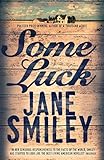
Admiration for "A Thousand Acres", a Mid-west take on the tragedy of King Lear, encouraged me to read "Some Luck", the first part of Jane Smiley's trilogy which covers a century in the lives of the Langdon family, starting in 1920 with young Walter returned from the Great War to establish himself as an Iowan farmer, with his beautiful young wife Rosanna and lively son Frank.
In what amounts to "an everyday story of country folk" American-style, if there is a main character, it is Frank. Jane Smiley is clearly intrigued by the challenge of capturing his first thoughts as a baby just a few months old – with what degree of accuracy none of us can quite remember enough to tell.
By contrast, after a promising beginning, we are continually frustrated by not being able to learn enough about what is going on in the minds of the adults. Walter and Rosanna are so absorbed in the daily grind of work, so patient, stoical and self-contained. It is never explained how Rosanna made what must have been the major step of giving up her family's Catholic faith. Even when Rosanna suffers personal crises, she manages to continue in her role of farmer's wife and mother. Yet, we know that she is repressing emotions, as indicated by her lack of care for her appearance and premature ageing, just as Walter conceals his troubles. Although this may sound gloomy, there is a good deal of low-key humour in the incidents of farm life. It could also be argued that the couple's faithfulness to each other and adherence to traditional values, combined with a self-imposed restriction on their personal gratification and ambition, are typical of many American farming communities a century ago. They are dull but worthy, leaving it to their children to fly higher, and perhaps get burned in the process.
Jane Smiley is at her best writing about the rhythms of the seasons, the intolerable heat and drought alternating with the deep snowdrifts of winter, the bitter irony of the economic depression which makes high yields pointless, the cautious acceptance of a labour-saving tractor instead of a pair of horses, the making of traditional cakes to keep the old customs going, the canning and pickling of produce. The trouble is that, without a strong plot, this can seem a little banal and repetitious to the point of tedium.
Also, when the author takes her younger characters off to experience city life, or to fight in Europe, the writing seems less authentic. The decision to devote each chapter to a consecutive year from 1920-53 becomes something of a straitjacket. I sometimes felt that incidents have been generated as padding. Perhaps because of the continual introduction of new players, either through births or romances, I began to find it hard to care about individuals who are insufficiently fleshed out, and often appear quite unconvincing – Lillian's husband Arthur being a prime example of this. Important national issues, like anti-communism or fear over a nuclear attack appear bolted on in a rather clunky fashion. The prose style often seemed almost childlike, perhaps because the author was trying to represent how some characters might have thought or expressed themselves.
Although I am sure many readers will love this book, for me it needed a stronger plot and narrower focus, such as in "The Cove" by Ron Rash which also has a rural farming theme. Yet, there is plenty of scope for more drama, as in, for instance, the uneasy relationship between charismatic, outgoing Frank and his very different, fearful, whiny, younger brother Joe who proves to be more sensitive (as in his concern for pet animals) and perhaps more fulfilled as an adult.
I wanted to admire this book but it seems a pale shadow of "A Thousand Acres".
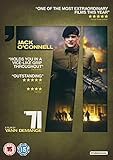
Based on the real tragic and messy situation of 1971 Belfast, this is a tense and gripping thriller, well-filmed, with an evocative score and some excellent acting, in particular from the leading player Jack O’Connell.
Having barely finished his gruelling army training, Gary Hook is sent to Belfast as one of a unit of inexperienced young soldiers, out of their depth in peace-keeping exercises which rapidly prove to be grim urban guerrilla warfare. Against a backdrop of burning cars and housewives banging dustbin lids on the pavement in a tribal rhythm, we see the soldiers struggle to hold back a hoard of furious civilians, spitting abuse and hurling stones as they see their neighbours beaten up by RUC men, whom the army has been ordered to defend. In the mêlée, Hook becomes separated from his colleagues and is left behind, menaced from two sides by an out-of-control faction of young IRA fighters who want a soldier’s scalp, and the sinister Military Reaction Force (which was created in 1971), supposedly deployed to use their local knowledge to help the Brits, but in fact running double agents in murky, shifting partnerships about which Hook may inadvertently have learned too much. We gain a keen sense of Hook’s will to survive, his confusion when injured yet without losing basic compassion for the weak and vulnerable, and the growing realisation that fighting in the army is not what it has been cracked up to be – not, as he had perhaps thought, a promising break for a lad brought up in a children’s home. Right up to the end, you know that the director is prepared to show how the essentially good, as represented by Hook, may not escape into a happy ending.
The identity of the various factions is a little hard to work out during the film, particularly for those who cannot remember the Irish troubles of the 70s, but it is a powerful reminder of a period we should not forget.
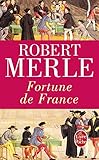
This opening novel in a thirteen part saga of the Huguenot de Siorac family during an unsettled period of French history starting in 1547 has at last been translated into English as "The Brethren". "Fortune de France" is best read in its original language, if possible, since it conveys more of a sense of the period, of the personalities of the key characters and the alternating humour and pathos of the chain of incidents. By contrast, the English translation which I used to check a few points appears to be a rather wooden literal translation.
The story is told by Pierre, a sometimes hot-blooded but perceptive and questioning narrator. At first, I was a little bored by what seemed like a dry beginning, and thought I would prefer to read a straightforward history of a period which I have never quite grasped: the French Wars of Religion between the Catholics and equally intolerant Protestants.
Quite soon, I became intrigued by the main characters: the contrast between the serious, puritanical Sauveterre, and his more charismatic "blood-brother" Siorac, spontaneous, often generous, yet capricious with a capacity for great inconsistency and callousness. A doctor by training, he risks his life saving his bastard child Samson from a plague-ridden village, only to introduce him into his household as his son, regardless of the feelings of his long-suffering wife. When "the brethren" feel prepared to risk declaring their protestant faith, Siorac tries to get all his children and servants on side, before cornering his wife with the command to abandon her catholic faith, although he knows that she is devoted to it.
There are some daft episodes of three musketeer bravado, but also some tense and moving scenes exploring the psychology of people with complex emotions of jealousy, rivalry, divided loyalties, duty, fear, to which we can relate even when they are bound by very different beliefs and attitudes from our own. Siorac faces the disapproval of a highly regarded doctor with his scepticism over the value of bleeding people as a cure, but when proved right does not point this out since he knows that the other man's vanity will not let him accept the truth. There are also some interesting and convincing accounts of how the Sioracs fortified their property, related to their (remarkably few) servants and workers, and made a living from the land.
I'm not sure I feel motivated to read any more of the series, but found this a surprisingly good read – in French, but less so in English.
This opening novel in a thirteen part saga of the Huguenot de Siorac family during an unsettled period of French history starting in 1547 has at last been translated into English as “The Brethren”. “Fortune de France” is best read in its original language, if possible, since it conveys more of a sense of the period, of the personalities of the key characters and the alternating humour and pathos of the chain of incidents. By contrast, the English translation which I used to check a few points appears to be a rather wooden literal translation.
The story is told by Pierre, a sometimes hot-blooded but perceptive and questioning narrator. At first, I was a little bored by what seemed like a dry beginning, and thought I would prefer to read a straightforward history of a period which I have never quite grasped: the French Wars of Religion between the Catholics and equally intolerant Protestants.
Quite soon, I became intrigued by the main characters: the contrast between the serious, puritanical Sauveterre, and his more charismatic “blood-brother” Siorac, spontaneous, often generous, yet capricious with a capacity for great inconsistency and callousness. A doctor by training, he risks his life saving his bastard child Samson from a plague-ridden village, only to introduce him into his household as his son, regardless of the feelings of his long-suffering wife. When “the brethren” feel prepared to risk declaring their protestant faith, Siorac tries to get all his children and servants on side, before cornering his wife with the command to abandon her catholic faith, although he knows that she is devoted to it.
There are some daft episodes of three musketeer bravado, but also some tense and moving scenes exploring the psychology of people with complex emotions of jealousy, rivalry, divided loyalties, duty, fear, to which we can relate even when they are bound by very different beliefs and attitudes from our own. Siorac faces the disapproval of a highly regarded doctor with his scepticism over the value of bleeding people as a cure, but when proved right does not point this out since he knows that the other man’s vanity will not let him accept the truth. There are also some interesting and convincing accounts of how the Sioracs fortified their property, related to their (remarkably few) servants and workers, and made a living from the land.
I’m not sure I feel motivated to read any more of the series, but found this a surprisingly good read – in French, but less so in English.


 Antenna Reviews