This site will share with you hundreds of book and film reviews written since 2009. Also a chance to discuss these reviews together with some of my creative writing to be added.
Energetic, pushy and prickly, realtor Leo Runcible has great ideas for property development in rural California, but he will probably never gain acceptance in 1960s Marin County, being not only an outsider but Jewish. An exaggerated grievance against his neighbour Walt Dombrosio sets off the quirky chain of events which form the theme of this novel.
As he continually switches his viewpoint between four of the main characters, so that Walt and his classy wife Sherry are as central to the tale as Leo and blurrily drunken Janet, I became engrossed in his capture of how they perceive each other and of the continuous small shifts in emotions – the observation of psychology and social life. This is a match for Philip Roth, I found myself thinking. Then, the narrative slips more into black farce and although I accept that the early 60s was a period of male chauvinism, of the sense that a man was emasculated if his wife worked, of unabashed racism and callous dismissal of the disabled, I began to have a nagging concern as to exactly how misogynist and non-PC Philip Dick may have been himself – or perhaps this is a mark of his skill as a writer.
It seems that this was one of the mainstream novels which remained unpublished in his lifetime, since his cult status was achieved only through his sci-fi, which does not interest me personally. Although I agree with a reviewer who found the end of this book somewhat rushed – he sets up an interesting final twist but fails to develop it adequately – he has clearly been underestimated as a writer with a keen eye, sharp insights into how mismatched people may tear themselves apart in relationships, “hell is other people” leavened with wry humour and a laconic style. I shall read another, but perhaps that will then be enough.
I embarked on this great slab of a historical biography – 820 pages excluding sources and notes – in an attempt to understand to what extent Napoleon was truly "great", particularly after reading a popular biography of Josephine which seemed to sell him short.
In the course of wading through the mud and slaughter of his interminable military campaigns, I concluded that he was a remarkable man whose greatness stemmed from enormous energy and vision, insatiable curiosity, the capacity to absorb a huge volume of facts, the confidence to take risks in putting ideas into practice, great tactical skill, flexibility and speed in conducting campaigns – when he had a single enemy to contend with and a small enough army to control personally – undeniable courage, a keen sense of self-publicity and understanding of how to motivate men at all levels – this sometimes deserted him – through a mixture of praise, rewards and decisive orders when needed. He was also capable of moments of refreshing candour and regret as to his shortcomings, and possessed a sense of humour and charm which captivated even some of his enemies.
On the downside, his desire to emulate Caesar and Alexander the Great may have led to megalomania, his attention to detail made him a control freak, as Emperor he made himself an unbridled political dictator, although he listened to the opinions of others and adopted a more democratic approach towards the end when he was fatally weakened. His continual exaggeration of enemy losses and playing down of his own may have been judicious PR, but suggests a failure to face up to his frequent squandering of the lives of the men he had inspired to follow him. He was a male chauvinist – although perhaps most men were at the time – and he made some major errors.
The most costly of these was the attempt to fight on two fronts simultaneously – Russia and Spain, and to allow himself to be lured as far as Moscow, over-extending his supply lines and then underestimating the time needed to limp back to France before the onset of winter. The shocking death toll of more than half a million soldiers, and the destruction of his horses made it hard to put up an effective defence with fast-moving cavalry when the extent of his conquests set most of the rest of Europe against him. He picked the wrong issues for stubborn obsessions, such as an unworkable scheme to block trade with Britain with which he annoyed the Tsar by trying to impose it on Russia, or the rejection of fairly reasonable peace terms when his luck had run out.
In an academic yet mainly very readable text, the author fired me with some of his own enthusiasm for Napoleon. I found myself rooting for him and wishing he had desisted from some campaigns to build his reputation as a social reformer – even as a prisoner on Elba, he arranged the provision of fresh water, improvement of roads, irrigation schemes, etcetera. He may of course have been in a cleft stick, in that he had to wage war to avoid being overrun by belligerent neighbours outraged by his assumption of a crown.
I realise that many chapters on military campaigns are unavoidable, and was impressed to learn that the author had clearly tramped many of the sixty main battle sites in person, but I found the information perhaps inevitably too condensed with indigestible lists of names of commanders, companies, details of troop movements, villages and rivers. It is frustrating that maps are not always supplied, and when included, often omit place names mentioned in the text, an indication of location, topography and scale to help one understand the course of events. I did not want to interrupt my reading to go and search for these details elsewhere. It would have been helpful to include more of the factual information in clear tables, charts and timelines – together with better maps- for easier reference.
Overall, this is an impressive work which has increased my understanding and appreciation of a fascinating historical figure.
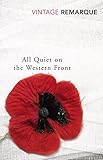
Having read and seen so many books and films about war, I made the mistake of expecting this to have little to add apart from the different perspective of a First World War soldier on the German front. Written in the 1920s by a young journalist who fictionalises his own experiences of the futile lunacy of war, it soon proved to me its status as a classic.
What marks it out is the combination of a whole gamut of reactions, from the MASH-like scenes of cynical survival to moving scenes portraying the psychology of survival at the front. In the opening chapter, the eighty men out of a company of a hundred and fifty who have returned alive and uninjured from the front are delighted to find that the quartermaster has not been informed in time to reduce their supplies so they have double rations for a day. A young man is dying from his wounds in a field hospital, and a friend is mainly preoccupied with laying claim to his rather fine pair of boots.
Using the present tense to give events more immediacy, the narrator Paul describes the sinister nature of the front in apparently calm periods which may be shattered with no warning by shells and gas – how to survive he must throw himself instinctively to the earth, which may protect, bury alive or claim him for ever. He must kill or be killed without emotion to stay alive, feeling his most conscious hatred for the teachers who abused their authority by urging him to enlist, or the sadistic ex-postman, now Corporal who provided his training, none of them with any realistic first-hand experience of the front. The prospect of leave seems like heaven, until Paul realises that he can no longer relate to family and acquaintances, or any aspect of his past life. He can no longer read the books he used to treasure, and his academic education now seems useless.
The narrative makes very early on the telling point which recurs at the end: the fact that young men plucked from school to the battlefield have no clear framework of work, wife or children to which to return, should they survive. They are a generation cast in limbo: “if we go back…. we shall be weary, broken-down, burnt-out, rootless and devoid of hope. No one will understand us – we are superfluous even to ourselves.”
This well-translated novel is saved from unendurable sadness by the range and frequent black humour of incidents. It is one of the most powerful pieces of anti-war writing I have ever read. The saddest aspect is that, when he wrote it, Lemarque might still hope there would be no future struggles of this sort on such a scale.
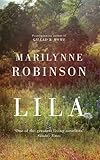
Marilynne Robinson's writing fascinates me. For a celebrated professional creative writer she has produced relatively few novels, of which three produced over a decade examine and rework the lives of two families in the quiet Iowan town of Gilead, each book focussing on the inner thoughts of a different character. Lila, a newcomer who has married the Reverend John Ames in his old age and borne him a son, is a minor figure in "Home" and "Gilead", but comes to the fore in this latest novel. Best read in turn with Lila last, to understand all the references, they can be treated as standalone novels.
Carried on a stream of consciousness which catches Lila's distinctive voice, we learn how she was abducted as a young child from a neglectful and possibly violent household by Doll, an itinerant casual worker. On the run for years from some real or imagined pursuer, they attach themselves to a small group who find jobs where they can in what sounds like the dustbowl America of the `30s, although the author is vague as to time and place. Despite having been barely tolerated by everyone apart from the protective Doll, Lila retains a nostalgic longing for her childhood, lived mostly out in the open, with a keen sense of nature and the seasons, and what little they all had shared in common.
By comparison, in the reverend's comfortable old house, with his kind and patient attention, she often feels lonely and reluctant to confess details of her past for fear this may turn him against her. It appears he has married her out of his own loneliness and a sense of her reflective nature, drawn to the same spiritual questions which perplex him. Perhaps he feels a desire to give practical support to a woman in need who has endured hardship through no fault of her own, outside the safe shell of his own life troubled only by self-concocted theological dilemmas. We can never be any surer about his motives than Lila, for everything is seen through her eyes. The book is full of irony: the old man never grasps that she likes to read Exekiel because its fire and brimstone images capture a sense of her own past life. He is amused by her announcement that she never wants to have a credenza in the house, not realising that this was the piece of furniture in which a whorehouse madam kept locked up the few possessions of the young women she exploited.
Since every phrase appears crafted with care, the book needs to be read slowly, rereading some sentences aloud to capture the full meaning by stressing the right word. Although it has been described as one of the saddest books imaginable, the beauty, expressiveness and wry humour of the style make the bleak aspects tolerable. Lila's pregnancy also strikes a continual optimistic beat. The mistrust of John Ames' old friend the Reverend Boughton, and likely bewildered disapproval of parishioners, held in check by respect for the old clergyman, are only hinted at in this subtlest of novels.
If I have any criticism it is over the repetition of some points, although this could be intended to convey how the mind keeps revisiting old ground. In the same way, the very muted ending could reflect the reality of most people's experience. The author's Calvinist background exerts a strong influence, which could deter readers with no biblical knowledge or belief. As an atheist who accepts that Christianity is deeply embedded in mid-west American society, I would say that this book is worth reading if you appreciate skilful writing and have an interest in psychology, how people think and interrelate, often failing to communicate, and how they come to terms with intimations of mortality and the transiency of both pleasure and pain.
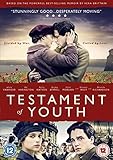
It is probably an advantage not to have read Vera Brittain's celebrated First World War autobiography on which this film is based, since it means one can come to it without inflated expectations. Born into a prosperous Edwardian household, strong-minded Vera battles to be allowed to apply for Oxford where, in 1914, women are permitted to attend lectures but still not take degrees. Despite her intention to avoid the conventional path of marriage she falls for one of her brother Edward's friends, Roland Leighton who like her has ambitions to write, in his case as a poet. When war is declared, all the young men of her acquaintance who are fit for service feel honour-bound to enlist. Since Edward has supported her case for Oxford, she returns the favour by arguing fiercely for her father to let him join up, finding the clincher she may live to regret, "Let him be a man". A stint as a nurse on the Front opens her eyes to the chaos and waste of war.
Seen mainly from Vera's viewpoint, the course of events is saved from intolerable sadness by moments of humour and fascinating touches of period detail. There are telling situations such as Roland's behaviour when he returns on leave, masking his preoccupation with the horror of war behind a mixture of bravado and moodiness. Many moving scenes compensate for others which seem a little wooden, but perhaps the latter reflect accurately the "stiff upper lip" restraint of the period. Also, in keeping closely to Vera Brittain's text, the film may have become too restricted as a drama.
Since "Testament of Youth" was an early exposé of the futility of war, it is perhaps surprising that it was not made into a feature film long ago. Its power has been somewhat diminished by our familiarity with the facts, but there is still particular poignancy in Vera's experience of World War One, and it is an effective introduction for anyone finding out about it for the first time.
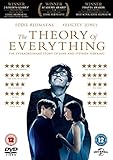
Despite or perhaps because of my admiration for Steven Hawking's brilliance and the courageous determination shared with his former wife, now Jane Wilde, I was ambivalent about watching a film which I feared would be harrowing and intrusive as regards some of the more intimate aspects of motor neurone disease. In fact, it is a sensitive and moving portrayal of their lives from their first meeting when he was embarking on a PhD and about to be hit with the unexpected diagnosis of MND with two years to live.
The film is based on Jane Wilde's book, and in a radio interview I heard her approval of the production with particular praise for Felicity Jones's brilliant imitation of her own gestures and voice, including her clipped diction from a 1950s upbringing in an academic household. Eddie Redmayne also manages to assume with remarkable skill the appearance of Hawking as seen on television. It does not trouble me that he is not a genuinely disabled actor and I would think it hard to employ one since Hawking has to be shown in steady decline from the apparently healthy only slightly clumsy young man at the outset.
Since this is a commercial film, it touches fairly superficially on Hawking's mind-bending scientific theories and the grimmer details of managing his physical decline. The pain of the latter is shown in subtle ways as when, struggling to get him to co-operate over the use of a grossly inadequate letter-board to communicate after it has been necessary to give him a tracheotomy, Jane dissolves into silent tears. So, it becomes in essence the story of his relationship with his wife, with her part in the drama equal to his. Tragically, neither can fully express themselves, he because of his disability and she out of love, a sense of duty and her unusually reserved and self-controlled personality.
The tragedy is highlighted by the fact that, perhaps in particular if one is a woman, one tends to identify mostly with Jane's exhaustion as she struggles to care for him, bring up their three children, and produce her own PhD in odd disrupted moments at the kitchen table. Having insisted on caring for a man only predicted to have two years to live, it is ironically her support which played a major part in keeping him alive. When asked in an interview how matters could have been improved, she stated that it would have helped if Hawking had been prepared to discuss his illness with her, if she had received a great deal more assistance in caring for him, and if the nurses eventually hired had been more carefully vetted. The film is faithful to the truth in making all this clear, yet manages to do so with frequent touches of wry humour.
Although Hawking probably had to be selfish and take his wife for granted to survive, the film made me wonder whether his decision to divorce her to marry his nurse was in fact an act of generosity, in freeing Jane to marry the supportive family friend whom she had come to love. There are other interpretations, of course. Posing such questions feels prurient, but this is the inevitable result of making those who are still very much alive the subject of a mainstream film.
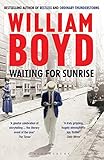
Actor son of a famous, long-dead thespian, Lysander Rief travels to Freud's Vienna to seek the advice of an English psychoanalyst on a sensitive personal problem. Since it is 1913, we know that the course of his life is about to be transformed for the worse, but before that, fate strikes a very different unexpected blow. With his fertile imagination and gift for spinning words into vivid and original descriptions or moments of farce with no apparent effort, William Boyd creates an entertaining read for the first half. He employs interesting little devices, as in the opening chapter where Lysander is introduced as he might appear to a stranger, although the next scene shows how many of the assumptions based on appearances are false. At other points, the author presents the dialogue in the form of a play, reflecting not only Lysander's employment, but also the way he and those around him are often playing a part in "real" life. The downside of this somewhat flippant, facetious approach is that at times we may not care about the characters' troubles as much as we should.
It is not until halfway through that the novel becomes the spy thriller vaunted on the front cover, and for me it is not improved in the process. At this point, the plot is too close to a Buchanish derring-do of over-complicated implausible events. I began to lose interest, but read on in the hopes of a satisfying dénouement which is in fact less surprising and "clever" than some of the twists on the way. Perhaps the strongest aspect is that Lysander is left a sad and wiser man accepting life's ambiguity, "we try to see clearly but what we see is never clear and is never going to be", one "happier with the dubious comfort of the shadows".
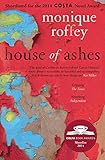
Inspired by the abortive 1990 political coup in Trinidad, about which I am now embarrassed to have registered so little, the author creates a similar drama in the fictional Caribbean island of Sans Amen. We are introduced first to the simple yet bookish and spiritual Ashes, haunted by the violent death of his freedom fighter brother in an earlier uprising. Under the influence of “The Leader”, charismatic head of a religious cult, Ashes is sucked into a plan to force concessions from the apparently corrupt and neglectful government, by occupying the main parliament building and taking hostages, including the Prime Minister.
The point of view switches between Ashes and Mrs Aspasia Garland, Minister for the Environment, and one of the more sympathetic of the hostages. In a situation which rapidly deteriorates and clearly cannot end well, the author uses her characters to explore their contrasting attitudes, the different experiences which have shaped them including colonisation, their developing perception of events and the way they handle the psychological trauma of a siege.
This reminds me strongly of another highly praised novel about a hostage-taking in a developing country, “Bel Canto”, yet I think “The House of Ashes” is technically superior in being more realistic and focussed on the complex issues of power, inequality and motivation without getting side-tracked into somewhat sentimental romances. On the other hand, what has the makings of an outstanding novel is undermined for me by the author’s tendency to repeat and over-labour points. It would have been much more powerful to have finished at the end of Part V with at most a brief epilogue, that is, omitting the final section, entitled “V1 L’Anse Verte 23 Years Later”. It is as if Monique Roffey is so absorbed in her characters that she cannot resist continuing to supply and analyse details long after the reader should have been left to reflect and reach his or her own conclusions. A minor irritant for me is the overuse of the West Indian term “steupsing”, the tendency to make a noise by sucking in air to express annoyance and derision. Yet perhaps this, and the patois which I enjoyed, give the story greater authenticity, demonstrating Roffey's genuine deep firsthand knowledge of life in Trinidad. Certainly, she creates vivid images of the dusty rundown city, the lush vegetation and Leatherback turtles dragging themselves up onto remote beaches to lay their myriads of eggs – from which most of the hatchlings are doomed to die in the struggle to survive.
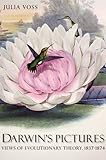
The eye-catching cover showing a pair of stylised hummingbirds on a water lily masks a well-translated from German if at times long-winded academic exploration of the evolutionary theory revealed in the pictures produced by Darwin and his contemporaries.
A prolific collector of specimens on his five year voyage on the Beagle, Darwin often lacked the knowledge to identify them correctly. So, it was the ornithologist Gould back in London who accurately classified the famous Galapagos finches with their distinctive beaks which provided early evidence for evolution, of which Gould himself ironically became an opponent, in the belief that such beautiful creatures as hummingbirds must have been designed by God.
Endearing in his shortcomings, Darwin failed to appreciate the importance of the locals' observation that the tortoises on each Galapagos island had a distinctive patterned shell. So, the creatures were taken aboard The Beagle for their meat and the shells discarded over the side. On his own admission a poor draughtsman, Darwin spent years back home constructing messy but ground-breaking diagrams to show evolution, such as the foldout chart from the 1859 Origin of Species, with neither origin nor end, but a focus on chance variation with the adaption and flourishing of some species at the expense of others. Unable to accept such vagueness, followers like Haeckel developed this idea into a clearly drawn tree culminating at the top with man, with gorilla, orangutan and gibbon on branches just below – a clear hierarchy which Darwin did not emphasise himself. It is fascinating to realise that gorillas were only being discovered by explorers at around the 1850s, so that the idea of humans somehow evolving from such a fearsome beast was hard to take in a society brought up to believe that man had been created by God only a few thousands of years before.
Although not very assertive in speaking out against religious beliefs, Darwin was troubled by the influential Duke of Argyll's clam that the perfection of the peacock's tail could only be explained by the existence of a Creator. Through painstaking drawings of patterns on the "argus pheasants" tail feathers, Darwin convinced himself that not only could these patterns evolve, but this perfection itself was a myth.
This book could have been made more accessible for the general reader, but it was probably the author's prime and understandable aim to further her academic reputation. As it is, the book provides some fascinating information on not only evolution but also Victorians' attitudes towards their origins and also how emotions might be expressed by both them and the domestic animals they had increasingly begun to keep – another research topic pursued by the ever-inquisitive Darwin.
These fresh and tasty chocolates were delivered promptly in a beautiful wooden box with the striking flower pattern shown. This makes a very attractive present. The chocolates are relatively expensive in that they are quite small and all the same, but if you like truffles this is not a problem, and I think the quality is good.



 Antenna Reviews