This site will share with you hundreds of book and film reviews written since 2009. Also a chance to discuss these reviews together with some of my creative writing to be added.
Tomas and Ebba, a Swedish couple whose marriage may already be under pressure, take their two young children on a ski trip to the Alps. When a controlled avalanche exercise goes awry and seems to pose a serious threat, Tomas thinks only of saving himself. Ebba is shocked by the incident, but even more so by her husband's inability to admit to his action. By turns humorous, moving or cringe-making, the ensuing chain of events dissects human relationships – marriage, family, gender roles and friendships. The film may also intend to explore Swedish inhibitions over expressing emotions, which were apparent to me forty odd years ago, although times may have changed, but this aspect may not be clear to a non-Swedish audience.
"Force majeure" is a common clause in contracts that essentially frees both parties from liability when an extraordinary event or circumstance beyond their control prevents one side or the other from fulfilling their obligations. The film's title is therefore ambiguous. Does it refer to Tomas's failure to act as expected of a husband and father? Or, does it relate to Ebba's extreme reaction to her husband's behaviour?
I enjoyed the brilliant beauty of the mountains under snow, the discussions which rang true, and the relevant, thought-provoking ideas raised. A few scenes did not quite work for me, such as the events of the last "Day 5" of the ski trip, but the ending is unpredictable, interesting and open to different interpretations.
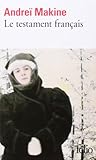
Admiration for Makine's short novel "La Musique d'un vie" in English translation inspired me to embark on the much longer multiple prize-winning "Testament français" in French.
It describes a sensitive Russian boy who spends summers in Siberia with the half-French grandmother Charlotte who regales him with anecdotes of Paris in the years leading up to the First World War. She backs them up with memorabilia from a battered trunk which hold the allure of an Aladdin's Cave for the boy. Unsurprisingly, he grows up with a sense of being split between two cultures, the harsh "reality" of Communist Russia holding less appeal than nostalgic memories of a past France. As a teenager, tired of his peers' mockery of his eccentricity, the boy makes a brief effort to break free from Charlotte's influence, but comes to realise how much he values it. It is a moot point to what extent Charlotte is responsible for nourishing his artistic sense as a writer, or aggravating a degree of mental imbalance.
This novel has a clearly autobiographical basis: following the disappearance of Russian parents, presumed to have been deported, Makine was brought up in Siberia by his half-French grandmother, who filled him with the language and culture of France absorbed from her childhood visits to Paris. After seeking asylum in Paris in his thirties and living on the breadline as a struggling writer, Makine resorted to the pretence that his early novels had been translated from Russian, since publishers would not believe that he could have written with such fluency and feeling in French.
A great admirer of Proust, Makine has imitated his style in "Testament français", which is short on plot, more a series of impressions, feelings and incidents. Particularly in the early chapters, I found the prose pretentious, with a cloying sentimentality. It was hard to believe that a boy of nine or so would be so enthralled by state dinners to welcome the Tsar and his wife to Paris in the 1890s, events about which Charlotte herself must have learned second-hand. And would the boy really have been so entranced by the sycophantic verse of José Maria de Heredia of which eight stanzas are included in the text? I was by turns irritated and bored by the repetition and exaggeration of ordinary images – a faded photo on the back of a newspaper cutting from the early 1900s of three demure young ladies in dark discreet dresses, over which the now teenage boy almost faints with emotion from the experience of mentally insinuating himself into their world, captured by click of the camera's shutter.
The writing seems most real to me when the narrator focuses on his own direct experience without any attempt at imitative artifice. For instance, there is a striking description of a sudden but fleeting storm bursting over the Russian steppe, to be replaced quickly by calm sunshine. He is probably very accurate in describing male obsession with female physical sexuality, although in the process the narrator appears very male chauvinist, to add to his intense self-absorption. The passages describing the sense of wanting to be both Russian and French are often quite powerful, and there are flashes of wry humour and insight. Although most characters apart from Charlotte and the narrator are thinly drawn, there are some vivid portraits, as of his tough, coarse, pragmatic aunt, a typical product and survivor of the Stalin era, unchanged even twenty years after the dictator's death.
Makine is a talented writer, and I shall probably read more of his work, but found this one too much of a chore. There is an English translation entitled "Dreams of my Russian Summers" which loses the point of the original title as revealed at the end.
Admiration for Makine's short novel "La Musique d'un vie" in English translation inspired me to embark on the much longer multiple prize-winning "Testament français" in French. I hope that this review of the original French novel may hold some points of interest for those reading the English translation.
It describes a sensitive Russian boy who spends summers in Siberia with the half-French grandmother Charlotte who regales him with anecdotes of Paris in the years leading up to the First World War. She backs them up with memorabilia from a battered trunk which hold the allure of an Aladdin's Cave for the boy. Unsurprisingly, he grows up with a sense of being split between two cultures, the harsh "reality" of Communist Russia holding less appeal than nostalgic memories of a past France. As a teenager, tired of his peers' mockery of his eccentricity, the boy makes a brief effort to break free from Charlotte's influence, but comes to realise how much he values it. It is a moot point to what extent Charlotte is responsible for nourishing his artistic sense as a writer, or aggravating a degree of mental imbalance.
This novel has a clearly autobiographical basis: following the disappearance of Russian parents, presumed to have been deported, Makine was brought up in Siberia by his half-French grandmother, who filled him with the language and culture of France absorbed from her childhood visits to Paris. After seeking asylum in Paris in his thirties and living on the breadline as a struggling writer, Makine resorted to the pretence that his early novels had been translated from Russian, since publishers would not believe that he could have written with such fluency and feeling in French.
A great admirer of Proust, Makine has imitated his style in "Testament français", which is short on plot, more a series of impressions, feelings and incidents. Particularly in the early chapters, I found the prose pretentious, with a cloying sentimentality. It was hard to believe that a boy of nine or so would be so enthralled by state dinners to welcome the Tsar and his wife to Paris in the 1890s, events about which Charlotte herself must have learned second-hand. And would the boy really have been so entranced by the sycophantic verse of José Maria de Heredia of which eight stanzas are included in the text? I was by turns irritated and bored by the repetition and exaggeration of ordinary images – a faded photo on the back of a newspaper cutting from the early 1900s of three demure young ladies in dark discreet dresses, over which the now teenage boy almost faints with emotion from the experience of mentally insinuating himself into their world, captured by click of the camera's shutter.
The writing seems most real to me when the narrator focuses on his own direct experience without any attempt at imitative artifice. For instance, there is a striking description of a sudden but fleeting storm bursting over the Russian steppe, to be replaced quickly by calm sunshine. He is probably very accurate in describing male obsession with female physical sexuality, although in the process the narrator appears very male chauvinist, to add to his intense self-absorption. The passages describing the sense of wanting to be both Russian and French are often quite powerful, and there are flashes of wry humour and insight. Although most characters apart from Charlotte and the narrator are thinly drawn, there are some vivid portraits, as of his tough, coarse, pragmatic aunt, a typical product and survivor of the Stalin era, unchanged even twenty years after the dictator's death.
Makine is a talented writer, and I shall probably read more of his work, but found this one too much of a chore. There is an English translation entitled "Dreams of my Russian Summers" which loses the point of the original title as revealed at the end.
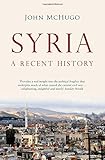
Drawing on firsthand experience of living in Syria, John McHugo has produced an informative analysis of the facts leading up to its tragic civil war. His detailed focus starts in the early twentieth century, just beyond the reach of living memory. When the Ottoman Empire crumbled after the First World War, a critical opportunity was missed to create, under King Faisal who had shown himself to be reasonably competent, an Arab state with the logical boundaries of Greater Syria, now divided between modern-day Syria, Lebanon, Jordan, Palestine, Israel and parts of southern Turkey. Instead, France and Britain were allowed to play imperial politics and carve up the territory along the notorious Sykes-Picot line, agreed in secret and, like too many other Middle Eastern borders, running across territories with no regard for ethnic groupings or geography.
Although McHugo accepts that an independent Arab state established in the 1920s might well have lapsed into tribal and religious conflict, and acknowledges the corruption which has fed unrest, he makes clear the West's part in inadvertently bringing about the current crisis. The disproportionate support for the Israeli cause without ensuring justice for the Palestinians has had complex consequences, such as the provocation of Israel's occupation of Syria's Golan heights, and the influx of Arab refugees into partly Christian Lebanon. This set up explosive tensions which Syria sought to resolve at the cost of antagonising the Palestinian leader Yasser Arafat rather than accept the Achilles heel of a weakened Lebanon through which Israel could attack Syria.
Instead of seeking a comprehensive and statesmanlike approach, the West confined itself to a somewhat blinkered preoccupation during the Cold War with attempts to gain the upper hand over the Soviet Union in the Middle East. "Once America had both Egypt and Israel as its allies as well as friendly relations with numerous other Arab governments….it did not need Syria" – which reacted by obtaining vital arms from Russia.
The author explains Ba'athism as an originally idealistic movement based on the three goals of unity, freedom and socialism – which of course must have been perceived as a threat by some Western powers. Yet when the Ba'ath party overrode elected politicians to gain power, it consolidated its position with nepotism and cronyism, thus undermining its founding ideals and reputation.
McHugh devotes two chapters to Hafez al-Assad, one of the pragmatic, ruthless secular Arab leaders who kept tribal and religious differences in check in the final decades of the C20. His son Bashir al-Assad seems to have attempted a more democratic approach on gaining office, but been driven by the pressure of events to adopt a more brutal and authoritarian approach, with less skill than his father.
McHugh ends on the bleak note that the most likely alternative to a victory by the regime is a descent into warlordism. The recent rise of Isis which has gained influence since the author went to press makes the effects of this anarchic outcome all the more grim. This book may sound like a depressing read at a time when Europe seems to be turning a blind eye to the political and economic chaos on its borders, but it has a positive effect in raising one's understanding of the complex chain of events, and increasing one's respect and sympathy for the Syrian people.
This period drama romance develops a fictitious episode in the life of André le Nôtre, famous landscape gardener employed by the capricious "Sun King", Louis X1V. Le Nôtre (played by Matthias Schoenaerts, at the time of writing a favourite choice for the role of handsome heartthrob) hires Sabine De Barra to add a little artistic chaos to his own formal style, which he senses is not quite enough to guarantee the king's approval for the designs of the gardens at Versailles. Since De Barra's rock garden with fountains ends up looking pretty formal to our eyes, the "chaos" seems to apply mostly to the characters' personal lives.
The course of events is predictable in this film which also seems too long in view of the essential thinness of the plot: 90 minutes might have been better than 117. Apart from the visual beauty of the scenes, the main interest lies in the portrayal of court life, an artificial bubble of luxurious excess, in which the courtiers at times literally dancing attendance on the king seem like pampered children in ludicrously ornate fancy dress, trapped in their privilege since they are free neither to leave the court, nor to express their true emotions, although overt flirtation seems permitted. The main point of suspense is over how De Barra became a widow and lost the young daughter, over whose memory she is obsessed.
I agree with the "professional" reviewers that although Kate Winslet plays De Barra with emotional honesty, the talents of a strong cast of actors are not shown to full effect by the script, pacing and plot. The Hollywood Reporter sums it up well for me by: "This decently acted film is agreeable entertainment, even if it works better on a scene by scene basis than in terms of overall flow."
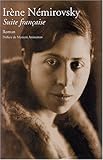
The recent film version prompted me to reread “Suite Française”, in which Part 1, “Tempête en juin” comprises vivid accounts of various Parisians escaping by car or on foot from the feared imminent German invasion of 1940, only to find themselves strafed from the air by enemy fire, or struggling to find adequate bed and board. Irene Nemirovsky’s characters are often stereotypes: the rich are mostly concerned to protect their possessions and status, and rapidly regress under pressure. A wealthy connoisseur of art, his car loaded with carefully packed porcelain, callously steals cans of petrol from a gullible young couple when he runs out of fuel. A pious mother who has encouraged her children to share their sweets with others descends to scolding them for this when she finds there is no food left to buy in the shops en route. The poor with little to lose are often more generous.
Part 2, “Dolce”, the core of the recent film, is much less fragmented, focusing on the effects of the military occupation on the small provincial town of Bussy. While the sight of German soldiers arouses bitter thoughts in the wives and mothers whose men are dead or missing at the Front, the young single girls are rapidly attracted to the soldiers, like moths to a flame, as are the swarms of local children. A complex relationship develops in which the locals resent having to hand over their firearms and horses, but the shopkeepers enjoy the chance to sell goods at inflated prices. The “heroine”, Lucille has led a quiet life, dominated by her wealthy but embittered mother-in-law, Madame Angellier, obsessed by the loss of her son emprisoned in Germany. Lucille has rather more ambivalent feelings about the husband she was pressurised into marrying who has turned out to be unfaithful, openly expressing disappointment that she has proved much less well off than he was led to believe. When Mme Angellier is obliged to billet Lieutenant Bruno Von Falk, Lucille finds herself drawn to an "enemy" she has been instructed to cold shoulder, yet feels drawn to as an individual.
A continual insight in this novel is the way people in war suffer because they are forced to “follow the herd”, losing their individuality in the process. The characters with “finer feelings” share the sense of being consoled by what the put-upon bank clerk Maruice Michaud describes to his wife as “the certainty of my inner liberty….this precious and inalterable gift, which it rests only with me to lose or to conserve..The first thing is to live. From day to day. Endure, wait, hope”.
Irene Nemirovsky, does not flinch from allowing the violent hand of fate to strike down some characters on a fairly arbitrary basis, as was the case for the author herself. Already obliged to wear the yellow star, she was deported to Auchswitz only to be gassed shortly after completion of the second part of her novel. So, the intended five-section, one thousand page French equivalent of “War and Peace” was sketched out but tragically never completed.
Read in French, “Suite Française” has a particularly powerful impact. When writing about the weather, scenery, the rural way of life, animals – especially cats – the author’s lyrical style reminds me of Colette’s. She had the ability to capture and explore people’s internal thoughts, their shifting perceptions and the development of their relationships, often expressed with a wry sense of humour.
Since she cannot have had time to edit it, the work is remarkably coherent and well-developed. The poignancy of her fate casts a shadow over the book as one reads.
Penniless American Mathias Gold, whose baggage is largely that of understandable neuroses, travels to the upmarket Parisian apartment left to him by his estranged father. He is shocked to find that the flat was purchased cheaply on a “viager” or life annuity basis, which means that he has inherited the obligation to pay the previous owner and long-term resident Mathilde a substantial monthly fee for the rest of her natural life. Although aged ninety-two, she seems robust enough to live for quite a few more years. Mathias’s attempts to find the money for the payments in the short run and solve the problem in the long-term, obstructed by Mathilde’s spiky daughter Chloé, form the theme of this bitter-sweet comedy, which turns quite dark at times as Mathias discovers more about his past.
Although this is not a great film, and I was left at the end confused over some aspects of the chronology of past events, it is well acted as one would expect from such luminaries as Maggie Smith, Kristen Scott-Thomas and Kevin Kline. There are some amusing scenes, poignant moments and picturesque shots conveying the ambience of the district of Le Marais au bord de la Seine. For me, this was sufficient to compensate for some of the corny aspects.
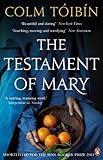
In this novella, Mary the mother of Jesus – although he is never referred to by name – recalls aspects of her son's life, the preaching, miracles and his crucifixion. Her take on events is original, and may offend some believers. It does not trouble me that Tóibín may have altered the order of events and inserted some "inaccuracies" in what is anyway a controversial reality.
According to Mary, the disciples were misfits and her son used his talents to lead them into trouble. She implies that he raised Lazarus from the dead with reluctance, as if he knew it to be a misuse of his powers. Certainly, Lazarus's sister Martha was "afraid that what she had asked for was being granted" and it is clear that Lazarus is unnerved and bewildered by his experience of death, and no one feels at ease with him afterwards, wanting but not daring to ask questions.
Mary perceives her son's talk in public as "high flown" and "riddles, using strange proud terms to describe himself and his task in the world", a kind of manic grandiosity when he describes himself as the Son of God.
Mary describes how, to her abiding shame, she ran from the scene of the crucifixion before her son was dead, to avoid the risk of being captured herself. Afterwards, she is dogged by earnest men, I assume the gospel writers, who wish to extract every word of her first hand testament for posterity. One of them is delighted by her dream of seeing her son raised from the dead, which implies that her memories will be twisted to suit the facts of a new religion, or discarded if they do not fit. Hiding in Ephesus from the authorities who killed her son, Mary is drawn to the goddess Artemis who gives her a sense of release. When her minders assure her that her son has redeemed the world through his death she responds that "It was not worth it".
The prose style is striking, eloquent, often poetical – not the first person "voice" of a simple, illiterate woman living in the middle east two thousand years ago, but rather that of the writer. This had the effect of distancing me somewhat from Mary's grief, although I found the work gripping. It seemed to lose its way a little after the crucifixion, but comes to a clear conclusion.
In my attempt to confirm what the Irish Catholic, at least by upbringing, author meant to convey, I discovered that this book was first produced as a stage monologue, in the Broadway production of which, "Mary is seen smoking what appear to be joints of marijuana and swigging from a commercially labelled liquor bottle". This concerns me as so much of the strength of the piece seems to lie in the quality of prose writing to be read and reflected upon individually, rather than declaimed with dramatic effects. I appreciate that the lyrical style lends itself to being spoken aloud, which may appeal more to some people.
Thomas Cromwell is perhaps best known for the Dissolution of the Monasteries, both to raise money for Henry Vlll and to disband subversive centres of loyalty to the Pope. He also masterminded the legislation required to make the King head of the Church of England and to declare invalid his first marriage to Catherine of Aragon.
Tracy Borman portrays Cromwell as a man of contrasts. He was ruthless in disposing of enemies by "act of attainder" which meant they could be convicted and executed without the right to put their case in court. He used torture to extort a probably false confession that the circle of young men surrounding Anne Boleyn, including her own brother, had been her lovers. Yet when his friend the poet Thomas Wyatt was inadvertently arrested in this affair, Cromwell found the time to reassure and get him released. There is irrefutable evidence that Cromwell took bribes, for instance in return for letting farmers stay on their lands affected by dissolution of religious houses. When enlarging his property at Austin Friars, he moved the garden fences to encroach twenty-two feet on neighbours' land, confident that no one would dare to challenge a rising star in the King's service. Yet he regularly ensured that dozens of poor people were fed at his gate, and often helped friends and acquaintances in trouble.
Largely self-taught, highly intelligent with a remarkable capacity for hard work, Cromwell also possessed a perhaps unexpected wit and charm. In the poisonous, back-stabbing hothouse of the Tudor court where Cromwell was despised for his working class origins as a blacksmith's son, he had to be a tough risk-taker to achieve what he did, although arguably he went too far in frustrating and humiliating his nemesis the mighty Duke of Norfolk. Ostensibly Cromwell's undoing was the unfortunate choice of an unattractive fourth bride for Henry, "the Flanders mare", Anne of Cleves. In fact, he overreached himself in deviating from his usual pragmatism to follow a sincere belief – his continued support for the introduction of Protestantism, one of his main achievements being the installation of an bible in English in a large number of churches. This alarmed a King who was at heart a conventional Catholic (papacy apart) and allowed himself to be convinced that Cromwell was plotting his downfall. Capricious and paranoid with advancing age, "a little over seven months after the former chief minister's execution" the king was heard to reproach his ministers for having persuaded him "upon light pretexts" to execute " the most faithful servant he ever had".
Tracy Borman has made a complex history accessible to those with no prior knowledge, also providing enough fresh detail to hold an informed reader. My sole criticism is the lack of consistency in including some quotations in modern spelling, others in the written anarchy of the day which make them hard to read, together with the way many words have changed in usage. Cromwell's spelling seems particularly mangled: " your most….obbeysand ….subiett and most lamentable seruant and prysoner".
The lukewarm reviews lowered my expectations for a film which proved to be moving, over and above the poignancy of knowing the fate in a Nazi concentration camp that awaited the Jewish author Irène Némirovsky. She lived long enough to see the humiliation of the rapid French defeat in 1940, the brutal German bombardment of the helpless refugees toiling along the main roads out of Paris and the exposure of true character under pressure – some hoarding their wealth, others risking their lives to give what little they had to help others.
The film dramatises "Dolce", the second of the two parts to be completed out of the five intended for "Suite Française". Unlike Part 1, "Tempête en juin", which follows the fortunes of several very different sets of people fleeing the capital, "Dolce" has a tighter storyline. Lucille has led a quiet life, dominated by her mother-in-law, Madame Angellier (a spiky Kristen Scott-Thomas), as she waits for news from the Front of the husband she was pressured into marrying "for security". When the country town of Bussy is overwhelmed by the arrival of the victorious German occupiers, even Mme Angellier cannot refuse to billet an officer. Inevitably, Lucille is caught in the dilemma of being drawn to an "enemy" she has been instructed to cold shoulder, yet feeling obliged to help a neighbour whose stand against an abusive German has put his life in jeopardy.
Many characters may be stereotypes, but we see how the contrasting reactions of resistance, collaboration and passive acceptance are fed by social divisions: the arrogant local Viscountess, who hates the peasants enough to shop one of them to the Germans, with devastating results; the tenant's daughter driven to abject poverty by the rent-grabbing Madame Angellier, who sleeps with an enemy soldier for the material gain it may bring; the townspeople who seize the opportunity to spit at Lucille when they think she is doing the same thing.
The film-makers seem to have found the original climax of the book too subtle, and so spiced it up with a final chain of events which did do not quite "ring true" yet it is overall a thought-provoking, well-acted and atmospheric film which captures a strong sense of the times.