The Gift – Cutting the Gordian knot

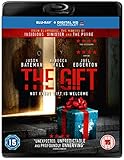
This is my review of The Gift [Blu-ray].

This well-acted psychological thriller, original in its unpredictable plot, manages to build a sense of menace through a threatening atmosphere rather than brutal violence. It is like a subtle version of a Hitchcock film.

In the opening scenes, Simon and Robyn appear to be a happily married, affluent couple in the process of moving into an up-market house in the Californian hills – attractive if you don’t mind the sense of exposure from surrounding trees pressing in on the expanses of floor-to-ceiling windows. A chance meeting with a former schoolmate Gordo, whom Simon does not at first recognise, is the dramatic trigger. As Gordon becomes increasingly intrusive with his uninvited appearances when Robyn is alone, and his over-generous yet unwanted gifts, Simon indulges in very realistic, jokey conversations with their new circle of friends over how to deal with “Weidro Gordo” whereas the more sensitive Robyn feels sympathy for him. Gradually, Simon is revealed as dominant and ruthlessly ambitious, Robyn appears vulnerable, possibly disturbed and dependent on her husband’s protection. How well does she know the man supposedly so close to her, and can she trust him? What is the truth? What makes some people winners and others losers? What exactly is “the gift” of the title?

Although as is often the case, aspects of the denouement are unclear or even implausible, the ending is very effective in leaving matters open to the viewer’s individual interpretation, and even in playing with one’s emotions to switch sympathy in inexpected directions.

A film to which I brought low expectations turned out to be gripping and thought-provoking. I was also interested to note that the excellent actor, Joel Edgerton, who plays Gordo was also writer, producer and projector for the project.

⭐⭐⭐⭐ 4 Stars

The false path to gold for public lavatories

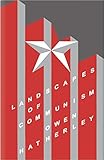
This is my review of Landscapes of Communism: A History Through Buildings by Owen Hatherley.

4 stars for subject matter.

For what might be more accurately called “townscapes", journalist Owen Hatherley presents a detailed, at times indigestible, analysis of Soviet era architecture. Despite limited finances, he managed to roam quite widely with firsthand impressions of cities including Moscow, Berlin, Kiev during the recent demonstrations on the Maidan, the remains of Ceaucescu’s Bucharest, Warsaw, Vilnius, even Shanghai.

Each starting with a relevant quotation, the chapters are themed: the “magistrales” or wide boulevards cut through cities to permit state-orchestrated demonstrations of power; the massive, impersonal to the point of soulless suburban blocks of apartments to house large numbers of workers as fast as possible; “houses of the people” to encourage suitable social activities; palatial metros, some stations ironically built in Moscow at the height of Stalin’s Reign of Terror. There is even a chapter on quirky examples of improvisation: extra rooms tacked onto the sides of high-rise flats, and self-managed tower blocks in New Belgrade like the Genex, resembling two enormous linked grain silos. Themes are set in context by an initial introduction on the nature and aims of Soviet architecture.

I learned a good deal from this book. I had not realised how much Soviet styles varied in a relatively short period and liked Paperny’s useful if simplistic definition of “Culture One” Modernism, dynamic, with horizontal structures, low, long and linear, as opposed to “Culture Two” Stalinist, with its “monumental, solid, massive, immovable” vertical structures. These harked back to past grandeur for the frontages of “people’s palaces”, intended as spacious flats for ordinary workers as in East Berlin’s flagship project, Stalinallee, together with major buildings like Moscow State University with their stepped ziggurats and the “Socialist Realism” of the huge, stylised statues of patriotic workers.

I had not considered how “Utopian Soviet planners” rejected distinct urban quarters as a survival of “obsolete capitalist structures”, so that individuality was only possible through chance variations in a site. Even under Krushchev’s less extreme regime, decrees led to an “International Style” extending between the far-flung borders with Scandinavia, Afghanistan and Japan, with identical standardised plans down to the use of the same mass-produced doorknob.

Ironically, the “social condensers” constructed to provide under one roof a variety of activities to create good socialist citizens often became rare examples of creative, “one-off” architecture, such as Melnikov’s Rusakov Workers' Centre in Moscow.

I accept that for reasons of economy only small, grainy black-and-white photographs are used, but they are often not placed right next to the relevant text. Some buildings, like the famous Dessau-Törten cubic houses of Gropius are described without the inclusion of any photograph at all, which is like a radio programme explaining how to make a complicated origami bird. Hatherley’s prose is a little too leaden to get away with this. Key points may be lost in his verbose and sometimes opaque style. Hatherley’s lack of clarity matters because it is confusing. The omission of the construction dates of many developments discussed is also unhelpful.

Concepts like Modernism and Constructivism need concise definitions, and a glossary of terms (Potemkin village, phalanstery – both very interesting) and architects would have been useful for reference. The book would have been more effective with fewer examples, each with a better photograph and concise text. When I took the trouble to find buildings on Google images, I could understand much better what the author was getting at, but it is cumbersome to read a book in this way.

⭐⭐⭐⭐ 4 Stars

What price honour?

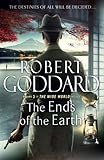
This is my review of The Ends of the Earth: (The Wide World – James Maxted 3) (The Wide World Trilogy) by Robert Goddard.

“The Ends of the Earth” is the third part of a trilogy set in the aftermath of World War One, for which it is strongly advised to read “The Ways of the World” and “The Corners of the Globe” in sequence first . Volume 3 opens with a group of James Maxted’s colleagues and a hired support team waiting in Yokohama for his arrival in order to embark on the dangerous mission of discovering exactly why his father, the diplomat Sir Henry was murdered. James aka Max also has a parallel task of thwarting the activities of the Moriaty-style villain, German spy-master Fritz Lemmer. Skip the rest of this sentence to avoid a spoiler if you have not read the previous two novels: Max’s friends are initially unaware that he was in the process of being murdered in Marseille at the end of Book 2.

The fiendish convolutions of Goddard’s plots are of course a large part of their attraction, but by the end of the second volume I was feeling quite unengaged: a tortuous chain of fairly stock violent episodes were becoming hard for me to want to bother to take in, not to mention the large number of characters of whom to keep track. I was also unimpressed by the author’s device of recapping on past events for Volume 2 by means of a highly condensed secret service report, too clunky and indigestible for my liking. So, I embarked on Volume 3 with no great enthusiasm, but was pleased to find that Goddard has done a better job of triggering memories of past events, by inserting brief reminders at suitable points. Even so, I would have found it useful to have for reference a brief separate summary of each previous volume together with a glossary of characters names and past roles.

Overall, I found this novel to have a sharper and more satisfactory plot than Volume 2, with Goddard’s gift for unexpected twists undiminished, together with crises and tense situations from which escape seems impossible. This story is as far-fetched as required of a mass market thriller, but it is set apart by the interesting detail on early C20 Japan, social, political and geographical – Goddard has taken pains to research Tokyo as it was before the Great Earthquake of 1923. He has also slipped in some Japanese dialogue for good measure. Amongst all the derring do and cliché, the main characters have moments of introspection and insight, so that the novel manages to be moving at times as well as an intriguing page-turner. The somewhat open-ended conclusion appeals to me, although if it leads to a fourth volume, I think the author would have done better to revert to a one-off novel with fresh characters, focussing on a single issue, full of twists, of course.

On reflection, I think Goddard's earlier novels had more depth, but even if his current output is more patchy and commercially-orientated, he is still capable of spinning a good twisty yarn.

⭐⭐⭐⭐ 4 Stars

The Knot of Vipers by François Mauriac: Cutting the knot of vipers

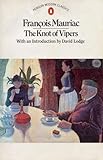
This is my review of The Knot of Vipers (Modern Classics) by Francois Mauriac.

An ageing and embittered miser, Louis is obsessed with his determination to ensure that not a single member of his family inherits a penny of his considerable wealth. Why does he hate his wife and offspring so much? Is he right to believe that he is loathed in return? To what extent is this situation his fault? As Louis’ plans begin to unravel combined with a sense of his mortality, he begins to see life a little differently. Questions arise as to whether people can really change, or is it a case of merely wishing to do so, or even self-delusion?

After a slow start to set the scene and explain Louis’ upbringing and early love for his wife Isa after a childhood and youth of loneliness and isolation, this becomes an intense and gripping psychological study in the context of the snobbish, self-satisfied, devoutly Catholic bourgeois families of the Bordeaux region whom Mauriac does not seem to have tired of dissecting. His flowing prose is a pleasure to read, with his sharp irony contrasting with almost poetical descriptions of the countryside – the smell of burning pines on the air and mists over the vines, timber and wine forming the basis of the economy.

There is a double tragedy at the heart of this novel. Although it may be hard to credit, Louis’ love for his wife is destroyed by his devastation over the discovery that she had a previous lover, even though it was probably only the passing infatuation of a very young girl. His inflexible nature combined with a lack of experience prevent him from adopting a sense of proportion. His inability to “forgive” his wife drives a wedge between them, probably causing her a degree of unhappiness of which he is unaware, and blinding Louis to a love for him she may have had to suppress. Mauriac contrives to make us feel some sympathy for both these characters in due course, if the not for their son and their daughter’s husband.

Mauriac was content to be called “a Catholic writer” and the essence of this novel is that Louis, a freethinking atheist, is repelled by the smug hypocrisy of the Catholic family into which he has married. He is further infuriated by what he sees as his wife’s indoctrination of their children against his wishes, poignantly perceiving this as a way of alienating them from him. Yet Mauriac would have us believe that, despite his flaws, Louis may be more truly spiritual than the rest of them, and if he really is the sinner they make him out to be, he is all the more deserving of “God’s grace”.

Even if the reader is also an atheist, it is possible to find the story moving and thought-provoking. Although most of the characters are unappealing, with a tendency to create their own unhappiness, this novel is not depressing by reason of its psychological insight and the quality of the prose. I prefer this novel to the other two famous works of Mauriac, his favourite “Thérèse Desqueyroux” and “Le Mystère Frontenac” which I believe he wrote as an antidote to the intensely emotional “Knot of vipers” but which seems somewhat bland in comparison.

⭐⭐⭐⭐⭐ 5 Stars

Turkish Mike Leigh

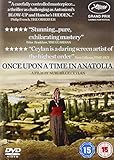
This is my review of Once Upon a Time in Anatolia [DVD].

Three carloads of Turkish policemen with accompanying prosecutor, doctor, diggers and two hand-cuffed prisoners arrested for murder search the bleak Anatolian countryside for the victim’s grave. It is dark, perhaps because the prime suspect has already been leading them on a wild goose chase for some time. Another possible reason is the pure incompetence of the police which often borders on comedy, together with the lack of resources to do their job effectively – this being the complaint of others encountered on the way.

In the course of a night and the following day, we are given an insight into Turkish life. We learn much about the characters’ attitudes through their banter and confidences, and their facial expressions in some fine pieces of naturalistic acting. I was reminded at times of Mike Leigh, in the authentic scenes which could well be based on improvisation. The dialogue is often quite like a stage play, with little action, for which the subtitles are sometimes barely adequate.

My main problem is the extremely slow pace, with the film taking two-and-a-half hours, which would have been transformed for me into a much more powerful work if reduced by at least sixty minutes. Also, vital information on the motive for the murder is delivered so quickly that I had to check the plot summary on Wikipedia to confirm what had happened.

So, although this is a plot with great potential, well-acted with striking photography I cannot give it more than 3 stars.

⭐⭐⭐ 3 Stars

More than a handful of dust

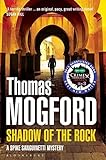
This is my review of Shadow of the Rock (A Spike Sanguinetti Mystery) by Thomas Mogford.

When former school friend Solomon Hassan knocks on his door in Gibraltar, tax lawyer Spike Sanguinetti decides to give him the benefit of the doubt over the charge of murdering his employer’s step-daughter in Tangiers. Spike’s attempt to persuade the Moroccan authorities to drop an extradition charge involves travelling to Tangiers and collecting some of the evidence the police should have found.

The spare style conveys more than many tales of twice the length. Details are gradually revealed without any clunky information dumps, although the novel occasionally reminded me of a travel guide or geography book. The author creates a strong sense of place, which reads as if it is based on first-hand knowledge, drawing interesting comparisons between Gibraltar and Morocco, both on the edge of Europe, separated from it by more than distance. Gibraltar is a historical anomaly, an anachronism is many ways, belittled by the Spanish who call its inhabitants “chingongos” – “ a remote tribe of people who are interbred”. In Morocco, the traditional culture is fractured by some of the less savoury aspects of western influence, with capitalist development involving more than a tinge of exploitation, as typified by Solomon’s employer “Dunetech”, “Powering a Greener Future” amongst the desert Bedouin.

So this pacy thriller with serious undertones might seem calculated to please a wide audience. I would have liked it better with fewer formulaic elements: the hook of a prologue describing a context-free murder made more sinister by the assassin’s calmness and the victim’s lack of fear; the frequent scenes of loveless sex and gratuitous violence which are not essential to the plot, but presumably intended to excite or titillate; last but not least, the use of very short chapters, often only a page or two in length, assuming a sound-bite level of concentration. Some scenes fall flat, or are frankly confusing, suggesting a need to edit more for clarity. It is a pity that all chapters do not sustain the excellence of say, Chapter 11 when in less than four pages we are treated to the sharp contrast of Tangiers, Spike’s wry humour, the incongruous presence of Dunetech “gleaming in the sun as if God had just finished buffing it with his own chamois leather” and the firm’s unappealing Head of Corporate Security Toby Riddell. Perhaps this reflects the author’s previous success as a short fiction writer.

Despite my reservations, this is a page-turner, with reasonably developed main characters and some interesting background issues, the denouement is quite sound and does not disappoint, although it would have been more powerful without the final chapter to spell out what the reader has already deduced..

I may read the next in the series, but not for a while.

⭐⭐⭐⭐ 4 Stars

Turkish Delight

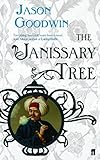
This is my review of The Janissary Tree (Yashim the Ottoman Detective) by Jason Goodwin.

Like many detectives, Yashim is a loner, but it is for the unusual reason that he is a eunuch and therefore somewhat set apart from others and so better-placed to observe events. This makes him invaluable to his employer, the Sultan in 1830s Istanbul, even if the ruler ironically does not fully appreciate his skills.

In the first of what has turned out to be a successful series, Yashim is called upon to solve the murder of a concubine in the closed, sinister world of the harem, but is under greater pressure to investigate the disappearance and bizarre sequential murders of four young army officers.

At first, I was drawn in by the vivid images of Istanbul, by the appealing personality of Yashim, understandably bitter over his state, yet maintaining a wry sense of humour combined with a penchant for cooking mouth-watering dishes. The snippets of history concerning past sultans, the fall of Istanbul to the Turks and the bloody demise of the once influential yet corrupt military Janissaries are quite interesting.

Yet I soon became irritated by the short sound-bite chapters (132 in 329 pages) which seemed to be a device to pad out with digressions a thin plot, often making it quite tortuous and hard to follow in the process. On page 164, I became so disengaged by a chain of implausible dramatic events that I gave up on the book for a while. No serious spoilers intended, but apart from the fact that the author’s descriptions are often quite complicated and unclear, I couldn’t accept the idea of Yashim stopping the advance of a fire by demolishing a house it would seem virtually single-handed – surely the flames would leap across the gap, or simply blast down the other side of the street? Neither could I accept his ability to chase an assassin through crowded alleys on the basis of “magic……..an unreasoned and unexamined knowledge”. While I’m at it, some of the dialogue grated on me in sounding far too modern – more suited to metrosexuals meeting in a London wine bar – not to mention describing a tanning yard as the size of a football field.

When I returned to the novel for the sake of a book group, I enjoyed the second half more, perhaps because the end was in sight. The denouement is quite neat, but some key points seem unduly rushed, and I feel the novel as a whole could have been developed better. I do not plan to spend more time reading other books in the series, yet it is clearly quite popular.

⭐⭐⭐ 3 Stars

St. Agnes’ Stand by Thomas Eidson: Desert yarn

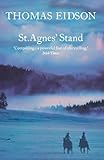
This is my review of St. Agnes’ Stand by Thomas Eidson.

This is not a typical western, even if at first handsome, tough and wily loner, Nat Swanson seems like standard material for the hero of one. As he rides through the desert wastes of New Mexico en route for a new life in California, on the run from a trio bent on avenging the death of a man he has just killed for reasons not fully explained, Swanson comes across two wagons ambushed by Apaches. Haunted by the face of a woman he has glimpsed at a window, he is drawn into offering help, only to find himself trapped in the apparently impossible task of saving a nun convinced he has been sent by God and the companions he has not bargained for, including several vulnerable children.

""The intense heat and wind were playing with the air, making it warp and shimmer over the land." What sets this novel apart from most westerns is the author’s skill not only in capturing a sense of the striking landscape but also in entering into the characters’ minds on both sides, so that we are half-able to identify even with the dilemma of the cunning, brutal Apache leader. Both Swanson and the nun are brought at times to question their actions and beliefs. Most of all, Eidson has a gift for creating a sense of tension, which is evident from the first pages as Swanson looks out for the slightest sign that he is being followed.

In his desire to hold the reader, Eidson does not shy away from images of gratuitous brutality which linger too long in one’s memory, nor from indulging in far-fetched plot twists. Suffering from multiple wounds and exhaustion, how on earth does Swanson manage to scale cliffs and hit targets with his crossbow, let alone carry packs containing blankets and even the luxury of coffee? Yet despite feeling disturbed or irritated by all this, combined with unease over the negative portrayal of the Indians and the dollops of sentimentality which are combined too casually with all the violence, this book is a page turner.

The author describes himself as inspired by a strong oral tradition of spinning yarns, and this tale reminds me of Norse legends, in which there is a thread of morality and spirituality beneath the thud, blunder and exaggeration.

⭐⭐⭐⭐ 4 Stars

Recalling Bellow’s Gift

This is my review of Humboldt’s Gift (Penguin Modern Classics) by Saul Bellow.

A prize-winning author whose creative life is stagnant while his personal life is in a mess, Charlie Citrine is haunted by memories of his former friend and mentor, the brilliant but manic poet Humboldt Fleischer. Humboldt is based on the real-life poet Delmore Schwartz, a one-time colleague of Saul Bellow, to whom Charlie himself bears quite a strong resemblance.

The rambling plot which switches back and forth in Charlie’s mind is mainly a framework for Saul Bellow’s astonishing prose, a mind-blowing stream of consciousness, with punctuation (minus commas between adjectives, an interesting technique). This is leavened by many very funny descriptions and dialogues, which may atone for any irritation over yet another novel by a writer about writers, and for Bellow’s casual cultural references which require everyone who is not an American with an encyclopaedic general knowledge to either break the rhythm of reading to look them up, or remain in ignorance.

The humour also serves as an antidote to Citrine’s philosophical musings about the state of the soul, the existence of an after-life and the decline of American society by the 1970s into consumerism and banality. Citrine’s monologues, which tend to be made more digestible for the reader by frequent mocking or teasing interruptions, generally from female lovers past and present, suggest that his ideas are underdeveloped, even confused. Yet this may be intentional, since Bellow himself seems to have changed his opinions substantially over his long life spent reflecting on the meaning of life.

You may regret that Bellow dissipated his extraordinary verbal talent on such a self-absorbed, self-indulgent, weak, lecherous man as Citrine, although he is redeemed by a self-deprecating sense of humour and a rather appealing ability to understand the viewpoint of those fleecing and manipulating him, and to find a sense of proportion when things get tough. Bellow might of course argue that Citrine is merely a parody of himself, a man whose flaws did not prevent him from producing brilliant prose. So, despite its verbosity, repetition, sometimes woolly thinking, and damp squib conclusion, this original, remarkable work with its stunning descriptions of places, notably Chicago, and people, its wit, interesting ideas, insights and ultimately entertaining plot is worth reading – although you have to take the novel slowly to get the most out of it.

⭐⭐⭐⭐⭐ 5 Stars

“Red Fortress: The Secret Heart of Russia’s History” by Catherine Merridale – Bedevilled by detail

This is my review of Red Fortress: The Secret Heart of Russia’s History by Catherine Merridale.

For enthusiasm and research, Catherine Merridale deserves five stars, but despite having visited Moscow both before and after the collapse of Communism, and been inside the Kremlin, I found this history hard going.

The opening chapters seem padded out, since there is little to say about the rural backwater of Moscow and the wooden fortification of the initial Kremlin when Kiev was the centre of activity for the region. In the later Middle Ages, the political rulers on one hand and religious patriarchs on the other are hard to distinguish, with the exception of Ivan the Terrible who tried without success to interest Elizabeth 1 of England in marriage.

For me, the book begins to come alive from the time of Peter the Great in the C17, through Napoleon’s destruction of Moscow to the impact of Communism and Putin setting out to harness the aura of the “red fortress” to cement his authority. Perhaps this is because it is easier to engage with people and ideas rather than often arbitrarily selected facts about buildings. I accept that this book may be invaluable for students, but for the general reader it is somewhat longwinded with a good deal of dry detail outside the entertaining anecdotes, which makes for a somewhat indigestible potted history.

⭐⭐⭐ 3 Stars