The unremarkable Whitshanks

This is my review of A Spool of Blue Thread by Anne Tyler.

Retired social worker Abby with her eccentric streak and strong sense of justice and her husband Red, owner of a small construction company in Baltimore, have raised four children and now welcome their grandchildren to the fine family house built by Red’s father Junior Whitshank, poor boy made good from the Appalachians, or thereabouts, who coveted it so much that he persuaded his wealthy clients to sell it to him, perhaps using some dubious means to achieve this end.

The opening seems promising, as Abby and Red conduct a Pinterish conversation over how to deal with wayward son Denny’s latest unsettling action: a nocturnal phone call to announce that he is gay. My enthusiasm cooled when nothing comes of this, and each chapter seems like a separate short story, or sequence of anecdotes, laden down with often tedious domestic detail, about what appear, apart from the prickly, often absent drifter Denny, to be an unremarkable middle—class American family with, frankly, no real problems. The twee, folksy style also grated on me, with the overuse of brackets and “house that Jack built” repetition. This may of course be intentional, to chime with the Whitshanks ordinary Americanness. Despite the humour which sets Anne Tyler apart from other celebrated modern writers like Marilynne Robinson and Alice Munro, there was just not enough to hold my interest.

But then, mid-way through Chapter 3 in which the children feel obliged to rally round as Abby develops worrying memory lapses and Red, recovering from a heart attack, is deemed unable to cope with her, Anne Tyler hooks my interest by beginning to let slip a chain of unexpected twists to indicate that all is not as it seems. I even stopped being annoyed by the style, although I swear it sharpens up as the story belatedly takes off. We begin to see how, for all her good intentions, inviting needy and sadly often ghastly people to share family meals without consulting her long-suffering family, she has unwittingly damaged both the child that she loves the most, and the one she has insisted with apparent great generosity on helping. At last, I was able to appreciate the subtle observation of the characters who begin to become more distinct, the irony and moments of sadness beneath the comedy and the telling dialogues.

Anne Tyler takes a risk, which pays off, in giving us the essential story in Part 1, ending Chapter 8, as is often the case, on a note of pathos, only to go back in time to show how Abby met Red, when she was going out with his friend Dane, and how Junior came to marry Linnie Mae, who proves to be much more than the homely, downtrodden figure portrayed at the outset. The author even manages to make us feel a flash or two of sympathy for Junior. In beginning and ending with Denny, the story has a satisfying arc.

⭐⭐⭐⭐ 4 Stars

Smoke gets in your eyes

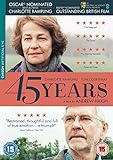
This is my review of 45 Years [DVD] [2015].

Kate Mercer, a self-controlled retired headmistress married to the older and frailer former engineering manager Geoff, combines walks with her dog through the misty Norfolk Broads countryside with preparations for the couple’s forty-fifth wedding anniversary party. A few days before the event, Geoff is understandably shaken to receive a formal letter in German notifying him of the discovery in an Alpine glacier of the perfectly preserved body of Katya, his girlfriend of half a century ago, who fell to her death during their trek through the Alps from Switzerland to Italy. Naturally, vivid memories return from the distant past, prompting him to exclaim aloud over the fact that Katya will be preserved exactly as she was, in contrast to how he has changed.

Kate’s equally strong if largely repressed emotions must surely be more than simple jealousy. Is she distressed by what she suspects or unearths about the true nature of Geoff’s relationship with Katya, or is it that he has misled her, if not exactly lied, and caused her to question how well she really knows him? Does the shock of the event expose long-denied disappointments in the marriage they are about to celebrate? The drama is strengthened by the fact that what is probably the key reason for Kate’s distress is revealed in such a subtle and unspoken way. The understated ambiguous ending also strikes the right note.

Charlotte Rampling and Tom Courtenay are excellent in the leading roles, the filming very naturalistic, creating a strong sense of place, with ordinary members of the public rather than extras in a busy Norwich street scene. Yet as the closing credits rolled I felt a slight sense of disappointment after the glowing critical praise. Perhaps the plot was a little too slight, the pace a little too slow to pad it out to 93 minutes. On reflection, I realised that in addition to the main plot so much about getting older is implied, such as on one hand the sudden crushing realisation of how life might have been different, or one might have made different choices, as opposed to the more positive recall of a past interest or talent which can be resumed, although probably not to the same standard. All this is over and above the

usual frustrations over one’s physical decline or the sense that “everything is going to pot” at one’s former workplace.

In the recent crop of “Marigold Hotel”- type dramas clearly designed to draw grey power audiences, this stands out in a class of its own, although I do not know what younger viewers will make of it.

⭐⭐⭐⭐⭐ 5 Stars

Planning ahead

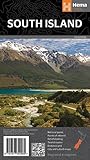
This is my review of New Zealand – South Island r/v (r) hema by Hema Maps Pty LTD.

This robust map designed to cope with continual use shows roads and key landmarks clearly as a vital aid to planning realistic itineraries which is hard with a guidebook or online suggested routes alone. There are also useful street plans for some of the major settlements and maps of popular national parks.

To be more precise, the scale for the overall South Island is 1:1,000,000 or 1 cm represents 10 km. This is adequate to show all the viable roads for route planning. There is a comprehensive index to towns and cities with the grid square reference to locate each one, together with a chart to show the distance by the most direct route between selected main settlements.

On the reverse, there are street plans for Christchurch CBD (Central Business District) and suburbs, Dunedin (ditto) and CBDs for picturesque Picton, Nelson, Blenheim and Invercargill.

Selected national parks are also shown separately at various larger scales than the main map, notably: Fjordland NP (abutting Mount Aspiring NP), Arthur's Pass NP, Kahurangi NP and Aoraki/Mount Cook &Westland Tai/Poutini NP, with some idyllic views to whet your appetite.

Overall, this is an informative and well-designed map, which seems good value for money

⭐⭐⭐⭐⭐ 5 Stars

What comes of reason?

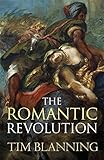
This is my review of The Romantic Revolution by Prof. Tim Blanning.

Although “by its nature, romanticism does not lend itself to precise definition”, this is a coherent and very readable introduction. Blanning even manages to interest a reader like me who finds romantic poetry and art too full of mawkish sentimentality and overblown emotion. My initial aim was simply to understand how romanticism arose as a backlash against the “cold and sterile” rationality of the C18 Enlightenment, which Blanning admits is an over-simplification.

Rousseau with his originality and “insistence on doing everything from the inside”, the “Sturm und Drang” movement in Germany and English poets like Blake and Coleridge all in their various ways attacked the Enlightenment developments of philosophy, science and mathematics as being too concerned with what could be measured and proved. Coleridge criticised rationally educated people who “were marked by a microscopic acuteness, but when they looked at great things, all became blank and they saw nothing”. He suggested that the souls of five hundred Newtons would go to the making up of one Shakespeare or Milton.

John Locke in particular was condemned for maintaining that at birth, the human mind was “white paper, void of all characters, without any ideas”. This seemed to put too much importance on development through the senses, involving social engineering, as opposed to Baudelaire’s view that romanticism lies “in a way of feeling”. It was also a focus on individual creativity from the inside out, which would give free rein to geniuses like “the romantic hero” Beethoven, or more arguably Wagner, who maintained, “Only religion and art can educate a nation – what use is science which analyses everything and explains nothing?”

The Enlightenment was also seen as hostile to history, a clear example of this being the French Revolution with its violence and imposition of a new order, treating society like a system for which the past could be erased.

With the downgrading of organised religion in the C18, art in its various forms could fill the gap, and the exploration of this forms the bulk of the book. Blanning writes of the composers who became the “high priests” of art; the poetic imagination which knows “how like a dream imagination is, how it loves nights, and solitude”, the same being applicable to writers and painters. The fascination with insanity, linked to the idea of “the mad genius” and the interest in folk art, folk dancing and folk songs are also covered. Even landscapes could become romantic, such as the Rhine and the Alps. It is easy to see how all this could feed the nationalism of German or Italian unification, fed by myths of past heroes.

In a final chapter linking to the present, Blanning shows how the force of technological change eventually forced romanticism to cede to modernism, giving the Enlightenment “the last laugh” – yet suggests in a somewhat rushed conclusion that there is now a renewed reaction to the culture of reason.

My only minor criticism is that the author makes too great a demand on the reader by flitting between examples without making the chronology clear. I like his heavy use of well-chosen quotations which create a vivid sense of romanticism in its varied aspects.

⭐⭐⭐⭐⭐ 5 Stars

“Insoupçonnable” by Tanguy Viel – The webs we weave

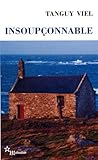
This is my review of Insoupçonnable by Tanguy Viel.

In the opening chapter of this Hitchcockian tale, Sam describes his sister Lise’s wedding to ostentatiously wealthy older man Henri, a successful auctioneer in business with his brother Edouard, unaccountably absent from the proceedings. As soon becomes clear, Sam’s resentment and uneasiness have been stirred up because he and Lise are in fact lovers, with a plan to extort money from Henri to finance a new life together in America. It is clear from the outset that this scheme will not work out as intended, but Tanguy Viel transforms what could have been a hackneyed plot by means of some novel twists.

Having also read “L’Absolue perfection du crime” and “Paris-Brest” by the same author, I soon began to note some common factors despite clearly different plots: they are all short psychological dramas with a male narrator, all involve a crime, and evoke the kind of sea and coastline found in Brittany from where Tanguy Viel originates. All have a strongly visual, cinematic quality. In the last chapter, Sam describes his feeling of being at the cinema with back projection behind a stationary car, even symbolically of his sense of driving a false car round false bends in a false world. In fact, “Insoupçonnable” has been made into a film in France.

The most distinctive factor in Tanguy Viel’s novels is the style, which is a kind of stream of consciousness with thoughts, descriptions, memories, ideas, running into each other in a way that requires total, page-turning concentration, and which only makes sense if you literally “go with the flow”. I understand the reviewer who finds the tendency to repeat phrases a little contrived or pretentious, but I like the rhythmic, at time hypnotic, frequently poetic nature of the style. These comments apply to the original French since I fear it might suffer in translation.

Two aspects prevent me from finding this a “perfect” novel. One is the fact that since the characters are somewhat two-dimensional, we do not really care about them or feel moved on their account: although the author manages to arouse in me a sympathy for Sam despite his actions, we are never told anything about his or Lise’s background, nor what brought them together. It may of course be Tanguy Viel’s intention to make everyone pawns or inscrutable manipulators in a theatrical game which the reader enjoys without any emotional involvement. Also, to the extent that Sam appears to be a semi-educated layabout on the fringe of the criminal world, it seems odd that he can compare Henri with the literary character Charles Bovary, and that he generally speaks in such a lyrical voice, which is of course the author’s, the product of much labour made to look deceptively effortless.

⭐⭐⭐⭐ 4 Stars

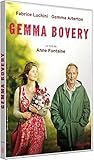
“Gemma Bovery” (2014) – Playing with fate

This is my review of Gemma Bovery (2014).

Although I do not know how close it is to Posy Simmonds’ satirical cartoon strip about English expatriates in rural France on which it is based, this French-British collaboration is an amusing and neatly plotted parody of Flaubert’s famous classic “Madame Bovary” which it is not essential to have read in advance.

Martin Joubert, played by the excellent Fabrice Lucchini, has returned to his picturesque, except in the English-type rain, home village in Normandy to produce mouth-watering bread in the boulangerie inherited from his father. He may have become disillusioned with publishing, but his literary passion for “Madame Bovary” arouses a fascination which will inevitably turn into infatuation, much to his wife’s irritation, when his new neighbour proves not only to be the classic heroine’s virtual namesake “Gemma Bovery”, but also to have a possibly dull husband Charles, and be fatally attractive and fairly soon rather bored. When Gemma, played convincingly by the suitably irresistible (and named) Gemma Arterton, duly starts an affair and buys arsenic-laced poison to get rid of the local fieldmice which invade her cottage, Charles becomes convinced that events are on course to imitate those of Flaubert’s art, and does his frantic, clumsy best to upset them, not always for entirely altruistic motives.

Having seen some quite critical reviews dismissing this as, for instance, “a watchable but sugary snack” of a film, I came to it with low expectations. In fact, I liked the mix of cultural differences and language between the English and French (with subtitles) characters, the frequent humour and amusing variations on Flaubert’s original plot. Ironically, it may even convey to a modern audience better than the novel how, even in secular C21 Europe, a woman may become the victim of her sexual appeal to men.

⭐⭐⭐⭐ 4 Stars

“Return: A Palestinian Memoir” by Ghada Karmi – Telling right from wrong

This is my review of Return: A Palestinian Memoir by Ghada Karmi.

Forced to leave Jerusalem as a child under the 1948 Nakba or Palestinian Exodus, Ghada Karmi felt the need to experience life in one of the semi-independent areas set up on Palestinian soil under the Oslo Accords of the 1990s. In 2005 she moved to Ramallah in the West Bank to worked as a consultant in media and communications for the Palestinian Authority.

As she might have foreseen, this proved to be a privileged sinecure in a closed bubble of complacent bureaucrats and politicians bent on furthering their status and material interests without rocking the boat, of expatriates caught up in romanticised demonstrations against an Israeli occupation which did not affect them personally, and poorly paid junior staff who kept their heads down for fear of losing their hard-to-obtain jobs.

Despite this, she managed to witness examples of ongoing injustice: camps like those in Gaza, “islands of memory in an erased landscape”, increasingly the sole places where isolation and hardship keep the fight for an independent state alive; Qalqilya, a town on the Green Line between pre-1967 Israel and the West Bank, surrounded by a twenty-five foot wall with razor wire and watchtowers ironically reminiscent of a concentration camp, but justified by the need to keep suicide bombers out of Israel and to protect settlers from their Arab neighbours; one of the few farms in Hebron still Palestinian-owned, where the defiant owner agonised over his withered vines, deprived of water by the Israeli authorities which disconnected his piped water supply and blocked his well, as part of the process of connecting the surrounding Israeli settlers.

Ghada Karmi made me realise for the first time how many Palestinians live outside camps, assimilated over time into countries like Jordan and Israel, inevitably resigned to the situation even if it makes them second-class citizens. She portrays the West Bank as a land of self-delusion: there is no sense of solidarity with Gaza, and many bright young people are employed by NGOs, precariously dependent on grants of foreign aid, to produce detailed research reports which remain unused. Likewise, frequent references to the conferences and political initiatives are depressing since we know now they failed to achieve any progress. It all seems like a displacement activity to allow the Israelis to consolidate their displacement of Palestinians. I was also intrigued to learn that middle class West Bank families wish to get their children educated at American universities, undeterred by the irony that it was US support which protected and empowered Israel.

I was interested in the views of Ghada Karmi’s ageing father: when she expresses concern over the apparent increase in traditional Islam as a “retreat into the past” which will “play into the hands of the West”, he counters that it is the West which has armed Israel and left the Arabs “dependent and enslaved” – “Islam is all they have left”. Sadly, this is the closest we get to her sole major omission: an epilogue updating events on the rise of a democratically Hamas and the increase in fundamentalist terrorism in the Middle East.

Although the author comes across at times as a self-absorbed and possibly difficult person, her intellect rises above understandable emotion to provide a revealing and thought-provoking analysis of an ongoing injustice which left me, like her, with a sense of “gut-wrenching despair” which needs to be more widely understood.

⭐⭐⭐⭐⭐ 5 Stars

Timshel – man’s freedom to choose

This is my review of East of Eden (Penguin Modern Classics) by John Steinbeck.

This epic masterpiece reminds me of aspects of Dickens and Hardy applied to God-fearing yet sinful turn of the century California. The opening chapter captures the beauty of the "Eden" of the Salinas Valley where Steinbeck was born. This forms much of the backdrop to the saga of two contrasting families whom Steinbeck uses to develop his ideas on the nature of good and evil, love and hate, beauty and ugliness.

The Hamiltons are close-knit and loving under the influence of their charismatic father Samuel, based on the author's own grandfather, who despite his silver tongue and inventiveness is doomed to poverty because he has only been able to afford a plot of poor land. The Trasks are introspective and repressed, generally unhappy despite their wealth because of their inability to find love. Steinbeck uses them to explore the theme which fascinated him: the story of Cain and Abel which he reinterprets over two generations, dedicating the book to his own two young sons.

The book seems dated in its use of an intrusive and omniscient narrator who tells the reader what to think about the characters, digresses into expounding his views on American society, and at times even lapses into the first person and enters the story as John, the grandson of Samuel Hamilton. These Escher-like shifts in point of view can be justified as part of Steinbeck’s emperimentation as a writer. From a critical angle, one can also find many of the author’s key characters quite implausible, in particular Cathy, introduced from the outset as a monster. She seems to represent the Devil in the novel, and the idea that evil is often an inexplicable force. In describing her manipulative nature, Steinbeck was sadly seeking some catharsis from the break with his second wife. Perhaps because he is intended to be a symbol of goodness, Lee, the impossibly competent and virtuous Chinese servant who saves the Trask family from total collapse and somehow learns to speak like a professor while talking pidgin English since that is what ignorant Americans expect, is also not entirely convincing. Yet he provides not only a good deal of wry humour but also serves, like Samuel, as a mouthpiece for Steinbeck’s philosophising, some of which is fine-sounding hokum.

Despite these reservations, it is easy to understand why East of Eden was an instant and longstanding bestseller. Beneath the gripping plot with all its twists of violence and emotion, made tolerable by comedy and the descriptions of American life a century ago, there are moving passages and some profound insights. A story which in the hands of a lesser writer might have sunk into sentimental soap becomes brilliant because of Steinbeck’s gift for words. Apart from the enjoyment of his dialogues and anecdotes, powerful passages come without warning to stop you in your tracks and demand to be reread: the descriptions of the different types of men who become hobos; even Samuel’s droll eulogy of his ancient horse Doxology “with his feet like flapjacks”; Dessie Hamilton’s musing over Samuel’s insistence on flouting the superstition that white doves bring “sadness and death” – she realises that they do, it is only a matter of time.

⭐⭐⭐⭐⭐ 5 Stars

“The Salt of the Earth” DVD – The all-seeing eye

This is my review of The Salt of the Earth DVD.

Wim Wender’s documentary on the life and work of the Brazilian photographer Sebastião Salgado holds the audience speechless and spellbound by the artistry, beauty yet often bleak evidence of man’s inhumanity in his pictures. Starting with incredible shots, all the more striking for being black-and-white, of miners swarming like ants on ladders to scale the steep, irregular face of a goldmine, the film goes on to show the various stages of his career. The scale of the forested valley and hills round his family’s farm may have formed his love of landscapes, where he has sought out self-sufficient communities, from Amazonia to Siberia, and won their confidence, enabling him to show them living in close harmony with nature. Another of his collections of photojournalism produced with his wife, focuses on different aspects of employment round the world.

A sensitive man, made aware of injustice through the harshness of the authoritarian military regime which forced him and his wife into exile in their youth, he was inevitably drawn to cover the sufferings of those forced by brutal war to become refugees. Uncensored photos of African victims are particularly harrowing, so it easy to understand why he became depressed by man’s capacity for cruelty, and turned to the animal world, with amusing scenes of his dedication, as he and his son roll over stony ground to catch walruses unawares, rearing up to clash their tusks in the misty dawn. “Genesis”, a wide-ranging project “dedicated to showing the beauty of our planet, reversing the damage done to it, and preserving it for the future” includes some breath-taking aerial shots.

With an innate confidence, he has taught himself the craft of different types of photography, aided by his artist’s eye – he explains at one point to his son how a shot will not work owing to the lack of a suitable background or “frame”.

We see the personal cost of his work, with long periods away from his wife who was left with the care of a Downs Syndrome son, while he seemed like a stranger to his older boy in his early years. The restoration of Salgado’s family farm by the replanting of trees to replace the deforestation and erosion is also inspiring – presumably made possible at least partly by his book sales.

His portrayal of the dignity and pathos of displaced people arouses a deep sense of unease over the handling by the West of current migrations into Europe and by our materialism which aggravates the problem, to which there is admittedly no simple solution.

⭐⭐⭐⭐⭐ 5 Stars

The Gift – Cutting the Gordian knot

This is my review of The Gift [Blu-ray].

This well-acted psychological thriller, original in its unpredictable plot, manages to build a sense of menace through a threatening atmosphere rather than brutal violence. It is like a subtle version of a Hitchcock film.

In the opening scenes, Simon and Robyn appear to be a happily married, affluent couple in the process of moving into an up-market house in the Californian hills – attractive if you don’t mind the sense of exposure from surrounding trees pressing in on the expanses of floor-to-ceiling windows. A chance meeting with a former schoolmate Gordo, whom Simon does not at first recognise, is the dramatic trigger. As Gordon becomes increasingly intrusive with his uninvited appearances when Robyn is alone, and his over-generous yet unwanted gifts, Simon indulges in very realistic, jokey conversations with their new circle of friends over how to deal with “Weidro Gordo” whereas the more sensitive Robyn feels sympathy for him. Gradually, Simon is revealed as dominant and ruthlessly ambitious, Robyn appears vulnerable, possibly disturbed and dependent on her husband’s protection. How well does she know the man supposedly so close to her, and can she trust him? What is the truth? What makes some people winners and others losers? What exactly is “the gift” of the title?

Although as is often the case, aspects of the denouement are unclear or even implausible, the ending is very effective in leaving matters open to the viewer’s individual interpretation, and even in playing with one’s emotions to switch sympathy in inexpected directions.

A film to which I brought low expectations turned out to be gripping and thought-provoking. I was also interested to note that the excellent actor, Joel Edgerton, who plays Gordo was also writer, producer and projector for the project.

⭐⭐⭐⭐ 4 Stars