Night Train to Lisbon – Seizing the day

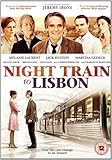
This is my review of Night Train To Lisbon [DVD].

The dull routine of Raimund Gregorius, fifty-something Swiss teacher of classics, portrayed by a suitably disguised Jeremy Irons in baggy jumper and pebble glasses, is transformed by his spontaneous Good Samaritan act of saving a young woman from jumping off a bridge. When she runs away, leaving only her red raincoat, he finds that the pocket contains a train ticket to Lisbon and a book containing the forty-year old writings of a young doctor turned amateur philosopher, Amadeu de Prado.

Everything about this book captivates Gregorious, from the soulful expression in Amadeu’s photograph to his insights: “We leave something of ourselves behind when we leave a place, we stay there, even though we go away. And there are things in us that we can find again only by going back there.” “So, the fear of death might be described as the fear of not being able to become whom one had planned to be.” And so on.

On an impulse, Gregorious takes the train to Lisbon to find out more about Amadeu and his circle of acquaintances. In the process, he becomes ever more aware of the emptiness of his own life in comparison.

Some reviewers of the international bestseller on which this film is based have attacked the “cod philosophy” which clearly expresses the popularised views of the author, an academic philosopher. Apart from the fact that some of this may have suffered in translation from the original German, I agree with those who have argued that the philosophy need not be regarded as the main point. The film is very successful in providing it as a backdrop to a poignant story of how the lives of idealistic young people in 1970s Portugal were disrupted, even destroyed, by the violence and menace of the revolution in which an authoritarian government tried to suppress dissent, to the extent of using torture.

The scenes of Lisbon convey the crumbling appeal of the older parts of the city and the ferry crossing. Apart from a slightly implausible and corny love interest (without giving too much away, does the auburn-haired optician need to be quite so attractive and single to boot?) the film is well-acted with an intriguing and thought-provoking plot, and deserves to be better known.

⭐⭐⭐⭐ 4 Stars

En saisissant les apparences

This is my review of Nympheas noirs by Michel Bussi.

This French detective thriller-cum psychological drama has the alluring setting of Giverny, the location of Monet’s famous garden and, as we are made to reflect, the tourist-ridden village which has become for some inhabitants a kind of prison, or framed picture from which they cannot escape.

The enigmatic opening chapter is from the viewpoint of the anonymous eighty-something widow, the “sorceress” who inhabits one of the real buildings mentioned in the tale, the timber-framed “moulin des Chennevières” which may be seen on “Street View” with its distinctive “donjon” tower. She introduces us in an intriguing prophecy to the three females round whom the story revolves: herself, the talented young eleven-year-old painter Fanette Morelle and the beautiful thirty-something teacher with an interest in art, Stéphanie Dupain.

Much of the tale is concerned with the murder of Jérome Môrval, a wealthy eye specialist, connoisseur of art and serial philanderer whose body is found on the edge of the millstream near the rows of poplars made famous by Monet. This is absorbing with some entertaining sparring between the detective duo of the intuitive, charismatic Laurenç Sérénac, and his painstaking sidekick Sylvio Bénavides, the fascinating nuggets of information about Monet, such as his order for a tree he had commenced painting in the winter to be denuded of leaves by hand so that he could finish the work in summer, and a skilful bamboozling of the reader right up to the final major and highly original twist, which I did not see coming. So, having thought at times that I was reading a kind of French “Midsomer Murders”, the denouement forced me into a radical reconsideration of all that had gone before.

For a non-French reader, this is accessible and enjoyable, with just the right level of idioms and unfamiliar words to give the sense of improving one’s skill in the process of reading a page turner. I trust that the English translation due in June 2016 will capture the features which set this novel apart.

⭐⭐⭐⭐ 4 Stars

Parts much more than the sum of the whole

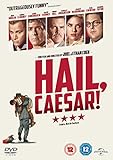
This is my review of Hail, Caesar! [DVD].

The Coen brothers have applied their trademark quirkiness to a parody of Hollywood in the 1950s, a world of glamorous make-believe masking the cynical commercialism of the studio bosses who railroad stars into keeping the show on the road at all costs, with hints of the grim background of kneejerk anti-communist McCarthyism.

The Coens have chosen a lightweight approach so that, without giving much, even any, thought to the underlying tensions and moral dilemmas, one can enjoy the slapstick and nostalgia over corny sets – guitar-strumming cowbow singing a ditty to the moon and mermaid siren emerging from a Busby Berkeley circle of synchronised bathing belles. So, when drunken philanderer Baird Whitlock, super star played by George Clooney is kidnapped, one does not worry about his safety, just as there is no pathos in a single mother star being ordered to undertake a fake marriage to preserve her reputation.

The lugubrious “fixer”, studio manager Eddie Mannix, presides over it all, unable to accept a more tempting job offer in the oil business (likely to involve far less wheeler-dealing), since despite himself he is bound to the role which drives him to chain smoke, instantly converting him when required into an unscrupulous monster of control who will stop at nothing to carry out his boss’s orders. He somehow squares this with his Catholic conscience, only feeling the need to confess “too often” to having broken a promise to his wife to give up cigarettes.

In spite of some entertaining if disjointed scenes, such as a “Nothing like a dame” sailors’ routine to rival Gene Kelly, I felt mostly unengaged, perhaps because the storyline is so fragmented as to disappear at times, the ham acting “on set” seems to extend into “real life” and I did not care enough about the characters, never doubting that it would all end pretty much as it began. It probably helps to know more than I did about the various real characters being parodied, but I suspect that the most positive reviews will come from those who simply enjoyed the entertainment, which surely cannot have been the Coen brothers’ artistic intention.

⭐⭐⭐ 3 Stars

Going where other vacuum cleaners cannot reach

This is my review of iRobot Roomba 620 Vacuum Cleaning Robot.

We purchased the robotic cleaner to get underneath beds. It is effective in removing dust where a conventional vacuum cleaner cannot reach and lifting heavy furniture is a chore. It is good at detecting and avoiding toppling over the top of the stairs, which unfortunately it cannot vacuum. Carpets and tiled floors are left looking clean, although I am unsure how efficient this machine is. It takes a long time – 30 minutes or so – to clean an entire level of house or a flat, and often misses small areas. Does it waste electricity by going over some surfaces with unnecessary frequency, wearing out carpet in the process?

As an aside, it is entertaining to watch it in action. You may like to view the Youtube videos of a cool cat taking a ride on and apparently operating the vroomba as opposed to the dog which barks and growls at but steers well clear of this apparent alien being. It is worth checking there is no soft mess on the floor before switching on the machine, which will otherwise spread it systematically over the entire floor area.

⭐⭐⭐⭐ 4 Stars

Red Angst

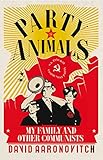
This is my review of Party Animals: My Family and Other Communists by David Aaronovitch.

Born in the 1950s, journalist David Aaronovitch grew up in a bubble of North London Communist Party activists. This book may be of particular interest to someone of about the same age who can recall the impacts of Yuri Gargarin’s space orbits or the Prague Spring, but with events seen oddly through the different end of a telescope. The young David was not allowed to read comics like Beano published by D.C. Thomson, a non-unionised exploiter of labour; he couldn’t be a Cub like his best friend since that would have meant monthly prayers for the Queen and Baden Powell. On the plus side there seems to have been a good deal of jolly socialising and when David’s father Sam fell victim to internal politicking and failed to get promoted as expected in the Party because he was judged “too ambitious”, his contacts with one of the few Communist academics in England enabled him to study for a degree at Balliol College Oxford with Ewan McColl and Peggy Seeger singing at his leaving party.

In an interesting parallel with the radicalism of present day second generation migrants, Sam’s Jewish parents arrived in London just before the passing of the 1906 Aliens Act which restricted right of entry, and the grinding poverty and inequality suffered as a child in the Cable Street area triggered his lifelong passion for the Communist cause.

The book falls into three parts. The first is an account of David’s family life from a political viewpoint up to his own resignation from the Communist Party because membership was deemed incompatible with his BBC journalist role.

The second part deals with the interesting ethical dilemmas on which he came to reflect in later life. This is when he discovered that, although the bugging of comrades’ families by MI5 was often ludicrous and pointless, some had, for instance, helped the atomic spy Fuchs to pass information to the Russians. He was also forced to accept that his own father, so often praised for his brilliance and charm, had in fact attempted to restrict freedom of expression by writers in the name of “political correctness” and advocated Stalinist “socialist realism” to counter the threat of American capitalist culture. This brings the author to speculate how repressive a British Communist Party would have been if it had ever gained power, particularly with so many members’ unquestioning reverence for Stalin as “ the great leader”. David Aaronovitch describes vividly how Communist families and friendships were torn apart when disillusionment drove some to quit the Party over Krushchev’s destruction of Stalin’s reputation in 1956, closely followed by Soviet suppression of the Hungarian Uprising.

The third part reworks the family history to expose on a personal level the hidden truth, which the author only laid bare after his parents’ death. Family psychotherapy sessions recorded under pseudonyms by the famous therapist Skynner, and probably instigated by David’s mother Lavender to remedy his difficult behaviour, in fact revealed the dysfunctional nature of his parents’ marriage. Much of his mother Lavender’s harshness towards him appears to have been displacement activity, not just for her stressful life but also deep unhappiness over Sam’s infidelity. The extracts from her diary and intimate details of marital deception, even violence, may stem from the author’s journalistic necessity to provide supporting evidence but I can understand why the manner and intimate detail of his revelations angered some readers, since they made me feel forced into reluctant voyeurism. What began as a wry take on an unusual family ends up as an exercise in public therapy for the author. This book reminds me of Maxim Leo’s “Red Love” analysing an East Germany family, also thought provoking.

⭐⭐⭐⭐ 4 Stars

Vengeance or wrath?

This is my review of The Revenant by Michael Punke.

I was impressed by the visceral and bleakly beautiful film “The Revenant”, the tale of a man’s survival against the odds in the American wilderness of the 1820s, having being abandoned by the two members of a fur-trapping team paid to care for him after he had been mauled by a grizzly bear. Curious to see how the somewhat ambiguous ending compared with that of the book on which the film is based, I discovered that the written medium gives scope for a much more detailed and complex, in some ways more realistic storyline, which does not need to be padded out with images of the dead Indian squaw who haunts the injured man Hugh Glass’s memory, nor with a murdered son to feed his revenge against the men who wronged him, nor any implausibly long battle with the bear, nor ploys like climbing inside the body of a dead animal, having removed the entrails, for cover. Instead, in addition to the predictable swashbuckling battles with Indians, wolves and the elements, there is also some strong character development, interwoven with details of the history of the period and descriptions of, how, for instance, men could construct “bullboats” out of buffalo hide, sewn together, stretched over frames of willow branches and caulked with grease to provide shallow-draft craft to punt down-river.

A number of characters really existed, including Glass who really survived a bear attack, Bridger who was one of those abandoning him but lived to become a revered pioneer, Ashley who was the ill-fated leader of the Rocky Mountain Fur Company to name only a few. Understandably mainly hostile to the European interlopers, the Indians, some alleged to be cannibals like the fierce Arikara tribe, were a continuous threat, sabotaging the trappers by stealing their horses when not firing arrows. The map of the famous explorer Clark, trained in cartography, “was the marvel of its day, surpassing in detail and accuracy anything produced before it” but when he at last got sight of a copy, Glass was most interested in details added recently which would help him to travel back to his team’s base at Fort Union, and he in turn was “peppered” with questions as to any information he could provide about lengths of rivers between forks and useful landmarks: in this haphazard, painstaking way, vital data was pieced together.

There are some striking descriptions of the landscape: the lone, twisted pine growing from a crack where a seed dropped by a sparrow lodged far above the pines, straight as arrows, used by the Indians to construct their teepees; “the aching presence…magnetic force” of the Rockies, “the snowy mountain peaks, virgin white against the frigid blue sky”

Just occasionally my interest flagged as Glass used his resilience and ingenuity to overcome yet another setback, only to be knocked back yet again by some piece of ill-luck, yet the novel works wells as both an adventure yarn and an insight into why and how the early pioneers risked their lives to develop the west of America.

⭐⭐⭐⭐ 4 Stars

Secret France

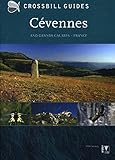
This is my review of Cevennes and Grands Causses – France (Crossbill Guides) by Dirk Hilbers.

This is a well-presented book filled with beautiful pictures of landscapes, wildlife – flowers, butterflies and birds – and picturesque villages and farmsteads with descriptions of the history of religious dissent and decline of traditional industries, Maps and detailed instructions are provided of a number of itineraries travelling by a mixture of driving by car and on foot.

I feel that it is really a book for someone with a deep love and knowledge of the area – say a traveller who wants to follow in the footsteps of Robert Louis Stevenson or keep a souvenir of orchids sought out on a long ramble. There are exhaustive lists of vegetation and wildlife far more detailed than most visitors would ever require. So, the book does not meet my need for a more general overview for a holiday-maker wishing to pass through the area, perhaps spend a few days in the vicinity, visiting the main settlements and most striking landmarks, or most striking walking routes.

⭐⭐⭐⭐ 4 Stars

“Art made tongue-tied by authority”

This is my review of The Noise of Time by Julian Barnes.

This short novel often reads like a biography but consists in fact of fictionalised reflections on the life of the famous Russian composer Shostakovich. The author’s cool, elegant style and rather contrived structure – three sections, like a musical triad, each covering a leap year at twelve year intervals marking some significant event in the composer’s life – tend to distance us somewhat from the main characters. Although Julian Barnes never lets his punctuation slip, the lack of any clear plot and the tendency for paragraphs to flit back and forth in topic and time create a kind of fragmented “stream of consciousness” effect which at first I found quite unengaging, even dull.

The essence of this book, which also turns out to be the best part of it, is the portrayal of what it is like to live in a society where artistic creativity and freedom of expression are censored, so that it is not enough to keep quiet, one has actively to follow the accepted line, but the goal posts keep moving so half the battle is working out what is expected.

In the first part, the innately neurotic but understandably terrified Shostakovich has inadvertently fallen foul of Stalin in 1936 by producing an opera which, as a sycophantic “Pravda” journalist asserts “had only succeeded outside the Soviet Union because it was ‘decadent and …tickled the perverted taste of the bourgeois with its quacks, grunts and growls… and its convulsive and spasmodic nature derived from jazz' ”. So, every night, standing fully dressed with his suitcase by the lift on the landing outside his apartment, the composer awaits the inevitable visit of the secret police.

1948 finds Shostakovich on a plane flying back from New York crushed by the humiliation of being forced to read an official speech extolling the Soviet music system as “superior to any other on the face of the earth” and condemning musicians who persisted in their "belief in the doctrine of art for art’s sake" with particular venom reserved for the "perverted" Stravinsky, who had claimed asylum in the United States. But what mortifies Shostakovich even more is the “suave offensiveness” of the Russian defector to the CIA who grills him without mercy, forcing him to confirm that he “personally subscribes” to every one of the bigoted assertions he has made. Julian Barnes employs the vivid image of a parrot banging its head on every step as it is dragged downstairs by a cat to show how even a famous composer cannot risk expressing his true opinions.

By 1960, Shostakovich is drowning his guilt in the vodka for which he has developed a head, to mask his guilt over having taken the final step of agreeing to join the Communist Party. It is ironical that, at a time when the worst of the terrors seem a thing of the past with the death of Stalin, the composer gives in to constant badgering thus laying himself open to the charge of being Krushchev’s stooge.

This novel is an acquired taste, perhaps including a liking for classical music and some knowledge of recent Russian history, but repays rereading and contains some interesting ideas. I assumed the “Noise of Time” was unmusical cacophony of any discordant age, but it is in fact culled from a book of the same name by the Russian poet. Osip Mandel'shtam.

⭐⭐⭐⭐ 4 Stars

Youth destroyed in the violence of summer

This is my review of La maison Atlantique by Besson Philippe.

We know from the first page that the narrator was orphaned as a teenager, neither of his parents’ deaths being accidental. There is a strong suspicion from the outset of his involvement in causing the tragedy at least in part, but to what extent is he also a victim?

The entire book is a protracted description of the summer he left school as an eighteen-year-old: his domineering alpha male father insists that they spend time together, patching up their differences at the holiday house on the Atlantic coast. This only serves to increase the young man’s resentment, since he associates the place with the time spent there as a child with the loving but lonely mother driven to depression by her husband’s serial infidelities. It is clear that his unresolved “chagrin” or grief will have tragic repercussions the nature of which we cannot avoid trying to predict to the bitter end.

The author displays his skills as a scriptwriter in this short novel of taut, highly controlled two-page chapters. In the clear, precise prose which never misses a beat, he builds up and sustains a sense of tension and threat, moving inexorably to a climax of physical violence all the more shocking after the prolonged pent up psychological rancour. Yet the story is never depressing or tedious. It is often humorous and ironical as it explores in detail the nuances of the main characters’ shifting emotions and motives, all seen of course through the eyes of what may be an unreliable witness as he switches between fly-on-the-wall observation and introspective flashbacks.

Although he is a somewhat unappealing character, with the excuse of having been emotionally rebuffed and neglected by his father, he often shows great sensitivity, as when he describes a failed attempt to recapture a sense of past happiness by looking at some old photographs he took of his mother, unawares. As it so often the case in this novel, this incident operates on several levels: he is writing about nostalgia, about “cet espoir têtu d’arrêter le temps. Cette promesse de conserver ce qui a été pour se le rappeler, plus tard….Cette façon de dire: le bonheur existe, puisqu’il est là, sur les photos.” He is also displaying his intense repressed grief over his mother’s death, and his inability to admit his feelings even to himself, and to come to terms with them.

I would like to read more of Besson’s work, for he seems to be a perceptive and very talented writer who deserves to be better known outside France, although I fear too much of what sets him apart might be lost in translation, just as a film of this book could easily lose the brilliance which lies in the quality of the writing.

⭐⭐⭐⭐⭐ 5 Stars

When a binary choice is needed to deal with a dead friend who has become a conundrum in the abstract

This is my review of The Good Liar by Nicholas Searle.

Roy is an ageing conman, perhaps in denial over his fading appeal as he fails to grasp that his latest prey Betty and her grandson Stephen are not quite what they seem either, and may even be planning to turn the tables on him to avenge some wrong buried in Roy’s murky past.

This is the basis for a potentially gripping psychological drama with a sustained hint of menace as the facts are gradually dripped out through a series of flashbacks. However, after only a couple of chapters I was beginning to sense that I might be wasting my time, unable to resist the fatal temptation to skip ahead or even seek out other readers’ Amazon reviews.

The problem is not that I am put off by characters who are either unlikeable or even dull. It is rather the combination of a banal style which, in its periodic attempts to be literary, is too often overwritten to the point of becoming wooden, some very artificial dialogue and a heavy-handed tendency to pontificate, without the subtle combination of irony, inference, black humour and cliff-hangers of real tension which this kind of novel requires. The frequent use of the present tense does not seem to achieve its usual purpose of creating a sense of immediacy and drama. In short, I could not care enough about what was happening and how it would all end.

⭐⭐ 2 Stars