Still retains a surprising power to grip

This is my review of Au Bonheur des Dames (French Edition) by Émile Zola.

Since I associate Zola with grim, unrelenting tales of exploited coal miners, the theme of a Paris department store dedicated to delighting women seemed at first uncharacteristically tame and frothy. In fact, behind its plate glass and eye-catching displays, “Au Bonheur des Dames” proves to be as dominating and exploitative as any industrial factory, its shop assistants, clerks, packers and delivery men mere cogs in the machinery, as controlled as any industrial worker, on the mass production line of retailing.

Beneath his charm and apparent empathy with women and their love of fashion, inspired entrepreneur Octave Mouret is in fact a cynical manipulator: he is not only a casual seducer, but views his female customers as an inexhaustible captive market to be dazzled by his marketing ploys and all too readily induced to fritter away their husbands’ money on the material goods he displays with such alluring skill. His sponsor Baron Hartmann warns him that one day women will “get their revenge” but Mouret is knocked off course where he least expects it by the sweet, unsophisticated but stoical country girl Denise Baudu, who is quick to grasp that the department store is a part of inexorable progress, but steadfastly sticks to her personal principles.

In vivid if wordy descriptions, Zola describes how the magnificent store looms over the surrounding gloomy alleys, further cutting them out from the sun. These are the haunts of the resentful traditional shopkeepers who persist in their stubborn and ultimately fruitless struggle to survive, when they cannot realistically hope to compete with Mouret’s drastic discounts and huge variety of goods. The scale and brightness of his store, with the light pouring in through glazed roofs, and the Lowry-style bustle on the metal staircases and galleries, as far as the eye can see, creates the idea of a self-contained community, which Zola sometimes calls a “phalanstery” after the C19 ideas of Charles Fourier for a utopian community.

Yet, although the workers are housed and fed in a paternalistic way, the shop is far from utopian: staff are not allowed to have visitors in their rooms, women have to leave when they become pregnant, and in the summer months of slack demand, assistants are dismissed for the slightest imagined misdemeanour. Not surprisingly, they often resort to scams to swindle the store, and the smallest rumour or incident is exaggerated and spread on the gossip grapevine. Although the customers look down on the assistants who must be ladylike without being accepted as ladies, they often behave badly, not merely overspending on luxuries and abusing the “returns” policy, but even resorting to shop-lifting.

Just as the store seems very topical in these times of zero hours contracts, class divides and the ravages of competition, Zola’s characters are real in their flaws and complexity. There are also some moments of comedy amongst the exhausting materialism of the store contrasting with the suffering of the impoverished small shopkeepers.

The novel is best read in French, although the exhaustive lists of specialised fabrics and some of the dated procedures forced me to resort to English translations. These vary a good deal in quality, so it is advisable to check them out before purchase. Some come with interesting introductions, to be read afterwards to avoid spoilers.

⭐⭐⭐⭐⭐ 5 Stars

Still retains a surprising power to grip – in the original French! Beware of poor translations

This is my review of The Ladies’ Paradise (The Ladies’ Delight) – Unabridged by Émile Zola.

I gave this 5 stars in the original French, but found this English version useful only to check a few points, like the names of fabrics!

Since I associate Zola with grim, unrelenting tales of exploited coal miners, the theme of a Paris department store dedicated to delighting women seemed at first uncharacteristically tame and frothy. In fact, behind its plate glass and eye-catching displays, “Au Bonheur des Dames” proves to be as dominating and exploitative as any industrial factory, its shop assistants, clerks, packers and delivery men mere cogs in the machinery, as controlled as any industrial worker, on the mass production line of retailing.

Beneath his charm and apparent empathy with women and their love of fashion, inspired entrepreneur Octave Mouret is in fact a cynical manipulator: he is not only a casual seducer, but views his female customers as an inexhaustible captive market to be dazzled by his marketing ploys and all too readily induced to fritter away their husbands’ money on the material goods he displays with such alluring skill. His sponsor Baron Hartmann warns him that one day women will “get their revenge” but Mouret is knocked off course where he least expects it by the sweet, unsophisticated but stoical country girl Denise Baudu, who is quick to grasp that the department store is a part of inexorable progress, but steadfastly sticks to her personal principles.

In vivid if wordy descriptions, Zola describes how the magnificent store looms over the surrounding gloomy alleys, further cutting them out from the sun. These are the haunts of the resentful traditional shopkeepers who persist in their stubborn and ultimately fruitless struggle to survive, when they cannot realistically hope to compete with Mouret’s drastic discounts and huge variety of goods. The scale and brightness of his store, with the light pouring in through glazed roofs, and the Lowry-style bustle on the metal staircases and galleries, as far as the eye can see, creates the idea of a self-contained community, which Zola sometimes calls a “phalanstery” after the C19 ideas of Charles Fourier for a utopian community.

Yet, although the workers are housed and fed in a paternalistic way, the shop is far from utopian: staff are not allowed to have visitors in their rooms, women have to leave when they become pregnant, and in the summer months of slack demand, assistants are dismissed for the slightest imagined misdemeanour. Not surprisingly, they often resort to scams to swindle the store, and the smallest rumour or incident is exaggerated and spread on the gossip grapevine. Although the customers look down on the assistants who must be ladylike without being accepted as ladies, they often behave badly, not merely overspending on luxuries and abusing the “returns” policy, but even resorting to shop-lifting.

Just as the store seems very topical in these times of zero hours contracts, class divides and the ravages of competition, Zola’s characters are real in their flaws and complexity. There are also some moments of comedy amongst the exhausting materialism of the store contrasting with the suffering of the impoverished small shopkeepers.

The novel is best read in French, although the exhaustive lists of specialised fabrics and some of the dated procedures forced me to resort to English translations. These vary a good deal in quality, so it is advisable to check them out before purchase. Some come with interesting introductions, to be read afterwards to avoid spoilers. This kindle translation is far too literal – hence very stilted and wooden in places. Also, not easy to read in conjunction with French kindle version!!

⭐⭐⭐ 3 Stars

Still retains a surprising power to grip, at least in the original French!

This is my review of Au Bonheur des Dames (The Ladies’ Delight) (Penguin Classics) by Émile Zola.

I gave this five stars in the original French. This English version is quite good and includes an interesting introduction to be read afterwards in the interest of avoiding spoiliers.

Since I associate Zola with grim, unrelenting tales of exploited coal miners, the theme of a Paris department store dedicated to delighting women seemed at first uncharacteristically tame and frothy. In fact, behind its plate glass and eye-catching displays, “Au Bonheur des Dames” proves to be as dominating and exploitative as any industrial factory, its shop assistants, clerks, packers and delivery men mere cogs in the machinery, as controlled as any industrial worker, on the mass production line of retailing.

Beneath his charm and apparent empathy with women and their love of fashion, inspired entrepreneur Octave Mouret is in fact a cynical manipulator: he is not only a casual seducer, but views his female customers as an inexhaustible captive market to be dazzled by his marketing ploys and all too readily induced to fritter away their husbands’ money on the material goods he displays with such alluring skill. His sponsor Baron Hartmann warns him that one day women will “get their revenge” but Mouret is knocked off course where he least expects it by the sweet, unsophisticated but stoical country girl Denise Baudu, who is quick to grasp that the department store is a part of inexorable progress, but steadfastly sticks to her personal principles.

In vivid if wordy descriptions, Zola describes how the magnificent store looms over the surrounding gloomy alleys, further cutting them out from the sun. These are the haunts of the resentful traditional shopkeepers who persist in their stubborn and ultimately fruitless struggle to survive, when they cannot realistically hope to compete with Mouret’s drastic discounts and huge variety of goods. The scale and brightness of his store, with the light pouring in through glazed roofs, and the Lowry-style bustle on the metal staircases and galleries, as far as the eye can see, creates the idea of a self-contained community, which Zola sometimes calls a “phalanstery” after the C19 ideas of Charles Fourier for a utopian community.

Yet, although the workers are housed and fed in a paternalistic way, the shop is far from utopian: staff are not allowed to have visitors in their rooms, women have to leave when they become pregnant, and in the summer months of slack demand, assistants are dismissed for the slightest imagined misdemeanour. Not surprisingly, they often resort to scams to swindle the store, and the smallest rumour or incident is exaggerated and spread on the gossip grapevine. Although the customers look down on the assistants who must be ladylike without being accepted as ladies, they often behave badly, not merely overspending on luxuries and abusing the “returns” policy, but even resorting to shop-lifting.

Just as the store seems very topical in these times of zero hours contracts, class divides and the ravages of competition, Zola’s characters are real in their flaws and complexity. There are also some moments of comedy amongst the exhausting materialism of the store contrasting with the suffering of the impoverished small shopkeepers.

The novel is best read in French, although the exhaustive lists of specialised fabrics and some of the dated procedures forced me to resort to English translations. These vary a good deal in quality, so it is advisable to check them out before purchase.

⭐⭐⭐⭐ 4 Stars

No one above suspicion

This is my review of Exposure by Helen Dunmore.

When ageing Guy Burgess-type lower pecking order spy Guy Holloway is hospitalised after a drunken fall, he burdens his former lover Paul Callington with the task of smuggling a Top Secret file back into his boss’s Admiralty office. Paul has created a new life for himself as devoted husband to Lily and father of three appealing young children. Yet, with his gay past and wife Lily who, when little, came to Britain as a German Jewish refugee, he is vulnerable and exposed to being framed in the sinister, suspicious Cold War world seeping up through fissures in the cosy, law-abiding England of hot Bovril and sliced spam.

As an admirer of Helen Dunmore’s writing, I came to this book with high expectations and so was disappointed by the opening chapters which switch between the three main characters with heavy use of flashbacks, providing a good deal of condensed information about them without really engaging the reader. Later, I realised that the early chapters are merely intended to set the scene for the specific crisis that is the focus of the author’s interest. When she finally “gets into her stride” with this, I was hooked.

Helen Dunmore is excellent at writing about children, and conveying a sense of life in Conservative, pre-Beeching, divided over CND, Soviet spy fearing Britain, with pupils sitting an eleven plus most were expected to fail and able-bodied widowers employing part-time housekeepers to pamper them with apple crumble and Bird’s custard. She also captures Lily’s wary sense from childhood of being an outsider, and her innate fear of being harmed which causes her to take impulsive evasive action, yet also gives her considerable resilience and resolve. Paul’s former relationship with Guy is gradually presented as one of real emotional depth and importance to them both, rather than a temporary fling, or convenient plot device.

Overall, this is an absorbing, well-written and constructed read which reaches a satisfying conclusion – neat, yet with the idea that life will never be the same again for the Callingtons.

⭐⭐⭐⭐ 4 Stars

Dystopian home from home

This is my review of Dheepan [Blu-ray] [2016].

Three Sri Lankans anxious to escape the horror of the failed Tamil Tiger movement for the safety of Europe masquerade as a family unit to gain asylum in France. In what appears to be a shady arrangement, the ex-fighter who has assumed the identity of the deceased Dheepan takes the job of caretaker on an estate of the giant, grim blocks of flats which blight the suburbs of too many French cities, in this case Paris. “Daughter” Illayaal is young enough to grasp French quickly and integrate into school after some initial problems. It is harder for wife “Yalini” who has no idea how to act the part of a mother, and is clearly more drawn to the young gang leader whose disabled relative she cares for, rather than the often moody and humourless Dheepan. A hard worker, he suffers in silence over the murder of his real family, and memories of his lost homeland, symbolised by blurred images of an elephant emerging from a dense mass of quivering leaves.

Apart from showing how the threesome relate to each other and the alien culture into which they are thrown, the film draws a parallel between the unexpected violence and gang warfare of the estate, and the fighting and insecurity from which they have tried to escape.

The acting by genuine Sri Lankans is good, even remarkable in view of the main players’ lack of experience. This, together with the tackling of the fraught topic of immigration may account for the winning of the 2015 Palme d’Or prize. The plot is thought-provoking, there are some moments of subtle direction and I was prepared to tolerate a slow pace and perhaps deliberately unclear “fly-on-the-wall” delivery style provided it built up to some climax. However, this proved to be quite implausible and confusing. It may seem trivial, but I was also distracted by such practical questions as how the “mother” and “daughter” so quickly obtained a variety of good quality western and traditional clothes. How did they get to know the Tamil (?) Sri Lankans with whom they celebrated in a Hindu (?) temple with a communal picnic afterwards, and why didn’t they leave the dangerous estate to live with them? The trite final scene also appears to be quite a grave artistic error, detracting from the work.

⭐⭐⭐ 3 Stars

“Quivering arches…. like awakening longings…. restless as the very soul of man” (Nansen)

This is my review of Aurora: In Search of the Northern Lights by Dr Melanie Windridge.

Fascinated by the mysterious shape-shifting of the Northern Lights which intrigued both local communities and explorers long before they had an inkling of the scientific causes, plasma physicist Melanie Windridge set out to write a popular science-cum-travelogue to explain the phenomenon, visiting Sweden, Norway, Iceland, Canada and Scotland in the process.

The author makes comparisons to twanging elastic bands, strings of pearls or games of cricket to make theories easier to grasp. There is also a good deal of repetition, which can be useful, although I was left confused and frustrated by the fragmented explanation (with often unclear diagrams) of the all important “Dungey Cycle” by which the plasma stream of negatively charged particles from the solar wind interact with the earth’s magnetic field to give some of the most spectacular aurora effects on the night side of the earth. Perhaps I am puzzled over the above because the process is still not fully understood by the experts.

No doubt to achieve a reasonable length and to make the physics more digestible, the text sometimes seems “padded out” with mundane details of encounters, or over-long digressions into, say, the history of photography, but one cannot afford to skip anything. I found my interest unexpectedly caught by, for instance, the history of the Canadian town of Yellowknife, named after the copper blades of the knives carried by the local Dene people. In the series of prospecting rushes for minerals, the town had a belated gold mine open right up to 2003. For decades, the economy has functioned with “ice roads”, literally cleared of snow in order to freeze hard enough to support convoys of lorries, Now that the Canadian government is committed to the construction of the Mackenzie Valley Highway, there is local ambivalence over the inevitable damage to the ecosystem and traditional culture, the price to be paid for access to commercial progress. The focus on Yellowknife is of course due to its proximity to the Arctic Circle where the Northern Lights are most visible at night in the winter months.

Even if I am left unclear over the “aurora oval” and “reconnection”, I have certainly learned a good deal. Seen with the naked eye, the aurora may be much less impressive than the effect to be captured for the same event with a camera. Varying between arcs and “patchy pulsations”, the familiar green of the aurora derives from oxygen electrons which, with lower energy, may appear red: nitrogen molecules emit blue, violet and pink colours. Those who lived through the hundred year period from 1620 which became known as the Maunder Minimum would have seen few auroral displays, which seemed to coincide with a lack of sunspots visible on the surface of the sun. A “coronal mass ejection” or “vast blob of plasma” may be launched from the sun into space at great speed. Organisations like “Swipsie”, the Space Weather Prediction Center are co-operating to invest increasing resources in predicting whether it is likely to “interact with the solar wind ahead of it because this can twist up the magnetic fields and lead to a more severe event on earth”: apart from interference with the operation of satellites, this could involve damaging an electricity grid, or an unusually large and dramatic auroral display.

⭐⭐⭐⭐ 4 Stars

Knowing the cost of war

This is my review of Eye In The Sky [DVD] [2016].

British and American forces combine in the use of cutting-edge technology to locate a band of fundamentalist terrorists, with the aim of capturing them alive to stand trial in their countries of origin, making an example of those with UK or US passports. When this proves impossible, single-minded British Colonel played by Helen Mirren is determined not to let them escape, but what are the moral issues stirred up if they are to be wiped out in a drone attack by a “pilot” activating Hellfire missiles from his base thousands of miles away in the States?

Relying on moments of black humour or poignancy rather than gratuitous violence and mindless action, this at times almost unbearably tense drama presents the arguments on both sides, continually dragging the rug of certainty from under our feet, causing us to vacillate as much as the politicians and lawyers one despises for trying to pass the buck. Although it may not be technically accurate, the film highlights a troubling new aspect of war, in which one side can wreak havoc from an office desk with no personal physical risk, as if playing a computer game set in an alien environment with which one feels no connection, yet may at the same time be confronted by the image of an innocent bystander which one might not encounter as a solder in the adrenalin rush of real action on the ground. My only reservation is whether soldiers trained to be tough killers would be quite as sensitive as some of the characters.

Scoring highly on acting, direction and sets, this film is not only gripping but also provides the basis for in-depth discussion on the most effective and “ethical” use of force against extreme terrorism.

⭐⭐⭐⭐ 4 Stars

The Master by Colm Tóibín: “Playing with vital elements….masking and unmasking himself”

This is my review of The Master (Picador Classic) by Colm Toibin.

In his fictionalised biography of Henry James, Colm Tóibín slides us into the author’s thoughts with no background explanation. The five year period covered is 1895-99, when he was a celebrated author in his fifties, but with many lapses into past memories going back to childhood.

At first, I thought that a full appreciation of the novel would require a detailed knowledge of James’s style, plots and characters and that it would bewilder and bore those who know little or nothing about James. In fact, what turns out to be a subtle and perceptive book, may be enjoyed and admired simply as a portrayal of a sensitive loner who cannot help employing his acute sensitivity to observe others, conjuring stories out of small incidents, yet who goes to great pains to conceal his feelings, and who, despite a sense of loneliness, even loss, ruthlessly steers clear of commitment, even at the cost of destroying the lives of those he has used as source material. Somehow, he generally manages to avoid acknowledging this realisation, just as he represses the expression of his sexuality.

So it is that he uses his beautiful cousin Minnie Temple as a model for several stories, but is chided by his friends for failing to invite her to stay with him in Italy when she is sick and close to death. Did he simply fail to notice her appeal for such an invitation, or refuse to make it because it interfered with his work? Similarly, he enjoys a secret friendship with a female writer, breaking through the defences of her self-contained loneliness, without apparently realising until too late the depth of her need for his presence and love.

James is continually an indecisive mixture of self-delusion and self-knowledge. The book opens with his excitement over the possibility of becoming a playwright: “He foresaw an end to long, solitary days; the grim satisfaction that fiction gave him would be replaced by… voices and movement and immediacy that …up to now he had believed he would never experience”. Yet this alternates with the certainty of failure (as proves to be the case) which would force him to return “willingly and unwillingly, to this true medium”. In such complex and nuanced chains of thought, Tóibín captures a sense of James’s convoluted yet insightful, hypnotic prose, but without making the mistake of concocting wordy, interminable sentences in what would inevitably prove a parody of “the master”.

There are some lighter moments, as Henry James steers his way through a world of gossip. On a visit to Ireland, it is clear that the domineering socialite Lady Wolseley, believing him to be gay, assigns the handsome army corporal Hammond to act as his servant, “smiling strangely” over his apparent satisfaction with the arrangement. The whole issue of the author’s sexuality is treated ambiguously, as it no doubt was at the time.

One of the funniest moments is towards the end when, briefly reunited with his elder brother William, with whom there has always been a degree of sibling tension. William takes him to task for wasting his sharp eye and wide-ranging sympathy on the superficial, class-ridden English whom he can never understand. In an outrageous, misconceived yet telling outburst, he asserts, “I believe that the English can never be your true subject. And I believe that your style has suffered from the strain of constantly dramatizing social insipidity. I also think that something cold and thin-blooded and oddly priggish has come to the fore in your content…I find I have to read innumerable sentences you now write twice over to see what they could possibly mean. In this crowded and hurried reading age you will remain unread and neglected as long as you continue to indulge in this style and these subjects”.

Not always an easy read, this has many brilliant moments.

⭐⭐⭐⭐⭐ 5 Stars

Australian opal of a novel

This is my review of The Shiralee by D’Arcy Niland.

Oppressed by the “captivity” of a job in Sydney, roaring in his ears “with its terrible pandemonious laughter”, Macauley returns to his life on the country roads of New South Wales, leaving his wife alone for long periods with their child. He is a stereotype of the macho Australian male, relishing a punch up or a drink with his mates, but he is also a good worker who has no difficulty finding work on sheep-shearing stations, building sites or sawmills. When he catches his wife in bed with another man, his first impulse is to snatch up his daughter, at least partly in revenge, and take her along on his travels, where she soon becomes a hindrance, a “shiralee” or burden far heavier to bear than his swag. The trouble is that her unshakeable trust in him , dogged affection despite his continual rebuffs and impressive resilience awake his conscience and emotional response to someone other than himself.

Macauley is portrayed as a flawed hero, virtually raping his girlfriend when still in his teens, irresponsibly putting at risk his daughter’s welfare, and neglecting his understandably resentful wife. Yet his basic decency is not in doubt, together with his need to be true to himself. As the old man called the “oracle of the north” assesses: “there’s a lot of good in you, but it’s buried deep and it’s twisted..like a wild animal that has to be coaxed out into the light and tamed…does not come willingly because it is frightened for itself. Don’t lead two lives or both will be unhappy: lead one and lead it well”.

Published in the mid-1950s, this novel has the authentic ring of the author’s own experiences of life as an itinerant worker in his youth. What could be a sentimental and schmaltzy tale is avoided by an often tense and unpredictable chain of events, leavened with wry humour, and the distinctive style which conveys a strong sense of place, often daring in its play with stream of consciousness, as when Macauley recalls his brief attempt to live in the city and unwise decision to marry. The book is worth reading for the raw, fearlessly passionate prose alone, which sometimes goes over the top, untrammelled by any editor.

“The sky was overcast, all in a yeasty motion of sombrous hues ever darkening the earth. The lightning jiggled, sharp and brilliant as a blind shooting up against daylight in a black room. The ground shook with the rumble of tumbling thunder. The wind whuddered across the waste, scattering the roly-poly, not unlike a lot of sheep making a stupid run for it…The rain came with a few big drops, a hesitant rehearsal; then they heard it roaring over the plain, and saw it coming, a wall of grey between sky and earth.”

Recently revived, this novel reminds me of Steinbeck, and deserves to be better known.

⭐⭐⭐⭐⭐ 5 Stars

“Capturing the truth of life …in brushstrokes on the verge of dissolution”

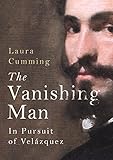
This is my review of The Vanishing Man: In Pursuit of Velazquez by Laura Cumming.

Art critic Laura Cumming has a gift for helping us to appreciate paintings more fully,

She has a particular feeling for “Las Meninas”, the enigmatic masterpiece by Velasquez which mingles “the watchers and the watched”, bringing us, the onlookers into the picture: the Spanish Infanta in a group of maidservants and court dwarves make direct eye contact with us, except that they may in fact be observing the king and queen, glimpsed Arnolfini portrait-style in a background mirror, who may once have stood where we now stand, being painted by Velasquez himself, portrayed with his palette at a huge canvas to one side. His brushlike tapering fingers merging into the brush itself, “no more than a darting streak of white” – “the whole painting has been set in motion by its delicate tip, which effectively vanishes”.

Laura Cummings continually marvels at how often sketchy and thin brushwork when viewed close up, could create such fine detail of clothing with sheen of silk and transparent white collars. Faces are so expressive that they seem alive, startling us with their modernity: the portrait of the misnamed Pope Innocent X disconcerted viewers, as if they were meeting him in the flesh. Philip IV of Spain preferred not to submit to the unflinching truthfulness of Velazquez’s portraits as he grew old, but retained the court painter he had employed as a very young man, although for the last decade of his life Velasquez was promoted to High Chamberlain and seems to have produced relatively few works yet of high quality, including Las Meninas .

Although held in high regard, Velasquez was not free to travel, gaining permission for only two admittedly lengthy visits to Italy, but retained his artistic independence in the convention-ridden Spanish court. His most striking portraits are of ordinary people: the dignified water-seller, realistic drops of liquid trickling down the curved side of a ceramic pot; the old woman frying eggs in which the translucent fluid can be seen in the process of solidifying into white; the dwarves portrayed with dignity; self-assured Moorish assistant who chose to remain with Velasquez despite gaining his freedom; actor Pablo de Valladolid casting his shadow on a void which serves to focus us on his theatrical presence. Ever experimental, the painter even produced an inspiration for impressionism in the outdoor scene of the Medici Gardens, tall cypresses rising above a white cloth draped over a balconied terrace with a crudely boarded-up archway.

Since comparatively little is known about Velasquez, the book often seems padded out with overblown speculation and a detailed sub-plot regarding the obsessive efforts of Reading printer John Snare to gain recognition for the portrait he had acquired of the youthful prince destined to become Charles 1. Whether or not this is a genuine Velasquez, the tale demonstrates how the casual, inconsistent description and classification of paintings together with a lack of x-rays and other dating techniques made it so hard to attribute them accurately until well into the C20, if then. It would of course have helped if Velasquez had signed his work. It is also disturbing to read about the dealer who, having “cleaned up” a “Velasquez” to make it more attractive to a buyer, had it darkened and aged to fetch a better price to suit the tastes of a wealthy alternative bidder.

Although the colour plates are of good quality, the main weakness of a generally fascinating book is the need for more of them, and better cross-referencing with the text, even if this added a little to the price. The small black and white photographs integrated in the text do scant justice to the painter’s work. I had to make a note of some titles of paintings described at length so that I could search for their images on line.

⭐⭐⭐⭐ 4 Stars