This site will share with you hundreds of book and film reviews written since 2009. Also a chance to discuss these reviews together with some of my creative writing to be added.
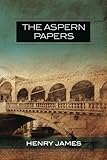
Determined to succeed where his colleague failed, an unnamed editor insinuates himself into the decaying Venetian villa of the ageing Juliana Bordereau. His aim is to obtain by some means the literary treasure he believes her to possess, the papers of her former lover, the long-dead, celebrated poet Jeffrey Aspern. Inspired by scholars’ interest in the letters of Shelley to his sister-in-law Claire Claremont, this novella is a subtle and absorbing psychological study of the destructive and corrupting effects of obsession, and of the complexity of people’s motives, set against the background of a crumbling, magical nineteenth century Venice with which everyone who has visited this city will still be able to identify.
In what James apparently regarded as one of his best works, his famously convoluted prose seems surprisingly clear and accessible, the dialogue is sharp and the descriptions evocative and vivid, as in the description of Venice viewed from a gondola as a series of scenes from a play. I like the way that the narrator made predatory by his obsession is not the only main character to be flawed: the ageing Miss Bordereau is understandably concerned to safeguard her privacy and may wish to provide for her faithful niece’s uncertain future, but proves mercenary and manipulative; Miss Tita may be a longsuffering companion with a sense of honour and duty, but proves not to be above taking the opportunity to exploit her exploiter. I think it might have been even better if the narrator had not appeared so self aware at times, but overall would recommend this as an introduction to Henry James, or in my case a book I have reread with undimmed admiration.
In 1920s Montana, brothers Phil and George devote their lives to running their prosperous cattle ranch. Despite living and working so closely together, even to the point of sharing a bedroom, the two could not be more different. George is stolid, dull, but decent and kind. Phil, a brilliant literary creation apparently modelled on the author’s step-uncle, is a complex, multi-talented man of intriguing contrasts: intellectually brilliant, musical, athletic, skilful with his hands, Phil has not only rejected the glowing career he might have pursued, but insists on wearing the rough clothes of a working man and resists any kind of change, scorning for example the cars which disrupt the flow of cattle to the railhead. For reasons continually implied, but never fully revealed, he has twisted his sensitivity and insight into the winkling out of any weakness in the creatures he hunts: “He knew if a timber wolf was lame, noted the fainter print of the favoured paw in dust or snow. In the sudden elbow of a stream where the baffled water turned upon itself he watched the trout ‘conceal’ itself in the shadow of a rock”. The same applies to those unfortunate enough to cross his path, subjecting them to merciless jibes if the mood takes him. So, when lonely George marries a young widow whom Phil regards as a socially inferior gold-digger, he sets out with typical obsessive patience to destroy her. The tale is bound to end in tragedy, but for whom?
By turns nostalgic, poignant or ironic, this gripping psychological study is very-well constructed so that, on reflection at the sudden unexpected ending, a trail of previous random details reveal themselves as clues and slot neatly into place. All the main characters are fully developed, with a depth and subtlety which even evokes some sympathy for Phil. Digressions on the way are as striking as the main plot, in their vivid descriptions of the terrain, and the portraits of minor characters, such as the Indian, unable to give up his pride over being the son of a chief, who leaves his poverty-stricken reservation without permission in order to show his own son the fertile lands of his youth: “the fields thick with purple lupine that waved and billowed in the breeze like water….the dark gray thunderheads that reared high over the mountains and lumbered like grizzlies across the sky, heavy with water”.
The fact that so much of the novel seems to have been based on Thomas Savage’s own experiences of belonging to a large ranching family gives the book its authenticity. It is a pity that this book was not hailed as a masterpiece when it first appeared in 1967. Perhaps even now that it has been “rediscovered”, too many readers will be put off by the instances of at best cavalier and at worst cruel treatment of animals in the book, starting with a graphic description of castrating calves in the opening paragraph: but this is all part of the reality of a life which the author knew first-hand.
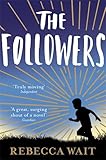
Drifting through life in a state of apathy bordering on depression, single parent Stephanie becomes dominated sexually and mentally by the magnetic Nathaniel who persuades her to join what turns out to be his religious cult, housed in a rundown, isolated moorland property called The Ark. This is much to the disgust of Stephanie’s spiky and perceptive twelve-year-old daughter Judith. Stephanie’s decision contributes to a chain of events leading to a shocking climax.
Following the common device of hooking the reader with a flash forward in the first chapter, we are introduced at the outset to a dysfunctional young adult Judith, reluctantly visiting Stephanie in jail where she is serving what sounds like a life sentence for a crime which has left her daughter understandably emotionally scarred. For quite a large part of the book, I would have preferred not to know this in advance, but was eventually won over by the author’s effective interweaving of “Before” and “After”.
Rebecca Wait is skilful in gradually revealing the chain of events, and in showing us the characters’ personalities and often confused thoughts. I was particularly struck by her portrayal of children, not just Judith on the verge of adolescence, but also those born and raised in the Ark who have been taught to view as an evil “Gehenna” the outside world which they have never experienced, even to the extent of walking down a street or watching TV. The gulf between the two worlds is continually shown through the by turns humorous and poignant interactions between Judith and Moses, the boy of her age who desperately wants to be her friend whilst clinging to the comfort of the beliefs she continually questions.
This is not merely a tension-building, gripping page turner but also a psychological drama exploring such issues as responsibility for one’s actions, dealing with conflicting values and guilt, and the extent of one’s duty to other people. I found the build-up to the climax too melodramatic, but it is arguably only reasonable that at this stage all the adults have become at least a little mad. Even given that Nathaniel had a talent for picking out weak and suggestible people, I was unconvinced that "the followers" would accept so meekly the increasingly erratic and extreme Nathaniel’s religious cant and manipulative ploys, but agree that there are plenty of real-world examples of a never fully explicable willingness to be controlled. It was chilling to read how the children had been conditioned, partly through knowing no other life.
Although most of the characters are insufficiently developed, one could argue that the story has been pared down to make a greater impact, leaving readers free, unlike the "followers", to reflect and draw conclusions for themselves.
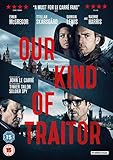
Bored with his job as a lecturer in poetry and perhaps too easily led in his desire for a fresh challenge, Perry holidays in Marrakesh with his high-flying barrister wife Gail, in an attempt to repair their relationship which has been damaged for reasons revealed in due course.
Perry allows himself to fall for the persuasive charms of Dima, a larger-than-life Russian who proves, somewhat improbably, to be a financial wizard who has made himself wealthy yet vulnerable money-laundering for the Moscow mafia. Beneath his hearty exterior, Dima is running scared, aware that he is about to be liquidated, regarded as no longer required but knowing too much by his ruthless Russian boss. In desperation, Dima tries to use Perry to pass to M16 information which will gain him asylum in the UK along with his family. The drama becomes tense as it becomes clear that the only member of British intelligence seriously interested in working with Dima is the maverick Hector, obsessed with the desire to expose high-ranking UK politicians who are colluding with Russian criminals.
The John Le Carré novel from 2010 on which all this is based has proved quite prescient as regards the course events have taken in the post Cold War world. Hence the shots of a London skyline disfigured by excrescences of high-rise property development financed with ill-gotten Russian investment.
The film contains striking photography, excellent acting and some tense scenes with sharp dialogue. It combines nerve-racking drama with the raising of serious issues. Yet it ultimately falls short because in an attempt to spice up what sounds like a plausible book plot, the film script introduces too many unbelievable situations. I was left feeling somewhat irritated: if this film is meant to be taken seriously, it stretches credulity too far.
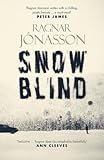
Being a sucker for detective fiction, I was ready to be hooked by this novel set in Siglufjörður, a real but obviously fictionalised small town in northern Iceland. It seems implausible that fresh from police college Ari Thór would leave Reykjavik to accept a post there, without having visited the place or discussed the move with his trainee doctor girlfriend, still less likely that the job would be offered without interview, unless it is very hard to fill. This seems possible in that Ari Thor soon develops misgivings over the isolation of the small town, linked by road to the rest of the world only via a narrow tunnel, together with the apparent lack of any real crime, and the sense of being an outsider heightened by finding himself an instant topic of unbridled gossip in the close-knit community.
Although the book is halfway through before it gains the momentum to become a full-fledged crime mystery, I like the way that Ragnar Jonasson sets the plot against the background of the 2008 financial crisis, referring continually to its implications for ordinary people, and also describes a pattern of life in which Icelanders are often obliged to leave their home towns for work, yet feel drawn back inexorably, partly by the magical beauty of the summers. Although the author writes less than I had expected about the depressing effect of prolonged darkness, he conveys well the claustrophobia created by heavy snowfalls which trap people in their communities. Ari Thór’s immaturity and impulsiveness, his attempts to conceal his inexperience and difficulty in handling his relationships with women all seemed quite convincing and aroused my sympathy.
I suppose this has been called literary fiction because the main characters are developed in some depth, with an attempt to explore their psychology and inner thoughts. The problem for me is that at first there seem to be too many of them, with over-similar “voices”, each revealed in turn in a somewhat indigestible slab of backstory, often involving the traumatic effect of the death of a close relative during the character’s childhood or youth.
Clues are dropped on the way, without being too obvious, and the plot is credible but the “denouement” seems a bit rushed. Also, although the English translation comes across as natural and does not jar, the style tends to be bland and prosaic, so may not do justice to the original.
Scandi-gris rather than noir, this is an easy, entertaining read, with some interesting psychology and a strong sense of place but which lacks tension or striking prose.
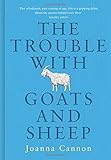
When a middle-aged woman disappears from a suburban road, gossips fear the worst, but her neighbours are embroiled in a rising tide of panic and recrimination as they fear that a guilty secret from the past is about to be exposed. Prompted by the vicar’s sententious platitude that “if God exists in a community, no one will be lost”, bossy ten-year-old Grace and her compliant but underestimated friend Tilly pose as helpful brownies to gain access to neighbours’ homes in order to check whether or not God is there. Quite how this is going to help the situation is never made quite clear.
The story is set in the long, hot summer of 1976 which a number of writers have used as a backdrop to weird goings-on. Despite some novel if overwritten images –– “the sky was ironed into an acid blue, and even the clouds had fallen from the edges, leaving a faultless page of summer above our heads”, “the avenue…bewildered by the heat” – I grew weary of descriptions of the unrelenting drought, but this may have been the author’s intention. The focus on “contemporary accuracy” with references to Harold Wilson and his pipe, “Are you being served?”, “The Good Life”, Patsy Cline singing “Crazy”, “The Drifters” and “Angel Delight” often seems contrived.
At first, the chapters written from Alice’s viewpoint seem the strongest, until the contrast begins to jar between her childishness and some implausibly insightful comments: observing a Mrs Morton she reflects “Early widowhood had forced her to weave a life from other people’s remnants, and she had baked and minded and knitted herself into a glow of indispensability.” In order to drip-feed the reader with the details of what is really afoot in “The Avenue”, Joanna Cannon has to resort to a number of different viewpoints, all in the third person and often involving flashbacks. This often makes the storyline seem fragmented, with the highly stereotyped adults soon becoming tedious caricatures. Trite comments apart, there is a good deal of humour in the book, but the hypocrisy and prejudice of the adults is laid on with many trowels.
As the story labours its way to a surprisingly abrupt and anticlimatic ending, I was probably wrong to be irritated by a number of small errors: the “six week” school summer holiday runs from early July through to September, starting on July 5th, at least a fortnight earlier than I remember to be the case. Dahlias bloom in July alongside freesias – perhaps a quirkish effect of the heat. The persecuted Walter Bishop has several cedar trees in his front garden, something I have never seen outside a stately home. My main problem was being unable to form a clear sense of place – a mental picture of the estate, somewhere a bus ride from Nottingham. At various points, we are told about terraces and a corner shop, but houses in the Avenue have garages and sound detached. Lace-curtained windows of kitchens and “living rooms” both seem to overlook the road plus the houses seem to have “sitting rooms” as well. Here, an alcoholic single mother lives close to a property manager. The neighbours mostly seem to have known each other from childhood but are they working or middle class? You need to know this about a community in the UK. And, although some appear to have jobs, how is it that they all seem able to converge on a dramatic scene at the drop of a hat?
It’s the fantasy land of a children’s story in what purports to be an adult novel. The “genres” are all mixed up but in the end it proves to be a lightweight, by turns sad, funny, sentimental, unsubtle psychological novel. A poignant situation and any sense of real suspense are both blunted by a storyline which descends into tongue-in-cheek parody – to give it the benefit of the doubt – particularly when the neighbours gather in their deckchairs to watch over the creosote image of Jesus which has appeared on a drainpipe.
When a middle-aged woman disappears from a suburban road, gossips fear the worst, but her neighbours are embroiled in a rising tide of panic and recrimination as they fear that a guilty secret from the past is about to be exposed. Prompted by the vicar’s sententious platitude that “if God exists in a community, no one will be lost”, bossy ten-year-old Grace and her compliant but underestimated friend Tilly pose as helpful brownies to gain access to neighbours’ homes in order to check whether or not God is there. Quite how this is going to help the situation is never made quite clear.
The story is set in the long, hot summer of 1976 which a number of writers have used as a backdrop to weird goings-on. Despite some novel if overwritten images –– “the sky was ironed into an acid blue, and even the clouds had fallen from the edges, leaving a faultless page of summer above our heads”, “the avenue…bewildered by the heat” – I grew weary of descriptions of the unrelenting drought, but this may have been the author’s intention. The focus on “contemporary accuracy” with references to Harold Wilson and his pipe, “Are you being served?”, “The Good Life”, Patsy Cline singing “Crazy”, “The Drifters” and “Angel Delight” often seems contrived.
At first, the chapters written from Alice’s viewpoint seem the strongest, until the contrast begins to jar between her childishness and some implausibly insightful comments: observing a Mrs Morton she reflects “Early widowhood had forced her to weave a life from other people’s remnants, and she had baked and minded and knitted herself into a glow of indispensability.” In order to drip-feed the reader with the details of what is really afoot in “The Avenue”, Joanna Cannon has to resort to a number of different viewpoints, all in the third person and often involving flashbacks. This often makes the storyline seem fragmented, with the highly stereotyped adults soon becoming tedious caricatures. Trite comments apart, there is a good deal of humour in the book, but the hypocrisy and prejudice of the adults is laid on with many trowels.
As the story labours its way to a surprisingly abrupt and anticlimatic ending, I was probably wrong to be irritated by a number of small errors: the “six week” school summer holiday runs from early July through to September, starting on July 5th, at least a fortnight earlier than I remember to be the case. Dahlias bloom in July alongside freesias – perhaps a quirkish effect of the heat. The persecuted Walter Bishop has several cedar trees in his front garden, something I have never seen outside a stately home. My main problem was being unable to form a clear sense of place – a mental picture of the estate, somewhere a bus ride from Nottingham. At various points, we are told about terraces and a corner shop, but houses in the Avenue have garages and sound detached. Lace-curtained windows of kitchens and “living rooms” both seem to overlook the road plus the houses seem to have “sitting rooms” as well. Here, an alcoholic single mother lives close to a property manager. The neighbours mostly seem to have known each other from childhood but are they working or middle class? You need to know this about a community in the UK. And, although some appear to have jobs, how is it that they all seem able to converge on a dramatic scene at the drop of a hat?
It’s the fantasy land of a children’s story in what purports to be an adult novel. The “genres” are all mixed up but in the end it proves to be a lightweight, by turns sad, funny, sentimental, unsubtle psychological novel. A poignant situation and any sense of real suspense are both blunted by a storyline which descends into tongue-in-cheek parody – to give it the benefit of the doubt – particularly when the neighbours gather in their deckchairs to watch over the creosote image of Jesus which has appeared on a drainpipe.
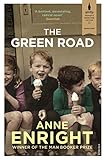
With her by turns staccato and poetic prose, wry wit and Pinteresque dialogues of unfinished sentences which reflect how people both fail to communicate but also do not always need to use words when they have lived together for years and shared common experiences, Ann Enright has an original angle on the well-worn theme of Irish family life.
In this case, the four Madigan children have grown up in a small west coast town close to the beautiful green road “famed in song and story” which runs across the Burren above the beach at Fanore and the Flaggy Shore – all of which can be found on Google images if the lilting names catch one’s interest enough.
The first part, “Leaving” is like a series of short stories, each from the perspective of a different sibling over a span of twenty-five years, with a final focus on Rosaleen, complex, difficult and probably too inconsistent and self-absorbed to be a “good mother”, and arousing a mixture of frustrated love and irritable resentment in her children. Ann Enright seems most authentic when writing about Ireland, which is where Rosaleen and her two daughters have allowed themselves to be “trapped”, all feeling a sense of unfulfilment to which they respond in different ways. “Impossible to please”, “Rosaleen was tired of waiting. She had been waiting, all her life, for something that never happened.”
Ann Enright’s experimental, risk-taking approach does not always work for me, but many observations and passages strike home: as Rosaleen walks along the Green Road in the dark, “a delicacy of stars above her”……….“The sea was huge for her. The light gentle and great. The fields indifferent , as she walked up the last of the hill. Bust she got a slightly sarcastic feel off the ditches, there was no other word for it – sprinkles of derision – like the countryside was laughing at her.”
Rosaleen’s two sons are more pro-active in their quest for an elusive goal, with Dan going “everywhere”, and Emmet “everywhere else” abroad. I was gripped by the strong sense of place and build-up of tension in the drama of aid-worker Emmet’s over-sensitive girlfriend Alice breaking a taboo in Mali by taking a stray dog into their home. Dan’s spell as a lapsed priest flirting with the gay art scene in New York struck me as too contrived, perhaps partly because of the arch tone of the unnamed first person narrator, a device not used elsewhere in the book, partly because it seemed overloaded with caricatures of over-sexed, drugged up young men caught up in an early ‘90s panic over Aids, all based on a woman’s second-hand research of the explicit details of being a male gay.
“Part Two”, “Coming Home” is more of a novella focused on a fraught Christmas reunion. Although, plotwise, not much happens, in terms of sudden sharp insights, comical or poignant situations and brilliant sentences one would love to have written, it is absorbing and demands to be read again.
⭐⭐⭐⭐ 4 Stars
The Green Road: Shortlisted for the Baileys Women’s Prize for Fiction 2016
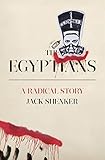
Journalist Jack Shenker embedded himself in the society of ordinary Egyptians before the Arab Spring burst into life, the better to understand the pressures for change. Quoting George Orwell’s exhortation, “Beware my partisanship” in “Homage to Catalonia”, Jack Shenker readily admits that his own book “takes sides”.
The essence of his argument is that global capitalist free market policies, have led to a “neoliberal restructuring” of Egypt which has resulted in a “mass transfer of wealth from the poor and middle classes to the rich and impoverished vast swathes of its citizenry". This has involved western governments, aid organisations, development banks and businessmen in dubious alliances, playing “a key role in both financing and legitimizing Middle Eastern despots including Egypt”. The replacement of Mubarak by Morsi was a cosmetic change which did not alter the fundamental system in that there is clear evidence of repression increasing under the latter. This helps to explain what was inadequately reported in the western press as the somewhat perverse rejection of a “democratically elected” new leader without waiting for him to be voted out. Although it may appear to supporters of greater justice and equality for Egypt that the situation is deteriorating once again under Sisi, Shenker argues that in an admittedly unstable “one step forward, two steps back” situation, Tony Blair’s argument that the revolution has “come full circle”, is “dead”, “failed”, and “officially over”, is too simplistic: local “revolutions” in villages and factories began decades before the famous occupation of Tahrir Square, and are still continuing in a drive for change which will take years. The revolution consists of much more than Tahrir Square which, although clearly a “media-friendly window on Egypt’s turmoil”, was most significant as an example of the creative community action which drives long-term change.
Some will be at odds with Jack Shenker’s rejection of free market capitalism, and find his belief in “Occupy”-style social change a little naïve. They may join with the western leaders who pragmatically prefer the authoritarian control of men like Mubarak or Sisi to the revolutionary chaos of say, Libya which has allowed ISIS to flourish. However, it is evident that the Egyptian developments triggered by western investment including the World Bank, IMF, USAID and European Investment Bank, and often involving the privatisation of state assets, have not “trickled down” to the poor. As described in the Epilogue, the 2015 “Egypt the Future” Conference at the International Congress Centre in Sharm el-Sheikh is cringe-making: Martin Sorrell’s “country branding” seems a world away from the daily reality of bare subsistence, lack of basic amenities, forcible evictions and arbitrary imprisonment for wearing a T-shirt with a subversive motif.
Despite the fascinating subject matter, the prose is often indigestible and repetitive, crying out for a sharp edit. To take at random a couple of interesting points that are explained much better in other sentences: “The Egyptians are a people who abrogate their voice to the stagecraft of procedural democracy”….. “Security forces have exploited tropes of passive femininity to target both men and women attempting to emasculate the former through sexual assaults and reimpose state-centric masculinities in the process.”
Although at times hard-going, this book has made me think. I find myself reflecting on how “neo-liberal” policies have led to zero hours contracts in the UK, and the desecration of the London skyline with tower blocks for absentee foreign investors, yet this of course pales into significance in comparison with the suffering and repression of millions of Egyptians. Examples include the brutal reversal of Nasser's land reforms, the eviction of peasants from their plots and urban dwellers from the unofficial "shanty towns" they have been obliged to construct for themselves, the cynical mass sale of undervalued state assets to the benefit of wealthy Egyptians and foreign investors, projects to divert Nile water to foreign exporting agribusinesses at the expense of farmers seeking to feed themselves and the local community, arbitrary arrest and brutal beatings to discourage dissent, even payment of thugs to rape female protestors, and so on.
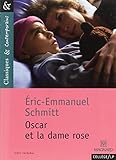
After an unsuccessful bone marrow transplant, ten-year-old Oscar puts the adults in his world to shame by the courage with which he faces the prospect of death. He is scornful of his distraught parents and sharp enough to perceive that his surgeon sees him primarily as an embarrassing and frustrating reminder of his own professional failure. The only “grown up” to offer Oscar some comfort is the eccentric hospital visitor “Mamie Rose”. Her suspect reminiscences of life as a successful wrestler, and the advice that Oscar should try writing letters to God, suggest that she may not be any more honest than the other adults, but combined with her idea of a game by which Oscar could imagine that each day represents a decade of the life (which he will not in reality experience), these ploys both entertain Oscar, and help him to grasp some vital points about living which it can take most of us years to understand, if at all.
Apart from Mamie Rose’s frankly tedious anecdotes, I found it implausible that Oscar would be so insightful about, for instance the “mid-life crisis”, and his romance with another patient, “Betty Blue”, is a bit mawkish at times. The most poignant moment for me occurs when, as a “very old man”, Oscar is struck by the beauty of nature, and realises that each day is to be appreciated as unique.
A philosopher by training, Schmitt uses quirky humour and an original approach to make just about tolerable a parable of how we could make more sense of life, and deal better with death. The focus on a young person’s death makes the situation all the more moving, but has relevance for us all.
Although I disliked this story at first, I was won over by the final pages, and was left with the sense that Schmitt has succeeded in provoking thoughts which stay in one’s mind. I believe this is studied in French schools and judging by reviews, it appeals to young people and is likely to spark discussion.


 Antenna Reviews