If Belphégor could speak

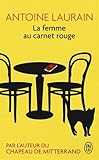
This is my review of La femme au carnet rouge by Antoine Laurain.

When bookseller Laurent finds a mauve handbag, presumably discarded by a thief since it contains neither purse nor phone, the personal possessions it still contains, not least a red notebook of quirky reflections, arouses his interest in the woman who owns it. Through a mixture of persistence, advice from his shrewd teenage daughter and sheer luck, he manages to discover her name, locate her address, even insinuate himself into her life. But will the real woman, perhaps tritely named Laure, live up to the imagined one? Will she be able to forgive an intrusion which has troubled some readers as obsessive to the point of seeming a little creepy?

What is essentially a light, whimsical romance with a somewhat contrived ending has frequent touches of humour or poignancy, and is given depth by some striking passages as when Laurent muses on the relevance to his life of a book title, “La Nostalgie du possible” Can one feel nostalgia for events which have never taken place – regrets for situations in which we are almost sure of not having made the right decision, as in a relationship?

References to real life writers may seem a bit pretentious at times, but I was interested to read about the writer and installation artist Sophie Calle, who may well have inspired this novel’s plot by her habit of following complete strangers without their knowledge in order to produce striking photographs of them. This led to the famous “Suite vénitienne” where she pursed a man to Venice, in a bizarre artistic inversion of male stalking of women.

An enjoyable read in French because of the flowing, musical prose, I would probably enjoy it less in English.

⭐⭐⭐⭐ 4 Stars

Re-entrance to a plauditry

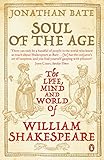
This is my review of Soul of the Age: The Life, Mind and World of William Shakespeare by Jonathan Bate.

Sequenced to follow the seven phases of a man’s life in the famous “All the world’s a stage” soliliquy, chapters takes the form of themed essays.

Readers will be struck by different revelations and insights in the spate of ideas. I realised for the first time that it was the banning of the cycles of medieval mystery plays by the Protestant Reformation which created a vacuum into which Shakespeare could present his new plays, untrammelled by dogma, relatively free to range over a wide range of topics and ideas.

I liked the idea of Shakespeare continually drawing on his Warwickshire roots. So, when culling ideas for “As You Like It” from a prose romance called “Rosalynd”, he turned the forests of the Ardennes into Arden. When insulted for his lowly origins by an educated, now forgotten rival playwright, who called him “an upstart crow beautified with our feathers”, Shakespeare took humorous revenge in “The Comedy of Errors” with a punning dialogue on “breaking in with a crow without feather” that is to say, a crowbar. The exchange is much more entertaining when you know the context.

It was the father of a friend of Shakespeare’s who translated into English details of the universe according to Copernicus, with the sun at the centre. When the accepted belief was in the “necessary correspondence between the order of the cosmos and that of the state”, Shakespeare showed his independence of mind and flexibility of thought in giving humorous irony to to Edmund in “King Lear”:

“when we are sick in fortune – often the surfeits of our own behaviour – we make guilty of our disaster the sun, the moon and stars, as if we were villains of necessity…..My father compounded with my mother under the dragon’s tail and my nativity was under Ursa Major, so that it follows I am rough and lecherous”.

Just before the abortive coup which ended in his execution, the Earl of Essex may have been inspired to sedition by Shakespeare’s Richard II: if Shakespeare had been sent to the Tower for this, great works such as Othello, Lear, Macbeth and the Tempest might never have been written. As it was, eighteen of his major plays which did not appear in print in his lifetime would probably have been lost if two colleagues from the Company of King’s Men to which he belonged had not ensured their publication after his death.

We see Shakespeare daring to experiment with the ideas of Montaigne, exploring a range of philosophies including the Epicurean view, suspected because of its association with atheism: the need to give vent to one’s feelings rather than maintain Stoical patience, for “Sorrow concealed, like an oven stopped, Doth burn the heart to cinders where it is.”

There are gaps in our knowledge of Shakespeare. Was he obliged to steer clear of King James’s court for a while since he had syphilis? Yet we have many remarkable details, such as the amount a colleague left him in his will, the fact that his energy was exhausting, but there was widespread admiration for his “wit” in the widest sense of linguistic talent, humour, imagination and judgement. So, the author’s occasional attempts at surmise seem like unnecessary contrivance.

With his astonishing knowledge of Shakespeare’s life and works, perhaps Jonathan Bate may be forgiven a convoluted style and a weight of detail which is sometimes too much to absorb. This book has helped me to appreciate Shakespeare’s wit and insight, filling me with good intentions to revisit his sonnets, even study some of his plays again.

⭐⭐⭐⭐ 4 Stars

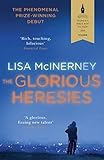
“The Glorious Heresies” – Winner of the Baileys Women’s Prize for Fiction and the Desmond Elliot Prize 2016 by Lisa McInerney. Stab at a female Irish Irvine Welsh?

This is my review of The Glorious Heresies: Winner of the Baileys Women’s Prize for Fiction and the Desmond Elliot Prize 2016 by Lisa McInerney.

“It hit him like a midwife’s slap” is a good line in the Irish idiom, but what would a teenage boy know about midwives? I appreciate the raw energy of Lisa McInery’s style and the sincerity of her portrayal of a group of dead-end Cork-based drug-takers and dealers, prostitutes and criminals, their excuse being poverty in post-financial crash Eire, and a flaky, hypocritical Catholic tradition.

Nevertheless, what is described on the back cover as a “punchy, edgy, sexy, fizzling, feast of a debut novel”, “a gripping and often riotously funny tale”, left me cold. I found the unrelenting sordid violence unrelieved by any of the famous Irish quirky humour or lyrical prose. At one point, when a man is shot, there is no real sense of shock or emotion. It may of course have been the author’s intention to portray death like that in an arcade game, but across the board, characters are not developed in any way that makes me engage with them. Although it did not promise a “happy ever after”, the ending seemed somewhat sentimental.

This is one of those novels which divides readers. Whether or not one likes a novel is always subjective. Some of the most challenging novels the most worth reading are an acquired taste. However, after decades of reading a wide variety of fiction, I may commend this as a debut novel (but why should one make allowances for a first book anyway?) but, as others have said, it is quite long with a shambling plot, and I did not feel it was worth spending the time needed to read it.

⭐⭐⭐ 3 Stars

From Catholic monarchy versus social justice to “bleak chic”

This is my review of The History of Modern France: From the Revolution to the War with Terror by Jonathan Fenby.

Observing the newly restored Bourbon King Louis XVIII’s reluctant choice of ministers, the devious Talleyrand leaning on the arm of brutal Fouché , Chateaubriand described “vice leaning on the arm of crime”. A Christmas Eve dinner during the Prussian siege of Paris in 1871 included, elephant consommé and bear ribs in pepper sauce from slaughtered zoo animals, along with the more mundane stuffed donkey’ s head and roast cat with rats. These entertaining asides spice up Jonathan Fenby’s broad sweep from the ill-fated attempt to restore the monarchy, after Napoleon’s final defeat in 1815, in the shape of the unimaginative, ageing brother of the guillotined Louis XV1, to the economic decline under the unpopular socialist President Hollande, aggravated by terrorist events like the attack on the satirical magazine Charlie Hebdo.

Throughout the book, I kept seeing parallels between past popular revolts and the present unrest: left-wing republicans trying to limit working hours, although the modern-day 35 hours a week was a ten hour day in the Paris of 1848; C19 Parisians uprooting trees to form barricades, and today’s CGT unionists burning tyres outside power stations in protest against legislation to make organisations more competitive, with the irony of a modern socialist government seeming to work on the side of employers. Of course, the paradox of the First Republic of 1848 was far keener, “a reminder of how eminently respectable republicans turned the troops on their own people motivated primarily by the desire for a decent livelihood.”

Jonathan Fenby is most readable when he focuses on particular people or events: the succession of four monarchs, including the well-intentioned “Citizen King” Louis-Philippe, whose approach to reform was too moderate to appease the republican genie let out of the bottle, particularly in 1848, the Year of Revolutions, which perhaps the author could have explained more. Napoleon’s step-nephew (I think, a few family trees would have been useful) managed to hold power for eighteen years as France’s last monarch, and presided over some much-needed economic progress and restoration of national standing, despite being dismissed by Bismarck as “a sphinx without riddles” and criticised for his amoral pragmatism. The humiliation of his loss of the Franco-Prussian War in 1870 is an aspect of the ongoing rivalry between the two countries either side of the Rhine: now, France suffers by comparison with Germany as regards growth rates and trade deficits.

Fenby paints a fascinating portrait of De Gaulle, who comes across as an egotistical dictator, alternating as is often the case between arrogant certainty and melancholy, profoundly ungrateful for the help received from Britain and America, presumably a constant reminder of his own impotence when France was occupied in WW2.

The price of covering so much is a text at times so condensed as to become indigestible and occasionally unclear, particularly in the period 1870-1939 which I found hard going. I accept that forty-two governments between two world wars, with a system resulting in short-lived coalitions, is hard to cover adequately. Fenby tries to aid clarity with subheadings, boxes to feature somewhat arbitrarily chosen individuals, and day-by-day accounts of some key periods of unrest. However, I could have done with a glossary of the large number of players involved, a timeline of key events, plus an explanation of the current French voting system, to avoid the need to refer elsewhere.

Fenby leaves us with a rather bleak picture of a depressed country which despite its sense of being special, has fallen behind as it prefers “to reject economic modernisation in favour of defence of tradition”. Although the Republic has been accepted since 1870 as the regime that divides the French the least, the warring factions remain: “the country invariably opts for right over left with occasional eruptions to prove that the revolutionary legacy is not dead”. I would have preferred more of this kind of an analysis, perhaps a two volume history with a break in 1945, to give more space to develop themes.

⭐⭐⭐⭐ 4 Stars

Loving too much

This is my review of The Disappearance [DVD].

The Morels seem like an ideal family: handsome father Julien Morel runs a Lyon restaurant with his widowed brother and good-looking son, his athletic wife combines a career with caring for the sparky eight-year-old Zoé, and is on good terms with her irresistibly beautiful elder daughter Léa, about to celebrate her seventeenth birthday. All this proves too good to be true, when following Léa’s disappearance after a festival, police investigations combined with Julien’s personal sleuthing reveal that her life was in fact a web of deceit and guilty secrets. Yet, she is not alone in this since, as Detective Molina is driven to exclaim in despair, is anyone in her family telling the truth?

Our interest is held through eight suspenseful episodes, admittedly involving what may be an excessive number of false trails and red herrings. What sets this series apart is its strength as an entertaining psychological drama, with the detailed portrayal of a family in meltdown under the pressure of fear, mistrust, grief and forgiveness – of knowing when to tell the truth rather than lie to protect others, and dealing with the consequences of past actions. The dynamics of the police team is also well-covered, centred on the driven, outwardly brusque but in fact compassionate Molina, who with a vulnerable fifteen-year-old daughter of his own, cannot help identifying with Julien despite his often damaging interference born of desperation.

The drama is gilded with alluring vistas of the sun-drenched, golden classical houses lining the river embankments at Lyon, intriguing shots of steep stone steps leading down to the water, and the leafy shores of the lake in the Tête-d’Or Park where the daytime beauty may mask more sinister nocturnal events.

After so much sustained tension and engagement with the shifting emotions of the main characters, perhaps the denouement inevitably leaves a sense of anticlimax. Although poignant rather than the all-too-often implausibly violent resolution, it was marred for me by a couple of ploys, one overused and the other unconvincing, which were avoidable.

Based, I believe, on a Spanish drama, “Disappeared” reminds me of a series of “The Killing” which explores in depth a couple’s response to the death of a child. If the producers are trying to imitate the success of Scandi-noir, they have done a good job.

⭐⭐⭐⭐ 4 Stars

Neat shopping solution

This is my review of Replacement tri walker / three wheel walking frame shopping bag.

This robust bag with a velcro-fastened flap is easy for an elderly person to use, but takes a lot of strength in the fingers combined with patience in easing the straps in order to to fasten the bag to the frame i.e. it would be better if the straps were a little longer. I imagine many users will need help in attaching or removing the bag.

⭐⭐⭐⭐ 4 Stars

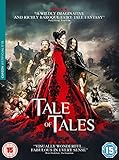
Tale of Tales – Be careful what you wish for

This is my review of Tale of Tales [DVD].

This is Italian director Matteo Garrone’s English language (to reach a wider audience) interweaving of three fables drawn from the Pentamerone, a 17th-century book of Neapolitan folk stories compiled by the Italian poet Giambattista Basile. He provided fodder for writers like the Brothers Grimm, to give a flavour of the macabre streak running through these bizarre tales.

Apart from the quality of the acting, casting of some remarkable faces, and fabulous costumes, the film is worth watching for the superb scenery from remote parts of Italy. There is no need for Jungle Book CGI with the potential to use striking settings like the Alcantra Gorge in Sicily, or the octagonal Castel del Monte in Puglia.

Despite the fairytale characters and magic mixed with implausibility of many scenes, one can still relate to the human emotions, clearly relevant to us now: the dangers of obsession, when a barren queen will pay any price to get a child, or a bored, self-indulgent king puts his fascination for the giant flea he has created before looking after his daughter. Two sisters desire for youth and beauty gets caught up with a sexually rapacious king’s infatuation with the idea of a woman he has only heard singing, glimpsed from a distance.

Classified as “15”, this visually powerful and entertaining (if sometimes gory or violent) film is available to those of an age to appreciate the deeper ethical points beneath the superficially childish storylines.

⭐⭐⭐⭐ 4 Stars

Love and Friendship – Hardened to the justice of general reproach

This is my review of Love & Friendship [DVD] [2016].

This film is based closely on “Lady Susan” the lesser known short, unfinished novel written by Jane Austen when she was only nineteen, and never published in her lifetime. Judging by the film, this differed from her more famous works in its focus on a blatantly outrageous and manipulative anti-heroine who uses her sex appeal and wit to bamboozle men, and to a large extent gets away with it. In today’s world, she could have employed her intelligence, charm and grasp of psychology as an independent, successful career woman, but in Jane Austen’s day an impoverished (it is never explained quite why although it may have been because Lady Susan is clearly a spendthrift) widow with a teenage daughter had little option but to sponge off relatives and seek husbands for them both. Too poor to pay a servant or her daughter Frederica’s school bills, forced to hand over her jewels when unpaid tradesmen shrewdly gang up on her, Lady Susan is obliged to use her wits to find a practical solution, hopefully having her cake and eating it by hanging on to her married lover in the process.

This production reminded me of “Dangerous Liaisons”, with the same kind of cynical amorality. Towards the end, Lady Susan pays the sweet and long-suffering Frederica a rare , inevitably backhanded compliment: “My daughter has shown herself to be cunning and manipulative – I couldn’t be more pleased.” In fact, this self-absorbed woman, unable to admit to any personal faults except as some kind of virtue or wholly reasonable behaviour, is trying to make the best of a situation she has for once failed to submit to her total control.

The dialogue is wordy, but quick-fire and funny, often more explicitly acid and less subtle than I recall Austen as being, perhaps because she did not write much actual speech in what was in fact an “episotolary” novel, consisting of an exchange of letters. Yet some of the best barbed comments have been culled word-for-word from the original: “My dear Alicia, of what a mistake were you guilty in marrying a man of his age! Just old enough to be formal, ungovernable, and to have the gout; too old to be agreeable, too young to die.” Or, “where there is a disposition to dislike, a motive will never be wanting.”

Leaping from one scene to the next, and leaving a certain amount implied and left to the viewer’s imagination, the production often feels disjointed, but at least this gives it some pace. Skilfully acted and visually beautiful, the film is highly entertaining, but did not impel me to do more than download free the original novel which I suspect will remain unread while the well-dramatised plot is still fresh in my mind.

⭐⭐⭐⭐ 4 Stars

Si tu savais tout ça, tu ferais quoi?

This is my review of La liste de mes envies (Littérature française) (French Edition) by Grégoire Delacourt.

“How can you do such a disgusting job – I work in advertising – and write such lovely books?” This sentence in the gushing postscript to the French version of this short novel explains the growing sense of unease I had experienced when reading it. This story is a marketable product pitched at female readers by an author with a knack for adopting the “voice” of “ordinary”, admittedly somewhat stereotyped, women, and for identifying an intriguing situation on which to build a bitter-sweet scenario.

In this case we have Jocelyne, owner of a small haberdashery in Arras, slipping into slightly overweight middle age with the dull and on occasion boorish husband she still seems to love, with two now adult children who have “flown the nest”. She seems to have had more than her fair share of misfortune: the loss of her mother and her father’s onset of illness when she was still a teenager put paid to her youthful ambitions, leaving her with low self esteem and a nagging sense of having made too little of her life. Into this rather unpromising situation falls the bolt from the blue of a huge lottery win, raising the dilemma we all share as to how we would spend this, if given the chance. Jocelyne’s periodic “wish lists” – progressing from “a lamp for the hall table” to “spend a fortnight in London with my daughter”, highlight the common inability to think on a grand enough scale, particularly if one is accustomed to put one needs second. Eventually, she only lists a Porsche as a “folly” that will please her husband.

There are some interesting aspects to the story: her fear that the money will destroy what is good in her life, her awareness that the most valuable things in life cannot be bought with money, that the planning of purchases over time can be more satisfying than a huge spending spree, money no object. The presumably intentional irony is that her knitting and sewing blog which costs nothing does more good in the world than the huge cheque she has won. Is it also intentional irony that the man she loves is so unworthy of her devotion, or are we meant to think that love itself is simply what counts more than money?

In the end, the novel disappoints by proving too shallow and sentimental, aptly described by the wonderful French word “guimauve” – marshmallows and mushiness. The two main male characters – husband and shadowy male love interest – are both too underdeveloped to be convincing and the plot drifts to a limp and disappointing ending.

⭐⭐⭐ 3 Stars

Be careful what you wish for

This is my review of My Wish List by Gregoire Delacourt.

“How can you do such a disgusting job – I work in advertising – and write such lovely books?” This sentence in the gushing postscript to this short novel explains the growing sense of unease I had experienced when reading it. This story is a marketable product pitched at female readers by an author with a knack for adopting the “voice” of “ordinary”, admittedly somewhat stereotyped, women, and for identifying an intriguing situation on which to build a bitter-sweet scenario.

In this case we have Jocelyne, owner of a small haberdashery in Arras, slipping into slightly overweight middle age with her dependable but dull and on occasion boorish husband, with two now adult children who have “flown the nest”. She seems to have had more than her fair share of misfortune: the loss of her mother and her father’s onset of illness when she was still a teenager put paid to her youthful ambitions, leaving her with low self esteem and a nagging sense of having made too little of her life. Into this rather unpromising situation falls the bolt from the blue of a huge lottery win, raising the dilemma we all share as to how we would spend this, if given the chance. Jocelyne’s periodic “wish lists” – progressing from “a lamp for the hall table” to “spend a fortnight in London with my daughter”, highlight the common inability to think on a grand enough scale, particularly if one is accustomed to put one needs second. Eventually, she only lists a Porsche as a “folly” that will please her husband.

There are some interesting aspects to the story: her fear that the money will destroy what is good in her life, her awareness that the most valuable things in life cannot be bought with money, that the planning of purchases over time can be more satisfying than a huge spending spree, money no object. The presumably intentional irony is that her knitting and sewing blog which costs nothing does more good in the world than the huge cheque she has won. Is it also intentional irony that the man she loves is so unworthy of her devotion, or are we meant to think that love itself is simply what counts more than money?

In the end, the novel disappoints by proving too shallow and sentimental, aptly described by the wonderful French word “guimauve” – marshmallows and mushiness. The two main male characters – husband and shadowy male love interest – are both too underdeveloped to be convincing and the plot drifts to a limp and disappointing ending.

⭐⭐⭐ 3 Stars