Less is more

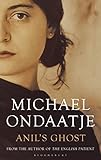
This is my review of Anil’s Ghost by Michael Ondaatje.

Having left Sri Lanka to train in the West, forensic anthropologist Anil Tissera has been selected by an international human rights group to investigate possible atrocities committed by the Sri Lankan government in its attempt to control insurgents in the north and separatist guerrillas in the south. This involves working with Sarath Diyesena, the enigmatic archaeologist whom she is unsure how far to trust, because one of his relatives may be a government minister. For whatever reason, he discourages her from reading too much into the skeleton nicknamed “Sailor”, which she is convinced belongs to a recent victim, hidden amongst older human remains at a site not open to the public. Admittedly, there are some grounds for Sarath’s cynicism over short-term visitors from the West who, based in luxury hotel rooms, make casual assumptions about the country, distorted by “false empathy and blame”. “I’d believe your arguments more if you lived here,” he tells her. “You can’t just slip in, make a discovery and leave”.

The opening chapters led me to expect a political thriller in the mould of Graham Greene, but since the author is in fact more of a poet than a novelist, the narrative drive, which has a low priority for him, soon splinters into a disjointed, sometimes dreamlike sequence, swerving back and forth in time, between different viewpoints. These include: Sarath’s brother Gamini who has become obsessed with caring for war casualties, high on the drugs he needs to keep himself going; Ananda, sometime painter of eyes on the face of carved Buddhas; Palipani, translator of ancient scripts and rock graffiti who seems to have ruined his reputation by fabricating a text, when in practice perhaps he had found “hidden histories intentionally lost”, a parallel for the suppression of truth in the recent history of Sri Lanka.

I appreciate that a stream of consciousness may reveal more about the complex interweaving of culture and individual relations in the real-life struggles of a war-torn country than a straightforward documentary approach, but I found this book hard-going, mainly because of the written style. I assume that Ondaatje undertook impressive reseach of, for instance, forensics and medical practice, but this tends either to be presented in rather unnatural dialogue and passages of condensed information, like the notes for a novel rather than the work itself, or through grim scenes of death and treatment of hospital patients which tend to drift into inappropriate sentimentality.

Perhaps the weakest aspects of the story are the flashbacks to Anil’s unsatisfactory relationships with a married American writer called Cullis and a female former work colleague called Leaf. Their sketchiness and irrelevance to the drama of Sri Lanka may of course be intentional, suggesting the disjunction between Anil’s westernised persona and her native roots.

Although Ondaatje is clearly capable of writing realistic dialogue, too often it does not ring true. The wording of sentences often jars, as if written by someone with an imperfect grasp of English, but the author has spent most of his life in England and Canada. Many incidents verge on the implausible or ludicrous, such as the verging on necrophilic scenes involving the skeleton Sailor who is at various points laid out to communicate with the stars, danced with, or his former occupation deduced from the most tenuous evidence.

Despite its huge potential and originality, there is in general a self-indulgent, rambling, pretentious quality to the novel which grates on me. I accept that this view is a question of taste, and many readers may be entranced by, say, the flash forward images of Palipana’s niece honouring his death:

“She had already cut one of his phrases into the rock…which she had held onto like a raft in her years of fear. She had chiselled it where the horizon of water was, so that depending on tide and pull of the moon, the words in the rock would submerge or hang above their reflection or be revealed in both elements. Now she stood waist deep in the water cutting the Sinhala letters….He had once shown her such runes, finding them even in his blindness, and their marginalia of ducks, for eternity….In the tank at Kaludiya Pokuna the yard-long sentence still appears and disappears..” and so on in Kubla Khanish vein. Except that Coleridge did not mix up his romantic poetry with the exposure of political corruption and the rootless alienation of a young woman caught between different cultures, in an infusion that fails to coalesce.

⭐⭐⭐ 3 Stars

Gripping, bleak yet hopeful

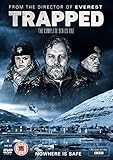
This is my review of Trapped [DVD].

This Icelandic contribution to Scandi Noir proved for me to be the most successful so far. The absorbing plot is essentially more plausible and realistic than is often the case, involving a slowly folding almost Shakespearean tragedy on the stage set of the remote coastal town of Seyðisfjörður, where some of the inhabitants are driven to crime through a complex brew of motives: panic induced by the shock of Iceland’s financial collapse in 2008, simple greed, or a gut desire for revenge. In the gradual revelation of the facts, all the main characters were developed as real people with flaws, conflicting emotions but often redeeming features at unexpected moments. The drama has the power to arouse our sympathy, if only rarely, for less appealing characters, even villains, along with flashes of impatience over, say, Andri’s self-centred ex-wife. Events unfold against the backdrop of the astonishing quantities of snow, burying cars and walls almost up to roof level, the bleak beauty of the white mountain slopes rising abruptly up from the the icy waters of the bay, the danger of an avalanche engulfing the town, which can be diverted by a dynamite explosion, itself a risky venture.

Andri Olafssun, the Reykjavik detective who has been banished to Seyðisfjörður for some misdeameanour, comes across at first as a shambling oaf, until the power and magnetism of the actor rapidly win us over. When blizzards cut the town off from the rest of civilisation, preventing the arrival of a team from the capital headed by Andri’s rival Trausti, he is forced to press ahead with investigations of the discovery of a mutilated torso, apparently connected with the arrival of a Danish ferry. This is way beyond the experience of Andri’s two junior colleagues who represent the woefully inadequate manpower at his disposal in a community in which serious crime has been a rare event. Both the earnest, quietly ambitious Hinrika and more impulsive Ásgeir, addicted to chess on the office computer after years of inaction, rise to the challenge of the sudden wave of crises. At the same time he has to deal with the stressful situation about which his parents-in-law have felt unable to forewarn him: the arrival of his ex-wife with new boyfriend, with plans to take his two young daughters back to Reyjkavik with them.

A further complication is the controversial plan for the leaders of the town to acquire land for a possible deal with the Chinese to develop Seyðisfjörður as a port, although it is unclear how, if at all, this has any bearing on the crime.

The drama combines action and suspense with a focus on showing people’s reactions to a wide range of emotions: fear, anger, regret or grief. Both the dialogue, even with sub-titles, and the acting are excellent. Often trapped in both a physical and mental sense, the characters seem like real people, not chosen for their good looks, often with crooked teeth and sagging skins, plus thick baggy jumpers to keep out the almost palpable cold. A sense of the thoughtfulness, stoicism and integrity of the Icelandic character (however illusory it may be) comes through

A few loose ends leave scope for a series to which I look forward, although doubting whether such a well-constructed and coherent drama can be created again. This drama passes the acid test of not leaving one feeling cheated at the end. My sole reservation is over Andri’s habit of running round in freezing weather with his jacket unzipped.

⭐⭐⭐⭐⭐ 5 Stars

Live not by lies

This is my review of The Invention of Russia: The Journey from Gorbachev’s Freedom to Putin’s War by Arkady Ostrovsky.

In his quest to understand how Russia got from the dissolution of the Soviet Union in 1991 to the aggressive, chauvinist state of Russian under Putin in 2015, the Russian-born author takes us back to Krushchev’s denunciation of Stalin’s repression in 1956, paving the way for Gorbachev’s formal launch of “Perestroika” or restructuring from 1985.

Ostrovsky focuses on the media’s key role in both assisting and obstructing change. In the 1960s, newspapers and television were dominated by intellectuals bent on “cleansing” Communism of the distortions Stalin had imposed. They had not yet progressed to demanding economic freedom. It took leading journalists like Alexander Yakovlev years to realise that “the Bolshevik religion was false” and that “socialism with a human face” might not be feasible under communism. Following the crushing of the 1968 “Prague Spring”, journalists like “Yegor” (also a Yakovlev, but “no relation”), felt alienated by the use of Soviet tanks, but continued to compromise, not speaking the truth in the belief that they could achieve more “from the inside”, not to mention their concerns for self-preservation.

Yet the irony was that eventually, “words rather than tanks” meant that the generation which had intended to vindicate the ideals of fathers purged by Stalin ended by unintentionally destroying socialism. “Glasnost” and the opening up of minds through the media proved more important in effecting change than “altering the means of production”. Unrest grew as the media helped people to perceive their relative lack of consumer goods, or the failure of the Afghan War. When Gorbachev dithered over economic liberalism, “Moscow News” had the confidence to urge him to act decisively or resign.

Under his successor Yeltsin, there was a generational shift from men like Yegor to his son Vladimir who founded the magazine Kommersant to promote capitalism of a primitive kind, operating in a moral vacuum. The “oligarchs” who benefitted from the “loans for shares” scheme saw the influence to be gained from owning TV channels: Gusinsky took over the TV channel NTV which established a reputation for honesty in, for instance, its reporting on the Chechnyan war. When his oligarch acquaintances urged him to sell the station that was putting their business at risk, or make it non-political, his journalist Malashenko resisted, pointing out that NTV had the strength to survive under a weak and dysfunctional state. The truth was of course that freedom of speech was fragile, dependent on Yeltsin’s goodwill.

This became clear after Putin’s appointment as a decisive and authoritative heir to the ailing Yeltsin. Gusinsky was ordered to sell NTV to Gazprom, after “the last straw” of parodying Putin on the Russian equivalent of the political satire “Spitting Image”. By 2004, the state-controlled “Channel One” was reduced to showing mainly soap operas during the Chechnyan crisis in Beslan, playing down the number of casualties, pretending hostages were safe when more than 300 were dead, and showing scenes from military dramas of terrorists being beaten.

Ostrovsky claims that by 2014, the Russian media had become not just a metaphorical but a real weapon causing genuine destruction, not just distorting reality but inventing it “using fake footage” to report on conflict in, for instance, Ukraine, even using actors: “sometimes the same actor would impersonate both the victim and the aggressor on different channels.” Nemtsov, the charismatic politician who warned against the use of TV to produce “patriotic hallucinations” was himself murdered outside the Kremlin shortly afterwards. For Russians, violent newsreels have become a form of entertainment: “the vast majority of Russians now contemplate the possibility of a nuclear war …..and 40 per cent of the younger ones believe that Russia can win, as though it were a video game”. The once brash Vladimir Yakovlev now warns that people live in a crazy illusion tha the country is surrounded by enemies… The information war is first and foremost destroying ourselves”.

The subject matter is fascinating and the bibliography impressive, but some clear and striking analysis is buried in the at times frenetic journalese which makes for hard reading, along with the large cast of characters with unpronounceable names, for a non-Russian reader. I was also surprised to find so little mention of the economic hardship I believe to have been endured by many ordinary Russians post 1991.

⭐⭐⭐⭐ 4 Stars

“The Bloomsbury Group” by Frances SpaldingHow they reverberated

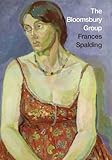
This is my review of The Bloomsbury Group by Frances Spalding.

Written by the “leading authority” Frances Spalding, this fascinating and very readable book which manages to cover in only a hundred pages an astonishing amount of information without seeming overloaded, begins with a brief explanation of the famous Bloomsbury Group before embarking on thumbnail biographies of many of its key members, each accompanying a full-page illustration of a painting from the National Portrait Gallery in London.

I have been forced to modify my view of the Bloomsbury Group (so-named after the district into which Vanessa Bell, as she was to become moved, together with her siblings including Virginia who was to marry the publisher Leonard Woolf. Having regarded them as a group of self-absorbed intellectuals, somewhat self-indulgent in the justification of their casual switching of partners, I now realise that their earnest discussion and experimentation was an important and inevitable response to the stultifying grip of Victorian moral conventions and unquestioning acceptance of religious teaching which linked ethics with behaviour. “Fresh questions had to be asked as to how and why they should be connected. What was the nature of good? How should you live? What philosophy could be found to support and justify the good life?” The Bloomsbury Group believed in honest personal relationships, and the value of enduring friendship, which could transcend a love affair which had lost its meaning. Virginia Woolf praised her Bloomsbury friends for “having worked out a view of life which still holds…after twenty years; and no amount of quarrelling or success, or failure has altered this”.

It is revealing how many of the photographs and paintings show the characters reading: the oddly charismatic, sedentary “man of letters” Lytton Strachey, was “often shown in a state of complete relaxation, a condition conducive to a life of intense mental activity”. This inspired the hopeless love of the probably somewhat neurotic artist Dora Carrington, whose portraits impressed me with their quality and realism: namely that of the handsome expert on Spain, Gerard Brenan, who in turn carried a torch in vain for her, and of E.M. Forster who shared Bloomsbury values while remaining on the margins of the group. The clarity and lifelike quality of Roger Fry’s self-portrait together with those of Bertrand Russell (whose mathematical mind and contempt for homosexuality may have distanced him from the Bloomsbury network, which he could not avoid because his wife Alys’s nieces married into it) and of Clive Bell, the longsuffering husband of Vanessa are at odds with Fry’s pioneering work “crusading passionately on behalf of Cézanne, Gauguin, Van Gogh and Matisse,” to raise awareness in Britain of the Impressionist movement.

The author’s many insights into the lives and time of the Bloomsbury Group, are lightened by many anecdotes, such as the magnetic “cornflower-blue”-eyed David Garnett watching the weighing of Angelica, newborn daughter of Vanessa Bell and Duncan Grant with whom he lived in a menage à trois, and “conceiving the idea of marrying her” which he duly did more than twenty years later.

⭐⭐⭐⭐⭐ 5 Stars

The real land of fire and ice

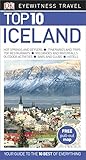
This is my review of Top 10 Iceland (DK Eyewitness Travel Guide) by DK Travel.

I used this compact guide as a supplement to a four nights’ package holiday in the Reykjavik area of south-west Iceland, where four of the recommended “top 10 highlights” are located and lived up to expectations, namely: Þingvellir National Park (anglicised to Thingvellir) and the site of the original 36 chieftains’ annual national assembly; the Geysir Hot Springs including Strokkur, Iceland’s equivalent of Old Faithful; the magnificent Gullfoss waterfall where it is possible to get terrifyingly close to the thundering water and spray; Blue Lagoon with its warm continually replenished geothermal waters, cloudy with supposedly health-giving chemicals and good for floating

As is typical of Eyewitness Guides, it is beautifully presented with plenty of photographs giving an accurate impression of the country, useful maps (including one fold-out map of the whole island and a handy laminated pull-out map) and concise, relevant information. It is set out very clearly, by both area and comprehensive range of topics and would be helpful for a longer self-organised tour of say, 7-10 days.

Apart from emphasising that everyone working in the service sector seems to speak good English (at least in Reykjavik where there also seems to be a good deal of migrant labour) with credit cards readily accepted, an omission is the failure to mention the at times mind-boggling prices for British tourists, with items often costing two, even three times more than they would in the UK. Admittedly I changed my pounds into króna at possibly the worst possible time just after Brexit. It was ironical that we were able to explore free of charge the fascinating (if possible white elephant folly) Harpa Concert Hall and Conference Centre, baled out for completion with government money after the financial crisis of 2008, but decided not to pay the equivalent of more than £12 each for a 15 minute video shown there about Iceland.

⭐⭐⭐⭐⭐ 5 Stars

“Tales of the Jazz Age” by F. Scott Fitzgerald.Where all the best girls round here marry fellas and go off somewhere

This is my review of Tales of the Jazz Age (Alma Classics) by F. Scott Fitzgerald.

This is a collection of short stories produced by a still youthful Scott Fitzgerald before he fell prey to the alcoholism which befuddled so many of his characters. The list of contents is accompanied by the author’s own explanatory comments, written at the point when they were assembled in 1922 from different magazines where they had been originally published. He was clearly a natural story teller, capable of producing a piece at great speed, such as “The Camel’s Back” which he wrote in a day.

His style can be quite pedantically C19: “So gaily and noisily were the peace and prosperity hymned by the scribes and poets of the conquering people that more and more spenders had gathered from the provinces to drink the wine of excitement, and faster and faster did the the merchants dispose of their trinkets and slippers until they sent up a mighty cry for more trinkets and more slippers in order that they might give in barter what was demanded of them”. At times, Scott Fitzgerald reminds me of PG Wodehouse or Jerome K Jerome, but without the humour, in fact, with a darker thread beneath the flippancy. I found the stories, set mainly in the well-heeled middle class world of 1920s urban America, quite dated, and grew rapidly tired of the boozy – if skilfully lampooned – US version of Hooray Henries, and the shallow, over-protected young daughters of Aluminium Men, Iron Men or Brass Men, etcetera, destined only for the marriage market.

Although I appreciate the author’s fluency and wit, I could only take so much of these stories, choosing to focus on those with more original and creative plots, such as “The diamond as big as the Ritz” which imagines the consequences of discovering a diamond so huge that to advertise one’s find would immediately destroy the scarcity value and therefore monetary benefit of the stone. This is also a reflection on the corrupting effect of power in a secret, self-contained world financed by judicial exploitation of the diamond.

“The Curious case of Benjamin Button”, recently made into a film, is also an interesting story, inspired by Mark Twain’s remark that “it was a pity that the best part of life came at the beginning and worst part at the end”, although I’m not sure everyone would agree that babyhood is the best part. Benjamin Button duly starts off as an old man, who find most companionship with his grandfather, ending up as a small boy who enjoys going to kindergarten and playing with his grandson. The best part of his life is the brief period in which his capacity and appearance match his actual age, so that he can be a successful soldier, a useful means of avoiding the wife who has become too old for his taste. Apart from the snobbery, there are frequent little flashes of racism which, although an aspect of the times, are a bit disconcerting now, as when Benjamin Button’s father, traumatised by the birth of a son who looks like an old man, passed “the bustling stores, the slave market (it’s the 1860s) and “for a dark instant wished passionately that his son was black”.

Despite its rather chauvinist ending, I liked the farcical ” The Camel’s Back”, about a young man who goes partying in a camel suit, with his taxi driver serving as the back legs, after a row with his fiancee who is reluctant to commit to marriage – this sounds very Bertie Woosterish. I was most impressed by “May Day” which in portraying the frenetic life in the New York of 1920, “in the general hysteria of that spring which inaugurated the Age of Jazz” also manages to convey grim undercurrents beneath the hectic partying, with soldiers trying to adjust to life as peacetime nonetities and the hounding of socially conscious “communists” foreshadowing the McCarthyism to come.

⭐⭐⭐⭐ 4 Stars

“Nightblind” (Dark Iceland) by Ragnar Jonasson.Astray in men and weather

This is my review of Nightblind (Dark Iceland) by Ragnar Jonasson.

It seemed particularly relevant to read this on a trip to Iceland, having enjoyed “Snowblind”, the first in the “Dark Iceland Series” featuring the decent if at times impulsive young police officer Ari Thór who rashly accepts a post in the remote northern town of Siglufjördur, still economically depressed “since the herring disappeared”, where “the fact he was untainted by local tradition, gossip, small-town politics and old feuds was a strong point in his favour”. Town-bred, he fails “to understand what was so enchanting about loneliness, isolation and cold” and remains “puzzled by the attraction of skiing”.

“Nightblind” is set five years later, that is after the financial crisis which shook Iceland, with Ari Thór, now father of a small boy, communications with his partner Kristin still troubled, partly because of his reticence over his father’s disappearance when he was young. Ari Thór is soon embroiled in investigating the shooting of his new boss, Inspector Herjóldur, who seems to have “pulled strings” to gain the promotion for which Ari Thór also applired. The gun crime is sufficiently grave to make not just national but Nordic news in general, attacks on the police being so rare in Iceland. An intriguing parallel theme cuts continually into the main storyline in the form of extracts from a journal written some thirty years previously. A patient in a psychiatric ward, the author’s identity and relevance to the crime are kept a mystery until near the end.

Like the first novel, this is meticulous in its plotting, a page turner which avoids being formulaic, but with an occasionally clunky style, particularly in the dialogue, which may be the fault of the translator rather than the author himself.

Given an authentic note by his lawyer’s training and experience, Ragnar Jonasson creates a strong sense of atmosphere with descriptions of the snow and “all-enveloping darkness” of winter in contrast to the “dazzlingly bright days” of the brief summer. Yet he seems much more interested in psychology, exploring people’s characters, often complex, shifting emotions and what makes them tick. He conveys a sense of Icelandic attitudes and values: a kind of pragmatic liberalism, underlain by darker threads of corruption and male domestic violence. He creates an impression of life in Iceland through continual images and vignettes: the depressing effect on the town mayor of the October rain, the rented property in the shadow of the town’s avalanche defences; the abandoned house with a tragic history, now the haunt of drug dealers, located near the mouth of the tunnel which connects Siglufjördur with the outside world, easing the sense of claustrophobia by making it “almost impossible to be snowbound any longer”.

I shall certainly read the third novel “Blackout”, although I am disappointed that it is set in time immediately after “Snowblind”, when I prefer to read novels in sequence to see how the recurring characters progress.

⭐⭐⭐⭐ 4 Stars

Not being Graham Greene

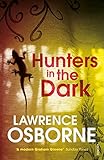
This is my review of Hunters in the Dark by Lawrence Osborne.

An English teacher in his late twenties, Robert escapes every summer from rural Sussex, which some people might consider a pleasant “prison”, to drift ever further afield. Having found Iceland and Greece “remarkably similar” – which suggests a certain ignorance or lack of observation on his part, Robert finds himself in Cambodia, having crossed the border from Thailand. It is unclear what he is escaping from, and what he hopes to find. “His rage was not obvious to himself. What was it directed against?” Drifting between places with no clear focus of interest, he comes across a Buddhist temple in a nondescript town. “It was a place with its own solitude and austerity and he liked it”. But only the previous evening he was escaping boredom in a casino. Eventually, he slides into involvement with some shady characters. Will this destroy him, or shake him into a more purposeful life?

The front cover likens the author Lawrence Osborne to Graham Greene. He has led a nomadic life in countries including Thailand, which suggests that he both understands wanderlust, and has a first-hand knowledge of Cambodia. Although it sounded like the type of novel I would enjoy, it failed to engage me. There was nothing to compensate for the fact that the plot is too slow to get off the blocks. The prose seemed wooden, with irritating little glitches (How could he see the rolling green hills of Cambodia in the dark, or fill his pockets with notes worth in total only 100 US dollars? What’s an “awkward” shirt?). I found the characters two-dimensional, dialogues banal, a lack of humour, no perceptive insights or startling imagery.

I agree with reviewers who have commented on the descriptions which read like extracts from guide books, on the tendency to tell us what to think about Robert, rather than reveal his character traits for us to mull over, and the abrupt changes in “point of view” later in the novel. I would also have liked a glossary of Cambodian terms to save the distraction of having to stop reading to look them up – or remain frustrated with a partial understanding.

Yet both professional and amateur reviews are on balance positive, so perhaps the chance reading of some exceptionally well-written books recently has made me set the bar too high.

⭐⭐⭐ 3 Stars

Not the kind of person who is able to do things

This is my review of Spill Simmer Falter Wither by Sara Baume.

The intriguing title is a sufficient magnet for this original take on Ray, prematurely aged at fifty-seven, a social outcast since childhood, who forms a relationship with a dog he names “One Eye”, mutilated by a badger attack. The dog’s reduced range of vision reflects Ray’s limited and distorted view of life. They have much in common: both are physically repulsive, the dog because of the way he has been trained to dig out and bait badgers, the man through lack of normal “socialisation” as a child, never attending school, and as an adult never having kissed a woman or made a telephone call. Living in squalor, he fills his deceased father’s house with junk in what seems like an advanced state of OCD, yet he shows frequent kindness to the dog, and his voracious reading and listening to the radio have given him a quirky general knowledge which informs his turns insightful, warped and even humorous observation of his surroundings. An unfortunate chain of events convinces Ray he must take to the road with One Eye, in a trek which one knows must end badly.

Early on, Ray’s stated, “I’m especially afraid of children” suggests that he may be feared by the local community as a paedophile. As we discover fragments of his past non-life, our sympathy may grow, yet there is also an increasing sense of darkness and unease, that despite his normal passivity, even gentleness, he may be as capable of uncontrolled or amoral violence as One Eye. At one point, Ray’s observation that the dog, with his frenetic energy, is of course mad, is an irony since it appears that his own sanity is slipping.

The decision to make Ray the first person narrator, addressing a one way monologue to One Eye, involves us more directly. There is poignancy in Ray’s speculation over the lives other people live behind closed doors, existences which he can never know, but in their way as futile as his. Like other readers, I found that Ray’s “voice” belongs too much to the star of a creative writing course rather than an isolated man self-educated on a diet of junk shop and mobile library books, his experience confined to a small Irish seaside community.

This book is set apart by the original, poetic style which needs to be read slowly to absorb its intensity. The alliteration and rich wordplay reminds me of Dylan Thomas: “I dream it’s dungeon dark…I’m belting.. Demented, directionless.” The capacity to develop descriptions of ordinary objects and situations, to sustain them, page after page, brings to mind Proust, except that his genteel madeleine is a far cry from a decrepit cane chair, or a self-harming habit of picking at one’s finger tips until the bloody wounds go septic. Striking descriptions of a shoreline are outweighed by unflinching images of nature’s violence, the ugliness of pollution, the sordid detail of bodily functions. “There’s a layer of filth sunk into the grooves of the skirting board, buttered across the lino. Bugs creep out of the wall at night to gnaw the filth and its stickiness gathers tiny tumbleweeds of passing hair.”

Eventually, this unrelenting preoccupation with dirt and decay becomes oppressive and monotonous. I grew tired of the repetition of One Eye’s “maggoty nose and the triplets of present participles: the dog “running, running, running”; “We are driving, driving, driving”; the conger eels are “nibbling, nibbling, nibbling”. Also, as an author who grew up in Ireland rather than America, why do her characters “look out the window”?

Clearly very talented, Sarah Baume mars her first novel by laying all the putrefaction, bodily fluids and general repulsiveness on too thickly. In not knowing when to stop, the book becomes too protracted to support its slender storyline. I felt so bludgeoned and desensitised that I only kept on reading to discover exactly what sad conclusion it would reach. I believe that the ending has left some readers confused. After a few moments reflection, I was convinced that I understood it and that what seemed at first like a rather trite epilogue was in fact quite effective, except that some readers will find too bleak the sense that an individual human existence does not matter in the overriding life force which just goes on.

This will provide a well-manured field of topics for a book group: it will divide readers, examples of what makes the writing so original are worth discussing, together with questions about Ray. To what extent is he responsible for his past actions, or even his inaction in allowing himself to sink into the vicious cycle of being shunned by others because he does not comply with the accepted norms of behaviour? Is it credible that he could be so dysfunctional in some ways yet resourceful in others? His life may seem a tragic waste, but has he gained something precious in his ability to observe objects and the world above him so closely?

⭐⭐⭐⭐ 4 Stars

“So long, See you Tomorrow” – Destroyed by what was not his doing

This is my review of So Long, See You Tomorrow (Vintage Classics) by William Maxwell.

This is not the only novel by William Maxwell to have been born out of an acute, lifelong sense of desolation over the loss of his mother when he was only ten. The opening page hooks the reader with the account of a pistol shot, marking the murder of Illinois tenant farmer Lloyd Wilson. However, it gradually becomes apparent that this is not a murder mystery, but rather a slow-paced, introspective exploration of how people’s lives can be irrevocably damaged by different kinds of loss: on one hand, recalling events as an old man, the narrator describes how he was affected by his mother’s death and his father’s remarriage; on the other, Maxwell provides a moving account of how the narrator’s childhood friend Cletus Smith was devastated by the effects of his mother’s infidelity. Maxwell manages to create sympathy for all the parties involved. For Cletus, the loss of a familiar routine, a sense of purpose as he helped on the farm, the company of his dog, were the most devastating aspects of the tragedy.

The novel’s strengths lie in the author’s ability to express so truthfully and with such deceptive ease how people think, to conjure up vivid visual impressions of the Illinois praires – plus the all-pervading quiet in which small sounds travel long distances – and also to convey a sense of society in rural or small town, conservative, hidebound 1920s America.

The story has an unusual structure, switching between first person recollection, and third person drama containing facts which the narrator could not have known – at some points we even enter into the mind of Cletus Smith’s faithful dog Trixie. Maxwell’s style sometimes seems best suited to short story mode, since he is easily distracted into the thumbnail sketch of a character who then fades out of the story, or into an anecdote which loses sight of any main plot or narrative drive. Perhaps I have missed something, but even the title does not seem to quite fit.

It seems that as fiction editor for the New Yorker, William Maxwell is remembered mainly for nurturing the talent of such major writers as John Updike. Regarded as denied due recognition in his lifetime, Maxwell is now receiving belated praise in a recent revival, often being compared with John Williams, the similarly acclaimed author of “Stoner”, another novel which portrays thought processes and emotions in great detail.

I found this novel absorbing, the kind of writing which needs to be read slowly and more than once to appreciate fully both its technical skill and the ideas conveyed. Yet, although I was struck by the originality of Maxwell’s approach, its focus on bleakness, hints of obsessive self-absorption, and the repetitious hammering home of certain points in a structure which often seems unduly fractured combine to leave me with an ambivalent view of this book.

⭐⭐⭐⭐ 4 Stars