Troubled genius

This is my review of Coleridge: Early Visions by Richard Holmes.

The first volume in a mesmerising two-part biography, Richard Holmes provides a fascinating psychological portrait of Coleridge (STC) and an exploration of the Romantic movement which enabled me to see beyond its often cloying sentimentality, all set in the context of the looming threat of the French Revolution, and the growing divisions in Britain over the need for political and social reform.

A young man of remarkable mental and physical energy, making a name for himself as a poet, political journalist, lecturer, preacher and budding philosopher, Coleridge’s charisma and eloquence gained him many admirers and staunch friends, only too often later alienated by his unreliable, extreme behaviour. Part of the problem was that his evident ability brought too many offers of work for him to handle. Combined with a tendency to be continually distracted by his own projects, STC was at times overwhelmed into inaction, increasingly fuelled by opium and alcohol, the list of unfinished work becoming a tragi-comedy even to him.

In his defence, STC still managed to produce an impressive quantity of poetry and prose. Opium was the main painkiller available to a man who seemed to suffer more than his fair share of ill health, plus it probably enhanced STC’s creative abilities except when overdoses proved catastrophic. Even without opium, he displayed classic symptoms of bi-polarity: mood swings, acute self-absorption, tendency to be easily distracted into a new project when he should have been doing something else, problems with sleep and organising his affairs, uninhibited displays of emotion, and a “grandiosity” over each new scheme, generally conceived on too ambitious a scale to be feasible in reasonable time.

The neglect of his wife Sara is often shocking, as when he left her pregnant with a small child to undertake what turned out to be almost a year spent in Germany, learning the language and studying the literature. Even news of his newly born son’s death did not bring him home. Having insisted on marrying Sara even after his need for a wife to help him sustain a utopian community in America had fallen through, he found living with her intolerable. Perhaps he was running away from the guilt of being unable to provide a steady income (having at one point turned down part-ownership of a newspaper which would have secured his wealth) plus he felt a compulsive need to wander at night through the moonlit Quantocks with the Wordsworths, travel to some exotic foreign land, or the stimulus of London gatherings. His attempted escape to live with the Wordsworths in the Lake District could not prove the idyll of self-sufficiency or “pantisocracy” of which he had dreamed as a young man, for his obsessive passion for Wordsworth’s sister-in-law “Asra” was a source of destructive tension. STC’s long periods spent apart from the children he professed to love is also disturbing evidence of the selfishness so evident alongside his intense sensitivity: again, he may have been evading the painful knowledge that they were being supported largely by his brother-in-law, the poet Southey.

Despite his obvious faults, his verbal magic and self-deprecating wit still leap from the page to win us over. Also, he could be generous, as when he set aside his own work to edit publications for Wordsworth. The latter is portrayed as a controlling egoist, who did not flinch from removing STC’s poem “Christabel” from a joint work, thus establishing dominance in their working relationship, which STC for humbly accepted for too long.

Part 1 ends with Coleridge still in his thirties, sailing off to Malta under the protection of a naval convoy, convinced he would die abroad, his honour saved by the life insurance taken out to benefit his wife. Had he perished at that point, he would have been remembered as a talented poet, author of “Kubla Khan” and “The Ancient Mariner”, his reputation less tarnished than was to prove the case, although a large body of his work would never have been written.

⭐⭐⭐⭐⭐ 5 Stars

“Les Vingt Ans Du Jeune Homme Vert” by Michel Deon – Disappointingly dull ramblings through a corrupt and shallow war-time world

This is my review of  Les Vingt Ans Du Jeune Homme Vert (Folio) [Mass Market Paperback] by Michel Deon.

Enjoyment of Michel Déon’s French take on Tom Jones, a rambling account of the foundling boy Jean Arnaud’s adventures, which end mid-stream with his departure for the Front on the outbreak of WW2, in the company of conman Palfy, gave me sufficient enthusiasm to start on the sequel – but this proved a disappointment, with all the shortcomings of the first novel magnified in spades. Déon has been praised and honoured for his straightforward prose style as opposed to Sartre’s intellectual existentialism, but the novel is far too sprawling and long-drawn-out.

The thin plot is dominated by Jean’s infatuation with Claude, a beautiful young married woman with a small child and mysterious absent husband. Portrayed as pure and virtuous, she effectively strings Jean along, accepting his moral support, claiming to love him, even letting him into her bed, but for a long time denying him sexual intercourse. Perhaps fulfilling the male author’s fantasy, Jean “has his cake and eats it” by enjoying in parallel a “no strings attached” physical relationship with film actress Nelly Tristan, transformed in his company from a foul-mouthed, tippling social embarrassment into a sensitive declaimer of sentimental French poetry.

The weak storyline is padded out with lengthy recollections of events from the previous novel or with tedious scenes which often seem quite pointless. Déon’s claim that it is possible to understand this sequel without reading the first book is a little misleading: those taking him at his word are likely to become confused over details of Jean’s parentage and his first loves, like Chantal.

Whereas some interesting characters were developed in the first book, like Jean’s restless grandfather Antoine and the village curate, the sequel is dominated by too many exaggerated and generally unappealing caricatures: Palfy, with his network of louche friends and lack of compunction over fraternising with Nazis; the “ultra-respectable” brothel keeper Madame Michette with her bizarre mix of gullibility and guile, and fantasies of being a spy; Jesus, the Spanish painter with the irritating lisp who is prepared to sell his artistic soul for money and avoid commitment until his sudden falling for “enemy German” Laura, or La Garenne, the crooked dealer in art porn. The lesser characters are mainly bland ciphers. There is little sense of place, like the lure of the South of France for Antoine in his Bugatti (previous novel).

In the first book, Déon sometimes revealed himself as an intrusive narrator, over-anxious to reveal future events. In the sequel, this tendency has run out of control, as he even destroys the tension of the two most dramatic, all too rare, incidents by digressing into what lies in store. He keeps giving us potted histories, often in the form of letters, rather than taking the trouble to develop characters and weave events into the plot. This seems like lazy writing. He consistently “tells” rather than “shows”, bludgeoning us into what we should think, with often heavy-handed philosophising, rather than let us experience events directly and form our own judgements.

Just occasionally, there are flickers of insight, as when the narrator (better still if it could have been a character) observes how the isolation caused by war blunts the impact of a tragic event through the delay in receiving it. At one point, Jean actually reflects on the contrast between the simple, honest couple who are sheltering him, and the “artificial et brilliant” life he has been leading.

Handsome, charming, easy-going Jean has always tended to consort with raffish characters, but it is troubling to see him frittering away his time in the company of wheeler-dealer Nazis and collaborators on the make. Although a contrast to many WW2 novels, perhaps in some ways more realistic to see the Occupation of France from this viewpoint, I felt uneasy about the shallow, cynical gloss over the hardship of those who refused to or could not profit from the Occupation, the suffering and risk taken by members of the Resistance and the mistreatment of French Jews, as at the Vel d’Hiv.

Apart from providing a means of practising my French, the novel often bored me, and since it seems to me have to been still further weakened in translation, I have only given 2 stars for the English version.

⭐⭐⭐ 3 Stars

“The Foundling’s War by Michel Déon” – Disappointingly dull ramblings through a corrupt and artificial wartime world

This is my review of The Foundling’s War by Michel Déon.

Enjoyment of Michel Déon’s French take on Tom Jones, a rambling account of the foundling boy Jean Arnaud’s adventures, which end mid-stream with his departure for the Front on the outbreak of WW2, in the company of conman Palfy, gave me sufficient enthusiasm to start on the sequel – but this proved a disappointment, with all the shortcomings of the first novel magnified in spades. Déon has been praised and honoured for his straightforward prose style as opposed to Sartre’s intellectual existentialism, but the novel is far too sprawling and long-drawn-out.

The thin plot is dominated by Jean’s infatuation with Claude, a beautiful young married woman with a small child and mysterious absent husband. Portrayed as pure and virtuous, she effectively strings Jean along, accepting his moral support, claiming to love him, even letting him into her bed, but for a long time denying him sexual intercourse. Perhaps fulfilling the male author’s fantasy, Jean “has his cake and eats it” by enjoying in parallel a “no strings attached” physical relationship with film actress Nelly Tristan, transformed in his company from a foul-mouthed, tippling social embarrassment into a sensitive declaimer of sentimental French poetry.

The weak storyline is padded out with lengthy recollections of events from the previous novel or with tedious scenes which often seem quite pointless. Déon’s claim that it is possible to understand this sequel without reading the first book is a little misleading: those taking him at his word are likely to become confused over details of Jean’s parentage and his first loves, like Chantal.

Whereas some interesting characters were developed in the first book, like Jean’s restless grandfather Antoine and the village curate, the sequel is dominated by too many exaggerated and generally unappealing caricatures: Palfy, with his network of louche friends and lack of compunction over fraternising with Nazis; the “ultra-respectable” brothel keeper Madame Michette with her bizarre mix of gullibility and guile, and fantasies of being a spy; Jesus, the Spanish painter with the irritating lisp who is prepared to sell his artistic soul for money and avoid commitment until his sudden falling for “enemy German” Laura, or La Garenne, the crooked dealer in art porn. The lesser characters are mainly bland ciphers. There is little sense of place, like the lure of the South of France for Antoine in his Bugatti (previous novel).

In the first book, Déon sometimes revealed himself as an intrusive narrator, over-anxious to reveal future events. In the sequel, this tendency has run out of control, as he even destroys the tension of the two most dramatic, all too rare, incidents by digressing into what lies in store. He keeps giving us potted histories, often in the form of letters, rather than taking the trouble to develop characters and weave events into the plot. This seems like lazy writing. He consistently “tells” rather than “shows”, bludgeoning us into what we should think, with often heavy-handed philosophising, rather than let us experience events directly and form our own judgements.

Just occasionally, there are flickers of insight, as when the narrator (better still if it could have been a character) observes how the isolation caused by war blunts the impact of a tragic event through the delay in receiving it. At one point, Jean actually reflects on the contrast between the simple, honest couple who are sheltering him, and the “artificial et brilliant” life he has been leading.

Handsome, charming, easy-going Jean has always tended to consort with raffish characters, but it is troubling to see him frittering away his time in the company of wheeler-dealer Nazis and collaborators on the make. Although a contrast to many WW2 novels, perhaps in some ways more realistic to see the Occupation of France from this viewpoint, I felt uneasy about the shallow, cynical gloss over the hardship of those who refused to or could not profit from the Occupation, the suffering and risk taken by members of the Resistance and the mistreatment of French Jews, as at the Vel d’Hiv.

Apart from providing a means of practising my French, the novel often bored me, and since it seems to me have to been still further weakened in translation, I have only given 2 stars for the English version.

⭐⭐ 2 Stars

Captain Fantastic [DVD].What price freedom?

This is my review of Captain Fantastic [DVD].

This is an entertaining, by turns funny, and moving, bittersweet yarn about an anarchic, left-wing, “hippy” bringing up his six children in a remote, beautiful Rocky Mountain setting. Although the endurance programmes and survival skills training designed to develop self-sufficiency in the wild at times seem close to the child abuse of which his father-in-law accuses him, home schooling has made his offspring remarkably well-read, perceptive and questioning. Their annual celebration of “Noam Chomsky” Day, as no more ludicrous than Christmas, the bracketing together of Christianity and capitalism as the root evils of Western society, smack of brainwashing – although when one sees American consumerism through their eyes, they have a point. The nagging question is of course how they will fare if and when they have to re-enter a world in which they will often appear naïve, ignorant of basic norms and, as the eldest son at one point observes, freakish.

Matters come to a head when they receive news that their mentally sick mother who has been forced to return to the outside world for medical treatment has committed suicide.

Despite suffering from the director’s inability to resist somewhat contrived, exaggerated and extreme situations, the film causes us to question our conventional values and ways of living, and to ask how far one can and should go in forging an “alternative life style” for one’s children? To what extent is it “abuse”, even permanently damaging, to make one’s children “too different”? On the other hand, the film exposes the hollowness of our materialistic society. Why is it acceptable for children to play violent computer games, but not work as a team to kill, dismember and cook a deer for food? How can one put one’s own desire for conventional respectability above a daughter’s wish for a Buddhist cremation and ironical flushing of ashes down the toilet?

The photography is beautiful, the storyline compelling, but I was frustrated that my ear was not sufficiently attuned to quick-fire American drawl to catch all the dialogue.

⭐⭐⭐⭐ 4 Stars

Julieta [DVD] [2016]. Getting the fate we deserve?

This is my review of Julieta [DVD] [2016].

Middle-aged Julieta is preparing to leave her stylish, if clinical Madrid flat for a move to Portugal with her lover, when a chance meeting brings news of the daughter Antía from whom she has been estranged for years. Immediately changing her plans, Julieta sits down to write the explanatory account of past events which she has concealed but feels Antía is now old enough to understand, if she can be persuaded to open her mind to them. This device of course takes us into a chain of flashbacks, often moving or evocative.

Based on three short stories by the celebrated writer Alice Munro, the Spanish director Almodóvar has produced an excellent film which succeeds through the combination of a well-constructed plot, with hints of Hitchcock, strong dialogue even evident in the subtitles, and skilful, sensitive acting where shifting expressions and body language often reveal more than words.

“Julieta” words on several levels as entertainment, as a study of the often devastating effects of chance, grief and guilt and as pure visual art. Almodóvar is not afraid to spin an essentially straightforward yarn, rendered remarkable with visual effects and a sustained, meticulous attention to detail. The filming draws on contrasting aspects of Spanish life: an old Madrid apartment with overpowering floral wallpaper redeemed by romantic wrought iron balconies overlooking the street; roads winding in hairpin bends to mountain views of great beauty which can also be the backdrop to moments of acute misery; the striking profile of a censorious, perhaps malevolent housekeeper who knows too much about her employer.

The folds of vivid blood-red material in the opening shots made me fear that Almodóvar would slip into the melodramatic excess which is often his trademark, but in this film at least, his continual harnessing of striking images manages to stop short of hammy overkill.

My reservations are few. Antía’s abrupt change in behaviour at one point seems unconvincing, but this does not prevent the film from being very moving. The switch in casting from the young to the older Julieta and Antía is done quite cleverly, although it takes a few moments to adjust to the distraction this creates. Perhaps the understandably mournful lover Lorenzo is a little too long-suffering, but as other reviewers have noted, the men in this film are as ever mainly foils for the female characters who are Almodóvar’s main focus of interest.

⭐⭐⭐⭐⭐ 5 Stars

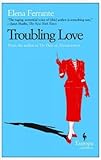
“Troubling Love” by Elena Ferrante.Played false by memories

This is my review of Troubling Love by Elena Ferrante.

In this short, pacy novel of often overpowering intensity, “Troubling love” refers to the narrator Delia’s ambiguous feelings for her mother Amalia, a mixture of love and hate, brought to a head by her death by drowning, an apparent act of suicide. Delia is not only driven to find out how her mother died but also to make sense of the chain of confused, even false memories which have blighted her life. Was Amalia the innocent victim of violent abuse at the hands of a jealous husband, in a Naples where casual sexual harassment seems to be the norm, or was she responsible for provoking him with her flirtatious manner and possible adultery with his former business partner Caserta?

Apart from her unlikely career drawing comic strips, and the fact that, approaching forty, she seems to be unattached and childless, we learn little about Delia’s adult life, but she appears to be mentally unstable. Apparently traumatised by her upbringing, did some childish action on her part make matters worse and how reliable a witness is she now?

Part of the magnetic pull of the writing stems from the way in which the facts, which initially seem bizarre or dreamlike, are revealed or made clear, like the pieces of a jigsaw fitting into place. A strong sense of Naples is created: the heat, furious commotion, squalor, decay, and sea like a “violet paste”. The book has been made into a film, and I found it much easier to read once I grasped the cinematic quality of many of scenes, with their emphasis on visual detail through which deeper meaning may become apparent. For instance in a sustained incident in which various characters pursue each other through the streets of Naples and onto a funicular, there is a purely visual image of someone “as if… skating on the metallic grey of the pavement, a massive yet agile figure against the scaffold of yellow painted iron bars at the entrance to Piazza Vanvitelli”. Alighting at the “dimly lit concrete bunker” of Chiaia Station, Delia imagines or perhaps partly remembers how it was nearly forty years ago, with her mother waiting there, mesmerised by three figures advertising clothes, symbolising the freedom of another world, and wondering how she and her daughter could escape into it.

Particularly for a first novel, this is original and brilliant, but bleak. It also repelled me in its gratuitous focus on the sordid side of life: too much about the mess of menstruation, masturbation and sexual beatings. What lies behind the author’s dedication of this novel “for my mother”? Is it a mark of admiration or a reproach? A reviewer’s humorous comment, “My money is on Elena Ferrante being male, with slightly perverted sexual tastes” also strikes a chord. The brutal passion and frankness of the writing may illustrate the cultural difference between Italian and British literary fiction.

This compulsive read assaulted my senses, and left me feeling tainted.

⭐⭐⭐⭐ 4 Stars

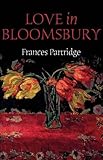
“Love in Bloomsbury” by Frances Partridge.Dashing and flashing and splashing and clashing

This is my review of Love in Bloomsbury by Frances Partridge.

Frances Partridge is probably best known for loving and in undue course marrying Ralph Partridge, already part of an infamous ménage à trois: the homosexual Lytton Strachey loved and relied on the practical, handsome Ralph, whom the talented if neurotic painter Dora Carrington had agreed to marry as a means of hanging on to Lytton, with whom she lived and was infatuated. This set- up symbolises some of the key aspects of the Bloomsbury group – their lack of concern about conventions, emphasis on “rationality” which could be used to justify egotism and also, a point which I have been slow to appreciate, the deep bonds of friendship which endured despite shifting love affairs and gossip.

Born in 1900, the author opens a window on Edwardian childhood in a prosperous middle-class family with a wide circle of well-connected friends and “advanced ideas”, despite employing maids to toil “up and down the great flights of stairs… with coal-scuttles and hot-water jugs”. She also provides fascinating, first-hand observation of a group of individuals who were often creative, original thinkers and vulnerable in their failings, leaving us to infer the degree to which they were over-privileged, self-absorbed and sometimes disappointingly trivial.

From an early age Frances questioned accepted views. Eavesdropping on two visitors’ “ribald breakfast-time conversation” which involved discussing God as if he were a human being, she realised that this meant not only that they did not believe in him but neither did she. A similar “moment of truth”, closest to the “mystical experience” described by friends, came towards the end of her schooldays, with the “blinding conviction” that whatever she might be forced to do, her “ideas and beliefs” were her own, and nothing could make her think against her “own grain”.

Clearly intelligent and physically active, choosing to attend the free-thinking Bedales school, at Cambridge she revelled in both philosophy and dancing to a jazz band. A private income gave the freedom to treat work as an interesting pastime rather than a necessity. Economising on the many trips abroad meant travelling third class rather than first. She turned down a job researching why Lyons’ waitresses dropped so much china for employment at the book shop set up by her brother-in-law Bunny Garnett with his friend Francis Birrell. This belonged to some past idyllic cloud-cuckoo land: since buyers objected to the fingerprints and tobacco ash left on pages by the staff, the clientèle was mostly confined to friends who were also members of the Bloomsbury group. Even after moving in with Ralph, she seems to have spent many evenings dining out at restaurants with admiring male friends, and although her days seemed to her very full combining work with “household preoccupations” she writes: “Who bought the bacon, the butter, the fish? I suspect it was our faithful Mabel. Certainly I have no recollection of doing it myself.”

Perceptive comments are often laced with a caustic humour: Lady Ottoline Morrel “in tawdry satin finery” chasing “avidly with claw-like hands over the floor” a bun she had dropped. A French waiter described in meticulous detail is then dismissed with “a face that might be a criminal or a philosopher’s, but most likely a half-wit’s”.

She deemed a “hermaphrodite” fancy-dress party “a sad come-down, a sign of decadence” compared with the elaborate performances which earlier parties had featured. To set against the boozy socialisting, is the moving account of the battlefields of northern France revisited as an antidote to Ralph’s grief over his failure to prevent Carrington’s suicide through her inability to live without the deceased Strachey. Fourteen years after the event, “the few trees still standing were gaunt skeletons riddled with bullets, and one had only to take hold of a branch and there was a rattle of shrapnel falling to the ground”.

Part 2 of the Book relies heavily on diary entries, using print too small to read comfortably in the paperback version, and sometimes tedious because of the large amount of name-dropping. The author may have painted Ralph in an unduly glowing light, and played down her own self-gratification. Yet overall, this very readable book is full of insight on the experience of being alive and fills one with the urge to do so as fully as did Frances Partridge.

⭐⭐⭐⭐⭐ 5 Stars

When chocolate with 90% cacao was about 30% too much

This is my review of Vinegar Girl: The Taming of the Shrew Retold by Anne Tyler.

In this modern take on Shakepeare’s “The Taming of the Shrew”, having been thrown out of university for insulting her professor, spiky, forthright Kate Battista has spent the past decade in a dead-end job as preschool assistant, whilst trying to act as a mother-substitute for her flirty, far from dumb blonde, adolescent sister Bunny, and keeping house for her impractical academic and frankly control-freak father. When his selfishness leads him to overstep the mark, by trying to manipulate Kate into marrying his brilliant East European research assistant Pyotr, so that he can stay in the States after his visa has run out, Kate understandably rebels.

This is the basis of an often very funny, shrewdly observed novel, superficially lightweight with an ending sewn up a little too neatly for my taste, yet suggesting darker currents beneath the surface. Even minor characters are given some depth, with a mixture of good points and human failings. I must have enjoyed the book since I sat up to 2 a.m to finish it in one sitting, but had a few reservations, which I suppose at least have the merit of provoking discussion.

Is it, for instance, likely, that a strong-minded, independent young woman with the intellect to study science at university would have put up for so long with the constrained world of the Little People’s School, or have avoided being sacked long ago for her lack of “tact, restraint and diplomacy”? By the same token, would she have accepted for so long her father’s rules about cooking meat mash to last a week and not emptying dishwashers in the interest of his theories on health and efficiency? Is her outspokenness not so much a sign of independence, but rather the result of a lack of socialisation into “social norms”, owing to a depressed, prematurely deceased mother (driven to despair by her incompatible husband?) and an often absent father with inadequate parenting skills?

A minor point is that Kate’s four-year-old charges seem rather advanced for their age, but since Anne Tyler has clearly observed children very closely, perhaps she has struck the right note.

When Kate suggests at one point that men are at a disadvantage compared to women because “they think they should be in charge, in control; they don’t dare show their feelings” this reminds me of the “behind every successful man there’s a strong woman” unfeminist twisting of arguments with which I was brought up in the pre-equality past. Kate’s argument that a woman should let a man into her more “empathic country” to give them both space to be themselves, sounds somewhat patronising and smacks of self-justification. Does Anne Tyler mean us to accept this at face value, or to take it with a pinch of cynicism? Still, I believe that Shakespeare’s Kate was initially simply too stroppy to make a “good wife”, and never meant to be a feminist, as we understand the term, at all.

⭐⭐⭐⭐ 4 Stars

More is less

This is my review of Anil’s Ghost by Michael Ondaatje.

Having left Sri Lanka to train in the West, forensic anthropologist Anil Tissera has been selected by an international human rights group to investigate possible atrocities committed by the Sri Lankan government in its attempt to control insurgents in the north and separatist guerrillas in the south. This involves working with Sarath Diyesena, the enigmatic archaeologist whom she is unsure how far to trust, because one of his relatives may be a government minister. For whatever reason, he discourages her from reading too much into the skeleton nicknamed “Sailor”, which she is convinced belongs to a recent victim, hidden amongst older human remains at a site not open to the public. Admittedly, there are some grounds for Sarath’s cynicism over short-term visitors from the West who, based in luxury hotel rooms, make casual assumptions about the country, distorted by “false empathy and blame”. “I’d believe your arguments more if you lived here,” he tells her. “You can’t just slip in, make a discovery and leave”.

The opening chapters led me to expect a political thriller in the mould of Graham Greene, but since the author is in fact more of a poet than a novelist, the narrative drive, which has a low priority for him, soon splinters into a disjointed, sometimes dreamlike sequence, swerving back and forth in time, between different viewpoints. These include: Sarath’s brother Gamini who has become obsessed with caring for war casualties, high on the drugs he needs to keep himself going; Ananda, sometime painter of eyes on the face of carved Buddhas; Palipani, translator of ancient scripts and rock graffiti who seems to have ruined his reputation by fabricating a text, when in practice perhaps he had found “hidden histories intentionally lost”, a parallel for the suppression of truth in the recent history of Sri Lanka.

I appreciate that a stream of consciousness may reveal more about the complex interweaving of culture and individual relations in the real-life struggles of a war-torn country than a straightforward documentary approach, but I found this book hard-going, mainly because of the written style. I assume that Ondaatje undertook impressive reseach of, for instance, forensics and medical practice, but this tends either to be presented in rather unnatural dialogue and passages of condensed information, like the notes for a novel rather than the work itself, or through grim scenes of death and treatment of hospital patients which tend to drift into inappropriate sentimentality.

Perhaps the weakest aspects of the story are the flashbacks to Anil’s unsatisfactory relationships with a married American writer called Cullis and a female former work colleague called Leaf. Their sketchiness and irrelevance to the drama of Sri Lanka may of course be intentional, suggesting the disjunction between Anil’s westernised persona and her native roots.

Although Ondaatje is clearly capable of writing realistic dialogue, too often it does not ring true. The wording of sentences often jars, as if written by someone with an imperfect grasp of English, but the author has spent most of his life in England and Canada. Many incidents verge on the implausible or ludicrous, such as the verging on necrophilic scenes involving the skeleton Sailor who is at various points laid out to communicate with the stars, danced with, or his former occupation deduced from the most tenuous evidence.

Despite its huge potential and originality, there is in general a self-indulgent, rambling, pretentious quality to the novel which grates on me. I accept that this view is a question of taste, and many readers may be entranced by, say, the flash forward images of Palipana’s niece honouring his death:

“She had already cut one of his phrases into the rock…which she had held onto like a raft in her years of fear. She had chiselled it where the horizon of water was, so that depending on tide and pull of the moon, the words in the rock would submerge or hang above their reflection or be revealed in both elements. Now she stood waist deep in the water cutting the Sinhala letters….He had once shown her such runes, finding them even in his blindness, and their marginalia of ducks, for eternity….In the tank at Kaludiya Pokuna the yard-long sentence still appears and disappears..” and so on in Kubla Khanish vein. Except that Coleridge did not mix up his romantic poetry with the exposure of political corruption and the rootless alienation of a young woman caught between different cultures, in an infusion that fails to coalesce.

⭐⭐⭐ 3 Stars

Less is more

This is my review of Anil’s Ghost by Michael Ondaatje.

Having left Sri Lanka to train in the West, forensic anthropologist Anil Tissera has been selected by an international human rights group to investigate possible atrocities committed by the Sri Lankan government in its attempt to control insurgents in the north and separatist guerrillas in the south. This involves working with Sarath Diyesena, the enigmatic archaeologist whom she is unsure how far to trust, because one of his relatives may be a government minister. For whatever reason, he discourages her from reading too much into the skeleton nicknamed “Sailor”, which she is convinced belongs to a recent victim, hidden amongst older human remains at a site not open to the public. Admittedly, there are some grounds for Sarath’s cynicism over short-term visitors from the West who, based in luxury hotel rooms, make casual assumptions about the country, distorted by “false empathy and blame”. “I’d believe your arguments more if you lived here,” he tells her. “You can’t just slip in, make a discovery and leave”.

The opening chapters led me to expect a political thriller in the mould of Graham Greene, but since the author is in fact more of a poet than a novelist, the narrative drive, which has a low priority for him, soon splinters into a disjointed, sometimes dreamlike sequence, swerving back and forth in time, between different viewpoints. These include: Sarath’s brother Gamini who has become obsessed with caring for war casualties, high on the drugs he needs to keep himself going; Ananda, sometime painter of eyes on the face of carved Buddhas; Palipani, translator of ancient scripts and rock graffiti who seems to have ruined his reputation by fabricating a text, when in practice perhaps he had found “hidden histories intentionally lost”, a parallel for the suppression of truth in the recent history of Sri Lanka.

I appreciate that a stream of consciousness may reveal more about the complex interweaving of culture and individual relations in the real-life struggles of a war-torn country than a straightforward documentary approach, but I found this book hard-going, mainly because of the written style. I assume that Ondaatje undertook impressive reseach of, for instance, forensics and medical practice, but this tends either to be presented in rather unnatural dialogue and passages of condensed information, like the notes for a novel rather than the work itself, or through grim scenes of death and treatment of hospital patients which tend to drift into inappropriate sentimentality.

Perhaps the weakest aspects of the story are the flashbacks to Anil’s unsatisfactory relationships with a married American writer called Cullis and a female former work colleague called Leaf. Their sketchiness and irrelevance to the drama of Sri Lanka may of course be intentional, suggesting the disjunction between Anil’s westernised persona and her native roots.

Although Ondaatje is clearly capable of writing realistic dialogue, too often it does not ring true. The wording of sentences often jars, as if written by someone with an imperfect grasp of English, but the author has spent most of his life in England and Canada. Many incidents verge on the implausible or ludicrous, such as the verging on necrophilic scenes involving the skeleton Sailor who is at various points laid out to communicate with the stars, danced with, or his former occupation deduced from the most tenuous evidence.

Despite its huge potential and originality, there is in general a self-indulgent, rambling, pretentious quality to the novel which grates on me. I accept that this view is a question of taste, and many readers may be entranced by, say, the flash forward images of Palipana’s niece honouring his death:

“She had already cut one of his phrases into the rock…which she had held onto like a raft in her years of fear. She had chiselled it where the horizon of water was, so that depending on tide and pull of the moon, the words in the rock would submerge or hang above their reflection or be revealed in both elements. Now she stood waist deep in the water cutting the Sinhala letters….He had once shown her such runes, finding them even in his blindness, and their marginalia of ducks, for eternity….In the tank at Kaludiya Pokuna the yard-long sentence still appears and disappears..” and so on in Kubla Khanish vein. Except that Coleridge did not mix up his romantic poetry with the exposure of political corruption and the rootless alienation of a young woman caught between different cultures, in an infusion that fails to coalesce.

⭐⭐⭐ 3 Stars