This site will share with you hundreds of book and film reviews written since 2009. Also a chance to discuss these reviews together with some of my creative writing to be added.
Very rapid, in my case, next-day service and not too expensive. Perhaps a little small and faint for school use where need to identify items quickly. Seem particularly good for elderly people in care, because inobtrusive and so less "humiliating" for those who have been forced to give up their independence.
Too soon to judge how long-lasting these are and whether will retain their adhesiveness. I had to press quite long and hard with a hot iron to ensure each label is stuck on securely, and being so small they are fiddly to manage, particularly since one has to iron through a protective cloth when attaching to synthetic materials. Still, better than sewing on each as in the old days!
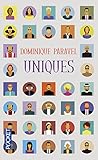
“I shouldn’t be here” – the mantra of an overqualified supermarket employee charged with monitoring the security cameras. At least this affords the amusement of observing how people deal with the problem of items accidentally put the wrong trolley, or noticing a little old lady mischievously placing tea in the frozen fish section and salmon with the champagne. This opening chapter is not developed further, but is followed by a series of less humorous portrayals of somewhat alienated individuals caught in some of the depressing aspects of modern life: a single mother with a vicious boss pressurising her to meet targets in a call centre, or a human resources manager forced to lay off staff in a textile factory so that work can be outsourced to cheaper Far Eastern labour.
The only common factor holding the book together is that the rather stereotyped characters live in the same Lyons suburb of Vaise, which has grown up on the muddy banks of the Saône, where their paths sometimes cross, often with them barely noticing each other. The book’s structure is rather odd: Part One with four individual portraits; Part Two with an artist brought up in Lyons, consumed with nostalgia on her return there for the display of her artwork “Uniques”; Part Three a brief history of Vaise which might have been better integrated into the other sections, concluding with final fleeting images of the original four characters, with a few extra ones thrown in. This fragmented approach with no clear plot, left me feeling unengaged. Situations are too often exaggerated and lacking in subtlety, sitting uneasily with the occasional flights into surreal fantasy. The continual flipping in style between farce and poetry is also distracting at times.
The highly praised author has won prizes in France, but this feels like the work of an inexperienced fiction writer without the redeeming “Mockingbird” factor. It was worth reading in French for the practice, but I would not have bothered to persevere with it in translation.
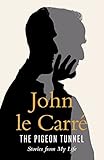
A BBC Radio 4 serialisation of this book caught my attention at the point when Le Carré invites Alec Guinness to lunch with Maurice Oldfield, former Chief of the Secret Service so the actor can get some ideas for the part of George Smiley. The chameleon actor joins with Oldfield in deploring the adverse effect of Le Carré’s books on the Service, mocks Oldfield’s “vulgar cufflinks” after he has gone, but studiously copies these and other aspects of his dress in his portrayal of Smiley.
The chapters can be read in almost any order, providing fragments of anecdote and observation across a wide field. The author comes across as well-connected, casually mentioning friendships with the rich and famous as one might expect from an old Etonian who achieved cult status as a novelist at an early age, yet also critical of the Establishment, with a cynical take on the world and sympathy for the underdog. I agree with other reviewers who sense a remoteness in his personality, a withholding of many aspects of himself in superficially frank memoirs. This may be due to a combination of factors: his mother’s abandonment of her two sons at an early age, his reaction against a flamboyant conman of a father, whose schemes left him frequently broke or in jail plus Le Carré’s time spent working for British Intelligence, compounding his natural secrecy. The book culminates in a long, bitter rant about his father, with his “infinite powers of self-delusion” in which the author perhaps comes closest to revealing his emotions.
Least satisfactory for me are the chapters on intelligence work and spying, not only because of their necessary vagueness but also owing to the indigestible acronyms and department titles from around the world. There is the additional suspicion that it is all a bit of a charade, as borne out by the exposure of “the final official secret” in the last chapter. The most interesting spy-theme chapter covers the author’s notes on Nicholas Elliott’s account of his friend Kim Philby’s confession to having been a Soviet spy. As Le Carré observes, it gives “a window on the British espionage establishment in the post-war years, on its class assumptions and mind-set.
I was more interested in how Le Carré researches his books. Having plotted a pursuit by ferry between Hong Kong and Kowloon only to discover too late it had been replaced by a tunnel, Le Carré now goes to extraordinary lengths to check out his facts and feel the ambience first hand. So, to preserve his authenticity, he travelled to the East Congo when advised that it was unsafe, in order to interview warlords on both sides of the conflict in the Congo. A priest describes how ethnic hatreds can make extremists even amongst his fellow African Brothers: “Thus it was in Rwanda that otherwise good priests were known to summon all Tutsis in their parish to church , which was then torched or bulldozed with the priests’ blessing”. Another chapter finds him trying to draw out a politely uncooperative radicalised German activist, imprisoned in Israel after joining Palestinian terrorists. Afterwards, Le Carré is surprised to realise that the Prison Governor has spoken to the woman in English, despite being fluent in German. She explains, “When she speaks German, I cannot trust myself…You see, I was in Dachau.”
This book probably flits back and forth over too many incidents in a fully-lived life to make a lasting impact but a few insights lodge in the memory., such as Le Carrés reluctance to take part in interviews about himself, except with the charming Bernard Pivot. “First, you invent yourself, then you begin to believe your invention. That is not a process compatible with self-knowledge”.
Lee Chandler is forced to abandon his work as a Boston caretaker to deal with a family crisis back in the small town of Manchester on the New England coast, a far cry from its English namesake. Through a series of flashbacks, we gradually piece together the tragedy which destroyed his life as a loving family man, if over-fond of calling his mates round for drinking sessions into the small hours. We begin to understand what drove him away from Manchester in the first place, and numbed his emotions, so that they can only be expressed in occasional destructive outbursts.
Perhaps a little too slow-paced in parts, this realistic and subtle film, by turns painfully moving but also amusing, explores how people react to life stings and arrows. Lee has had more than his fair share of misfortune, and suffers from the inability to communicate his feelings, but his essential decency and perseverance arouse our sympathy and ultimately respect.
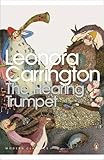
Leonora Carrington defied her wealthy, conventional parents to become an artist, running away to Paris to join a group of Surrealist painters. Her short-lived, intense affair with German Max Ernst was destroyed when he was imprisoned on the outbreak of World War 2, escaping to the security of the States. Her nervous breakdown and appalling treatment in a Madrid asylum, from which she was rescued by the nanny who arrived in a submarine sheds light on the bizarre fantasies of her “modern classic”, “The Hearing Trumpet”. She went on to live for decades in Mexico, married to a Hungarian photographer, and far more famous in her adopted country than the Britain of her birth.
This short novel begins as a quirky satire on old age, showing the frequent lack of sympathy between generations, even the revulsion that youth may feel for old age, and the extent to which the elderly no longer care about conventions and often are far more “with it” than they appear. The ninety-two-year-old narrator Marian Leatherby discovers with the aid of a friend’s gift of a hearing trumpet that her selfish and mean-spirited family plan to put her in a home for senile old ladies. Despite its deceptive appearance, designed, “to trick the old people’s families that we led a childish and peaceful life” and the bogus religious background, Marian is mesmerised by the portrait of the “nun with a leer” which hangs over the dinner table, and entertained by the eccentric little band of residents.
Marian recalls a former admirer from her youth in England: “I remember your white flannels better than I remember you”. As for food: “I never eat meat as I think it wrong to deprive animals of life when they are so difficult to chew anyway”. “People under seventy and over seven are very unreliable if they are not cats”. All this kept me entertained until the verbal surrealism went haywire, as Marian’s world spins into a kind of post-atomic nuclear winter. The author seems to be attacking organised religion and authoritarian fascist governments, whilst harbouring a fascination for romantic legends of the Holy Grail: “the Great Mother cannot return to this planet until the Cup is restored to her filled with the Pneuma, and under the guard of her consort the Horned God”. All this is reminiscent of her paintings with their common theme of angular figures in flowing dresses, with the heads of animals, standing stiffly in artificial landscapes or slightly out of kilter rooms.
Although I admire her originality, I cannot engage with the author’s surrealism. Her sketches for the book strike me as crude and childish, although her paintings are better:in a subjective choice, I like the paintings “Green tea” or “La Dame Ovale”, “The Crow Catcher", and her large sculptures.
I am more interested by Leonora Carrington as an unusual character than in her work. I was intrigued, for instance, by an interview on YouTube between her and a young relative who had tracked her down in Mexico, still lucid and chain-smoking in extreme old age. “You are trying to intellectualise my work too much” was her recurring response, suggesting we try to analyse her more than she intended.
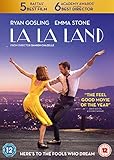
If you watch this film only having heard the hype, you will be disappointed. It is best to approach it with no expectations, just curiosity as to why it has attracted so much attention. The plot is fairly thin, predictable and cheesy in places, and neither would-be trad jazz club owner Seb, nor aspiring Hollywood actress Mia can really sing, although Emma Stone seems to my untutored eye to dance quite well, and Ryan Gosling has achieved impressive mastery of the piano to play his part. You probably need to be a lover of big screen musicals really to appreciate this, although there is only one passable song and instrumental “love theme”.
La La Land is “book-ended” with two quite striking and ambitious dance sequences, there are some jazz pieces which might just enable someone like me to grasp what it is all about and the film is saved from utter vapidity by the bitter-sweet underlying message that following one’s dreams is necessary for personal fulfilment, but may be at a high price.
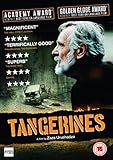
This subtle, film, for the most part slow-paced and low-key, with occasional flashes of violent action, proves to be a searing indictment of war.
The outbreak of war in 1992-3 has driven away the expatriate Estonian community from a remote village in Abkhazia, a Russian-supported separatist enclave in Georgia. The political geography may be unfamiliar, but it is clear that only Margus has stayed behind to harvest his valuable tangerines, together with his carpenter friend Ivo who provides the wooden crates, but perhaps has an additional unrevealed reason for his reluctance to leave.
A shoot-out on their doorstep between two Muslim Chechen mercenaries fighting for the Abkhazian separatists and a trio of Georgians leaves only two injured survivors, one from each side. This is clearly a recipe for high tension, requiring all the pacifist Ivo’s skills to manage. Yet even as a bond forms between the four men, they are at risk from marauding bands of soldiers from both camps who may turn up at any moment, pumped up with adrenalin to shoot on the slightest pretext.
This film contrives to convey a sense of the value of rural life in its calm, natural rhythm, a growing empathy with all the four main protagonists, with their differing viewpoints and personalities, an awareness of the arbitrary nature of survival and conviction as to the utter folly and waste of war as it impinges on innocent parties.
A near perfect film in its development of characters and storyline, with excellent, naturalistic acting, this is all the more striking for being unexpected and deserves to be more widely seen.
Since it is widely known that historian David Irving lost his libel suit against the Jewish American academic Deborah Lipstadt who had branded him a “Holocaust denier” in her book published by Penguin, I was at first reluctant to watch a film on a harrowing theme about which I considered myself already reasonably well informed.
In fact, I gained quite a few fresh insights from what proved to be a well-acted fact-based drama with a powerful script by David Hare, which manages to both moving and peppered with wry humour.
A feisty and outspoken woman, Deborah is perplexed to discover that, under English law, the burden of proof rests on the defendant, so her lawyers must satisfy the judge that Irving lied in his work, deliberately distorting evidence to show Hitler in an unduly favourable light and to present false evidence to “prove” the Holocaust had never occurred. Deborah’s outrage boils over when it becomes clear that, not only is she to be prevented from taking the stand, but the concentration camp survivors desperate to honour the memory of the dead by giving evidence will also be excluded. The lawyers know that a dispassionate approach, using painstaking historial research to find the flaws in Irvine’s work, will prove more effective than emotional scenes which Irvine, who is representing himself, will twist into theatre to play to the gallery.
The screenplay avoids the pitfalls of getting bogged down in a morass of detail, with a focus in the trial scenes focus on a few striking pieces of evidence to give a flavour of the complex proceedings.
I realised for the first time that the existence of gas chambers at Auschwitz is hard to prove, since the Germans bulldozed them causing barrister Richard Rampton to exclaim in despair over the lack of impartial, systematic forensic analysis of the site over the half century following the Holocaust. So, for instance, mavericks have been able to concoct false analysis of the levels of Zyklon B in the brickwork.
There is a double denial in the title: not merely Irving’s deceit, but the fact that, to gain justice, holocaust victims must remain silent while the legal team ferrets out the points which will discredit Irving.
Bright and from an early age too outspoken for her own good, Ifemelu is made aware of racial differences for the first time when she leaves Nigeria to study in the States, where, after a rocky start, she achieves success with a Princetown fellowship and much-read “lifestyle” blog with a focus on American race relations.
We know from the outset that, a more than a decade on, Ifemelu decides to dump her latest longterm lover and comfortable life in America , in order to return to Nigeria. It gradually becomes clear that this is just another example of her apparently capricious tendency to disrupt an enviable situation because “There was a feeling I wanted to feel that I did not feel”. One suspects this is because her life can never be complete without the love of her first boyfriend Obinze, “the only person with whom she had never felt the need to explain herself”, who after an unsuccessful attempt to emigrate to Britain returns to become a successful businessman in Nigeria.
What could be reduced in summary to a corny love story becomes engrossing in the hands of a skilful storyteller, who develops a wide range of mostly convincing characters. For me, this is the kind of novel one does not wish to finish, absorbed by the vivid sense of place, strong often funny dialogues and sharp insights into both Nigerian society and different racial groups in America. The author made me appreciate for the first time the difference in outlook between American Africans, with a strong sense of their own culture, and African Americans burdened by the injustice of past slavery and current prejudice. I now look on African hair with new eyes, having been made aware of the dangers of chemicals used to straighten it and the effort required to create a natural-looking Afro style.
I agree that the book is technically too long (although I didn’t mind since I enjoyed reading it), the frequent verbatim blogs often seem contrived as vehicles for the author to express her personal observations on American society. Perhaps because there is an element of autobiography in the tale, she appears a little too forgiving of the at times ruthless Ifemelu who casually abuses a close friendship by making Ranyinudo’s personal life the subject of a blog for public consumption, and who seems to feel no compunction over breaking up a marriage, too easily justified by the belief it is built on sand. Some of the privileged American dinner party conversations seem artificial and pretentious, but may well be realistic. Nigerian society is painted in an unflattering light, as corrupt, materialistic, superstitious and socially divided as any western class system. There is a troubling moral ambiguity in the implication that Obinze’s emotional detachment from his lifestyle somehow absolves him from the guilt of enriching himself through working for a wheeler-dealing crook.
Very attractive, colourful presentation, well-illustrated to whet one's enthusiasm, also clearly set out and readable, dividing the island into four areas: the more scenic northwest and northeast, versus the arid south-east and beach-orientated south-west. There is a useful pull-out map of the whole island, a road atlas at the end and street plans of the main towns of Santa Cruz de Tenerife and Puerto de la Cruz in the north. This compact guide also provides a suggested itinerary and possible tours, with online links for more detailed information, together with basic travel information e.g weather, emergency call number 112, dates of annual festivals and events and useful phrases in Spanish.
There is little on the history of the island, or on accommodation, but it seems that the aim is to "keep to the essentials" to create a guide which is easy to carry. It therefore serves both as an aid to initial holiday planning, and for quick reference en route.
This seems ideal for an initial visit to Tenerife and good value for money.