Excellent design links form and function

This is my review of WALNEW Kindle Paperwhite Case, Ultra Light&Thinnest Premium Slim Cover for Amazon Kindle Paperwhite(Fit All 2012,2013,2015 and 2016Versions) with Magnetic Auto Sleep Wake Function, Blue Night.

The simple but effective design means that the Kindle fits easily but firmly into the case which snaps shut without the need for flaps, button or straps. Very light and compact, the case fits easily into a relatively small bag. The Van Gogh design is also distinctive.

⭐⭐⭐⭐⭐ 5 Stars

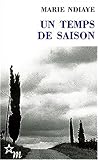
“Un Temps de Saison” by Marie NDiaye -More effective as a short story?

This is my review of Un Temps de Saison by Marie NDiaye.

Little does Parisian Herman foresee the repercussions of his fateful decision to stay on an extra day past August 31st in the village where he is accustomed to spend the summer holidays with wife Rose and small son. A landscape he has only ever seen under sunny blue skies is obscured at once under freezing rain and mist which he realises will be the permanent state of the weather until the holiday season comes round again. Beneath the unfailing politeness and smiles of the locals, the women all conforming to the local tradition of tightly-laced bodices with coloured ribbons denoting the length of marriage, Herman observes for the first time the coldness of their stares. He has outstayed his welcome, which was strictly confined to the summer when tourists are valued only as a source of income. In his attempt to find his wife and son who have mysteriously disappeared, the once confident, dynamic urban professional is sapped of his energy and motiviation, unable to find the will to leave a place where he can never really fit in. The ultimate sad irony is that, far from being a refuge from materialistic, corrupt city life, the villagers are no better in this respect.

Related in a deadpan, convoluted, subjunctive-laden prose which sounds like poetry when read aloud, this modern fable becomes progressively more surreal. Precise in the choice of words, but farcical in content, this did not engage me strongly with the characters. It is quite hard to sympathise with Herman and his wife in their different forms of apathy, one wants to shake them, but perhaps this is not the point in what seems a larger scale attempt to question the norms and values of modern French life. The novella is original, and an interesting inversion of the idea of a Paris denuded of its population as people pile on to the autoroutes for a summer holiday in picturesque villages, never thinking about the effects of their invasion, or what these place are like the rest of the year. However, having made her point, Marie Ndiaye lets the story ramble and drag, struggling to a climax which proves a damp squib, the whimper of an ending feeling like a cop-out.

Apart from the practice gained by reading this in French, I found it overlong and rather dull.

⭐⭐⭐ 3 Stars

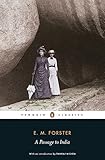
“A Passage to India” by E.M. Forster – How classics stand the test of time

This is my review of A Passage to India by E.M. Forster.

Is genuine friendship possible between Indians and the British under colonial rule? Spelt out at both beginning and end, this is the question underlying a novel which, although quite dated, with some arguably stereotyped characters, remains relevant for a vivid portrayal of India, helping us to understand its present state, and also for the exploration of complex human relationships.

Naïve and idealistic, Adela Quested, who has come to India to decide whether or not to marry the young City Magistrate Ronnie Heaslop, is desperate to see the “real” India (not just be fobbed off with elephants). She also dislikes the character traits her fiancé is beginning to display. “His self-complacency, his censoriousness, his lack of subtlety, all grew vivid beneath a tropical sky”.

Keen to please, although quite critical of his colonial masters “who take and do nothing”, Doctor Aziz offers to take Adela with her future mother-in-law, Mrs Moore, on an excursion to the caves in the Malabar Hills. This leads to a bizarre incident with far-reaching repercussions, symbolising the lack of understanding and ultimate gulf between the two groups, British and Indian. Confusion as to what really occurred in the Malabar Caves is inevitable since Forster himself admitted that his mind was a “blur” on the subject, but this does not really matter since it is not fundamental to the book.

Having observed first-hand the insensitivity and arrogance of British administrators and their wives, E.M. Forster is scathing in his portrayal of them. Despite his obvious empathy, the Indians are not spared either. Aziz is ashamed of his filthy lodgings, but fails to insist that his servants remove the flies, their excuse being there is no point since they will only return. Obsequious and self-absorbed, Professor Godbole’s spiritualty seems bogus, when he shows no sympathy for the plight of Aziz, perhaps falsely accused of a crime, but appears more concerned over the choice of name for the schools he plans to establish in his new post.

Laugh-out loud comedy tinged with poignancy is used very effectively to show the continual misunderstandings caused by cultural differences. Aziz impulsively insists on lending his collar stud to his new friend Fielding, only to be disparaged behind his back by Ronnie for the way “the worthy doctor’s collar climbed up his neck” because of his “inattention to detail; the fundamental slackness that reveals the race”. On the train to Malabar, Adela and Mrs Moore are surprised to see the butler emerging from the carriage toilet with poached eggs. More of these are planned for their arrival, together with mutton chops, since Aziz is under the impression that English people eat all the time, so will need substantial refreshment every two hours.

Places are not romanticised either as Forster writes of the squalor and “abased, monotonous mud”. Although mysterious when viewed from the city by twilight, even the Malabar Hills lose their appeal close at hand: “Bland and bald rose the precipices; bland and glutinous the sky….a Brahmany kite flapped with a clumsiness which seemed intentional”. In another incident, “A grassy slope bright with butterflies.. purple hills in the distance” sound pleasant, but there is a sting in the final phrase: “The scene was as park-like as England, but did not cease being queer”. In other words, the Anglo-Indians could not help judging the landscape by what was familiar to them.

Rereading the book, I was impressed by the originality of E.M. Forster’s approach. In his attempts to capture the atmosphere of the Malabar caves which created such confusion in Adela’s mind or the ceremonies at the Hindu temple in Mau, the tone become almost surreal. What sometimes seems like a patronising parody of the latter made me uneasy, but it is offset by the sense of mysticism which only a few of the British, like Mrs Moore or her children Ralph and Stella can begin to comprehend. It is interesting that none of these three is fully developed as a character, perhaps to maintain the mystical element. On somewhat shaky grounds, Mrs Moore becomes a revered symbol of wisdom, a kind of modern goddess in Indian memory, perhaps reflecting how this has happened through the ages.

What was to prove Forster’s last novel took years to complete, as he struggled to achieve what he wished to be his final masterpiece. Although I found many passages brilliant, his experimentation at times falls short, as in the use of a stilted turn of phrase (allowing for the fact that language has changed over a century), or when an important point is introduced too abruptly in a staccato sentence, creating a disjointed effect. Forster appears on the “cusp” of the early 1900s, as he switches from lapses into flowery “Oh reader!” Victorian-style passages to astute, sharp prose which could have been written now. Reaching its court-room climax two-thirds of the way through, the narrative seems to drift after that but on reaching the end I felt the construction of the story is quite effective and certainly stays in the mind breeding fresh thoughts long afterwards.

⭐⭐⭐⭐ 4 Stars

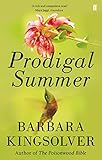
“Prodigal Summer” by Barbara Kingsolver – Ambitious tour de force to set one thinking

This is my review of Prodigal Summer by Barbara Kingsolver.

Middle-aged, reclusive warden for an Appalachian Forest Service, Deanna is unable to resist the charms of the young hunter Eddie Bondo, although she suspects that his chief motive is to claim the bounty for shooting the coyotes thought to have migrated into the area, creatures it has become her obsession to keep concealed and protect. Sexual attraction has led city-bred Lusa to abandon her budding career as a research biologist to become the wife of Cole, a down-to-earth farmer in rural Zebulon County, where she feels oppressed by the suspicion and narrow-minded prejudices of his family and driven to bicker with him over their different attitudes to nature: like Deanna, she is interested in how coyotes have come to migrate two thousand miles from the Grand Canyon, whereas he is more concerned about the intrusion of meat-eating animals on the local dairy farms. Thirdly in the three interwoven story threads which we know will eventually converge, old Garnett Walker conducts a feud with Nannie Rawley “his nearest neighbour and the bane of his life” who sabotages his attempts to control the weeds on his lands with pesticides. Having lost the past family wealth from the American chestnut woods now lost to blight, he labours at the painstaking process of cross-pollinating replacement trees with stock from China, to re-establish a resistant strain. n.b. I’m interested by the Goodreads review from a male reader who felt that the men in the story are stereotyped and portrayed unfairly as less in touch with ecosystems than women, and more guilty of trying to control nature.

Trained as a biologist before becoming a writer, Barbara Kingsolver brims over with a knowledge of the natural world, much apparently based on personal observation, impressive for a city dweller, and thought-provoking – as for the idea that that pesticides may only cause bugs to multiply, by also killing indiscriminately the creatures which prey upon them. I soon found this novel an absorbing page turner, with vivid descriptions, a range of interesting, distinctive characters, by turns poignant and wrily humorous – the kind of story one tries to read more slowly in the vain attempt to take in all the bubbling brew of ideas and information, and which one feels sorry to end.

Yet at the same time, the author’s primary aim to show how the primal force to reproduce drives everything – insect, bird, beast and man – often leads to an almost farcical plethora of examples. It feels at times like reading a biology text book masquerading as a literary Mills & Boon, often too overblown, wordy, corny and contrived for my taste, as when Lusa tries to bond with her prickly ten-year-old niece, or when Deanna, unexpectedly tracked down by Eddie, launches into the analysis that he has been guided by her pheromones: “I’m fertile, that’s what got to you……I sleep outside a lot..I’m on the same schedule as the moon”. This prompts Eddie to say “So back in the old days, when they slept on the ground around the fire, wrapped up in skins….You’re saying all the women in the world came into heat at the same time?” This conversation takes place as the pair “stomp down” on puffballs “releasing a cloud of spores that rose and curled like golden brown smoke, glittering in the sunlit air between them. Sex cells, they were, a mushroom’s bliss, its attempt to fill the world with its mushroom progeny.”

The novel repays rereading, perhaps after an elapse of time. Sincere and “heart-warming”, carefully thought out to trigger reflection on man’s place in nature, it would have been a technically better novel if pruned down but perhaps it was the author’s intention to create a cornucopia of words and ideas.

⭐⭐⭐⭐ 4 Stars

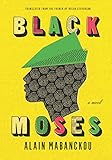
“Black Moses” by Alain Mabanckou – Savage irony

This is my review of Black Moses: A Novel by Alain Mabanckou.

What at first seems like memories of a childhood spent in a Congolese orphanage gradually becomes more surreal, proving by the end to be a kind of fable. A savage indictment of the brutal, corrupt, superstition-ridden and hypocritical regime of Congo-Brazzaville, it employs irony, farce and imaginative, no-holds-barred verve to make its point. The narrator Moses, nicknamed “Little Pepper” for his unorthodox method of dealing with a couple of bullies, befriends a fellow pupil called Bonaventure in the orphanage that mirrors the failings of the wider society of which they are both victims. Whereas Moses becomes more aggressive over time, pursuing a life of crime in order to survive, Bonaventure remains naïve and detached, yet both are eventually judged mad in a crazy world.

The novel has an authentic ring, perhaps because the author grew up in Pointe-Noire, the coastal town he describes so vividly. I like the flights of fancy as when Mabanckou reels off a list of particular food preferences by region, each deplored by all the rest: the Lari eat caterpillars, the Vili adore shark, the Tékés go for dog, and the northern tribes consume crocodile, despite regarding the reptile as sacred. Later on, the author’s imagination runs riot with various remedies supplied by a local healer to cure Petit Piment’s mental problems: cricket’s urine, green mamba’s blood, toad’s saliva, elephant hair mixed with kaolin and sparrow droppings.

I found the style hard-going at times: initially slow-paced, with too much repetition and explanation of events in somewhat unrealistic dialogues as when, sent to the school infirmary to give Moses his medication, assistant Sabine Niangui launches into a lengthy, intimate description of her early life. Events often seem disjointed, and new characters tend to be introduced too abruptly only to disappear as suddenly. Together with the casual violence and frank approach to bodily functions, this may reflect the reality of an orphan’s life, or the general state of affairs in the Congo, but the very prolific Mabanckou does not seem to have the time or inclination to fine-tune his work. Towards the end it is as if he has lost interest in the story, bringing it to a rapid, neatly contrived yet also open-ended conclusion.

Some may enjoy the picaresque inventiveness, but having made its point about the Kafka-meets-1984 state of the Congo, it did not hold my interest, as anything more than an opportunity to practise reading in the original French.

⭐⭐⭐ 3 Stars

“The Evening Road” by Laird Hunt – “Ginning up a story to steal away my heart”

This is my review of The Evening Road by Laird Hunt.

This is an unusual take on the shocking theme of America’s last public lynching in 1930, immortalised in Billie Holliday’s rendition of “Strange Fruit”. The author explores in turn the experiences of three women whose paths cross fleetingly on the evening of the atrocity. Forming a menacing background theme, the lynching is never explicitly portrayed, often seeming oddly secondary to the preoccupation with the personal lives of the two main characters Ottie and Calla. Both are feisty, damaged by dysfunctional childhoods yet on opposite sides of the racial divide.

Ottie is a sassy young secretary who indulges her lecherous boss to boost her pay cheque and has a troubled relationship with her husband, connected with events from her childhood which gradually become apparent. The trio’s whisky-sodden attempt to join the herd travelling to the misnamed town of “Marvel” for the lynching as a kind of casual spectator sport takes on the quality of a bizarre Odyssey. which seems at times like a nightmarish version of the Coen brothers’ “Oh brother where art thou”. Ottie suppresses her sense of unease over the lynching to the point of encouraging the hijack of a cornflowers’ cart to get there. This is the peculiar, incongruously sweet choice of a name for black Americans as opposed to “cornsilks” for whites, or “cornroots” for American Indians.

Orphaned as a child, taken in by a couple on sufferance, torn between her affection for two men, Calla channels some of her personal violent anger into defiant rage over the lynching to the point of taking action, however futile, to prevent people from attending it. One of the most convincing scenes is her perverse desire to “stamp into the ground”, even shoot, the one white person who shows her kindness. She is enraged by the inadequacy of his statement that the lynching is “just plain wrong”. For her, it is “a thousand miles from what needed saying….what a cornsilk needed to do was just keep his kindly mouth stapled shut”: the honest prejudice of his mother seems preferable. This section reaches the strongest conclusion in the novel.

By contrast, the viewpoint of Sallie, a brain-damaged local white woman with mystical powers provides a short, inconclusive postscript.

“The Evening Road” evokes the sense of 1930s inward-looking small town America where the superficial cosiness of catfish suppers at the church is warped by ordinary people’s unthinking acceptance of slavery’s racist legacy, of sexism and the drowning of guilty sorrows in whisky, a reaction against the unrealistically oppressive prohibition of hard liquor.

Despite its striking metaphors (hell-poker hot) and visual images , this novel comes across as an over-contrived exercise in creative writing. Deliberately surreal and evading the norms of structure, it appears too fragmented and rambling, with details only half-revealed at random, threads allowed to drift away, characters half-developed and unengaging, overall a kind of verbal “modern art”. I read on in the hopes of some resolution or revelation which never came and did not feel any insight gained in the process.

⭐⭐⭐ 3 Stars

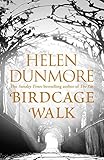
“Birdcage Walk” by Helen Dunmore – “What is left behind by a life”

This is my review of Birdcage Walk by Helen Dunmore.

Set in Bristol against the backdrop of unsettling news about the French Revolution in which idealism turns so quickly to extreme violence, the central character Lizzie Tredevant steers a course between two different worlds. On one hand she has learned to be unconventional, unmaterialistic and free-thinking from Julia Hawkes, her radical blue-stocking mother and a talented pamphleteer on human rights. On the other, she is drawn largely by sexual attraction to John Diner Tredevant, a clever and competent self-made man who has battled his way out of poverty to become a successful property developer. The widower of a French woman, he is much quicker than Julia and her idealistic companions to see the ethical flaws in a revolution which brutally guillotines anyone who happens to be an aristocrat, priest, or sympathiser of the old system. He also appreciates how political and economic uncertainty jeopardise the Bristol housing boom and his debt-laden dream of constructing a grand terrace on the edge of the Clifton gorge, which forms a dramatic backdrop to the story.

Julia, step-father Augustus and family friend Hannah have all advised against her marrying Diner, who in turn does not hide his contempt for what he sees as their naïve theories and practical incompetence: “They tear down the Bastille, but can they build it again? Augustus would not be able to put a roof on a doll’s house…. Can he turn a lathe?…. Can he lay a flagstone floor? No, he depends upon those who can. He is as much a guest in the world as a three-year-old child”. Gradually, her loyalty to Diner is strained by his controlling behaviour, and her curiosity about the French wife she is afraid to ask him about develops into fear over a secret which he may be concealing.

Helen Dunmore knows how to structure a story with a double hook at the beginning: the mystery of a long-dead woman writer who really existed but left no trace of her work, and the reasons why a man is burying a woman’s body in a woodland clearing on the opposite side of the Avon Gorge from Clifton. She develops complex characters and relationships, although the poet Will Forrest is a little too good to be true, with a strong sense of time and place particularly evocative for those who know Bristol – it is intriguing to imagine Clifton as a raw building site surrounded by countryside. The narrative drive drags a little at times, but builds up to a gripping if slightly contrived, borderline melodramatic conclusion. This is a very readable work of popular literary historical fiction.

⭐⭐⭐⭐ 4 Stars

“Days Without End” by Sebastian Barry – Rough justice in mid C19 America

This is my review of Days Without End by Sebastian Barry.

After his immediate family’s death in the Potato Famine, John McNulty joins the wave of Irish immigrants into the US where soldiering seems the only option for him and his lifelong companion and secret lover, John Dole. In the 1850s, this means, of course, “routing out” the Indians to leave the land clear for European settlers. After a brief return to civilian life, inspired by “the true and proper love of country and the call of Mr. Lincoln”, the two men see no irony in joining up again to fight for an end to slavery in the Civil War of the 1860s. Yet McNulty realises that Indian Chief Caught-His-Horse-First and his people have received a raw deal from the Americans whose actions show they are mistaken in thinking themselves morally superior. “Indians ain’t vermin to be burned out of the seams of the coats of the world”.

At first, this novel seems to have a plot so slight it could be summarised in a paragraph, so that what sets it apart is partly the power of Sebastian Barry’s poetical prose – “winter was tightening her noose on the world…then the rains came walking over the land… making the grass seeds drunk with ambition…just before a thunderstorm, when the land draws in its chest and holds a limitless breath…” – layer upon layer of images. There is also his skill in sustaining a distinctive “voice” for his narrator John McNulty in the form of an ungrammatical but expressive stream of consciousness. In fact, when the story gears up to a final dramatic climax, it becomes clear that most of the previous characters and incidents are jigsaw pieces in a carefully constructed plot.

The first of many striking, visceral descriptions is the unexpected encounter with a herd of two or three thousand buffalo, the thrill and danger of catching a few for meat, and the exhilaration of preparing and eating it. “The knives opened the flesh like they were painting paintings of a new country, sheer plains of dark land, with the red rivers bursting their banks everywhere.. The Shawnees ate the lights raw. Their mouths were sinkholes of dark blood”. When this unflinching style is applied to the massacre of Indians, it becomes very hard to read. I can understand Sebastian Barry’s urge to test his creative writing skills to the limit in capturing the reality of brutal events, perhaps he is honouring the victims in the process, yet reading it feels almost obscene. I certainly felt oppressed by unrelenting sequence of violent bloodshed clearly in store.

This sensation is at least partly offset by John McNulty’s wry humour, his sensitive eye for the landscape and weather, his acute observations of the rapid changes in the way of life, all more vivid and evocative than a social history of the period: the experience of a stream train, “Something in perpetual explosion. Huge long muscle body on her and four big men punching coal into her boiler…..Here is new-fangled luxury I guess. We tear on through country would of took long wretched hours by horse, the train traversing it like a spooked buffalo”. Or the freed slaves working confidently by “Vast wharf-houses tall as hills…The boss man is black and the shouting roars out of black lungs. No whips like heretofore. I don’t know but this looks like to be better. Still…(we) don’t see one Indian face”.

In another of McNulty’s flashes of insight: “When that old Cromwell came to Ireland he said he would leave nothing alive. Said the Irish were vermin and devils. Clean out the country for the good people to step into. Make a paradise. Now we make this American paradise, I guess. Guess it be strange so many Irish boys doing this work”.

Although the author manages to convey a good deal about his characters through what often seem like chance comments, and they are in general a realistic mixture of good and evil, apart from the impossibly perfect Indian girl Winona, the fragmented style at times makes them seem distant, two-dimensional, not arousing as much sympathy as they should. It may have been Barry’s intention, to portray people this way in an unstable world. Thus McNulty himself remarks towards the end. “I never think bad of John (Cole), just can’t. I don’t even truly know his nature. He’s a perpetual stranger and I delight in that”.

⭐⭐⭐⭐ 4 Stars

“Based on a True Story” by Delphine de Vigan – Interesting idea could have been handled better

This is my review of Based on a True Story by Delphine de Vigan.

Having written a fictionalised memoir of her bipolar mother’s life which ended in suicide, the award-winning author Delphine Le Vigan is well–placed to muse on the borders between reality, perceived truth and creative invention. In “Based on a True Story”, this theme is interwoven with the psychological drama of a vulnerable author finding her life being insidiously taken over by a charismatic but probably unstable individual who wants to go beyond being a ghost writer to control the life of a successful author. The inspiration for this comes at least in part from Stephen King’s novels, quotations from which, including “Misery”, at the beginning of each section give broad hints as to where matters are heading.

In giving the novel’s narrator her own name of Delphine, the author suggests a degree of autobiography, but although she herself may well have experienced a period of “writer’s block”, it is to be hoped that the bulk of the story is “made up”. Overwhelmed by the success of her novel revealing intimate family details, which has upset some relatives, bombarded at book signing sessions by fans whom she has given the confidence to unburden their own troubles, it is not surprising that the fictional Delphine is finding it impossible to write. With hindsight, she attributes her decline to the malign influence of her enigmatic friend “L” who at first seemed such a kindred spirit, so eager to help manage her life.

The tense, claustrophobic relationship rapidly established between Delphine and “L” is heightened by the absence of other characters. As regards Delphine’ family, this is conveniently explained by her childrens’ absence at college while her lover spends long periods on work projects in the States. While Delphine initially wants to write creative fiction, the ever more dominating “L” is determined that she should focus on real experiences, however painful, arguing that this is what people wish to read about and now expect from her. This seems a somewhat sterile argument over a false dichotomy, since apart from the fact that people see reality very differently, it is inevitably altered through a writer’s descriptions and interpretations into a “form of fiction”. A book may claim to be “a true story”, but even when “inspired by real facts” may in practice be largely invented.

Although this book has been highly praised, for me it falls short of the subtle and mind-bending work it could have been. The decision to present a retrospective explanation of events with indications of what was about to happen may feed a sense of “reality” but combined with the repetition of points “ad nauseum” makes for an often rather dull and tedious read. When the suspense does begin to ramp up, it tends to become rapidly too melodramatic, collapsing all too predictably into disappointingly mundane or even ludicrous anticlimax. Although the novel benefits from a twist towards the end, the author does not seem to know when to stop – the last two chapters in particular seem counterproductive.

I am tempted to see Polanski’s film on this, since I suspect that the director of “Rosemary’s Baby” will know how to create a real sense of menacing suspense, perhaps at the expense of the literary arguments.

⭐⭐⭐ 3 Stars