“Don’t Let Go” by Michel Bussi – The risks of revisiting the past

This is my review of Don’t Let Go: Some holidays are paradise, some are murder…. by Michel Bussi.

On holiday in the French tropical paradise of Réunion, Liane Bellion disappears from her hotel room, leaving only evidence of a struggle. As the damning evidence against him mounts, her husband Martial decides to go on the run with the couple’s pampered but bright six-year-old daughter Sopha. This being a novel by Michel Bussi, Martial is unlikely to have murdered his wife, but is unable to prove his innocence, plus he could well have committed some other crime, or be about to do so.

In the same vein as Bussi’s excellent “Nymphéas noirs”, this novel has a remarkably convoluted plot in which the reader can be sure of nothing, except that the author is capable of switching from corny mawkishness to moments of brutal violence or tragic fate from which no character may be spared. Once again, he develops a strong sense of place, in this case a volcanic island with some striking landscapes of deep craters, lava fields encroaching on fields of sugar cane and palm-fringed beaches, scenic tourist spots, which he describes in detail along with the local vegetation and birdlife – all of which can be checked on google images. Even the route Martial takes can be located on “street view”, and the Hotel Alamanda at Saint-Gilles-les-Bains exists in reality.

Bussi also fleshes the story out with details of the social background: the Créoles, descendants of slaves and still exploited as cheap labour in the hotels, the Zarabes, muslims of Indian origin like the driven police officer, Captain Aja Purvi, and the Zoreilles, the “top dogs” from the French mainland.

This is a page-turner until the accumulation of implausible plot twists becomes too much to swallow and by then it is too late to give up. There is also the odd dud scene, such as the clunky debate on the effects of rum on the local population conducted by the hypocritical drinking mates of unlikely police lieutenant Christos. Even more toe-curling are the sex scenes with his voluptuous lover Imelda.

Most of the characters seem somewhat overdrawn: ageing hippy Christos, with his grey pony-tail, smoking pot he has confiscated from Imelda’s borderline-criminal teenage son Nazir; Imelda herself, a Creole Miss Marple to out-class the detectives, but not wise enough to avoid having five children by different feckless men, nor keep clear of danger in her sleuthing; Aja Purvi, humourless in her single-minded ambition, throwing the furniture round in bursts of unprofessional frustration, exploiting her long-suffering husband’s seemingly inexhaustible good will as he somehow combines a teaching career with caring for their two daughters.

The slightly jokey tone perhaps makes one take the occasional bloody murder too lightly. The strongest aspect of the book is the creation of a sense of tension as Martial and Sopha maintain their freedom against the odds. The only subtle relationship in the book is the complex bond between the two as Martial tries to connect with the daughter whose care has always been provided by his overprotective wife, with the constant nagging suggestion that Martial may in fact be even more of a monster than the police believe.

This “reads” better in the original French rather than the very literal but somewhat wooden English translation. For the reasons given above, it is not as effective as “Nymphéas noirs”

⭐⭐⭐ 3 Stars

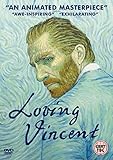
“Loving Vincent” [DVD] -Mesmerising

This is my review of Loving Vincent [DVD].

Unlike any film I have seen before, this hundred minute dramatisation of the differing explanation of Van Gogh’s death consists entirely of a remarkable animation of nearly sixty-seven thousand oil-paintings, skilful copies of ninety-four of his pictures, into which the characters have been painted in new poses as required.

The continual movement applied to Van Gogh’s broad strokes and swirls of colour are fascinating, as is the brilliant way actors who have been chosen for their likeness to real people whom he painted such as his physician Doctor Gachet, latter’s daughter Marguerite or the paint supplier and art dealer Père Tanguy, are given such life-like expressions and mannerisms recognisable as typical of the actors used. Although every effort has been made to use Van Gogh’s paintings, where it has been necessary to create new settings, these are shown in black-and-white, again painted, as in the scenes of his brother Theo, himself dying and mentally tortured soon after Vincent’s demise.

The theme may sound sombre, but is touched with moments of humour as the hard-drinking Armand Roulin, son of Vincent’s postman, always wearing his distinctive canary yellow jacket which apparently drove the film’s artists mad as they constantly cleared canvases to repaint it at another angle, fulfils his father’s instruction to deliver by hand to a suitable person Vincent’s last letter. Initially reluctant to do this, Armand becomes obsessed with the desire to obtain the truth and justice for the artist who may have been the victim of manslaughter rather than fallen prey to suicide in a psychotic moment.

Although there is something to be gained from coming to this film, as I did, with no prior knowledge of how it was made, there are some informative short videos about this on Youtube.

I also think it is helpful to be aware of the essential facts of Van Gogh’s life: he was a difficult man subject to great enthusiasms and mood swings, probably bi-polar. Taking up painting in his late twenties, he was supported entirely by his long-suffering brother Theo, never or barely selling a single picture in his lifetime. Captivated by the brilliant colours in the sunshine of Provence, he hoped to establish an artist’s colony there, only succeeding in falling out with Gauguin in a failed attempt to get this started. He was astonishingly prolific in his production of both paintings and letters decorated with drawings in the margins.

This film needs to be seen more than once, requiring intense concentration in the attempt to take in every clever or beautiful visual effect, as when the tossing of some object like an apple core prompts a flock of cawing crows to flap up out of a cornfield.

The “storyline” sometimes seems a little disjointed, the black-and-white scenes are the least satisfactory, often appearing blurred and weird, and the overall dreamlike quality may distance viewers from the characters. Yet the film still creates a sense of poignancy, and its technical achievement outweighs any minor criticism. ( A subjective view, but the choice of an inferior new recording in preference to Don Maclean’s original version of “Starry, starry night” in the final moments seems ill-judged.)

The visionary genius of conceiving this film in the first place, and the teamwork involved in producing it over a period of years seem to justify a string of awards.

⭐⭐⭐⭐⭐ 5 Stars

“The Dry” – The Sunday Times Crime Book of the Year 2017 – by Jane Harper: The cost of even white lies

This is my review of The Dry: The Sunday Times Crime Book of the Year 2017 by Jane Harper.

When Federal Agent Aaron Falk returns after an absence of twenty years to his now drought-stricken former hometown of Kiewarra in the Australian outback, for the grim duty of attending a triple funeral, he is soon sucked into seeking proof that, despite the initial evidence, Luke Hadler, his onetime best friend, is himself a murder victim and not guilty of killing his wife and son.

Aaron’s investigations are obstructed by the widespread hostility of a closeknit, inward-looking community, in which old memories and prejudices soon surface over another suspicious death, the drowning of Ellie Deacon, which eventually drove Aaron and his father out of town two decades earlier. Who is in any way responsible for these deaths, and how may they be linked?

This well-constructed page turner, which lends itself to adaptation as a film, gradually reveals details through effective use of flashbacks – except perhaps at the end – and develops the main characters as for the most part convincing, flawed individuals prone to guilt, resentment, regret, the desire to control or revenge, suffering the consequences of missed opportunites and fateful coincidences. The unresolved collapse of trust between Aaron and his father is particularly poignant. Least satisfactory in that they lack any redeeming features are the Hadler family’s venomous neighbour, Mal Deacon and his boorish nephew Grant Dow.

The novel seems to be the product of a creative writing course with gruesome hook in the prologue and build-up to highly dramatic at the cost of plausibility climax. There are a few glitches in the editing. I found the final loose-ends tying chapter a little disappointing, but there is no denying that this is an exceptional debut novel and a cut above the average crime thriller because of its psychological depth and chain of clues and plot which “holds water”. I was very struck by the sense of place – the isolation of farmhouses where one could very understandably be driven mad, the oppressive heat and intensity of the drought captured by Falk’s realisation that the missing sound in the landscape is that of the once sizeable river of his boyhood, now completely dry so that one is made to feels guilt over the use of water to clean one’s teeth. The acute dryness is even made critical to the climax of the drama.

⭐⭐⭐⭐ 4 Stars

“4 3 2 1” by Paul Auster – When is life too short to finish a long book?

This is my review of 4 3 2 1 by Paul Auster.

When Paul Auster was fourteen, the boy next to him was struck by lightning and died. This traumatic evidence of how chance affects our life and death has influenced his writing profoundly, and forms the basis of the mammoth “4321” which narrates the early life of Archie Ferguson, cycling through four versions at each stage.

Characters may be prosperous and happily married in one scenario, failures, even criminal, at odds with their partners, without a partner or die prematurely in others. Ferguson himself is essentially the same: baseball-loving, precociously interested in books and classical music, introspective and observing those around him, developing inexorably into a writer. Since Ferguson is born in 1947, the same year as Paul Auster, the latter seems to be playing games with his own fictionalised autobiography.

The opening anecdote is promising: arriving at Ellis Island, Ferguson’s Jewish grandfather Reznilkoff cannot recall the name he has been advised to adopt and blurts out in Yiddish “Okh hob fargessen” – “I’ve forgotten”. But by only page 150, I felt I had been reading for hours but was less than a fifth of the way through, bogged down in unrelenting detail cutting me off from characters with whom I could engage.

Without the distraction of making notes or continually flicking back four chapters, it was hard to remember which Archie I was dealing with. This was irritating although I decided early on that it does not matter, the main point of the novel being to explore human relationships against the backdrop of the United States’ post-war Rosenberg Trial, Civil Rights, Vietnam conflict history. Those over sixty-five may respond to the nostalgia of recalling long-forgotten incidents, but younger readers, particularly if not American, may be unfamiliar with references which it is assumed one will understand.

The trouble is that Ferguson is not very interesting. His life, whether in a strapped-for-cash or wealthy version, is mostly quite mundane. The rare moments of high drama, such as a death or a serious crime, are stripped of their potential by the matter-of-fact descriptive style. Perhaps it is realistic that people cannot find words adequate to the the shock over Kennedy’s assassination, . “I just can’t believe it”…. “Unreal. A city wihout trees. A world without trees”. This leaves me cold, unlike my memory of Jackie Kennedy still in her bloodstained pink suit, apparently hours after the shooting.

Not only daunting in its length – 866 pages in the hardback version, it is cumbersome to read, too heavy to take on a bus, awkward just to hold open at the right page. Using a Kindle is a solution, but then it is harder to refer back quickly, plus a typical complex sentence is likely to last for several pages with the milestone ending of an interminable paragraph rarely in sight on a small screen.

The sheer garrulous verbosity makes the book seem even longer. Paul Auster can never resist including all the examples which have come to mind, rather than refine them down to one or two. He can’t just tell you that Ferguson was painting the kitchen ceiling when he heard of Ho Chi Minh’s death: you have to know it was “in a three-bedroomed apartment on Central Park West between Eighty-Third and Eighty-fourth Streets”, and that’s a modest example of prolixity. Lists of friends about whom one knows nothing at all are tedious, those of favourite literary works just seem a bit self-indulgent, even pretentious.

I found myself comparing “4321” with Philip Roth’s “Nemesis”, the product of another experienced writer’s “late stage” work, but making the same point about the devastating effects of chance in a much shorter, memorable novel.

I have enjoyed novels by Paul Auster, and will make a point of reading some more since I have bracketed him mentally alongside writers like Saul Bellow, but “4321” lacks the vitality and verbal skill of the equally ambitious “Humboldt’s Gift”. This too has been criticised for being an over-long ego trip! I came to the sad conclusion that the opportunity cost of finishing “4321”, in terms of the other books I could read in the same time, was simply too high.

⭐⭐⭐ 3 Stars

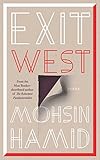
“Exit West” by Mohsin Hamid – How we have all become migrants in time.

This is my review of Exit West by Mohsin Hamid.

In the same vein as “The Reluctant Fundamentalist” yet quite different in some respects, this short novel has an unusual, often insightful and moving take on the fraught issue of migration. Saeed and Nadia, two young professionals in an unnamed muslim city, first notice each other at a time when religious militants are beginning to disrupt daily life. One of the first hints of menace comes in the comment that the view from the flat which Saeed shares with his parents would in times of conflict be “like staring down the barrel of a rifle”. Saeed cannot visit Nadia’s flat openly, so he comes at night when she can drop down to him a woman’s black robe to provide a suitable disguise.

When militants gain overall control of the city, with close relatives killed, work places closed down, food in short supply, electricity and water supplies disrupted and Saeed and fearful of touching each other in public, they have little option but to flee. On realising that Mohsin Hamid has resorted to magic realism by having his characters slip through black doors which mysteriously appear to allow people to escape to unknown destinations, irritation almost provoked me to abandon the novel. In fact, he handles this device surprisingly well: apart from adding to the sense of being at the mercy of fate, it arguably it is a method of focusing on the migrant experience of adapting to a series of unfamiliar new settings, and also makes the impact of each cultural change all the sharper.

Mohsin Hamid imagines a London which has almost broken down under the volume of migration, with many of the vacant homes of wealthy residents taken over by squatters. There is a kind of pragmatic tolerance in the eventual decision to build settlements for the newcomers in the Green Belt.

He writes quite subtly of the different ways in which migrants respond: Saeed clings to aspects of their old life, seeking solace in prayer and the company of those of the same nationality, whereas despite her continued wearing of the black robe which keeps the unwelcome attentions of men at bay, the non-praying Nadia finds it easier to put the past behind her. The claustrophobia of close proximity impels them to go foraging alone, despite the risk of being separated if their phone contact is broken. In the disrupton and risk of their old lives, they feel most disoriented when general system failure cuts them off from the internet and online social networks, sophisticated links in stark contrast to their poverty and lack of personal control over their fate. Although maintaing an enduring concern for each other, their relationship is strained to the limit and altered by the changes imposed upon them.

The author arouses a strong sympathy for the migrants, combined with a growing sense that the lives of those in the countries receiving them must be inevitably changed at the same time. He writes at one point of the elderly Californian who feels a stranger in the locality where she has lived all her life which seems to have been taken over by “people who looked more at home than she was, even the homeless ones who spoke no English, more at home maybe because they were younger, and when she went out it seemed to her that she too had migrated, that everyone migrates, even if we stay in the same houses our whole lives, because we can’t help it. We are all migrants through time”.

Perhaps because he felt it necessary to express ideas beyond the experiences of Saeed and Nadia, Hohsin Hamid keeps briefly introducing fresh characters, unconnected to the main storyline line, who pass through the black doors into new lives. This tends to create a disjointed, distracting effect, for me the main shortcoming in an otherwise excellent book which I read in a single day, trying not to pass too quickly over the many acute observations.

⭐⭐⭐⭐ 4 Stars

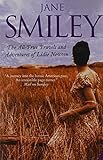
“The All-True Travels and Adventures of Lidie Newton” by Jane Smiley – Worth-reading because it’s important to understand what led to the American Civil War

This is my review of The All-True Travels and Adventures of Lidie Newton by Jane Smiley.

Despite caring little about the issue of slavery which is propelling 1850s America ever closer to civil war Lidie Harkness agrees to marry the thoughtful but arguably naïve New Englander, Thomas Newton, a committed “abolitionist”. A book-loving tomboy, who likes to ride a horse bareback, and once swam the treacherous Mississippi for the sheer challenge, she is lured by the adventure of becoming a settler’s wife, developing a “claim” on the “free soil”of the falsely promoted Kansas Territory. All too soon she experiences not only the harsh reality of life on the prairies, particularly in the freezing winter, but also the vicious hostility of the perhaps somewhat stereotyped residents of adjoining Missouri, unwilling to accept a democractically elected slave-free state, convinced that this will destroy the economic and social order.

Perhaps inspired by the divisions in her own family tree, with a grandfather’s branch Southern sympathisers, but her grandmother’s progressive abolitionists, Jane Smiley has researched in depth the fascinating question of whether or not to permit slavery in the newly established states as pioneers pushed further westwards. As a result, the book sometimes reads like a condensed history shoehorned into a novel. I was frustrated by the fact this is often hard to follow, without the disruption of breaking off to check the details elsewhere. It could be argued that, since the narrative is so strongly based on Lidie Newton’s viewpoint, her limited and confused understanding of events is realistic. Instead, she writes with much more precision and insight about filling in the chinks in her cabin walls or forming a relationship with the rashly purchased horse Jeremiah.

Jane Smiley clearly prefers writing in-depth about the complexity and contradictions of relations between individuals and the details of daily life. Although one cannot know how authentic this is, she has managed to sustain what reads like the “voice” of a young nineteenth century American woman – inexperienced and inevitably limited by her upbringing but perceptive and resilient, with a wry humour.

At first, I wondered why this book is not as widely known and praised as Jane Smiley’s “A Thousand Acres” but although it is a page turner in parts, I soon found it weighed down with tedious wordiness, a long list of examples when two or three would do, the same point made several different ways, repetition of words. In short, Lidie’s thoughts and the lengthy disquitisions of some characters could do with a good edt. Yet perhaps the author seeks to emulate the styles of C19 authors she admires, like Dickens, George Eliot and Anthony Trollope. This seems borne out by the way every chapter starts with a quotation from Lidie’s “bible”, “A Treatise on Domestic Economy for the Use of Young Ladies at Home” by Catherine Beecher Stowe, while every chapter and even page is titled with a brief indication of what is happening.

Having gritted my teeth to endure the style, I was absorbed by much of this book, and it certainly created an interest in learning more about American history in the run-up to the Civil War. However, in addition to being over-long and in need of more rigorous editing, it hinges on some unnecessarily implausible plot developments, and its ending seems unsatisfactory, too abrupt (after all the verbiage) and weak.

⭐⭐⭐ 3 Stars

“The First Man” by Albert Camus – Making sense of a life

This is my review of The First Man (Penguin Modern Classics) by Albert Camus.

If possible, this is best read in French to appreciate fully Camus’ writing.

When forty-year-old Jacques visits his father’s grave, he is taken aback by the realisation that he was only twenty-nine, far younger than his son is now, when killed in the First World War. The compulsion to find out more about his father takes Jacques back to Algiers where he was brought up, but the visit fails to provide many clues as to what his parent was really like. Jacques realises that he will never know his father, who will remain a mystery resulting from his poverty, being one of the anonymous masses despatched in waves to develop North African territory between the sea and the vast expanses of desert. So Jacques must be self-sufficient, “le premier homme”, learning to grow up without a sense of roots and recollections from the past.

The book develops as a moving account of Jacques’ childhood in a close-knit but impoverished family, starved of opportunity, lacking books, newspapers, even a radio, too busy in the struggle to survive to communicate much or reflect life. He craves the affection of his widowed mother who is clearly proud of him, but cannot express her emotions. Isolated by her deafness and illiteracy which means she can only earn a living as a cleaner and washerwoman, the nearest she gets to escape is to sit by the window, watching the world go by. A brief attempt at romance is destroyed when her brother beats up the suitor who threatens the family unit. Jacques’ formidable grandmother’s belief in character- building includes sending him out at the night to catch a chicken in the coop before forcing him to watch its execution. At thirteen, he is denied the pleasures of roaming free in his summer holidays by her insistence on his earning money in the accounts office of a hardware store.

At first I was disappointed to find that this fictionalised autobiography of Albert Camus, in which he sometimes reverts to the characters’ original names, is incomplete – an unedited stream of conscience found at the scene of his fatal car crash, a draft which so dissatisfied him that he intended to burn it. My initial impressions were of a disjointed, often banal and indigestible read, with long sentences in interminable paragraphs of I counted up to eight pages.

I became hooked at the point where Jacques is taken under the wing of primary school teacher M. Bernard, the father figure when he needed one, who sees the boy’s potential and goes out of his way to prepare him for the entrance exam for the lycée, his escape route from a life of grinding poverty, not to mention charming the boy’s grandmother into letting him continue his studies when he could be contributing to the family’s meagre earnings. It is fascinating to see how schools have changed: overhearing Jacques called a “teacher’s pet”, M.Bernard readily admits this, announcing it is the least he can do for comrades killed in the war to favour one of their deserving offspring. When, as honour among pupils requires, Jacques beats up the boy who has mocked him, and the parents complain, Jacques is mortified to be forced to stand in the corner of the school yard for a week with his back to the ball games he loves. M. Bernard sidles up and gives him permission to look across to where the other boy is being punished in the same way.

There are wonderful descriptions of the oppressive, prolonged heat of Algiers in the long summer months, suggesting the germ of the idea for “L’Étranger”, or the joys of childhood, as when Jacques brandishes a palm branch to revel in the feeling of the wind vibrating through his body. A recurring background theme is the effect of colonisation where a centralised French cultural curriculum is imposed without any concessions, together with the uneasy relationship between Arabs and residents of French origin. Also, Jacques’ intense introspection, examining issues from all angles foreshadows Camus’s philosophical writing in later life, as in “La Chute”. In short, this book is not only a vivid portrayal of the life of a bright but emotionally repressed boy in a poverty-stricken but close-knit family, but also a key to the literary works which brought the author fame and criticism.

It repays rereading to tease out the mass of insights and ideas. Invaluable for any student of Camus and his work, the power of its spontaneous flow compensates to some extent for the lack of editing.

⭐⭐⭐⭐ 4 Stars

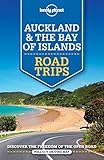
Lonely Planet Auckland & The Bay of Islands Road Trips – A compact, clear and attractive aid to route planning

This is my review of Lonely Planet Auckland & The Bay of Islands Road Trips (Travel Guide) by Lonely Planet,Brett Atkinson,Peter Dragicevich.

This compact guide seems more concerned with presentation including photographs and maps in colour than is usually the case for Lonely Planets with their serious-minded focus on detail. The logical if slightly repetitious approach is to “drill down” from an initial overview to aid general planning, through suggested road trips covering the area as a whole (6-8 days for the Northland and Bay of Islands or 4-5 for the Coromandel Peninsula) or in different parts (2-3 days for a circular coastal tour north of Auckland or for the popular Waiheke Island an hour from Auckland). Each trip is then broken down into a sequence of destinations, all cross-referenced with the suggested trips, concluding with advice on driving in New Zealand.

It is useful to have a detachable map, although it would be better to have a pocket to slip it back into, rather than a tear-out folded sheet which can easily be mislaid or damaged.

This book seems most useful for New Zealanders themselves or those making regular visits to the country who have “done” the main tourist spots nationwide. I was actually looking for day trips out of Auckland, and would have liked a few suggestions for this. I decided that one could be 45 minutes west from Auckland to Piha with the Lion Rock and Bethells Beach, but was deterred by the “black sand” and apparent lack of a direct road route between these two coastal sites. Shakespear Regional Park on the east coast seemed a possible option but I decided on Tauharanui National Park, 1.25 hours north of Auckland. The guide book helped me to think this out, but I had to go on the internet to find a map of area, with suggested walking routes, all of which could easily have been included in this guide.

⭐⭐⭐⭐ 4 Stars

“Middlemarch” by George Eliot – A masterpiece which has stood the test of time and repays the time needed to read it

This is my review of Middlemarch by George Eliot.

How can a book written a century-and-a-half ago still exert such a powerful addiction over modern readers who imagine themselves to be free from the conventions concerning class, race, gender and honour which so shackled C19 society? A remarkably perceptive and articulate woman who wrote as “George Eliot” to ensure she was not merely published but taken seriously at the time, Mary Ann Evans was able to enter into the minds of her characters and analyse their complex and shifting emotions so effectively that readers in any generation are able to relate to them. Admittedly some of the minor players are caricatures, such as the complacent, censorious inhabitants of Middlemarch, but the main protagonists are portrayed in such depth, both strengths and failings, that we even find ourselves feeling a twinge of sympathy for the canting hypocrite, non-conformist banker Bulstrode when he receives his final reckoning.

Culled from two separate earlier stories, the main storylines are interwoven, contrasting the fortunes of two idealistic individuals: the wealthy well-born Dorothea, filled with the earnest but unfocused desire to make a difference in the world, and the ambitious young pioneering doctor Tertius Lydgate, determined to make his mark in furthering medical knowledge. Restricted by the naivety stemming from a sheltered upbringing and a lack of education to match her intelligence, Dorothea makes the mistake of marrying a selfish pedant, whose dry-as-dust research project has run into the ground. Her gradual realisation of the hollowness of his talent and the meanness of his outlook is made all the more poignant by the appearance on the scene of Casaubon’s intelligent and attractive young relative Will Ladislaw, who could not present a greater contrast in his open-minded spontaneity. An unwise marriage is also Lydgate’s downfall, since the lovely but shallow and materialistic Rosamund is neither willing or able to support him in achieving his aims.

With its web of many well-developed, diverse characters and entertaining sub-plots, this is a kind of glorious literary soap opera, by turns humorous and poignant, set against a background of industrial and political revolution: the drives to extend the vote under the controversial Reform Act, and to develop the railways, seen as a mystifying and needless threat to civilised life by many in Middlemarch. Just occasionally, George Eliot falls prey to the prejudices of her time: anti-Semitic asides and snobbish descriptions of some low-born characters such as the “frog-faced” Joshua Rigg, bastard son of the perverse Featherstone, whose highest ambition is to use his unexpected inheritance to set himself up in the despised profession of moneychanger. Yet overall one is impressed by the sheer force of the author’s intellect, and struck by the irony that a female writer of this calibre was obliged to write under a male pseudonym.

I am not sure whether George Eliot felt required to indulge in the flowery disquisitions so popular in Victorian writing, or revelled in displaying her skill in this, but I have to admit to struggling with some of these passages, not least where words have changed in their meaning, or turns of phrase become too convoluted for our preferred sparer style. Yet most descriptions and dialogues sizzle with a sharp wit which would not seem out of place in a modern novel.

Less bleak than “The Mill on the Floss” or “Silas Marner”, “Middlemarch” deserves to be called one of the greatest English novels of the nineteenth century.

⭐⭐⭐⭐⭐ 5 Stars

“Middlemarch” by George Eliot – A masterpiece that stands the test of time and repays the time needed to read it.

This is my review of Middlemarch by George Eliot.

How can a book written a century-and-a-half ago still exert such a powerful addiction over modern readers who imagine themselves to be free from the conventions concerning class, race, gender and honour which so shackled C19 society? A remarkably perceptive and articulate woman who wrote as “George Eliot” to ensure she was not merely published but taken seriously at the time, Mary Ann Evans was able to enter into the minds of her characters and analyse their complex and shifting emotions so effectively that readers in any generation are able to relate to them. Admittedly some of the minor players are caricatures, such as the complacent, censorious inhabitants of Middlemarch, but the main protagonists are portrayed in such depth, both strengths and failings, that we even find ourselves feeling a twinge of sympathy for the canting hypocrite, non-conformist banker Bulstrode when he receives his final reckoning.

Culled from two separate earlier stories, the main storylines are interwoven, contrasting the fortunes of two idealistic individuals: the wealthy well-born Dorothea, filled with the earnest but unfocused desire to make a difference in the world, and the ambitious young pioneering doctor Tertius Lydgate, determined to make his mark in furthering medical knowledge. Restricted by the naivety stemming from a sheltered upbringing and a lack of education to match her intelligence, Dorothea makes the mistake of marrying a selfish pedant, whose dry-as-dust research project has run into the ground. Her gradual realisation of the hollowness of his talent and the meanness of his outlook is made all the more poignant by the appearance on the scene of Casaubon’s intelligent and attractive young relative Will Ladislaw, who could not present a greater contrast in his open-minded spontaneity. An unwise marriage is also Lydgate’s downfall, since the lovely but shallow and materialistic Rosamund is neither willing or able to support him in achieving his aims.

With its web of many well-developed, diverse characters and entertaining sub-plots, this is a kind of glorious literary soap opera, by turns humorous and poignant, set against a background of industrial and political revolution: the drives to extend the vote under the controversial Reform Act, and to develop the railways, seen as a mystifying and needless threat to civilised life by many in Middlemarch. Just occasionally, George Eliot falls prey to the prejudices of her time: anti-Semitic asides and snobbish descriptions of some low-born characters such as the “frog-faced” Joshua Rigg, bastard son of the perverse Featherstone, whose highest ambition is to use his unexpected inheritance to set himself up in the despised profession of moneychanger. Yet overall one is impressed by the sheer force of the author’s intellect, and struck by the irony that a female writer of this calibre was obliged to write under a male pseudonym.

I am not sure whether George Eliot felt required to indulge in the flowery disquisitions so popular in Victorian writing, or revelled in displaying her skill in this, but I have to admit to struggling with some of these passages, not least where words have changed in their meaning, or turns of phrase become too convoluted for our preferred sparer style. Yet most descriptions and dialogues sizzle with a sharp wit which would not seem out of place in a modern novel.

Less bleak than “The Mill on the Floss” or “Silas Marner”, “Middlemarch” deserves to be called one of the greatest English novels of the nineteenth century.

⭐⭐⭐⭐⭐ 5 Stars