The Florida Project (DVD) – The joy of childhood against the odds

This is my review of The Florida Project [DVD].

Lively, precocious Moonee runs wild with her small group of friends around the cheap motels where they all live encircled by fast roads, wasteland, the garish colours of grotesque orange- and witch-shaped cafes, not to mention a noisy helicopter pad, all on the fringes of the Florida Walt Disney fantasy land. It is an ugly, urbanised, artificial but sun-drenched world, with occasional flashes of natural beauty in a sunset, or a group of birds.

As the children’s freewheeling mischief leads to more risky escapades, one fears for their safety. Moonee’s immature young mother Halley, foul-mouthed, chain-smoking, often high on drugs, more than a little crazy as she swings between uninhibited self-expression and violent outbursts when thwarted, also arouses concerns for Moonee’s future. As Hailey resorts to petty crime to pay her rent, it is clear that the little girl’s carefree world cannot last much longer.

This film conveys a child’s sense of joy in living, curiosity over every new experience, the ability to be happy with very little. One can see that Moonee risks being ruined by a lack of boundaries, frequently insufferable, noisy, mouthy, defiant and destructive, yet also with a strong sense of justice, loyal and generous to friends, acutely aware of the world around her although often unable to make sense of it. The moments of bonding with the free-spirited Halley who is more like a big sister than a mother are quite moving. Although clearly “unfit” to be a parent, Halley loves her daughter – too immature and self-absorbed to see how she is neglecting Moonee, she does not appear to consider giving the child up as a solution to ease her penniless state, but rather, being a child at heart herself, she knows how to create on a shoestring (or by stolen means) the magical experiences Moonee will never forget like making wishes outdoors at midnight as fireworks explode over Disney World.

The acting is generally excellent, from the children, Halley’s long-suffering friend and some of the real-life police and social workers in the cast, to William Dafoe in the role of the harassed caretaker who develops a soft spot for the appealing child and feckless young mother. The performance in this role by Bria Vinaite, the much-tatooed free-spirited first-time actress,who certainly looks the part, is a little too frenetic and exaggerated at times, which began to grate on me. Although it is sometimes hard to grasp the American drawl, some amusing one-liners come through clearly and it is generally pretty clear what is going on, except I did not understand that the gaudy wristbands Hallee was trying to sell were valuable passes to Disney World. The pace drags somewhat with repetitive scenes in the middle, although this may be intentional to reflect the reality of a child’s life. Despite building up in the end to a dramatic climax with a director who knows when to stop – if a little fancifully -, the film would have benefitted from sharper editing.

Recommended overall for its mix of humour and pathos in a realistic portrayal of children’s resilience, ability to survive and live joyfully against the odds.

⭐⭐⭐⭐ 4 Stars

Enemies and Neighbours: Arabs and Jews in Palestine and Israel, 1917-2017 : Victims of a “Control + Alt+ Delete” policy”

This is my review of Enemies and Neighbours: Arabs and Jews in Palestine and Israel, 1917-2017 by Ian Black.

This is a timely explanation of the Arab-Israeli conflict in the centenary year of the infamous glib Balfour Declaration in which the foreign secretary of what was then a major imperial power casually and irresponsibly promised the clearly irreconcilable goals of both establishing Palestine as a national home for the Jewish people and protecting from adverse resultant effects the existing non-Jewish communities in Palestine and Jews living in any other country.

With chapters defined by time periods from the arrival of the first Jewish settlers fleeing Russian pogroms in 1882, Ian Black presents the facts systematically up to the impasse with continual outbursts of violence in 2017, with “much of the world” favouring an independent state for the Palestinian people “alongside a secure and recognised Israel”, the conundrum being that this can only be accepted widely within the 1967 borders all but erased by decades of “illegal” Israeli settlements.

Perhaps because journalist author Ian Black is now a university senior fellow, he has felt the need for an academic approach, presenting minute detail backed by sources. The book is therefore very informative and often gripping because the facts are so telling, but it is heavy going at times by reason of the plethora of Arab and Israeli names, organisations, and italicised terms. All this gives a strong sense of authenticity and objectivity, but I could have done with glossaries of the above, plus a time-line of key events for quick reference and a few more maps embedded at various points to clarify various incidents – particularly since the index is of limited use in “checking back” on points .

Black leaves it to the reader to form her or his own judgements. In the welter of detail, certain themes recur: the weakening effects of poor leadership, corruption and divisions within Palestinian resistance; Arafat’s Fatah versus the more militant Hamas, with the West Bank Palestinian Authority at times co-operating with the Israeli defence forces to track down Hamas terrorists, their fanaticism often fuelled from an upbringing in the grim Gaza Strip. Similarly, a lack of cohesion between neighbouring Arab countries has prevented an effective response to the iron determination of the Israelis to obtain their ends with ruthless risk-taking in hunting down proactive opponents. The vicious cycle of Israeli intrusive security checks and time-wasting controls on movement in the occupied territories and inexorable defiant construction of new settlements is the inevitable response to the acts of violence by a democratically-supported Hamas and Hizbullah.

It is unclear that the conflict could have been averted completely, but the so-called Great Powers were slow to grasp the problem, with France and Britain more concerned over carving up the Middle East, and a general lack of understanding and respect for Arab culture. Sympathy with the Jews or a sense of guilt over the Holocaust made it hard for influential powers to take a firm line with the Israelis assuming they wished to do so. Even Obama, who was probably the US President keenest to obtain more justice for the Palestinians, was unsuccessful in making progress, and in view of the outcome of recent intervention in Afghanistan and Iraq one has to ask whether military action to enforce a fair settlement would have made matters even worse.

Even an already well-informed reader will find something new of interest. I was shocked by the “Olympian disdain” or arrogance with which Balfour told Curzon that “Zionism, be it right or wrong, good or bad,…. is of far profounder import than the desires and prejudices of the 700,000 Arabs who now inhabit that ancient land”. Although I was surprised by how little Black writes about the great wall of separation – up to thirty feet of concrete in height and often constructed to fit round new illegal settlements, I had not realised that many of the latter are accessed by new roads and tunnels for use by Israelis only, reinforced the growing situation of an apartheid between western-style modern settlements in West Bank territory, highly subsidised to increase their attractiveness, and the squalid and deprived Arab communities which few Israelis get to experience firsthand. The Gaza Strip is described as an “open-air prison” where ironically some welcome the recent Israeli siege as a “blessing in disguise” which has boosted a billion dollar annual trade ranging from looted rocket launchers to wedding dresses passing through tunnels from Eqypt – a “blockade-busting” lifeline which sustains the rule by Hamas.

I was struck by the argument that it may now be too late to achieve a two state solution, since Netanyahu’s laws, edicts and funding of new settlements, often cunningly clustered to fragment Palestinian territory or occupy the more fertile land needed for economic viability, have increased the reality of “one state for two peoples, first and second class”. Yet a single state presents many practical problems: not only would Israel lose its distinctiveness and raison d’être as the Jewish nation state, but high birthrates could lead to a clear Arab majority within two decades, with the risk of “endless civil war” over say, the distribution of land or the “right to return” for those on both sides. So, at the end of a fascinating read one is left with a sense of anger over injustice, and despair over future prospects.

⭐⭐⭐⭐ 4 Stars

Lonely Planet New Zealand’s South Island Road Trips (Travel Guide) by Lonely Planet,Brett Atkinson,Sarah Bennett,Peter Dragicevich,Lee Slater -Skimpy and limited use as a sole guide

This is my review of Lonely Planet New Zealand’s South Island Road Trips (Travel Guide) by Lonely Planet,Brett Atkinson,Sarah Bennett,Peter Dragicevich,Lee Slater.

Designed to whet the appetite with plentiful photos in colour and clear maps to provide some easily-grasped “on a plate” itineraries for those who for whatever reason want a trip planned for them, this contrasts with the “usual formula” for “Lonely Planet” guides: tremendously detailed, largely black-and-white with few illustrations, for serious-minded independent travellers who probably already have a plan of where they want to go.

The breezy style is mildly irritating: Queenstown is introduced as “a small town with a big attitude” which “goes for gold with an utterly sublime setting” on Lake Wakatipu, “ripe for rubbernecking, so keep your eyes on the road and your hands on the wheel”. There are some useful street maps (once you get there!) of, for instance Te Anau or Central Nelson, snippets of good advice e.g. on leaving Te Anau by 8.00 to avoid heavy coach traffic to Milford Sound.. Yet the structure seems quite repetitive and therefore wasteful of space: introducing the four road trips, featuring main South Island highlights (Milford Sound, Kaikoura for whale-watching and Queenstown, then main cities, Queenstown again and Christchurch), then outlining each trip, finally covering each one in more detail but still quite skimpy as regards suggested activities and places to stay.

I question the rationale for the choice of road trips:

1. Sunshine Coast 4-7 day circular drive in vicinity of Picton, Nelson and Abel Tasman National Park on north coast

2. Kaikoura Coast 3-4 days linear route between Picton and Christchurch

3. Southern Alps Circuit 12-14 days circular drive from Christchurch via Arthur’s Pass, Fox Glacier, Queenstown with detour to Mount Cook

4. Milford Sound Majesty 3 – 4 days linear return trip from Christchurch via Te Anau to Milford Sound for boat trip

I do not recall reading this in the book, but starting from Christchurch, these four trips could be combined into a grand 4 week tour of the South Island.

I don’t understand why a few more features were not flagged up with a fuller index, and the inclusion of more itineraries e.g. to cover Dunedin and the Catlins Conservation Area in the south, or the Punakaiki Pancake Rocks on the west coast.

The guide in general seems over-simplified, fragmented and less informative than it could have been in the space provided.

⭐⭐ 2 Stars

Go, Went, Gone – When “the things I can endure are only just the surface of what I can’t possibly endure”

This is my review of Go, Went, Gone by Jenny Erpenbeck.

In the original German of “Gehen, ging, gegangen” the title conveys more effectively the pathos and irony of rootless migrants having to learn the niceties of German grammar in a society putting them under pressure to move on, preferably to a place where ironically their German will not be required.

Living alone since his wife’s death, clinging to routine but at a loss in the recent retirement from his long-held post as a professor in Berlin, introspective Richard becomes aware of the growing number of African migrants squatting in the city. When some are evicted from a square, he obtains permission to interview them, reading several books on refugees to help him devise the questions.. What seems at first like an academic’s automatic response of viewing them as a topic for study, soon grows into a sense of empathy with the refugees, which it seems to be the author’s prime aim to arouse in readers as well.

As Richard’s life becomes more enmeshed with those of the migrants, he realises that actions which cost him little can transform lives. In return, puzzled by his decision never to have children, some refugees reciprocate by including him in the strong sense of friendship and community which is all they have. Richard rails against the rigid bureaucracy: the crazy world in which the refugees are not permitted to work, even in areas of skilled work where there is a labour shortage, and therefore doomed to become a burden to society, the motivation which led them to escape their past life sinking into apathy or boiling into rage.

Jenny Erpenbeck is keen to show the arbitrary nature of the boundaries which divide us. For a boy who has grown up in the Sahara, the borders drawn by Europeans are “perfectly straight lines” with no relevance. During his family’s wartime flight from Silesia to resettle in Germany, Richard himself was only saved from being permanently separated from his mother by the kindness of a vigilant Russian soldier. “What would have become of the infant if the train had pulled out of the station two minutes earlier?” He then lived for decades on the communist side of the Berlin Wall, so that post-unification, he still gets lost on trips to the still unfamiliar west side.

In a key passage, which also highlights the translator’s skills, Richard muses how to him and his friends, “the sense that all existing order is vulnerable to reversal..has always seemed perfectly natural, maybe because of their postwar childhoods, or else it was witnessing the fragility of the Socialist system under which they’d live most of their lives and that collapsed within a matter of weeks”. Have “long years of peacetime” made politicians believe that we have reached an “end of history” status quo which has to be protected from change by violence? Has growing up in “untroubled circumstances” distanced ordinary people so far from the suffering of those in war-torn lands that they are afflicted with a sort of “emotional anemia”? Must living in peace – so fervently wished for throughout human history and yet enjoyed in only a few parts of the world – inevitably result in refusing to share it with those seeking refuge, defending it instead so aggressively that it almost looks like war?”

The author has drawn on the experiences of real-life refugees, although one cannot know to what extent she has altered them. In what often seems quite a disjointed approach, it is hard to keep the refugees in mind as distinct characters and engage with them. The text also gets bogged down at times in over-detailed explanations of the various, probably no longer applicable, regulations imposed. I wondered at times if the book would have been more effective if written as a straightforward account and analysis of actual events. As it is, the novel gives scope for artistic licence, creating the stream of consciousness in Richard’s head, leavening the grimness with wry humour and occasional diversions into magic realism. At times, Richard recedes as a character, but the book clearly begins and ends with him, understanding and developing himself more as an individual through his encounters with the refugees.

This is an original book full of insights, which repays a second reading to absorb all the ideas. However, although in many ways profound, it is also quite subjective, conveniently ignoring “other sides of the question”, such as the long-term implications of very high levels of unrestrained migration, and the need to grasp the nettle of managing it in some way.

⭐⭐⭐⭐ 4 Stars

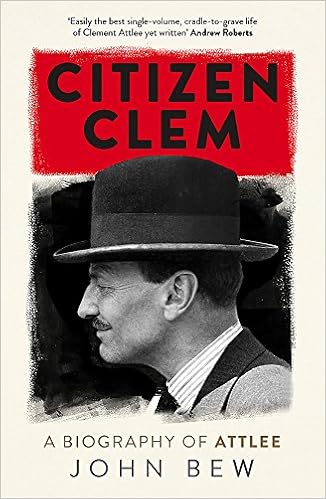
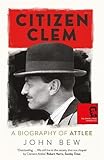
Citizen Clem: A Biography of Attlee – “The man who looked like the sort of man who would vote for Attlee”

This is my review of Citizen Clem: A Biography of Attlee: Winner of the Orwell Prize by John Bew.

This prize-winning biography achieves the challenging task of marshalling a mountain of research into an absorbing analytical account of the man who presided over the first majority Labour government in the UK. Criticised, like the Blair period, for failing to seize the opportunity for radical change, Attlee’s pragmatic approach in fact changed a good deal: introduction of the NHS together with national insurance and welfare systems, the more controversial nationalisation of essential industries, and overseas, the dismantling of the British Empire to be replaced by a Commonwealth, with India one of the first to gain an independence, sadly marred by bloodshed.
Clement Attlee was a man of contrasts. Public-school and Oxford educated, he traded a career in law for charity work with deprived boys in London’s East End, which led him to join the nascent Labour Party as a means of creating a fairer society. Mocked as an “invisible man”, likened to a rabbit or one of the “three blind mice”, even called “the Arch-Mediocrity” by the sharp-tongued Bevan, Attlee proved a courageous officer in the First World War, and quietly tenacious, chipped away patiently at problems in civilian life, prompting Churchill to describe him as a “lion-hearted limpet”. Although often painfully shy when thrust into the limelight, lacking in ego and refusing to promote himself so that a retirement speech and media interview on his life would be remembered mainly for their brevity, he was in fact at ease with himself, and so able to establish a rapport with both a mineworker’s union leader and King George VI. Ironically, the man who hated pomposity ended up accepting a hereditary earldom. Although it was feared he would be a liability in general elections, with his reedy voice and mechanical delivery of speeches, his authenticity proved popular with the general public, who liked his values, but not his continual reminders of the need to be “good citizens” and restrict consumption so that Britain could meet its obligations. Having been brought up to revere the British Empire, he was one of the first to call for the granting of Independence to India, and was keen to accept “Red China” as a legitimate power before America was prepared to do so. Despite his vision of achieving a lasting peace through an effective United Nations, with an end to the proliferation of nuclear weapons, in the end he resorted to their development in order to protect the country against the threat of Communism. Very questionably, this was done covertly, to avert a violent outcry from the Labour left wing.

The history of the Labour movement which forms the background to this fascinating biography reminds us of how many of its current dilemmas are far from new. It is impossible to avoid making parallels with today as one reads about Attlee under attack from the left wing intellectuals in his party for his failure to attack the establishment, or criticised more widely for accepting huge loans from the US because of the crippling strings attached, or feeling obliged to enter into a costly war the country could not afford because of the need to show solidarity with the US over Korea. Likewise, there was his refusal to cooperate with west European states over the Schumann Plan to share coal and steel (forerunner of the EU) because he judged it incompatible with freedom to plan the UK economy. Another example was his inability to protect the Palestinians, as promised in the Balfour Agreement, because of a powerful US support for Jewish migration to the homeland of Israel.

With the current all-pervading media hype and obsession with celebrity, it would seem even less likely than before for such a man as Attlee to gain and retain power for so long. He may have been a Victorian at heart, puzzled by his grandchildren’s addiction to television, yet his unassuming dedication, based on a thoughtful vision of the world developed through years of observation, reading and reflection, still evokes admiration after half a century, and a regret that we do not have more politicians with his mix of altruistic vision, determination yet moderation.

⭐⭐⭐⭐⭐ 5 Stars

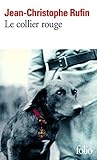
Le Collier Rouge – When animals are faithful but men are proud

This is my review of Le collier rouge by Jean-Christophe Rufin.

In the small French town of Berry where life is returning to normal after the First World War, Jacques Morlac is the only prisoner left in the barracks, while his faithful dog Guillaume, somewhat battered after his own spell in the trenches, barks mournfully for his master for hours on end. Lantier, the bourgeois young judge appointed to investigate the case and decide Morlac’s fate is fascinated by the stubborn working class man who has a foot in both camps, having been decorated for bravery only to commit an “outrage” against his nation, although we have to wait until the final pages to discover exactly what Morlac has done. Apart from the suspense this generates, the interest lies in the surrounding questions. What motivated Morlac to act as he did? Why does he seems so bent on being punished, rejecting the extenuating circumstances Lantier suggests? Why is he avoiding his former lover when he clearly wishes to see the son she has borne him? And why does he appear to hate his faithful dog?

This is one of those carefully constructed tales which depend totally on how the information is dripped out to keep us hooked. Rufin, who seems more in his element with short stories and in this case what is almost a novella, is very skilful in the deceptive ease with which he spins out and reveals a simple plot which could be summarised in a few words, itself inspired by a colleague’s anecdote about his grandfather.

Although the English translation has been praised, this is particularly worth reading in the original French if possible for the clear, economical prose which captures a sense of rural France, with locals spearing trout or hurrying to harvest the wheat as autumn storms threaten. This is also a subtle exploration of human – and canine – psychology: issues of loyalty, duty, wounded pride, jealousy, questioning of the accepted system and traditional class divides. Cynicism lurks beneath the lip service paid to patriotism even in a conformist like Lanvier, set off to fight as a “youthful idealist”, only to end with the private subversive thought that the suffering of the soldiers seems more worthy of respect than the ideals of those who inflicted it upon them. “No one could have lived through this war and still believe that the individual has any value”. Yet when it came to condemning people, justice required that they be presented to him as individuals.”

Even if one is not a dog lover, it is hard not to be moved by the rapport Lanvier in fact everyone apart from Morlac seems to develop with the dog. Although the description of his wounds make Guillaume sound almost repulsive, his eyes are remarkably expressive, not merely conveying his own emotion but seeming to empathise with others.

⭐⭐⭐⭐⭐ 5 Stars

“The Red Collar” by Jean-Christophe Rufin – When dogs are faithful and men are proud

This is my review of The Red Collar by Jean-Christophe Rufin.

In the small French town of Berry where life is returning to normal after the First World War, Jacques Morlac is the only prisoner left in the barracks, while his faithful dog Guillaume, somewhat battered after his own spell in the trenches, barks mournfully for his master for hours on end. Lantier, the bourgeois young judge appointed to investigate the case and decide Morlac’s fate is fascinated by the stubborn working class man who has a foot in both camps, having been decorated for bravery only to commit an “outrage” against his nation, although we have to wait until the final pages to discover exactly what Morlac has done. Apart from the suspense this generates, the interest lies in the surrounding questions. What motivated Morlac to act as he did? Why does he seems so bent on being punished, rejecting the extenuating circumstances Lantier suggests? Why is he avoiding his former lover when he clearly wishes to see the son she has borne him? And why does he appear to hate his faithful dog?

This is one of those carefully constructed tales which depend totally on how the information is dripped out to keep us hooked. Rufin, who seems more in his element with short stories and in this case what is almost a novella, is very skilful in the deceptive ease with which he spins out and reveals a simple plot which could be summarised in a few words, itself inspired by a colleague’s anecdote about his grandfather.

Although the English translation has been praised, this is particularly worth reading in the original French if possible for the clear, economical prose which captures a sense of rural France, with locals spearing trout or hurrying to harvest the wheat as autumn storms threaten. This is also a subtle exploration of human – and canine – psychology: issues of loyalty, duty, wounded pride, jealousy, questioning of the accepted system and traditional class divides. Cynicism lurks beneath the lip service paid to patriotism even in a conformist like Lanvier, set off to fight as a “youthful idealist”, only to end with the private subversive thought that the suffering of the soldiers seems more worthy of respect than the ideals of those who inflicted it upon them. “No one could have lived through ths war and still believe that the individual has any value”. Yet when it came to condemning people, justify required that they be presented to him as individuals.”

Even if one is not a dog lover, it is hard not to be moved by the rapport Lanvier in fact everyone apart from Morlac seems to develop with the dog. Although the description of his wounds make Guillaume sound almost repulsive, his eyes are remarkably expressive, not merely conveying his own emotion but seeming to empathise with others.

⭐⭐⭐⭐⭐ 5 Stars

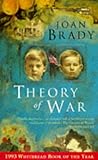
Theory of War – When faith will serve as well as anything

This is my review of Theory Of War by Joan Brady.

In the aftermath of the American Civil War, a penniless soldier sells a small boy called Jonathan, who may or may not be his own son, to Kansas farmer, Alvah Stoke, in search of some cheap and malleable labour. The irony is that, just after America has been torn apart in the cause of abolishing black slavery, a white boy is effectively made a slave, as it appears was actually the case for the author’s own grandfather whose life inspired this novel.

Deprived of love and affection, not merely education but even decent living conditions and food, Jonathan is soon the butt of bullying from Alvah’s son George, jealous of his intelligence, practical ingenuity, good looks and natural grace. So he is inexorably transformed from a sweet, inquisitive chatterbox into a wary and embittered youth, eventually able to make his escape on one of the new steam trains which capture his imagination. Despite his ability not merely to survive but to succeed against the odds, Jonathan’s psyche is poisoned by his very understandable fury over the years of abuse, and the desire for revenge focussed on George. Moving between scenes from Jonathan’s life to that of his granddaughter as she pieces together his story from his coded diary and the ramblings of his son, alcoholic doctor Atlas, Joan Brady shows how the destructive effects of slavery can blight a family for three generations.

This original, quirky novel drips with cynicism and venom (which happens to be the title of another of Brady’s novels) and includes some at times gratuitously unpleasant scenes, one of which almost caused me to give up. Yet despite this, and the extreme mental or physical ills which seem to beset many of the main characters, this book is a page turner. Apart from being “a good yarn”, with dazzling verbal pyrotechnics and some telling observations, it brings alive a sense of the landscape and pioneering spirit of the States, as railroads are forged west to California, new towns are formed, only to die in a few years, as in the brilliant descriptions of the town of Mogul, “ferried out in the desert” for the purpose of mining stignite. “Mogul was growing up with America, no sewers, no trees, no street lights, no running water: a full-blown boom town geared to the quick sale of everything, alive or dead, worldly or divine. Walls of saloon and Methodist chapel alike advertised whiskey, shaving cream, dried beef and – without so much as a change of paint colour or script style – God Himself and the virtues of cleanliness” and so on for page after page of wry, sparkling prose. Despite the perhaps over-laboured attempt to apply theories of warfare to Jonathan’s battle with George, regardless of the recurring message that life has no meaning, much as we may wish that it did, that “truth’s a convention, a fashion: it changes every year”, being alive is miraculous and wonderful.

It is a pity that this deservedly award-winning novelist, whose own life seems quite intriguing, has not written more and is not better known in this country.

⭐⭐⭐⭐ 4 Stars

“One-way” by Didier van Cauwelaert – Fizzles out after a promising start

This is my review of One-way by Didier van Cauwelaert.

Aziz has never been accepted fully by a Marseille gypsy community, having been salvaged from a car in which his French parents perished in an accident. So when he presumes to get engaged to a beautiful gypsy girl, he is framed for the theft of the ring which ironically he has in fact purchased, admittedly from the proceeds of other petty robberies for which he has never been caught. His punishment is deportation to Morocco , his “official” birthplace. The young policeman friend who cannot help him out of this fix explains that, desperate to be seen to implement a new policy against illegal immigrants who break the law, the authorities have seized on Aziz as the first foreigner to hand who actually has identity papers, the irony being that there are in fact cheap forgeries. This is the author’s sardonic take on a controversial French policy of clamping down on immigrants, which apparently inspired him to write the book in partial protest.

Aziz accepts the situation with what may seem like a disappointing degree of passivity, although of course, if able to prove his Frenchness, he would be liable to end up in gaol. He forms an unlikely bond with Jean-Pierre Schneider, the gullible probation officer tasked with escorting him back to he fictitious birthplace which he devises on the spur of the moment. As Aziz, with his love of story-telling, compounds his potential problems by continually embellishing tales of life in a remote mountain community which does not exist, Schneider becomes ever more fascinated by it, perhaps as a kind of escape from his own personal problems of just having been left by his wife.

This short novel is certainly imaginative, and has been described as an allegory for the nature of identity, which can be imposed upon us, or fabricated by us as a mixture of reality and fantasy. Farcical and ironically humorous from the outset, with poignant moments, the tale becomes a tragi-comedy. Once in Morocco, it takes a surreal turn, with a complex plot, involving many unexpected incidents. The humour remains, as when we discover Schneider’s view of events, with his surprise over Aziz’s remarkably good French and spark of rebellion against his faith by eating with his left hand, but the storyline becomes too aimless to maintain my interest. Neither could I relate to or feel moved by the characters as the story progressed. The prolific author writes as the fancy takes him, thinking up bizarre or amusing situations, but not developing them fully, so that they fail to “add up” to anything or lead to any meaningful conclusion. The abrupt ending felt as if the author had found a convenient spot to dump his hero, before moving on to the next writing project.

The novel is good for practising one’s French if possible to read it in the original form, but otherwise somewhat unsatisfying.

⭐⭐⭐ 3 Stars

“Conclave” by Robert Harris – “As wise as serpents, innocent as doves….. as if there were no women in the world”

This is my review of Conclave by Robert Harris.

In his role as Dean, steeped in the rituals and politics of the Vatican, which may well be the cause of his recent crisis of faith, Cardinal Lomeli is peeved when the Pope refuses his request to retreat to a religious order, insisting that he is needed as a manager. Yet when the old man unexpectedly dies, all Lomeli’s skills are needed to ensure that a suitable successor is found out of the clearly far from perfect candidates. Inevitably, Lomeli’s diligence in this respect may give the impression that he is clearing the way for his own election. Since he is a decent man of integrity, would this be such a bad result? Could he be tempted by the prospect of power, or is the weight of responsibility and loss of freedom to roam through the streets unrecognised and browse in a bookshop too high a price to pay?

This psychological drama which I felt compelled to finish in a single day can be read on two levels: a simple question of who will win out in a fiercely fought competition to gain the coveted yet also daunting position of Pope, or a deeper analysis of the condition and influence of the Catholic church in the modern world. Robert Harris seems to me to be making a stinging indictment of the excessive wealth and privilege of the Vatican hierarchy and its ostrich-like divorce from real life. I was struck by the irony of the meek nuns who serve the meals, clean the rooms and provide secretarial support for the male staff and cardinals who take it all as their due.

There is no need for belief to be intrigued by the survival of the medieval ritual of locking 118 cardinals in the Sistine Chapel, segregating them from the rest of the world in the Vatican, until they have chosen one of their number by ballot to become the next Pope. Continuing his preoccupation with the pursuit and exercise of power, possibly offending some Catholics in the process, Robert Harris, has fleshed out the arcane process by his portrayal of the cardinals scheming like a typical bunch of secular politicians in the desire to advance the cause of a favoured candidate, or obtain the role in person.

All too human in their personal flaws, the main protagonists represent a range of characters from different continents and cultures: from the self-styled man of the people to the self-effacing intellectual; the socially progressive and tolerant to highly conservative. The most unworldly and principled may resort to dubious means for a good end or at least to avert what they regard as a bad one. An ambitious liberal may manipulate matters to a point bordering on the criminal, while a wheeler-dealer may destroy his chances through a sudden insistence on what he really believes.

How essential is it for the Church to maintain its unity against growing external pressures from say, atheism, secular moves for social equality, or an ever more militant Islam? Is this unity even feasible, when the ground-breaking step of electing an African cardinal as Pope would mean having a leader intolerant of homosexuality?

The detailed coverage of the prayers and rituals which Robert Harris has researched so thoroughly, the repetition of the procedure of casting the ballot until it is possible to ignite the chemicals which will give the pure white smoke of a result, has proved too dry for some readers. Admittedly, the lists of cardinals and their lengthy titles may have been overdone, but all this creates the necessary context for the drama.

I understand why some have found the ending implausible and somewhat abrupt, but on reflection I decided it was quite a clever, ironical twist, leaving matters open and the reader with further food for thought.

⭐⭐⭐⭐ 4 Stars