“The Juliet Stories” by Carrie Snyder – torn between viewpoints

The Juliet Stories

Although described by reviewers as a series of short stories, the first part of this book, set in Nicaragua, reads to me like a novel in its vivid portrayal of an observant, imaginative girl, perhaps destined to be a writer, trying to make sense of an alien world, her perceptions inevitably limited through being only ten years old.

Her idealistic perhaps unconsciously selfish father has uprooted his family from Indiana to Managua in the 1980s, to enable him to work as a peace activist for “Roots of Justice”, dedicated to campaign against the Contra terrorists, supported by President Reagan, who are attacking the recently established left-wing government. Juliet’s beautiful mother Gloria, her continual smoking no doubt a symbol of her stress, apparently only really happy when lost in singing to her own guitar accompaniment, generally seems sharp-tongued and burdened by childcare, most of her limited store of love and attention being being devoted to her infant son Emmanuel.

Meanwhile tomboy Juliet roams with increasing confidence, scrapping and bickering with her brother Keith who seems to adapt more easily to the situation, picking up Spanish quickly and performing better when the pair eventually get sent to school. Although they do not seem close, they share a bond based on their unusual common experience. With the typical irresponsibility of childhood, the two manage to leave Emmanuel behind at a neighbouring house where they have been offered drinks, but he is brought back to them by a group of local girls who handle him much better than Juliet – unlike her, they are only a few years off falling pregnant and becoming mothers.

A good deal of humour stems from Juliet’s perspective as a child: communism is “bad” back home but the Nicaraguan brand is “good” because it involves “sharing”. She learns about poverty and inequality without understanding it: observing how their maid Bianca steals “diapers” and Gloria’s red blouse when she whisks them away to be washed, but how she lives in a slum partly destroyed by recent fighting, and also makes them chicken soup when they fall ill in their father’s absence, admittedly pocketing some of the money taken to buy them food.

Juliet also notices without understanding how her father may be flirting with a young volunteer, overtly infatuated with him while, probably depressed, Gloria falls easy prey to the attentions of a charming married expatriate with a wandering eye.

This evocative and original section of the book, which completely engrossed me, comes to an end when a combination of Keith’s severe illness and the dangerous escalation of Contra activity drive Gloria to insist on returning to the States. The second part appears to be Juliet’s own diary, written with changing points of view and styles as she witnesses her parents’ marriage fall apart and has her own offspring and infidelities. I have struggled to understand why I so quickly lost interest and failed to engage with this change of tack. Perhaps it is because it is too disjointed, characters are introduced abruptly without being developed, points are either too unclear, or explained rather than being left for us to sense.

Oddly, a book reminiscent of “The Poisonwood Bible” has the same flaw to a stronger degree for “western” readers, namely a brilliant, absorbing first part set in a strikingly “different” developing country, with a less successful second part dealing with the more familiar developed world.

“Mourir sur Seine” – a tall ship tale

Mourir sur Seine: Best-seller ebook (ROMAN) (French Edition) by [Bussi, Michel]

This is the third novel by Michel Bussi which I have read partly as a relatively painless way of practising my French, but also because I was so impressed by the originality and ingenuity of “Nymphéas Noirs”.

Trademark features of his works seem to be a strong sense of place to which one can readily relate from firsthand experience, or simply by googling images, and development of some historical theme to trigger or embellish a modern-day crime. In this case we have the Seine at Rouen as the setting for the excitement and visual feast of the “Armada”, the five yearly display of sailing ships from around the world which draws millions of visitors. This is a cue for tales of the pirates, buccaneers-cum-explorers from the past with their “chasse-partie” codes of honour, and dreams of utopia to be funded by booty which too often ended up lost overboard or stolen, to tantalise modern treasure hunters. Added to the mix are the quaint half-timbered houses of Rouen’s historic centre, including the macabre symbols of the plague carved into the ancient beams of the “aître” of Saint-Maclou, together with, in nearby Villequiers in a meander of the Seine, the statue of Victor Hugo, head in hand, and the remarkable stained glass church window portraying pirates boarding a ship.

With the Armada in full swing, a charismatic young Mexican sailor is found stabbed to death, his body marked with five curious tattoos (of a tiger, shark, crocodile etcetera), and branded with a hot iron. Led by Commissaire Gustav Parturel, who had banked on a crime-free period in which to enjoy the Armada with his two young children, the police make heavy weather of what soon becomes an escalating conundrum. Due to a mixture of foolhardy risk-taking and improbable luck, highly sexed journalist Maline Abruzze obtains vital information to help them to identify the arch-villain and avert a worse tragedy.

This may well sound a little hackneyed and corny. Certainly, the characters tend to be either stereotypes like the irascible Parturel whose family life has broken down under the pressure of his devotion to solving crime, or highly caricatured, such as the impossibly handsome Olivier Levasseur (named after a pirate ancestor, needless to say), Director of Press Relations for the Armada, whom the supposedly liberated Maline sets out to seduce before he can take the initiative himself.

The highly contrived and at times rather tediously written plot with its stilted dialogues relies heavily on coincidences, people arriving simultaneously at the same spot, or on highly implausible events which it would create too many spoilers to reveal. It is formulaic in revealing early on a mysterious puppet-master with a female accomplice, and in following the clichéd path to a climax in which he brags about his crimes (just in case we had failed to work them out) with arrogant complacency before carrying out his planned coup de grâce.

The novel seems to be mainly highly rated, presumably by those who in their addiction to crime thrillers are prepared to overlook these shortcomings, but I think that my secondhand copy of “Maman à tort” may well be my last Bussi novel.

“The Lighthouse” – Trapped

The Lighthouse [DVD]

Apparently based loosely on the true story from the 1890s of a Welsh lighthouse keeper who went mad after the death of his colleague , this highly acclaimed film directed by Robert Eggers with a screenplay written with his brother Max also draws on a short story of the same name by Edgar Alan Poe. It is a surreal psychological drama which ramps up the tension as we watch the interactions and inexorable mental disintegration of two men isolated for four weeks, more if bad weather delays the supply ship, in the claustrophobic setting of a rundown lighthouse on a bleak, rocky island off the New England Coast. The drama is intensified by the skilful use of black-and-white scenery, with not a hint of colour, filmed in an almost square frame to reflect the style of C19 early film-making, preceding the development of the wide screen. The men’s features, the wild sea and rocks are all shown in sharp detail, with images only blurred or flashed too quickly to grasp entirely, when intended to feed a sense of ambiguity. The script is play-like and requires close concentration, while the sinister rhythms and thumps of the film score add to a sense of menace.

William Defoe plays the old seadog Thomas Wake, forced to work ashore by an unexplained accident, given to spouting poetry and theatrical rants, who takes a delight in playing mind games and browbeating his new assistant into slaving over all the hard maintenance tasks, whilst jealously guarding for himself the “privilege” of entering the sanctum where the light is housed at the top of the tower. The younger man, Ephraim Winslow, who seems to be a drifter and may be on the run or haunted by some guilty secret, for the most part stoically endures the bullying and hardship, but becomes increasingly obsessed with the desire to see the light at close hand. He is also worried by Wake’s claim that his previous assistant went mad and died, because he has occasional troubling visions, including erotic images of a mermaid and encounters with a bold, malign seabird which he is told it would bring bad luck to kill.

For me, the film was too long, and some of the scenes of drunkenness become tediously repetitive, too “easy” a way of dragging events down to a new low, as the two men resort to alcohol as their only source of nourishment as food supplies run out in the incessant storms which prevent the expected supply ship from reaching them . Although I cannot say I enjoyed the film, which is quite unpleasant, even shocking, at times, relieved only occasionally by humorous moments, William Defoe and Ephraim Wake act brilliantly, it is visually striking, original and imaginative and I can understand why it has been hailed as a masterpiece.

“Parasite” – Taking advantage

Parasite [Blu-ray] [2020]

Deserving its Oscar for originality and quality in all aspects, this black satire which takes Hitchcock to a new level, is not only humorous and tense or menacing by turns but also a telling indictment of the social divisions in modern South Korea and by extension most other societies as well.

The Kim family live in a grim bug-ridden basement flat with a drab view from their high level window enlivened only by a persistent drunk who likes to urinate outside. They earn an uncertain living folding pizza boxes and are heavily penalised if the folds are in the wrong places. Not surprisingly, college-age but non-studying son Ki-Woo jumps at the chance to replace a friend who is off to study in the States, by taking on the role of English tutor to a girl belonging to the wealthy Park family.

Gullible in their life of complacent ease, the Parks live in a striking hill-top mansion designed by a famous architect, with a lawn surrounded by fabulous greenery, a bubble of privilege sealed from the outside world by walls and secure entrances. One thing leads to another, so that with a bit of streetwise guile and deceit, including the pretence that they are unrelated, Kim’s sister and parents manage to gain employment as family servants, replacing the previous staff. A slight flaw in all this is that, with such ability, one wonders why the Kims cannot get decent employment by honest means, except that, as the father points out, “there are five hundred applicants for every driver’s job”.

The Kims cannot believe their luck in being able to milk the Parks, “only nice because they are rich”, of some of their wealth. Which family is in fact more parasitic? It is unclear how Mr. Park has gained his money, and his wife seems pampered and idle, with their two children well on the way to ending up the same. Their small son is the first to pick up clues that something is amiss, but partly because his behaviour is so dysfunctional the adults fail to notice.

Since the director cleverly gets us on the side of the surprisingly likeable Kims, and their employers are very happy with the arrangement, it seems a pity that it cannot continue indefinitely. However, clearly, good fortune based on such a shaky foundation of lies cannot last, although the way in which it is shattered is certainly unexpected.

As “things fell apart”, I began to feel that the film was losing its way, seeming likely to culminate in a kind of Shakespearean-style tragedy, until it took yet another unpredictable twist. By the end, plausibility no longer seems to matter: the situation can be seen as an allegory, or as Ki-Woo would say, a “metaphor” that lingers in one’s mind. What really drives people over the edge is not so much lack of material goods, but lack of respect.

“Silver” by Chris Hammer: a twist too many in the swamps and potions of greed, guilt and revenge?

Silver: Sunday Times Crime Book of the Month by [Hammer, Chris]

Having immersed himself in a book on the complex crimes he helped to solve in the outback town of Riversend, covered in the freestanding bestseller “Scrublands”, hard-bitten former foreign correspondent Martin Scarsden returns after an absence of more than twenty years to his home town of Silver on the east coast of Australia, where his new partner has inherited a dilapidated house in one of the many coincidences on which the novel’s convoluted plot tends to rely.

Gradually, details emerge of the family tragedy which drove Martin to leave Silver at the earliest opportunity, although some missing pieces of the puzzle are not even revealed to him until the final pages. He barely sets foot in town before being diverted from reflecting on the past by the shocking discovery of the body of his close friend from childhood, Jaspar Speight, a local estate agent, found lying in the house Martin’s partner has been renting, making her a prime suspect. In his determination to prove her innocence, Martin becomes involved in the local conflict between speculators out to make money and the native people and visitors to a spiritual retreat wishing to be left free to enjoy the natural beauty of the surf-washed shore where kangaroos graze. In the mesh of sub-plots, there are also recurring themes of revenge and guilt.

As in “Scrublands”, author Chris Hammer is strong on sense of place: “the spotted gums and cabbage tree ferns, the palm trees and staghorns and the cedars trailing vines, bellbirds chiming” in the lingering summer of the subtropical north coast of New South Wales; “the tugging dryness of a drought-ravaged inland left the far side of the coastal plain” –all quite evocative in view of the recent devastating Australian wildfires. He also captures the ambience of a somewhat run-down town with the potential for development, but at the risk of destroying local communities and damaging the environment.

Although the style can be slick and corny at times, Hammer is good at developing Martin’s character to show his changing moods, with his understandable introspection, flashbacks of nostalgia for the past mixed with bitterness, but also his compulsive drive to “get a scoop” even at the cost of appearing ruthless and insensitive (“Seven people dead. And you’re smiling!”), pursuing sometimes dubious means without hesitation in order to achieve an end which is justified if the guilty are caught.

The author puts his long experience as a journalist to good use to show how reporters vie, even within a paper, to be the first get an article published, how they live with the constant fear that a story will turn out to be false, and the risk of losing the trust of colleagues on whom they rely, may even be fired, if they fail to reveal a juicy fact in an attempt to shield someone they love.

Despite moments of high drama, there is too much repetition of banal detail apart from the denouement which ironically seems overly abrupt. The numerous plot twists are often unconvincing or rather confused. The upshot is a novel that alternates oddly between being a page turner and a bit tedious. It did not grip me as much as “Scrublands” which I would recommend reading first (although on reflection this has the same strengths and flaws, so perhaps it was the novelty that hooked me), nor in quite the same league as Jane Harper’s novels also set in Australia.

“Second-hand time” by Nobel Prize winner Svetlana Alexievich: “Cracking the mystery wrapped in an enigma”

Second-hand Time by [Alexievich, Svetlana]

This is an amalgam of largely unedited and at times remarkably frank, no-holds-barred interviews with individuals and fragments of conversations with groups living in the former Soviet Union after the collapse of communism in the early 1990s. The author’s personal experience of life in Belarus, and her obvious listening skills no doubt helped to draw people out.

Patterns emerge from the diverse accounts. Despite the violence, physical hardship and social oppression, those who lived under Stalin’s regime retain a nostalgia for the past which may at first seem surprising. It must be partly due to conditioning from an early age with the propaganda of patriotic songs:
“World capital, our capital/Like the Kremlin’s stars you glow/You’re the pride of the whole cosmos/Granite beauty our Moscow”.

Yet it also seems related to the past pride in being part of an empire, the sense of purpose in helping to build it through fighting on the winning side against Germany, working with one’s hands to develop it, sending Gargarin as the first man into space. There is also the lost “dream of equality and brotherhood”, and drive to “create Heaven on Earth” – the pining for community spirit and mutual support, overlooking the practice of informing on friends and neighbours. The “sovok” (Soviet man) remains appalled by the current lack of idealism, the preoccupation with obtaining consumer goods (“A Mercedes is no kind of dream”) and rewards for the crooks who control the new market system.

Then there are those born after Stalin’s death in 1953, who grew up reading forbidden books, and conducting endless debates in the kitchen about how life might be changed for the better, half-joking over the risk of a bugged light fitting. They were initially seduced by Gorbachev’s “Perestroika”, even daring on his behalf to brave the tanks on the streets in the abortive coup against him. This made their disillusion all the deeper when the unchained capitalism of the 1990s made them the victims of crooks and violent gangsters, creating large-scale unemployment for the first time, forcing even the skilled and educated to sell their possessions and work as cleaners or flog goods smuggled in from Europe, and reducing to destitution pensioners whose savings had become worthless.

I think the title “second-hand time” refers to the irony of how events have come round full circle in some ways: Russia is ruled in 2020 by an ex-KGB man who has made himself into a modern equivalent of an autocratic Tsar. There is even a “new cult of Stalin” with “everything Soviet back in style, but in the commercialised form of Soviet cafes, Soviet salami, Soviet-themed TV shows, even tourist trips to Stalin’s camps. Young people are reading Marx by choice.

The book also covers the horrors of civil war in areas like Armenia and Chechnya, where different ethnic groups who had previously intermingled came to blows once the iron hand of communist control was removed. The second-class treatment, racial and religious discrimination against migrants like the Tajik street cleaners of Moscow is another troubling aspect of recent change.

Does the lack of editing not only create a book of nearly 700 pages, too long for many people to find the time to read it, but also make for excessive repetition, or does the latter serve to reinforce important impressions? I am not sure what a reader with no prior knowledge would make of all this. Even with the useful chronology of political events from 1953, it is sometimes hard to keep track of exactly what people are referring to. Yet I kept coming across sharp observations and vivid insights which encouraged me to read on. I regret that the author did not do more to sift these out for the reader, although you may feel that the rambling, contradictory nature of the text adds to its power.

It sometimes seems as if the typical Russian man is addicted to vodka, continually beating his wife and children. Women are portrayed as neurotic, hysterical and superstitious, with a self-destructive urge to nurture inadequate men, particularly prisoners, down on their luck, who will inevitably repay their kindness with brutality in due course. Westerners, it seems, can never really understand the tortured, sentimental Russian soul…..But despite the frequent oppressive bleakness, this book encourages readers to form their own understanding of a complex situation of mingled brutal tragedy and poignant humanity. It proves a very powerful and informative aid to grasping the current nature of Russian society and how it has come about.

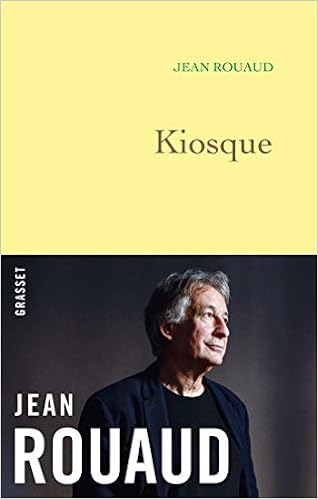
“Kiosque” by Jean Rouaud: when trying too hard is trying

For seven years in the 1980s, Jean Rouaud financed his dream of becoming a published author by working at one of the newspaper kiosks which form such an iconic part of the Paris street scene. These kiosks seem better suited as the subject of, not a book, but a Sunday colour supplement article, illustrated to show how their design has evolved over the years: the domed roof with a curvy green frieze round the edge designed for Haussman’s Paris; the stark angular plexiglas version of the type in which Rouad worked, and the most recent, controversial version of a “walk-in” green structure shielding customers from the elements.

Rouaud has needed to pad the book out, initially with descriptions of the eccentric anarchist friend who ran the stall, the rather sad ageing men employed to run errands, the motley stream of locals who came by for their favourite paper or magazine. He includes chapters on some of the controversial modern architecture of Paris 1980s, to which he seems opposed: the famous pyramid at the Louvre or what we call “The Pompidou Centre” with its pipework displayed on the outside. He writes about his family, but bearing in mind they have been the subject of five previous books, commencing with “Les Champs d’Honneur” which eventually made his name, this seems repetitious.

Having exhausted these themes, he turns more frequently to navel-gazing, wondering why he has such an urge to write, fearing that he will be as unsuccessful as the painter who is reduced to serving on the stall as well, deriving encouragement from other writers who achieved success late like Henry Miller. He tells us how sorting the newspapers has made his writing more organised and controlled, which makes one wonder what on earth it was like before. He continues to agonise over the style he should adopt, clearly wanting both recognition and the freedom to plough his own furrow.

I found this memoir particularly hard going, not just because French is not my first language. Despite implying that he has “toned down” his preferred style, Rouaud’s sentences remain long, sometimes lasting for an entire page, and tortuously garrulous, often performing mind-boggling flits without taking a breath between several tenuously linked ideas – from an Elvis lookalike with his banana-shaped hairstyle to “primitive” Flemish painters. The style seems like a throwback to the past, pretentious and laboured, larded with heavy-handed attempts at humour which invariably turn out overdone. The subject matter oscillates between the banal and the obscure. One minute he is describing in tedious detail the process of sorting magazines, the next referring to some anecdote about an obscure writer from the past, or to an artist with whom we are assumed to be familiar. Are Chardin’s painting of a skate, for instance, or Jan Van de Meyer’s unfinished portrait of Saint Barbara so well known that there’s no need to include photos of them – and why has he digressed into writing about them anyway?

Some themes are interesting, such as Rouaud’s fascination with haiku, and his habit of recording impressions using this form, in his attempt to engage more directly with realism in his first love of poetry (although he cannot abandon the belief that “l’irréalisme poétique” can be the most effective approach). The section on how Flaubert made a transition from romantic writing to “le mot juste” of Madam Bovary could also be quite enlightening, but all these disjointed topics are jumbled together in a mentally exhausting fashion. The whole book seems to be a rambling mess of ideas which needs to be reorganised.

I suppose one could regard this book as a French equivalent of “Flaubert’s Parrot” but Julian Barnes has the knack of doing it much better. Yet this style is clearly an acquired taste which some will enjoy.

“Le Monte-charge” or “Bird in a Cage” by Frédéric Dard: the fickle finger of fate

Le monte-charge (FREDERIC DARD) (French Edition) by [DARD, Frédéric]

Four years after his mother’s death, narrator Albert Herbin returns to her flat in which he has not set foot for six years and is filled with nostalgia for his childhood and their close relationship. What is the reason for his long absence? Why has he not cleared the place, even to the extent of removing a dead branch from a pot? Why is he so alone, half wanting to be recognised and half fearing it as he wanders the local streets while everyone else is celebrating Christmas? Daring to enter a post restaurant, his attention is drawn to the small child and attractive woman at the adjacent table who reminds him of his past love Anna – but how did she come to die?

As the details of Albert’s life are revealed, he is drawn inexorably into a fateful series of events which make him accessory to a serious crime, but how will it all end?

Bird in a Cage by [Dard, Frédéric]

Reminiscent of Hitchcock, this is one of the most ingenious just about plausible plots I have come across, full of twists leading to an unpredictable outcome, sustaining a powerful sense of anticipation and tension, yet managing at the same time to develop characters, create sympathy for those who have committed horrific acts, and conveys a strong sense of place. Even the abrupt, ambiguous open ending is masterful when you come to reflect on it.

The French title is a play on words, linking the “monte-charge” or cage-like lift, which plays an important part in the tale, to the Christmas tree trinket of a little velvet bird in a spangled cage which Herbin buys on an impulse. This has been translated in the English version as “Bird in a Cage” which has a further double meaning which it would be a spoiler to explain.

The French is so clear and expressive that I imagine it translates easily into a compelling read in English, all contained in a short, well-constructed story which could be read in a single sitting. Made into a film in the 1960s, the book has a cinematic quality, although I think it must lose some of its tension, subtlety and irony in the process.

“Good Morning Midnight” by Jean Rhys – looking for love

It’s the 1930s, and the narrator who calls herself Sasha, no longer young, has been lent money by a woman friend to leave London and attempt a fresh start in Paris. Since it is clear from the outset that she is depressed, lonely and alcoholic, only feeling lucky “ when I have had a couple of extra drinks and am quite sane”, it seems inevitable that this will not end well.

Gradually, through fragmented memories, we learn of the past love affair which broke her heart, but not of underlying explanations for her inability to copy with life and to “be like other people”, her fear and sense of rejection and ultimate lack of desire to go on living. This novel seems to be to some extent autobiographical, most particularly in describing Sasha’s perceptions and emotions, in various stages of drunkenness, rarely sober. Despite my alternating feelings of depression and irritation over Sasha’s passivity and destructive self-absorption, the writing exerted a remarkable power enabling me to relate to a state of mind I rarely share to such a degree, and conveying the poignancy of Sasha’s situation.

Jean Rhys seems to have been preoccupied with the idea of a woman adrift in an uncaring Paris, despite its romantic reputation, continually subjecting herself to casual misuse and abuse by men. This novel is the last of four on this subject, with the oldest variation on the theme in the form of Sasha.

I enjoyed the early flashback in which Sasha describes her brief stint working for a “dress-house”, a job gained as a favour. “Drugged” with boredom, she reflects on how successful the life-size dolls in the window would have been if real women: “satin skin, silk hair, velvet eyes, sawdust heart- all complete”, a sad comment on her experience of being casually objectified by men, a novel thought in the 1930s. This is followed by her growing sense of panic, induced by fear that the visiting English boss will see through her lack of qualifications for the job, her poor French. Ironically, she proceeds to make the very embarrassing error she fears through misunderstanding an instruction because of his dire accent.

Even in the bleakest moments of this sad novel, Jean Rhys creates a strong sense of place in Paris, and lightens the scene with acute observations, acerbic comments and a keen sense of tragi-comedy. Apparently, when the book was published, critics praised its style but felt it was too depressing to succeed. This drove the author into an absence from the writing scene for years, until the request to turn the book into a play restored her confidence and triggered her best-known and highly regarded novel, “Wide Sargasso Sea”, drawing on her own experience of being brought up in the West Indies, the daughter of a white Creole mother.

The impressionistic style and structure of “Good Morning Midnight” must have seemed quite original when first written. I wished it could have been applied to a more engaging plot, although I can see that it is an achievement to capture a state of mind so well. I was also struck by some striking, poetic expressions of everyday observations.

“There is a wind and the flowers on the window-sill, and their shadows on the (drawn) curtains are waving. Like swans dipping their beaks in water. Like the incalculable raising its head, uselessly and wildly, for one moment before it sinks down, into the darkness. Like skulls on long, thin necks. Plunging wildly when the wind blows, to the end of the curtain, which is their nothingness”.

The book’s title is culled from a poem by Emily Dickinson included below, which also seems to encapsulate Sasha’s position.

“Good Morning—Midnight—
I’m coming Home—
Day—got tired of Me—
How could I—of Him?

Sunshine was a sweet place—
I liked to stay—
But Morn—didn’t want me—now—
So—Goodnight—Day!

I can look—can’t I—
When the East is Red?
The Hills—have a way—then—
That puts the Heart—abroad—

You—are not so fair—Midnight—
I chose—Day—
But—please take a little Girl—
He turned away!”

“Little Women” directed by Greta Gerwig

Having read “Little Women” before the age of ten, and judging by the “U” rating for Greta Gerwig’s film dramatisation of this tale, I decided at first to give it a miss. It was only the glowing reviews and suggestion that the director had taken an interesting new take on the classic likely to appeal to adults that made me go and see it.

For those who need to be told, this is about the four very different March sisters who are left with their high-minded mother, resolved to raise them to care about those less fortunate despite struggling to make ends meet themselves, after their idealistic if impractical father has gone off to fight for an end to slavery in the American Civil War.

Greta Gerwig’s first change is to begin with a brief portrait of each sister as young women who have gone their separate ways apart from the youngest, sweet but sickly Beth who stays at home. This must all be quite confusing for those who do not know the story. The scene then switches abruptly seven years back in time to when the girls are immaturely squabbling and fighting at home when not involved in cringe-making amateur dramatics orchestrated by the budding writer and defiantly anti-ladylike Jo.

Enter spoilt but appealing rich boy Laurie living with a grandfather who shows no signs of being as severe as described, in a splendid mansion overshadowing the somewhat substantial house for a family supposed to be as hard up as the Marches. Laurie and Jo have an instant strong rapport, which Jo tends to under-value, partly since it is at odds with her determination to be free and independent. Her wealthy Aunt March strongly disapproves of this, holding that the only option for a girl with no money is to marry a rich man.

I found the performances of the sisters irritating, frenetic and exaggerated. Greta Gerwig has stated when interviewed that this was intentional “controlled cacophony”, using Alcott’s original dialogue as much as possible, delivered very fast, but for me this does not work and is too often an unpleasant and unclear listening experience. There are some good dialogues, such as when Jo and Laurie are alone together, or Jo’s bargaining with her publisher, but too many scenes are disjointed, implausible in some way, or heavy-handed when delivering the serious feminist message which Gerwig has sought to bring out of the novel.

Also, the continual flitting back and forth in time is often confusing. This is compounded by the device of creating “a story within a story” by which Jo eventually presents a publisher with the story of her family, with two possible conclusions: Jo’s feminist one in which she rejects marriage versus the conventional happy ending which the publisher insists is the only one that will sell. (This reminds me a bit of “The French Lieutenant’s Woman”.) There are a few other scenes which seem to be enacted twice in different ways, or perhaps involve a dream. This has the effect of making the film seem too contrived, less “real” and engaging.