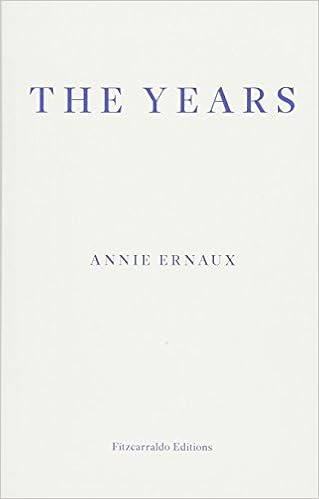
Les Années (The Years) by Annie Ernaux: An individual perspective on “collective” memory

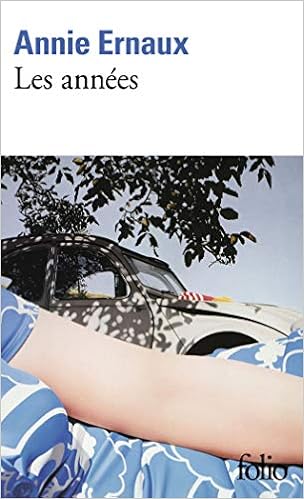
This is an autobiography which aims to avoid “sentiment”: “The point is not to speak of the personal”. Instead, referring to herself in the third person, or writing collectively as “we”, Annie Ernaux adopts a fragmented approach which tends to distance the reader from her.

As implied by the choice of quotations at the outset, she is preoccupied with our insignificance in the scale of things – not only shall we be forgotten as individuals, but matters of great importance to us will seem trivial to our descendants, and our way of living may come to seem ludicrous, even blameworthy. This has become very topical since our materialist way of life, justified by “the need for growth” is now under criticism for destroying the planet for future generations.

Annie Ernaux’s attitude may explain her tendency to give more importance to fleeting, often banal memories than to major events in her life. The opening pages are a list of ephemeral images, some from before she was born, reflecting her insight that, influenced by our parents’ talk, we may have a kind of false memory of events which happened to other people in the past before we even existed. Many of the images are sordid or grim, and it would seem quite arbitrary – a woman urinating behind a café, the glimpse of a thalidomide victim with no arms. This sets from the outset a somewhat depressing, negative, joyless tone which is never fully dispelled.

She often seems more interested in the social history through which she has lived than in recounting the main events of her life. So, on one hand she writes a good deal about the impact of the 1968 riots, the social revolution resulting from the availability of the pill or the arrival of a consumer- driven society which also discarded the taboos and traditions which constrained our childhood until the 1960s. On the other, I never learned, for instance, whom she married, nor when and how the couple parted. She makes no allowance for the reader’s frustration if significant details are hinted at but kept hidden. She writes about a woman’s desire for divorce, mixed with fear of rupture and independence, in an abstract, generalised way. In just one poignant scene, which reveals complex feelings during what may be the last family holiday with her husband in Spain, she becomes an individual with whom one can sympathise, suggesting that a little more “sentiment” in the book would not have gone amiss.

I formed the impression of a bright girl from a narrow, working class background, who “escaped” via the encouragement of her teachers and a good education. However, breaking the taboos over sex outside marriage just a few years ahead of “the pill” and loosening of the abortion laws, she joined the ranks of those obliged to marry and start a family before they would have chosen to do so. She seemed dissatisfied with her lot as a teacher, perhaps because of her long-held desire to be a writer. Drawn to left-wing movements, uneasy over consumerism and the faceless development of new urban areas, Annie Ernaux nevertheless comes across as an “academic” socialist, actually rather contemptuous of workers in the unappealing new suburbs built for them, where she would never willingly set foot.

It is not her style to discuss explicitly her frustration over being diverted by family responsibilities from achieving the ambition to become an admired author. Instead, it is revealed when, oppressed by the annual ritual of the Christmas celebrations in which she now occupies the head of the table, she imagines the crazed action of overturning the table and screaming. Perhaps because she is a writer, a recurring theme is her panicked sense of only having one life, which she has allowed to slip by, without realising it: the living of her past life amounts to a book, but one that has not yet been written – until now.

I found the book hard-going at times. The repetition and lists of people and events are quite tedious and I was not familiar with many of the cultural references. It was fascinating to learn about, say, Ranucci, the last French citizen to be sentenced to death as recently as 1976 by guillotine, which seemed particularly barbaric and antiquated although it was originally seen as more humane than other methods, but the need to look things up continually fragmented the reading of an already disjointed text which rambles on for over two hundred and fifty pages in short sections with no chapters to form natural breaks.

Annie Ernaux has said: “This is the story of events and progress and everything that has changed in 60 years of an individual existence but transmitted through the “we” and “them”. The events in my book belong to everyone, to history, to sociology”.

Yet this approach only works if the events are clearly explained in context to those who did not experience them at the time, and may be ignorant of them now. Admittedly, those who can share her experiences may derive a nostalgic pleasure from being reminded of them.

Les Rêveurs (Dreamers) by Isabelle Carré: Stages of Life

Well-known award-winning French actress Isabelle Carré’s autobiography adopts a style which seems popular with French writers. It is fragmented and anecdotal, often putting more emphasis on minor rather than major incidents, fictionalising events without making it clear when this is the case. The author sometimes writes about herself in the third person, sometimes adopts the viewpoint of a third party to imagine or interpret the memory of an occurrence, even from before she was born.

So it is that she begins with a description of the unmarried pregnant teenager who turns out to be her mother. Forced to hide away alone in a Parisian flat by her hardhearted aristocratic parents, she refuses to hand the child over for adoption, and is “saved” by marriage to the young art student, son of a railway worker, who has become infatuated with her resemblance to a Fra Angelico madonna. This gives a flavour of an unorthodox upbringing in the 1970s, when conventions were breaking down anyway.

Isabelle Carré may devote a whole chapter to a stranger in the Metro who reminds her of someone she once knew, or to the behaviour of a family on the beach compared with her own, without ever explaining how she established herself as an actress, or whether she has a husband. This approach seems to stem from creative writing advice that it is better to select memories, rather than attempt to “cover everything”, since in childhood in particular, one’s impressions tend to be partial and subjective.

In interviews, she speaks of the importance she attaches to dreams, since real life without them can seem too “brutal”. She is fond of the image of one’s life as an iceberg, in which only a small part is visible. Another preoccupation is the eternal tantalising question of “what might have been”, inspiring her to play with a situation and develop it along a different path from what really happened. Yet in what is essentially an autobiography we are not told when this is the case.

French readers will no doubt gain a warm sense of nostalgia from the frequent cultural references. I found looking them up a good way of maintaining my interest in a narrative which often seemed quite tedious, despite some dramatic incidents. So it was that I discovered the “Les Neiges du Kilimanjaro”, rated one of the best French pop songs of the 1960s. The author’s tendency to express her feelings in snatches from past pop songs or quotations from plays became rather trying after a while, also giving the sense that she conceals herself behind the words of others, that is, forever acting.

Clearly a highly imaginative child, she injured her leg badly jumping out a window in an attempt to fly. Was the overdose which landed her in a psychiatric hospital aged fourteen, a result of “nature” or dysfunctional “nurture” or a mixture of the two?

Her mother seems clinically depressed, perhaps through a combination of her own mother’s neglect, living in an apartment with a red décor and large collections of African masks, and a husband who comes out as a homosexual when it is still barely legal. This culminates symbolically in his painting the outside of the front door with the naked figures of two men, running to freedom along a beach, which unsurprisingly arouses the neighbours’ wrath even more than his elder son’s loud piano-playing.

Isabelle seems to harbour resentment against her mother’s coldness and lack of maternal feeling, and show more of a rapport with her father with whom she chooses to live when her mother eventually insists that he leaves. Alone aged fifteen in the flat he buys her, holidaying with him in situations where she is the only female present with his gay friends, could have destabilised her further, but perhaps simply fed her versatility as an actress, finding consolation by immersing herself in acting out imaginary lives.

Following up the reference to her father’s design of a spherical record player used in a film starring Serge Gainsbourg, revealed that her father is the well-known French designer, Alain Carré. Since in later life he went on to run a successful company employing 90 people, one wonders how he reacted to her descriptions of his previous Walter Mitty-type loss-making projects, his quest for happiness with a male lover, his imprisonment for fraud, and subsequent alcoholism.

In interviews, Isabelle Carré appears somewhat intense, but charming, charismatic and humorous. Admitting that she wrote the book primarily for herself, is discussing it really just another role for her to play? Quoting a playwright she explains, “J’écris pour qu’on me rencontre”, but to what extent is this true? How much of her do we actually “meet”?

“Hamnet” by Maggie O’Farrell

Hamnet: Winner of the Women's Prize for Fiction 2020 by [Maggie O'Farrell]

This is an original and inventive take on Shakespeare’s relations with his family, whom history has it lived in Stratford while he was for the most part working in London. The playwright is described as the father of Hamnet, the husband of Agnes (better known to us as Anne), the son of John: in never naming him as Shakespeare, Maggie O’Farrell creates the freedom to take all the dramatic licence she chooses to interpret his life.

The chapter alternates between two different periods of time. Firstly, we meet Hamnet, bright eleven-year-old with a tendency to daydream, in search of an adult to look after his frail twin sister Judith who has been taken ill suddenly. Then we are switched fifteen years or so back in time to his father, an unfulfilled youth, bullied by his father, a Stratford glove-maker who has lost his good reputation through shady deals. Forced to work as a Latin tutor to help pay his father’s debts, he becomes infatuated with Agnes, an intriguing older woman who flies a kestrel hawk and is skilled in the use of herbs to cure ailments. She in turn sees something remarkable in him, the dilemma being that he can only realise his talent as a playwright in London, a place where she cannot live, ostensibly because the plague-ridden capital is too risky for Judith’s fragile health, but in reality because Agnes is only at ease in a natural world of trees, wildlife and herbs.

This is essentially an exploration of the nature of grief and how people are affected by it, with Agnes the central character. Hamnet’s role is to be the source of that grief. The back cover blurb in the paperback edition reveals the boy’s fate, perhaps on the assumption that it is common knowledge that Shakespeare’s only son died, raising the tantalising question of whether, and if so how, this tragic fact led to the production of a play called Hamlet only a few years afterwards.

Some may find the slow pace and minute detail tedious at times – as in the description of the layout of John’s house in the opening chapter, but this serves to give strong visual images of a vividly imagined Elizabethan world, as lived by ordinary people, which must have involved a good deal of research. Similarly, the focus on Agnes’s psychic powers – her ability to divine so much about a person simply by pressing the muscle between thumb and forefinger – may not appeal. Ironically, when it comes to foreseeing the future for her twins, these powers let her down. Yet, combined with a style which is often reminiscent of a folktale, the supernatural element recreates a sense of the superstition which dominated people’s lives in Tudor times, in the absence of a scientific way of explaining their situation. The presence of ghosts is easier to imagine when death is so common, and all this chimes with the magical themes running through Shakespeare’s plays including of course the ghost of Hamlet’s father.

The style is often expressive and poetic, as in the case of Anne’s hawk as first seen by “Shakespeare”: “Its stance is hunched, shrugged as if assailed by rain”. Descriptions are complemented with sharp dialogues and thoughts which reveal rounded personalities: Agnes’s surprisingly supportive brother Bartholomew, her stroppy teenage daughter Susanna, her mother-in-law Mary with whom a mutual understanding grows despite their different natures – and moments of insight and humour in all the sadness.

My main reservation is that moving passages too often seem overwritten, although I feel guilty in saying this, after reading of the acute sickness and brushes with death which the author herself and her own children have suffered. I also found the contrast somewhat jarring between her “literary” passages and those with a child’s story book repetition and turn of phrase: “Three heavy knocks to the door…..boom, boom, boom”. Admittedly, when Anne’s husband returns home unexpectedly after a long absence, and “booms in his biggest, loudest voice” this reflects his other extrovert life on the stage of the London Globe.

Overall, it is an absorbing, thought-provoking read, with even the foreknowledge of the intolerable loss of an appealing child one wants to see survive made bearable in time by the reminder or realisation that inevitable sorrow and joy are inextricably linked in life, in which all things pass.

Along with “The Plague” by Camus, this is a timely book to read during or in the aftermath of a pandemic. Perhaps recent experiences make us more attuned to the feelings of past generations who had to live with a vulnerability to disease and untimely death which we thought we had overcome.

“Under the Greenwood Tree” by Thomas Hardy: tuning his merry note

Under The Greenwood Tree by [Thomas Hardy]

On a cold and starry Christmas Eve in 1850s Wessex, or a thinly disguised rural Dorset, the Mellstock Church “Quire” of fiddlers and singers keep up the time-honoured tradition of carolling their way round the scattered hamlets of the parish, to a mixed reception. Farmer Shiner bawls at them to shut up, which only incites them to play even louder, the young vicar murmurs his thanks without getting out of bed, and pretty new schoolmistress Fancy Day poses in her window with a candle, captivating the tranter’s (carrier’s) son Dick Dewey. The course of their love affair forms the main theme, but the secondary one of the vicar’s desire to replace the quire with a modern cabinet organ to be played by none other than Fancy Day, is no less important since it reflects the changes in society which are gathering pace as old habits wither away, and strong communities are ruptured as people begin to drift to the towns for work.

There is in fact relatively little about this trend in the novel, despite Hardy’s interest in social and political matters. Having had his first novel rejected as likely to alienate readers with its radical ideas, Hardy played safe with “Under the Greenwood Tree”, intended as a “study of rural life”, the motley local characters, with their pithy, quirky observations in the local dialect, forming a humorous background to the romance. So, it forms a sharp contrast to Hardy’s subsequent gripping but progressively more bleakly tragic novels:“The Mayor of Casterbridge”; “Tess of the D’Urbervilles” and “Jude the Obscure.”

Years later, Hardy seemed to regret having written “so lightly, so farcically and flippantly at times” rather than develop a deeper study of the group of musicians, who are portrayed as somewhat two-dimensional comical characters, as indicated by the description of their silhouettes against the sky as they gather to sing at Christmas Eve. The novel is strongest in its vivid description of rural life: the closeknit community with the tranter throwing his cottage open for an uproarious Christmas party with dancing; the tolerant inclusion of the “simple-minded” Thomas Leaf, although he serves a useful purpose in being the only one able to sing a “top G”, the smoking out of the bees to gather their honey, at which Head Keeper’s daughter Fanny is still adept despite having been educated “to be a lady”. With echoes of Hardy’s poems, there are many striking images of the countryside such as the distinctive sounds made by different trees in the opening paragraph: the fir trees rock, the holly whistles and the “ash hisses amid its quiverings”.

The possibility of tragedy in the book’s climax and the final sentence with its twist of ambiguity give hints of Hardy’s darker later masterpieces.

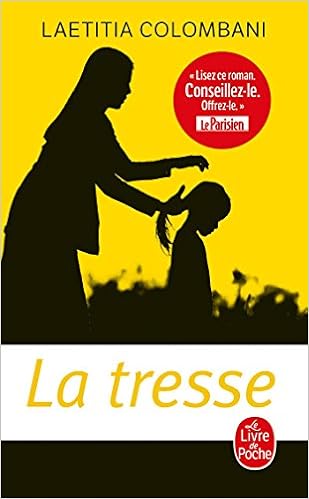
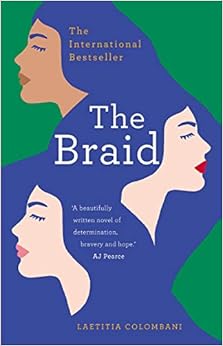
“La Tresse ” or “The Braid” by Laetitia Colombiani: “saved by a hair’s breadth”

Like the three stands of a plait (ou tresse) the chapters focus in turn on three women who seem at first to have little in common apart from their sheer determination. A villager in Uttar Pradesh (India), Smita is a Dalit, member of the “Untouchable” cast which means that, like her mother before her, she must empty the toilets of higher caste neighbours, using the same wicker basket impregnated with the curse of its pungent odour. All that keeps her going is the dream of her small daughter Lalita breaking the vicious circle and escaping her fate by getting an education. The Brahmin teacher accepts the expected bribe to take her on, only to humiliate the little girl on the very first day. Incensed and defiant, disappointed by her husband’s refusal to leave his rut of rat-catching in the village, Smita chooses the dangerous course of travelling with Lalita to a relative in a distant city where the pair can start a new life.

The daughter of a Sicilian wig-maker in Palermo, Guilia is the only one of three sisters to take an active interest and work in the family business which she seems destined to take over in due course. Her carefree life is shattered when her robust, seemingly indestructible father is badly injured in a road accident which leaves him in a coma. Obliged to sort out some paperwork, she makes a shocking discovery. At the same time, perhaps susceptible in her grief, she embarks on an unlikely love affair.

Meanwhile in Canada, high-flying lawyer Sarah, twice married with three children largely absent from the scene because they are cared for by male nanny and factotum “Magic Ron”, takes pride in her success and is utterly confident in her sense of being in control. When confronted by a threat to her career which perhaps she should have foreseen, which cannot be managed and contained through sheer willpower, how will she cope?
This is easy to read and plot-driven, but the continual switching between apparently unconnected storylines is somewhat jarring, at the same time serving to increase suspense over how, if at all, they will converge at the end and masking a thinness in Guilia’s and Sarah’s tales. I would have found it a more satisfying read if presented as three separate short novellas, although I accept this would have weakened the “Eureka” moment of realising what links the three women. Smita’s tale seems to me the most fully developed and engaging, perhaps because there is a stronger sense of place and portrayal of a (to me) unfamiliar, distinctive culture as she travels towards her goal.

Since the author is a scriptwriter and film-maker, I assumed this novel was written from the outset with adaption to the screen in mind*. At a recent interview, the author was adamant this was not the case. This was partly because she wanted the freedom of not needing to think about the cost of, for instance, choosing specific widely distant locations. She acknowledged that her books are regarded as cinematographic, which she explained as meaning based on situations one can visualise, like Smita and her daughter travelling on an overcrowded train for the first time, rather than relying heavily on description of people or dialogues. On the other hand, perhaps because of the author’s scriptwriting background, the style is for me the weakest factor – by turns heavy on exposition, or unduly sentimental in tone. The strength of the stories lies in the dramatic incidents and changing emotions of the characters.

*At the time of writing this, both of her first two novels have been or are in the process of being filmed.

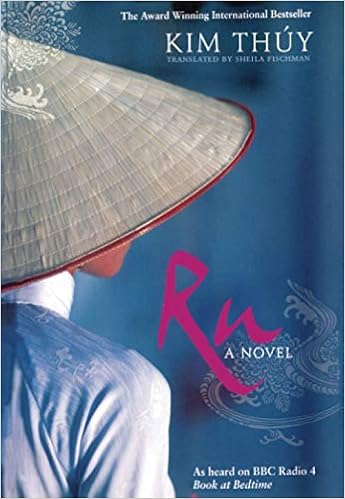
“Ru” by Kim Thuy: hypnotic memories in a waking dream

Born to a wealthy family during the 1968 Tet Offensive when the North Vietnamese communists launched their surprise attacks on the South during the Lunar New Year festivities, mingling machine gun fire with firecrackers, Kim Thuy has drawn on her own experiences to produce this fictionalised memoir. Half the family is home partitioned off with a brick wall to be taken over by communist soldiers who spy on them continuously. Their wealth in the form of diamonds inserted in the pink plastic of dental prosthetics, the narrator’s family joins the flood of boat people, passing via a muddy Malaysian camp to Canada which has extended a generous welcome to many Vietnamese refugees. Years later, as a naturalised Canadian, she is able to revisit her country of origin to reevaluate it from a westernised perspective.

At first, certain aspects of the evidently original and distinctive style irritated me. I felt somewhat cheated by the mainly one page chapters, often more than fifty per cent white space. The way they flitted back and forth in time made it hard to keep characters in mind and grasp the order of events. It is difficult to refer back to points quickly unless one is using a Kindle! I found it easier to read once I had accepted the novel as a series of anecdotes, often poetic, with a rhythmic, hypnotic quality, the white space encouraging a pause for reflection, the underlying aim being to mirror how memory works in fragmented, jumbled recollections.

“Ru”, a French word which can mean “Flow”, seems a more apt title than “Ru” in the sense of “Lullaby”, many memories being quite brutal or harrowing, mixed with beauty, humour or banality. This may render them all the more shocking, in seeming unreal while manifestly true. For instance, Mr. An, met in Canada, is still traumatised by the Russian roulette played by the Communist soldiers, causing him to observe for the first time the varied shades of blue in the sky he thought he was seeing for the last time. The narrator’s objectivity in describing such things is a way of coping with suffering and loss. Yet is it also at the price of making the reader feel too disengaged as well?

Despite their brevity, the paragraphs need to be read slowly, with concentration, because they are so full of images which evoke yet further ones. Each reader will draw something different from the myriad of impressions. Perhaps because they give insights into a different culture, I found the passages on Vietnam the most striking and moving – the nostalgic image of a past tradition, in which old ladies in a boat on a small lake place tea leaves in lotus flowers for them to absorb their scent during the night.

Then there is Aunt Five (the Vietnamese name their family members by number), a spinster who has dedicated her life to her parents. Rewarded after their death by being driven out of the house, she takes refuge in a hut near a Buddhist temple, virtually her sole possession being the four bowls in which she gave her old father his daily rice. These blue and white bowls with silver rims, partly translucent when held up to the sunlight, are a symbol of a lost way of life.

There is subtlety in the anecdote of the refugee boys machining clothes in a Quebec garage after school to earn some pocket money, who recall the dark period in Vietnam when they were abused by men in for the price of a bowl of soup. Yet their ability to maintain a kind of innocence, divorced from the sordid deeds of adults, and become balanced young men, Canadian engineers, is an affirmation of human resilience.

Kim Thuy evokes our empathy with the refugees, and a sense of how having been uprooted from one culture, they inevitably retain a nostalgia for certain aspects of it, some fated to occupy a kind of limbo, unable to shed a sense of disconnection from the host country, no matter how well they appear to have integrated into it: “one horizon always conceals another…… one advances through life in the footsteps of those who have gone before, in a kind of waking dream”.

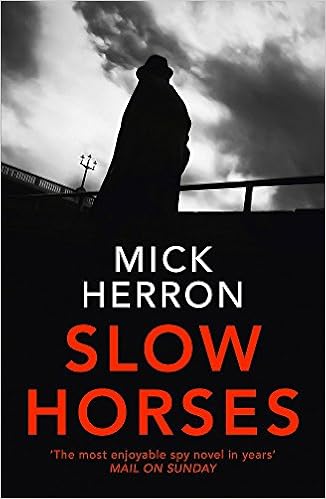
“Slow horses” by Mick Herron: “practise to deceive”

“Come, friendly bombs, and fall on Slough
It isn’t fit for humans now,
There isn’t grass to graze a cow
Swarm over, Death!”

This well-known attack on Slough by John Betjeman is the source of the name Slough House, in turn easily corrupted into “Slow horses”, the derogatory nickname of disgraced MI5 intelligence officers sent to work there on pointless tasks, until they are driven to leave the service at no further cost to the organisation. The particular failure of their slovenly, foul-mouthed boss Jackson Lamb has not been disclosed, but for his hapless underlings it ranges from leaving a highly confidential computer disc on the Tube, handed in at the BBC, to making a careless error when tailing a suicide bomber at Kings Cross, resulting in massive and costly damage. This was bad enough for River Cartwright to be sacked, but for the string-pulling of his grandfather, retired spook the “OB” which turns out to mean the “Old Boy”.

The narrative starts slowly, setting the scene and filling in the backgrounds of the main characters, but it is always vital to pay close attention, particularly in view of the author’s penchant for making an incident clear only after the event. Matters hot up when a young man is kidnapped by extremists who threaten on camera to behead him but nothing is as it first seems in this increasingly tangled plot. Mick Herron does not baulk at killing characters off, both good and bad, which serves to raise the suspense. As the slow horses get embroiled in some unintended consequences and real action, will then end up as scapegoats or heroes?

With shades of John le Carré and Raymond Chandler, I found this book a page turner by reason of the plot twists, wry humour and cynical comments on our society. Some readers may disagree if they are put off by a tendency to repetition, long-windedness, implausible moments and points which remain frustratingly unclear (perhaps a few loose ends are to be picked up in a sequel). The ambitious politician Peter Judd is an obvious parody of Boris Johnson, but is it wise to bring in current named celebrities whose names may not mean much in a few years? For instance, Jackson Lamb is described as “Timothy Spall gone to seed (which left open the question of what Timothy Spall not gone to seed might look like)”.

I found some aspects of the final denouement confusing, too rushed and something of an anticlimax. Perhaps it is a pitfall for elaborate plotters to run out of steam for a mind-blowing revelation at the end.

“Slow Horses” is the first of seven full-length novels in a series as at 2021. I believe it is best to read these chronologically, not least in order to understand the allusions in the successive books. I may read one or two more in a while, but fear they might prove “too much of the same”.

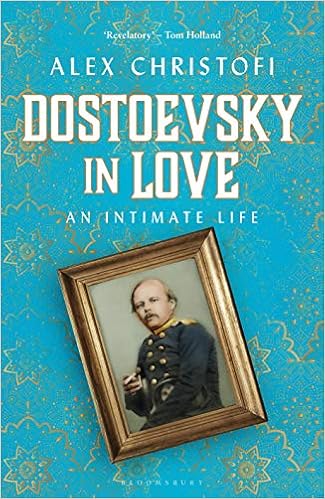
Dostoevsky in Love by Alex Christofi – Brilliant novel approach

Dostoevsky did not live to complete his intended autobiography, but Alex Christofi has done both him and us a great service in this daringly original fictionalised biography, based on meticulous research, which skilfully weaves in Dostoevsky’s own words, printed in italics. It seems as if many of the quotations are taken from a piece of fiction, but applied here with astonishing aptness. Despite revealing Dostoevsky’s many flaws, literally warts and all, the author succeeds overall in painting him in a sympathetic light.

The dramatic hook of a prologue, largely in these italics, presents what Dostoevsky believed would be his final thoughts in December 1849 during the last moments before execution by firing squad for involvement in a group which had acquired a printing press to organise a coup against the Tsar. “The most terrible part of the punishment is…the certainty…that in half a minute your soul will quit your body and you will no longer be a man”.

Reprieved but sentenced to four years of hard labour in Siberia, at first “broken by the monstrous strangeness”, he began to absorb every impression of his new world, even questioning fellow convicts about what it felt like to receive more than 500 lashes: “But I could not get a satisfactory answer…it scorches like fire, as though your back were being roasted”. The prison hospital was the only place where he could record all this on smuggled paper.

Although I have only read “Crime and Punishment”, it was fascinating to see how much of it is drawn from his own thoughts and experiences. Dostoevsky practised his belief that a great writer needs to suffer. The circumstances of his early life were tragic enough. The small country estate awarded to his father for “zealous service” as a doctor was burned down. His mother died of TB when he was fifteen. Driven to drink, his father was found dead in a ditch, possibly murdered by a disaffected serf.

Perhaps his worst misfortune was debilitating epilepsy which repelled his first wife Maria, and made it increasingly difficult for him to work in later life: “As a result of the falling sickness..I have forgotten the plots of my novels. I do remember the general outline of my life.” Yet he even found something positive in his first full fit. “The sense of life, the consciousness of self, were multiplied ten times in that lightning strike…. My mind and heart…flooded with extraordinary light… all unease…..anxieties…. submerged in a lofty calm…serene harmony, joy and hope”. The next part was of course “unendurable”.

The serious gambling addiction which should have destroyed his second marriage to Anna, but for her at times inexplicable love, makes painful reading. Christofi gives us blow by blow accounts of the cycle of Dostoevsky borrowing yet more money to win initially, fail to quit, lose the lot, pawn his watch, pawn Anna’s jewelry, lose some more and lack the funds to return from the fatal attraction of the German casinos to Russia where such gambling was not allowed. Apart from his obsession with finding the formula “to overcome the crudity of blind chance and win” the money he needed to be free to write without continual worries over debts – he was not a rich landowner like Tolstoy or Turgenev – he admits to deriving “acute enjoyment” from the risk of gambling “at the cost of torture” in the process.

With acute self awareness, he had a character confess how an “exceptionally shameful position, some more than usually humiliating, despicable and, above all, ridiculous situation always aroused in me not only boundless anger but ….an incredible sense of pleasure, an intoxication…..from the agonising awareness of my own depravity. I confess that I often sought it out because for me it was the most powerful of all such sensations.”

Sensitive and romantic, too quick to propose, appeared Dostoevsky easily obsessed with the idea of love rather than the woman concerned. Maria, at first unobtainable because she was married, and reluctant to wed him when she was widowed because he was by then a low-ranking soldier, seemed to lose her appeal once she became his wife, her bitterness no doubt fed by his neglect. Did he become infatuated with the beautiful, intelligent student Polina because she strung him along so tantalisingly? If he had been prepared to leave his dying wife for her, would his love for Polina have evaporated in turn? Even during his second loving marriage to the highly supportive and collaborative Anna who also proved to have a sharp business sense, despite a deep love for their children, with the single-mindness of a creative artist, his work came first. His routine was to sleep every morning in order to write through the night without interruption.

Criticised by former colleagues for attacking the nihilism of the next generation of rebels, briefly editing a journal regarded as arch-conservative, Dostoevsky was in fact an independent thinker whose ideas evolved over time, “chopped and changed” in the unceasing attempt to communicate them. Having developed a strong religious sense during his imprisonment, he observed that “if someone succeeded in proving to me that Christ wasn’t real, I would rather stay with Christ than with the truth”.

Dostoevsky crammed a wealth of diverse experience into his fifty-six years. He managed to regain and surpass his early success as a writer so that, by the end, Victor Hugo was inviting him to a prestigious conference in Paris, the Tsar was demanding a copy of his latest book and his speech in celebration of Pushkin was met with an extraordinary emotional ovation, and a laurel wreath a metre-and-a-half wide.

Dostoevsky’s concern with social justice for serfs and social outcasts mirrored that of Dickens whom he revered. Unable to understand Tolstoy’s popularity, rather despising his focus on the world of aristocrats and gentry, Dostoevsky was groundbreaking in exploring human nature even to the depths of depravity, paving the way for modern prose via those he inspired in turn: Joseph Conrad, Virginia Woolf and James Joyce.
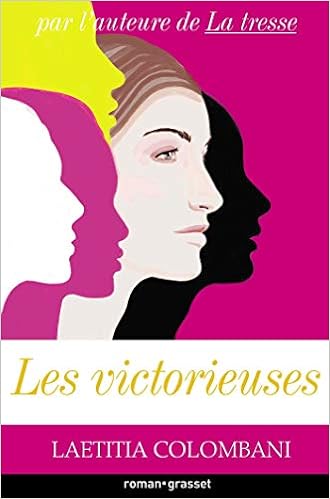
Les Victorieuses by Laetitia Colombani: “Making a difference”

When a businessman on trial for fraud is found guilty, he hurls himself over the guardrail to his death six floors below on the marble floor of the foyer at the Paris Palais de Justice . This dramatic opening hook proves to be no more than the trigger for high-flying lawyer Solène’s mental breakdown. Having pursued a legal career at the cost of personal relationships, Solène is left apathetic and reliant on antidepressants. As a form of therapy, she agrees to spend every Thursday as a “scribe” for the women with a wide range of social problems, refugees and former rough sleepers living at the Salvation Army’s Paris hostel in the historical “Palais de la Femme”. Gradually, she builds a rapport with a variety of women, but her growing sense of “making a difference” proves fragile in the face of the inevitable setbacks in such a vulnerable group. Yet there is always humour and mutual support mixed with the pain and deprivation.

The storyline alternates with a fictionalised account of the real-life Blanche Peyron, wife of Commissioner Albin Peyron, who is presented as the driving force in acquiring the substantial building originally intended to house Parisian workers, constructed on the site of a former convent. The plight of a woman with a small baby, for whom Blanche could not find a suitable lodging in 1925 despite four decades of striving to eliminate the widespread problem of homelessness in the capital, was what motivated her to create the haven for women which exists to this day.

“Les Victorieuses” is very easy to read, contains flashes of insight, as in the description of how we find it hard to look homeless people in the eye as we pass them by, and raised my awareness of a piece of social history as regards the struggles of the Protestant Salvation Army to make headway in Catholic France. Sadly for my taste, the style is too coated with sentimentality– even a tweeness that seems incongruous. In this, it resembles the sugary sweets on which Solène gorges when she is feeling low.

Social problems and acts of violence tend to be glossed over or sanitised. Apart from Solène, whose personality is explored in some detail, although I am not sure she is intended to be as flawed as she actually appears, most of the other characters are somewhat two-dimensional, often stereotyped or romanticised. “Les Peyron” in particular seem too good to be true. There is a tendency to provide potted histories of past lives, rather than to undertake the harder task of revealing characters through their dialogues, behaviour and thoughts.

I read this in French, “good practice” for an English reader and likely to stimulate discussion in a book group.

Laetitia Colombani has won plaudits for “La Tresse” which some critics seem to regard as a superior novel.

“The Octopus Man” by Jasper Gibson: Being Mindful

The Octopus Man

Tom is given to talking out loud and offering a chair to Malamock the Octopus God, whose voice he continually hears, on whom he depends to guide him through life. Needless to say, the medical profession regards Malamock as a problem, a barrier to Tom’s well-being to be removed through medication. All previous approved drugs having failed, Tom is under pressure to take part in an experimental drugs trial. It is a controversial view, but Tom wishes to live free of drugs with their generally negative side effects, not least the rendering of his mind to a deadened and sluggish state. Tom simply wants the world to accept him as he is, with Malamock.

Once a high-achieving law student with a promising career ahead, together with a tendency to overconsume recreational drugs, Tom has been reduced to a life on benefits and medication, dogged by spells in mental hospitals and stoically supported by his hard-pressed sister, torn between him and her partner who represents the uncomprehending and intolerant “real world”. The viewpoints of these three, and the relationships between them are brilliantly captured in the final chapter.

It is a daring and original book, written from Tom’s viewpoint, with a tragi-comic blend of lunacy and lucidity, and Pinteresque exchanges between the sharp-witted if technically deluded patient and the too often rigid, imperceptive, or perhaps just overworked professionals who try to treat him. It may be too one-sided, but there are also some telling scenes to show how patients in mental institutions may be manipulated by unscrupulous staff, and how they may have negative effects on each other with their different types of condition.

The Octopus Man was apparently inspired by the death of one of the author’s close relatives, for no apparent reason other than that he had spent years on various types of medication for psychotic mental illness.

I do not know what those suffering from mental illness will make of this novel. Having experience myself of a close relative with longstanding mental illness involving psychosis, I found this novel, which is actually quite funny at times, too distressing and near the bone for me to be able to read it from cover to cover as I normally would. This is a compliment to the author’s skill. It is well worth reading for someone with little or no familiarity with the issues involved – a relatively painless way of gaining understanding.