The Trespass

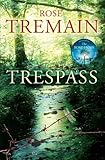
This is my review of Trespass by Rose Tremain.

Tightly plotted and well-written as you would expect of the work of a prize-winning author, this is part thriller, part pyschological study of a disparate group of characters in late middle age. The short chapters, which switch between the viewpoints of the main characters seem to lend themselves to the film script which will no doubt follow in due course. The "trespass" can be taken on two levels, the most obvious being the encroachment of middle-class expats on the remote rural area of the Cevennes, drawn by its wild beauty and peace but oblivious to the feeligs of the displaced local people. On a subtler note, the "trespass" is also the unintentional harm caused by parents who ride roughshod over their children's needs, leaving their adult lives blighted – in this unremittingly sad book, this damage applies to all the characters.

At first I was irritated by the contrived opening chapter which seemed to be an exercise in creative writing (a child's eye view of the world – not very relevant to what follows) culminating in a horrific but unexplained incident, clearly intended to retain the reader through the following somewhat unexciting scene-setting chapters. The main characters seemed stereotyped: arrogant gay art dealer obsessed with his mother, horsy lesbian sister, dreamy sensitive French peasant given to epileptic fits and boorish,drunken brother, etc. Gradually, my interest was caught by the interplay between the characters, their different takes on the same situation, etc. All of them, even those who seemed wholly bad or unsympathetic at the outset, revealed redeeming features and some clear development in their outlook by the end of the book.

Although the language occasionally disappoints by touching on the cheesy, I was impressed by some imaginative phrases such as for two drinkers who "sat face to face across a choppy sea of glassware" and by insightful comments about, for instance, memory, growing old, being lonely, and all the characters' changing perception of events.

Although I guessed the climax of the story long before it came, there was a sadly ironic twist at the end. The most poignant aspect was the lack of communication between the ill-used Audrun and her brother Aramon, driven to drown his guilt in alcohol

I have enjoyed other books by Rose Tremain more – The Road Home, The Colour, Restoration etc – I think because they are all more original and probably more ambitious in their scope. They also, as I recall, have a single main character with whom one can more clearly identify. The quality of the writing saves "The Trespass" from being as depressing as it might sound and overall it is a successful example of what you might call accessible literary fiction.

⭐⭐⭐⭐ 4 Stars

A Tall Story?

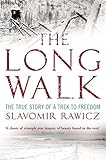
This is my review of The Long Walk: The True Story of a Trek to Freedom by Slavomir Rawicz.

Initially taking this tale at face value, I felt that I should take a positive view of it out of respect for the courage of the escaped political prisoners who showed such resourcefulness and persistence in their determination to survive. However, although it was relatively short and easy to read, I found the book all too easy to put down. This was partly because the incidents which would have been full of tensions and mishaps in a self-confessed adventure story were so straightforward: the escapees scaled prison walls without attracting notice, no dogs pursued them, everyone they met was friendly and gave them food, when hunger drove them to steal and slaughter an animal it all went without a hitch, and so on. Admittedly half the group died on the way, but I am not introducing a spoiler here: the author removes all suspense by telling us in the completely unnecessary chapter headings listed in the contents page how many people died and where. "Five By-Pass Lhasa" reminded me of a kind of "Enid Blyton meets Biggles" approach to it all. The characters were all somewhat two dimensional, and the rapid deaths without much warning or build up left me less moved than I should have been.

It could be argued that the lack of real action and personal drama reflected the fact we are dealing with a true story. However, consulting Amazon half-way through my reading, I found comments on the strong evidence that this tale is a pastiche of the story of another man's escape. I have no idea whether this is true or not, but it supported the doubts which had already arisen quite independently. My two first major queries arose over the fact that the narrator was able to repair the camp commandant's radio purely on the happily coincidental basis of having had the same model at home. This gave him convenient access to the commandant's wife, who not only spoke to him with the most surprising informality, but virtually incited him to escape, advised him on how to do so, and contributed to equipping him and his colleages to boot! As other reviewers have commented, the subsequent amazing capacity to cross the Gobi Desert without water, and the sight of the Abominable Snowmen were the final nails in the coffin of my belief. Out of all the characters, Kristina seemed to me to be the least convincing. I wondered if she was created to add a little more drama and was not surprised that she was the first to be eliminated from the tale.

I am sorry if I am misjudging this book.

⭐⭐⭐ 3 Stars

Home

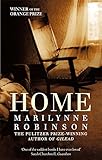
This is my review of Home by Marilynne Robinson.

"Home" is a subtle and moving exploration of relationships between parents and siblings, and the deeply embedded nostalgic memories of one's childhood which return in adult life, perhaps particularly for those who are "less successful", with too much time on their hands. It is written from the viewpoint of Glory, the oversensitive and unworldly youngest daughter of the retired Reverend Boughton, for whom she has returned to care in his old age after the collapse of her long, clearly doomed engagement. Unexpectedly, after an absence of twenty years, her brother Jack also returns home, an outsider, an alcoholic drifter from his youth, yet still retaining the power to attract people with his charm and flashes of perceptiveness. The human flaws and contradictions in the main characters held my interest – not least the pious yet manipulative old father, who in some distorted way loved his most wayward son the most, because he provided a "real cross to bear". There was also the inference that Jack's questioning agnostic spirit had somehow been crushed by the stifling religion of his upbringing. I enjoyed the implication that Jack, concerned about the race riots in the south, was less prejudiced than his godly father who had not thought to question the bigotry in which he had been raised.

Although this book could have been unbearably sad, this was countered by the wry humour of Glory's private thoughts, and by some drily witty dialogue.

I sympathise with some of the reservations of other readers. Having made its point, the book did "go on a bit" although you could argue that it reflected the slow rhythm of life in rural Iowa. In the same vein, the focus on the minute details of living – cooking, cleaning and maintaining clothes when one is very poor, gave the book realism. I also liked the way in which some key facts are touched upon so delicately that you could miss them if you tried to read too fast, or did not trouble to "tune in" to the wording, which is quite convoluted at times, almost "nineteenth century" in style yet very lucid at other points.

It is true that the self-absorption of the three main characters was wearing at times. There were a few practical queries. Wouldn't Jack's sudden appearance after twenty years have created more of an impact? Surely the siblings would have come flooding back to see him? If their respected old father was fading into senility wouldn't that have brought them back as well?

The book dragged somewhat in the middle for me. As relations between Glory and Jack improved I feared I was reading a kind of Polyanna-cum-Little Women for adults. Jack's reputation for being an alcoholic and a thief seemed a little exaggerated. But the tension from Glory's ongoing dread over her brother's imminent downfall was proved justified. The pace improved towards the end with an effective final twist, although I felt that Glory's final observations were a little schmalzy.

This is a well-written and thought-provoking book which encourages me to read "Gilead" although on a superficial view the latter appeals to me less. Although "Home" can be enjoyed by an agnostic/atheist I am not sure the same can be said for Gilead…..

⭐⭐⭐⭐ 4 Stars

“The Girl Who Played with Fire” (Millennium Trilogy Book 2) by Stieg Larsson – Something lost in translation?

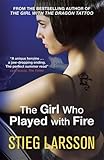
This is my review of The Girl Who Played with Fire (Millennium Trilogy Book 2) by Stieg Larsson.

The opening chapters diverted me from the tedium of sitting on an airport runway for three hours waiting in vain for the plane to obtain a slot to fly round a cloud of volcanic dust. The complex plot wound its way to a suitably shocking and unpredictable ending, and although I do not share the widespread admiration for the “spiky and sassy” anti-heroine Lisbeth Salander, I was left with sufficient curiosity as to her fate to feel motivated to tackle the final part of the trilogy in the next few weeks.

So, with these positive initial reflections, what were the reservations which made me wonder at several points whether this much-hyped book was really worth reading? It certainly needs a thorough edit, with a few passages which I swear do not make sense, and a tendency to read at some points like research notes for the novel rather than the final work itself. I have no objection to a large cast of characters, but the tendency to switch from the viewpoint of one to the next makes for jerky reading, and I would have liked a brief list of names and roles for quick reference where the unfamiliar Swedish names/personalities/roles of bit part players were rather similar. Also, some characters seemed to “drift out of the frame” after what seemed to be unduly lengthy introductions.

My main beef is that the book is frankly badly written at many points, although to be fair to the author I wonder to what extent this is due to a translator with a cloth ear for language. The large number of short scenes, conveying the impression that the structure was created with filming in mind, suggest that quality of writing was never a major consideration.

By the standards of popular pulp fiction, this probably deserves the high praise it has received in Amazon reviews so far. Perhaps I was misled into thinking this trilogy is more of a “work of literature” than it is by the first part, which seemed to have a strong mission to expose corruption, and conveyed a sense of the tensions in Swedish society and a rounded central character in the journalist Kalle Blomkvist. In this section, the (for me) slightly ludicrous aspects of Salander’s extraordinary gifts for computer hacking and manipulating unlikely victims play a much larger part. Together with the increased level of sadistic violence in the book, it held less appeal for me.

Whereas the first part involved working out the riddle behind a series of murders, this second part was a little disappointing in that revelations towards the end came in the form of explanations from key characters or summarising from a report.

However, I am clearly in a minority……

⭐⭐⭐ 3 Stars

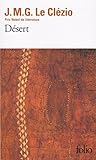
Desert

This is my review of Désert (Collection Folio) by Le Clezio.

This book has just been published in English, and I would be interested to see how it translates. (As an English speaker, I laboured through it in French, with a handful of phrases for which I could not work out the sense.)

I doubt whether any translation (except perhaps one by the bilingual author) can do justice to the language, which is like a long, rhythmic, hypnotically repetitive free verse poem about the harshly beautiful infinity of the desert to which man must adjust, for it makes no concessions. The lives of the nomads, barren existences of grinding poverty in the initial estimation of a privileged westerner, are in fact shown to have a dignity and sense of community, in balance with nature.

The narrative switches between 1909-12, when the desert warriors, the men in blue veils, are making their last abortive stand against the Christian imperialist invaders of North Africa, and the late C20 where the North Africans live a debased life in the coastal shanty towns – debased since they are desperately poor, but have lost contact with their old culture of desert-based nomadic self-sufficiency – and dream of life in great cities like Marseilles. Each thread focuses on a particular individual – in the earlier period, a young boy called Nour follows the ill-fated trek north across the desert to the sea in the wake of the charismatic leader Ma el Ainine, rendered ineffectual by age and his inadequate resources to fight the westeners with their artillery.

Nour's modern-day descendant is Lalla, the beautiful young girl, fascinated by and in tune with the desert, who nevertheless makes the journey to Marseilles where she is thrown into the squalid life of the immigrant scraping a living in a corrupt and ugly city which is portrayed as another type of desert, until her life is transformed in a way that I cannot reveal for fear of creating a "spoiler" except to say that I found it implausible and could not see how it added to the tale.

The book often frustrated me in its slow pace. Small details observed in passing, or the "greater scheme of things" seem more important than a strong plot line and well-developed series of interactions and events. Perhaps this is intentional, all part of a contemplative, spiritual focus which appears to be Le Clezio's main concern. The narrative speeds up with more moments of real pathos and drama towards the end – crises of life and death – but some of the significant events and characters on the way are underdeveloped – again, this may may be deliberate, since the book is mostly about the ambience and power of desert places. Given the missed opportunities for engagement between the main characters, I was struck by the way Le Clezio seems to have made an exception in the over-romanticised portrayal of Lalla.

Despite these apparently strong reservations, this book will stay with me, in terms of the evocative power of the language and the vivid visual images it conjured up of the desert landscapes in various lights, and of the nomads. Le Clezio describes the relatively few events of this book, people's thoughts and sensations, in minute detail. In so doing, he makes the reader more self aware, more attuned to the details of his or her own surroundings…..

⭐⭐⭐⭐ 4 Stars

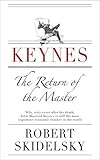
Keynes Return of the Master

This is my review of Keynes: The Return of the Master by Robert Skidelsky.

This provides some thought-provoking perspectives on, for instance, the collapsed credibility of the discipline of economics which failed to foresee the recent financial crisis- Skidelsky attributes this to a narrow focus on mathematics rather than the broader ethical, philosophical, historical context within which Keynes operated. This led Keynes to change his mind on the benefits of free trade after experiencing the trauma of the Great Depression. Perhaps wishing to have it all ways, he favoured an international approach to the world of arts which he loved, but came to advocate a measure of protection to encourage countries to manufacture their own goods, even if others could do it more efficiently.

Although this book inspired me to resolve to read a longer and more detailed work on Keynes, it left me feeling a little disappointed. The structure seemed disjointed, as the text switched back and forth in time, with sections written under subheadings in the manner of a text book, but without the systematic approach this normally entails. I was uncertain as to the intended audience. Surely a lay reader with no prior knowledge of Keynes would be confused by the half-explained theory, such as the role of interest rates in equating savings and investment, but not necessarily at the full employment level?

I would have preferred the key points of this book to be presented in a meaty essay, rather than have to tease them out of a somewhat unfocused book.

⭐⭐⭐ 3 Stars

Summertime

This is my review of Summertime by J M Coetzee.

At first it seems incongruous to have this short and deceptively slight novel shortlisted for the Man Booker Prize alongside the sprawling tomes of Wolf Hall and The Children's Book. The opening pages, "fictionalised" (we never know to what extent) fragments of Coetzee's notes for an autobiography which an imagined premature death have prevented him from writing, establish from the outset an impression of "quality rather than quantity": the spare, elegant prose, intriguing hints of conflict between the characters, wry humour, insights into the complex tragedy of life in South Africa in the years preceding the end of apartheid.

The work is original in taking an unusual perspective. Sandwiched between Coetzee's notes are interviews between his fictional biographer and five people who knew him before his recent death. Each interview reads like a short story in its own right, drawing us into the lives of a very disparate group of people and evoking in the process vivid impressions of the lives of white people in the South Africa of the 1970s. Again, there is unexpected humour in the often sparky exchanges between interviewer and interviewees who are not backward in questioning his techniques. The fascinating issues are raised of how a Nobel prize winning writer may seem, even be, very ordinary, and may appear very differently to various people who knew him. I found most moving the account provided by Coetzee's cousin Margot, although it was the only "interview" to be written in the third person, in the form of a transcript being read back for confirmation.

I agree that beneath the portrayal of Coetzee as perhaps excessively self-effacing, with a possibly exaggerated lack of appeal, one senses a certain discomforting self absorption in the writer. Why did he focus on himself in this way? On the other hand, you could argue this is a twist on the fact that many novels contain unacknowledged, perhaps even unconscious elements of the autobiographical. Also, perhaps a Nobel Prize winner is allowed to be self-absorbed – may even need to be.

Another point which concerned me a little was the similarity in "voice" of the author and the interviewees, with the exception of the Brazilian dancer. Also, although the distinctive precision of the writing is a welcome contrast to the cloying sentimentality of some writers, there is the nagging sense that it links to a level of cold, clear-eyed dispassion which can seem almost repellent – I imagine some readers will feel this more than others. And does it matter, if reading is all about extending awareness?

Whilst I admire this book, and suspect I read it too quickly and need to revisit it and reflect more on the many observations about human relationships, culture and the meaning of life, I was left feeling a little let down. Perhaps this was because the final scene in the book is agonising in it sadness. Perhaps my disappointment is because many of the issues which interested me, such as the role of a "liberal Boer", were underdeveloped. There seemed to me to be the potential to do so much more, without the book becoming too flabby or weighty. I noticed the same quality in "Disgrace" and wonder whether Coetze's main message is that life is not clear cut, accepted definitions of success and failure are open to question, individuals are complex and essentially unknowable, even to themselves – life is, simply, inconclusive and often disappointing….

⭐⭐⭐⭐ 4 Stars

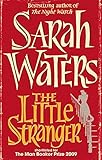
The Little Stranger turns the Screw

This is my review of The Little Stranger by Sarah Waters.

After a slow start, this well-written tale initially reeled in my interest with its evocation of life in rural England just after World War 2, with the conflict between nostalgia for an irrevocably declining way of life and the pressures for change. Waters captures well the appearance of cracks in the still rigid class divide, the physical decay of the elegant house and way of life which the impoverished local gentry could no longer afford to sustain, interesting details on rationing, reactions to the establishment of the NHS, the inescapable gossip grapevine, and so on. However, there was a fragmented nature to the plot, which with increasing frequency lapsed into a poltergeist-cum-Gothic horror fantasy. I am no fan of ghost stories, but I suspect that this one does not score very highly on the spine-chilling scale. Somewhere round page 160 I almost gave up, but resolved to continue since this is the choice of my local book group. Without giving too much away, the details of the hauntings which drove first Rod and then his mother mad seemed to be too silly for words, and insufficiently frightening, just ludicrous. What was slightly more alarming and intriguing was realisation of the way in which doctors, with possibly questionable motives, might react to people troubled by the supernatural by locking them up in asylums indefinitely for their own good.

Another point which concerned me was that, because of the author's decision to write in the first person through the eyes of the local doctor Faraday, many of the most dramatic scenes had to be reported to him which obviously detracted from the tension. Plus at times, the narration of these supernatural events entered into the minds of third parties and what they had thought and felt to an implausible degree.

I also disliked the disjunction between the development of subtle and intriguing relationships between characters and the ruthless killing off in bizarre circumstances of some key players.

The book improved towards the end with the course of Faraday's relationship with Caroline, and the revelation of his own character. There was an interesting final twist which caused me to reflect on the chain of supernatural events, Faraday's precise role in this and the ambiguous identity of the "little stranger" but, to conclude, I think Sarah Waters' talents could be better used.

⭐⭐⭐ 3 Stars

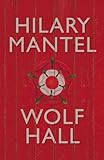
Wolf Hall – an entertaining and high class soap opera

This is my review of Wolf Hall by Hilary Mantel.

Wolf Hall gives a different slant on the well-known tale of Henry VIII and Anne Boleyn by taking the viewpoint of Thomas Cromwell, and transforming him from a sinister, unappealing villain into a complex, intriguing character who, if not exactly likeable, commands respect. Hilary Mantel has clearly come to love her unlikely hero, even making him into something of an "homme fatal" with a stream of women appreciating his charms – or perhaps respecting his power – Mary Boleyn makes a (not very convincing) pass at him, Jane Seymour finds him sympathetic and so on. Although clearly materialistic, manipulative and ruthless, Cromwell has a soft spot for children, women who have hit hard times and young men in his service, he can engage with people at all levels, and has a natural desire to turn his hand to any practical task which is at times almost comical for a man of his hard-won status. We see how the king and the nobility come to use Cromwell – the super-competent, lateral-thinging, can-do fixer – whilst despising him for his low birth. Yet even when he is at the height of his powers, he hears the inner voice reminding him that he may be brought low, like the unseen fist which once felled him in his youth.

The book evokes powerful sensory images of life in the sixteenth century – the sounds and smells, the unfamiliar food and long-lost customs, the muddy roads, the appalling brutality of public executions. Many in the large cast of characters are well-developed as distinct personalities warts and all: the bluff, tactless Norfolk; unworldly, cerebral Archbishop Cranmer who somehow manages to acquire an illicit wife; Anne Boleyn, clever,calculating, yet driven to tantrums in her deep sense of insecurity. Mantel captures Henry's charisma, combined with the casual cruelty arising from his understandable fear of being deposed without a male heir, and qualms about breaking free from the Catholic church mixed with the irrestible temptation of tapping the wealth of the monasteries, made possible by Cromwell's genius for organisation.

The author's take on Thomas More was particularly interesting: a man normally portrayed as a principled saint is presented as a religious fanatic and sadistic torturer of those who do not hold his views, also cruelly sarcastic to his wife, critising her to his dinner guests in the Latin she cannot understand. His execution forms a moving climax to the end of the book, preceded by some well-written scenes in which Cromwell, whose complex feelings for More include some sympathy based on the length of their acquaintance, uses his powers of argument to try to induce More to recant: the pragmatist against the idealist.

I also found the dialogues very entertaining and play-like – witty and clever, often causing me to laugh out loud.

This book needs to be read slowly to appreciate it fully – a problem if you have borrowed it from the library with no prospect of renewal. My opinion of it improved as I read further and I would like to read it again – the highest accolade for a book BUT I share some of the criticisms made. The continual reference to Cromwell as "he" amongst all the others is very confusing. It is annoying to be obliged to reread a passage twice or more to get the sense. Also, some allusions to previous scenes require the reader to have picked up and retained some small detail which could easily have been overlooked. As a result, a few passages did not make sense to me – good editing would have prevented this. I also agree that the style was at times rather stilted. This was very noticeable in the early chapters, also to the extent of putting me off continuing. The dodging about in time – recording Wolsey's downfall before the events leading to it, and introducing the lords sent to arrest him before developing them as clear characters, created a sense of confusion which detracted from the overall book. I agree that it would have been worth knowing a little more about how Cromwell came to work for Wolsey.

Finally, the ending seemed rather limp – definitely leaving the way open for a sequel or two. And why was it called Wolf Hall (the home of the Seymours) which features very little in the book? – I assume it was to point to a sequel in which Cromwell, whilst drawn to Jane Seymour as a future bride sees the scope for her to be Henry's next victim -or perhaps the increasingly ruthless Henry steals her from under Cromwell's nose.

⭐⭐⭐⭐ 4 Stars

Stilted nostalgia – perhaps damaged in translation

This is my review of The Garden of the Finzi-Continis (Penguin Modern Classics) by Giorgio Bassani.

This book probably needs to be read in Italian to be fully appreciated, since the prose comes across as over-flowery in translation. Despite this, the at times over-meticulous descriptions create evocative images with a sense of nostalgia for old Italian towns and the dusty estates of doomed aristocrats in 1930s Italy. The rise of Fascism, with its evils not yet understood, and the growing menace to the complex Jewish community are also outlined quite well, although it would have been more dramatic not to have had the fates of the key protagonists spelt out so baldly from the outset. By contrast, the way in which certain relationships were hinted at but left to the reader to guess was interesting.

The prologue to this translation, which I read last, informs us that Bassani struggled to write. Apart from such touching scenes as the hero's late night conversation with his father, or the details of some of his "squabbles" with the source of his infatuation, Micol, I found many of the exchanges quite stilted and the portrayal of relationships "underdeveloped". I therefore concluded that Bassani's style works quite well for describing scenes, but is less good for human relationships – although perhaps he is accurate in suggesting a certain formality in relationships in that period. I was puzzled that the hero seems quite "coy" in some ways in his relationship with Micol, but appears unphased by a quick visit to a prostitute, clearly implying this was not the first one but he saw no need to mention this before, and it struck me as odd that he passed over "the deed" in a brief clause.

The book makes no concessions, with many erudite references to Italian writers and works which can mean little to the great majority of readers. Again, this may reflect acccurately the nature of education for upper class people of the day.

Last but not least, the extremely long and complex sentences wore me down, to the extent I probably would not have finished the book if not obliged to do so for a reading group. I struggled on in the expectation of "something happening", but much of the book was about not a great deal. Bassani was forever announcing "some significant point" which proved to be nothing much.

My feelings are mixed. I see why this is a classic, but it could have been more dramatic, moving and unusual – the theme of "thwarted first love" is after all a well-worn one. I am left with a few insights e.g. in the opening chapter which describes a visit to Etruscan tombs, a child asks why we care so little about the long dead, and more about those recently so.

I realise that some of my reservations may be due to the quality of the McKendrick translation.

⭐⭐⭐ 3 Stars