This site will share with you hundreds of book and film reviews written since 2009. Also a chance to discuss these reviews together with some of my creative writing to be added.
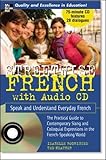
As an English speaker with A Level standard French, I do not know how truly accurate and topical the phrases in "Streetwise French" are. However, this attractively presented book is very easy to use with "parallel text" French/English conversations ( on how to complain, give advice, tell a story, express an opinion, and so on), slang and idioms highlighted in italics and thoroughly explained, a CD of conversations, and some written and aural tests to check learning. Despite the picture of young people on the front, and the opening conversation all about "gueules de bois" hangovers, the colloquialisms covered are wide-ranging and of interest to would-be French speakers of all ages.
I am working through this book to improve my ability to read modern French fiction and articles, understand French films better and last but not least make out more of "real conversations" when in France – plus I feel this is a good complement to the more academic text books available. I gather that French has changed a good deal recently – even for native-born speakers who have lived abroad a while – so it is good to have an accessible book to fill the gap somewhat.
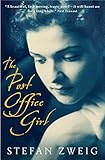
“The Post Office Girl” deserves to be more widely read. It has clearly not suffered in translation. The crystal-clear prose captures the changing moods of Christine, the young Austrian woman whose childhood and youth have been blighted by the effects of WW1. Running a village post office single-handed for a stifling bureaucracy, caring for a sick mother prematurely aged by war work, Christine’a life is transformed overnight when a rich aunt visiting from America casually invites her to stay at a luxury Swiss hotel. Christine is utterly entranced by the sudden immersion in wealth and apparent freedom. Her delight and eruption of enthusiasm and confidence attract fair-weather friends who imagine she is wealthy. When the aunt abruptly withdraws her hospitality, Christine returns to a dull routine made all the less tolerable because she has seen that the grass is greener! Then she meets a kindred spirit, Ferdinand, a young man who has been similarly embittered by ill fortune – the loss of his family fortune in hyperinflation, his years spent as a prisoner in Siberia which have left him disabled. The two then conceive a plan of action which will enable them to assert their freedom from the trap of their current lives.
Parts of this book make for gloomy “Jude the Obscure”- type reading, and Ferdinand’s self-absorbed rants did get on my nerves BUT my respect for the book was increased greatly through considering its context. Zweig was a wealthy Austrian Jew who was appalled by the destruction of European culture by the Great War and the rise of Hitler. Influenced by Freud (whom he knew personally) he was interested in the way that a chance event may trigger self awareness and a sense of being really alive. Zweig and this wife died in a suicide pact in 1942, so that it is haunting to reflect that he had his characters contemplate an extreme solution which he was prepared to carry out himself.
Although the relentless bleakness of some passages is at first repellent, Zweig has the power to enable you to view life from different perspectives, even to the extent of seeing a logic in apparent madness, and fulfilment in tragedy.
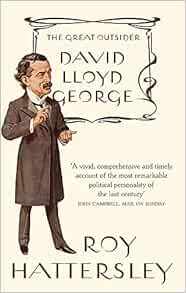
“The more things change, the more they stay the same”. We see Lloyd George condemning the arms race and immoral wars, such as against the Boers – how would he have applied his razor-sharp scorn to the Iraq War? He campaigned for non-conformist teachers to be allowed to teach in Welsh schools , so presumably would have spoken against faith schools and for Welsh devolution, had he lived today. He foresaw how the embryonic labour party threatened the long-term survival of the liberal party and eventually advocated a “centrist” coalition with the Tories to effect constitutional change. The level of faction-fighting within the Liberal Party foreshadowed what may be about to happen again now. And then there were the issues of Irish independence and the power of the Lords to block legislation, eternal thorns in the flesh of Westminster.
Lloyd George got himself noticed by attacking people through breathtakingly rude yet witty insults, on a scale which would probably be quite unacceptable today. His “weathercock” attitude to many issues makes for confusing reading at times. He opposed votes for women on the practical grounds that this would give the Tories an unfair advantage until suffrage was extended to men without property. This illustrates the ultra-pragmatism which enabled him to negotiate with employers and unions to avert strikes, and bring peace to Ireland – yet always there was his tendency to give different parties different impressions – to the point of appearing to lie – so that “solutions” were too often short-lived.
We are told that LG “felt no loyalty to either institutions or individuals …yet he remained true … to a few ideas… for which he was prepared to sacrifice other political objectives”: he was unyielding on national insurance for sickness and invalidity, based on contributions from employers and workmen. For this and his leadership in WW1, he deserves praise – although he seems to have withheld vital troops from a military leader he wanted to remove, but lacked the power to do so.
On a personal level, he sailed close to the wind, risking scandal through indiscreet affairs, fathering illegitimate children. He sold honours for cash with astonishing blatancy, even joking about the “dirty money” which the Liberals held their noses and asked him to raise.
Ffion Hague’s recent biography of Lloyd George has already provided a detailed character study of the charismatic but selfish and manipulative “Welsh Wizard”, but it tends to focus on his relationships with women, notably his long-suffering (“blind” because it was the easiest option?) wife and emotionally abused mistress Frances Stephenson. I looked to Roy Hattersley for a clearer analysis of the political aspects of his life.
It is a challenge to produce a book which is accessible but suitably “scholarly”, without getting overly bogged down in detail. For the most part, the author manages this, with a good blend of analysis, telling quotations and fascinating anecdotes. Once Lloyd George achieves his ambition of cabinet office, first at the Board of Trade but then as Chancellor, the book gets into its stride and manages to be quite gripping, even over such a superficially dry but important topic as his battle to get the 1909 Finance Bill through the Lords – or did he want it to fail in order to force a crisis over the undemocratic power of the higher chamber?
I spotted a few errors – “wining” for “winning” etc, which gave me the confidence to think that has been a lack of editing. Also, some topics are introduced in a fragmented way, without sufficient initial explanation. So, I was often forced to break off reading and comb the index to piece together an understanding of, say, the aims and effects of various education acts (all tied up with the imposition of Anglican RE on nonconformist Wales) or the ins and outs of Irish dissidence, which then as now had the power to split and bring down Westminster parties. One of the worst omissions for me was the lack of explanation of the role of Joseph Chamberlain in breaking up the Liberal Party before LG attained office. I had to consult Wikipedia to find out about the formation of the Liberal Unionists (not mentioned in the index for this biography) who governed in coalition with the Tories. There are also some odd leaps in the text , such as the jump on p.367 from the need to produce shells in WW1 to the drive to reduce the consumption in alcohol.
Hattersley does not much like, but admires LG, a viewpoint which it is easy to share. I recommend this biography, although the 650 pages require a serious commitment of time and concentration – probably worth buying so you can reread to get the full benefit…..
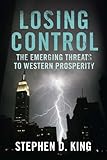
The global economist Stephen King has produced an analysis of "the emerging threats to western prosperity" that is clear, readable yet ultimately more chilling than a thriller from his namesake.
King may be doing no more than bring together the information which can be deduced from regular reading of daily broadsheets, but it is thought-provoking to have the evidence for our inevitable terminal decline set out in one place. Writing from the viewpoint of a "westerner", we are in a Catch-22 position: we need the rising economies of the east, most recently China and India, as areas for new productive investment, sources of capital for us to borrow in turn, sources of labour as our own working populations decline. Yet, at the same time, the swamping effect of the Chinese surpluses invested in US bond markets destabilises our financial system. Increasing earnings and rising expectations create intense competition for scarce resources of energy etc. In the bargaining process, what is to prevent, say Russia, from making gas deals with the east rather than the west? Just as old eastern empires declined and the west "succeeded" because it was flexible and entrepreneurial, the tables may now be turned back again. Retreat into a protectionist bunker, such as the formation of "The Independent EU", is a sterile solution, as we should know from the US attempts at protectionism which exacerbated the World Depression of the 1920s-30s. Our complacent assumption of being in a permanently superior position cannot last.
There is already evidence of the truth of King's predictions of increasing internal unrest, as say, "the Tea Party" in the US provides an example of economic nationalism in what is likely to be a futile effort to stem the changing balance of world power.
In reading this book , one is frustrated again by the short-termist attitude of our political leaders, who persist in the fallacy that continual growth is possible and "fiddle while Rome burns" by encouraging us to focus on immediate relatively minor issues and "scandals" rather than face up to the "bigger picture" long-term.
Although King is good at painting this picture, and certainly covers a wide range of interconnected political and social aspects as well as the economic, there is the odd occasion when he forgets to explain the basics for a lay reader (e.g. the operation of the US bond market – very important since developing countries invest so much of their surplus wealth in currently "safe" US bonds). The small number of diagrams included do not shed much light (e.g. p. 69 of hardback) and the book becomes rather repetitive, even rambling, after a while, as though a very busy man has thrown it together in a hurry.
His solutions also appear a little thin. Suggestions for e.g. a small number of major financial power blocs rather than reliance on the US dollar is interesting, but the suggested common currency for China and Japan sounds a bit Utopian! He fudges the issue of increased migration into areas like Britain to offset the "demographic deficit", saying that "it is not time to close borders", without addressing the counterarguments adequately. I was left with the depressed conclusion that King has no real answer for "coping with the West's diminished status" apart from accepting it with an air of defeatism. It may be indefensible for the West to have obtained its unfair advantage in the first place but, having identified the problem of our inevitable decline, one could wish that "experts" could come up with better strategies for how the decline might be managed.
At least this book enables us to understand more coherently what is in store for us in terms of a permanently reduced standard of living, with increased inequality within countries, not least for the growing numbers of pensioners reliant on declining savings…..
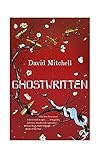
Ghostwritten defies an accurate description of what it is really about, but seems best summarised as nine – or ten -short stories, each with a strong sense of place and well-developed main characters. Mitchell is very versatile and ultra-imaginative, so he can transport us from Japan to Hong Kong, then Mongolia, Russia, London and so on, with some ingenious plots, good sense of comedy, very humorous dialogues, yet also situations of great tension and menace, heightened because we know the author is ruthlessly prepared to destroy any character to serve the drama – although he seems to have a soft spot for his "nicer" creations.
The stories are loosely connected – in some cases these links could be missed, so that part of the fun is looking out for a familiar character or an event from a previous tale. Often, disproportionately serious outcomes arise from minor or random events.
Then there are the ghosts. I may have failed to notice them all but they take various forms: the mischievous poltergeist pestering the corrupt financial lawyer in Hong Kong, or the wise spirit in the Chinese Tea House Tree which turns out to be the transmigrating force which hops from body to body in Mongolia. Then, there is the charming London drifter perhaps on the brink of "facing up to responsibility" who is quite simply a ghostwriter for minor celebrities.
I was not always certain what purpose these ghosts served, and if you do not care for Sci-fi or magic realism, the paranormal aspect may be unappealing. The parts where I for one lose patience are where, say, the state of the migrating "non corpa" is analysed and "explained" with a kind of "ludicrous logic". Likewise, the AI taking control of the world's computerised defence systems is "over the top". Yet, I agree with those impressed by Mitchell's prescience. I had to check that the publication date preceded 9/11, the weapons of mass destruction and invasion of Iraq. I suppose that Reagan's "Star Wars" may have triggered the writer's imagination.
As a set of short stories, "Ghostwritten" is brilliant – well-written, creative and diverse in style and coverage.
As a novel, the whole seems less than the sum of the parts. I think this is because some of the links between stories are so tenuous. Also, although the stories are page turners (different styles will appeal to different readers), they oblige you to work hard mentally, getting to grips with a set of people and situations, only to end inconclusively (not necessarily a criticism) and force you to start afresh. This is not conducive to the kind of coherence, progression or "structure" a novel requires.
Also, although technically very clever and clearly sincere in, say, questioning our current values and misuse of resources, and the evil of one regime imposing ideas on others, I do not feel that Mitchell has the kind of clear, insightful message that a "great" novel might convey. Individual characters are often too busy wisecracking and being too clever by half to be genuinely moving.
This book is definitely worth reading, and may merit greater prizes than it has won, for its originality and skilful writing.
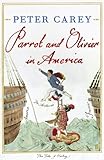
That this is an old-fashioned "good yarn" was not initially clear to me because, being the work of a twice Booker prize-winner who has chosen to use the style of the early C19 in which the story is set, the sentiments and language tend to be quite wordy and flowery.
The narration alternates between the two main characters. Olivier is the delicate, pampered French aristocratic, whose overprotective mother, traumatised by the guillotining of her close relatives, insists on packing him off to America to escape the risk of prison or worse in a politically volatile France. Parrott, the wily, hard-bitten servant in thrall to the manipulative Monsieur, a close friend of "Maman", is sent off to look after, and also spy on Olivier. From an initial mutual dislike, an understanding and "modern" friendship grows, of the type that could only occur in the New World.
After wading through the first chapter about Olivier, which I found very stiff and unnatural (perhaps intentionally in view of his family's fossilised values), I got used to the style of writing, and became absorbed in the characters and the plot. Many scenes and dialogues are very entertaining or imaginative (sometimes a bit too far-fetched!), and there is some powerful drama, as in the scene where men leap, their bodies on fire, out of a blazing building. Descriptions of Dartmoor where Parrot spent some of his childhood are very vivid, and his nostalgia for life with his long-dead father is moving.
Some of the minor characters are rather sketchy, even unconvincing, although Godefroy father and daughter are "flesh and blood" representatives of a new-style "meritocracy". I could never quite believe in the beautiful Mathilde's apparently unquenchable love for the much older, grizzled Parrott, who for much of the book seems to be something of a loser. However, Olivier and Parrott are portrayed as complex characters, and we see how their emotions are formed and changed by experience. I found myself in sympathy with Parrott, portrayed as a man who survives against the odds, but is tortured by his lack of achievement as an artist.
It is interesting to think about what life must have been like for the children of aristocrats who survived the first violent waves of killings in the French Revolution. It was unclear how long the restored monarchy in France would last and one could be penalised for having chosen to stay in the country and keep a low profile, rather than flee into exile with the remnants of the royal family. Also, it was uncertain what sort of democracy might be established in France and what its effects would be. So, Olivier, whose official excuse for being in America is to study prisons, actually becomes fascinated with recording this new democracy . He is in fact modelled loosely on the writer De Tocqueville.
I like the way in which Parrott adapts easily to American life, and takes the opportunity to advance in life, whereas Olivier is unable to shed totally the constraints of his formal, convention-ridden upbringing. Yet, he has the last word because he can predict how "democracy will not ripen well", the "perfidious press" will feed people's ignorance, and "the public squares will be occupied by an uneducated class who will not be able to quote a line of Shakespeare." Although he is a hopeless snob, when you think how things have turned out under Bush Jnr and the prospect of Palin, he has a point.
I was distracted by minor discrepancies e.g. Parrot says on p.109 he has lived with Mathilde for six years, but implies on p.163 that it is only two. There is also a tad too much reliance on coincidences. The language can be a bit too convoluted at times, but I think that is to create a C19 atmosphere.
Overall, this is an entertaining, often funny and moving read, which proves thought-provoking at the end. It would make a worthy Booker winner.
This may be too short to appeal to lovers of crime fiction who like to get immersed in a convoluted tale. The style is very clear, carrying the plot along at a good pace, with development of distinctly different characters. I liked what seemed to be the realistic portrayal of life in a small, dusty southern town, where people know each other's business, racial prejudice lingers on, and a shopping trip to Memphis is the highlight of the week. It seemed a bit dated – with typewriters and a kind of unconscious lack of political correctness, until I noted it was first published in 1981.
The one sentence paragraphs grated a bit. But this could make it good for someone learning English.
A growing sense of tension, and the heroine's mixture of anger over her situation, and suspicion of almost everyone around her is well handled. She seems to "work things out" rather quickly. There is a touch too much of the Mills and Boon on the romantic front, and the denouement is a bit of a let-down BUT overall, this isn't a bad "quick read".
Since the reviews so far have been small in number but very glowing, I feel the need to offer a different viewpoint. I have not included a plot outline, as others have done this already.
I found the lengthy descriptions of small scale events very tedious. Early examples of this are:
– where the doctor walks round the house to his host's workshop, finds it locked, so has to go back all the way round the building. Why did the author not just include a plan?
– the account of the pageant performed by the deaf children to their parents, together with the frequent focus on their repetitive language practice and the dreary poems they have to learn.
– references to long-superseded electrical and optical equipment without any brief notes of explanation: this means either reading stuff one does not understand, or having the flow of reading disrupted by the urge to go and research.
A few errors made me doubt the accuracy of the rest e.g. the description of chrysanthemums, tulips and irises growing together in an open bed. Then there was a paragraph about stamens, stigma and pistils that didn't seem quite right. This matters because reading detail that is inaccurate and serves no other purpose is a waste of time.
The emotional coldness of the book repelled me utterly. I think some of it is meant to be humorous, as when Carrefax senior considers attaching a tapping device to a coffin in case the deceased ( a very close relative) should come back to life. However, the upshot of the fact that the main characters observe the world so clinically, without a drop of empathy, is that one cannot engage with them or care about their fate.
I did not mind the lack of plot, or the disjointed structure. Some images are striking, as when the infant Carrefax observes the beauty of the wing he has plucked from an unfortunate fly, and peers at the Hatching Room through it. The reviewer who feels the book needs to be read slowly, and improves on a reread, may have a point – but life is short, and there are many books which make a positive impact from the outset!
I sense that other readers would like to make this into a kind of "cult book" – if so, I don't want to join.
My Antonia – pronounced "Anton-ee-a" is a "Little House on the Prairie for adults" classic that I would not have thought to read unless required to do so for a book group. Published in 1918, this "early modern" novel forms a bridge between the old and the new. It has all the flowing style and precision of a C19 work – reminded me of Thomas Hardy – yet is pared of any unnecessary verbiage to give a vivid impression of the striking landscape of Nebraska in the late C19 when it was developed largely by immigrants from Germany and Scandinavia.
We see the vast expanses of red prairie grass, "running" in the wind and the sunflowers following the bends of the country roads, perhaps where the Mormons scattered seeds as they travelled west to Salt Lake City. Based on her own childhood memories, Willa Cather has the successful lawyer Jim Burden recall his childhood, dominated by his friendship with the vivacious Antonia, daughter of a family of penniless Czech immigrants, forced by hardship and duty to give up any thought of education which would enable her to escape from a life of toil on the land. I feared the tale would be admirable but dull. In fact, it is brought to life by the varied cast of believable characters and the string of surprisingly entertaining anecdotes – the killing of a rattlesnake, dubious escapes from wild wolves, and so on.
The storyline is fragmented in structure and lacks a strong plot – yet it seems the author was deliberately experimenting with the structure. The long first "book" focused on prairie life is probably the best. The middle sections ramble through Jim's adolescence and college education. For a while we lose sight of Antonia altogether, but in the final part, the middle-aged Jim meets up with her – now a mature "matriarch" with a brood of children, still living on the land to which she has become too attached ever to think of leaving. The book questions the nature of success: despite his fine career, Jim is childless, and the people he met in his rural childhood have more "reality" for him than what he learns in his academic studies. A major point of the book seems to be that "the best days" of his life prove to be the earliest ones that he cannot recapture.
When describing his eleven-year-old self, Jim appears to be an unusually perceptive child, often slipping more into the voice of an educated mature woman – the author herself?! Although based on a real person, you may feel that Antonia is somewhat idealised as in part a creation of Jim's nostalgia. I sensed a touch of unconscious racism in the description of the blind negro pianist. You could say the ending is a little romanticised, although there is the subtle indication that Antonia's husband is a malleable man who fathers her children and allows her to live out her rural dream.
Although it is slow-paced, and the plot is fairly slight, I would definitely recommend this novel. If your version has an introduction, save it until afterwards, so as not to prejudice your reading of this evocative tale.
An American damaged by childhood and Gulf War traumas becomes a corrupt investment banker on the brink of what we know to be a major financial collapse. He comes into conflict with a well-connected but eccentric, slightly demented neighbour who sees the building of his grandiose mansion on a once rural riverbank as a symbol of all that is rotten in the state of America. This sounds like the recipe for a good read.
Drawn to this novel by a glowing newspaper review and interesting dust jacket blurb, I was soon disappointed. The warning signs come as early as the prologue, in which the author uses flashbacks and digressions to skirt round a US naval incident in the Gulf, rather than transporting readers into the heart of the drama. I did not mind the slow pace of the plot, but there are too many overlong minor scenes, such as Nate's druggy dealings with his mates, and the issue of his "being gay".
The dialogues tended to grate on me because they are unnatural. Although I realise that Charlotte Graves is meant to be an eccentric elderly lady, the monologues inflicted on her student Nate, and the diatribes of her two talking dogs (especially the bigoted preacher Wilkie – yes, I know it sounds odd) are tedious and very hard to follow, adding nothing I could see to an appreciation of what is rotten with current US society, which I took to be the point of the book.
The book is only occasionally moving – much less than it should be, as when we learn that Nate is haunted by the fact that he might have averted his father's suicide if he had looked for him further. And why not use the space to give us more insight into the main character, the financier Doug Fanning?
Haslett slips frequently into passages of reflective, philsophical creative writing which left me cold because they seem too "studied". He mentions Joyce at one point, so I wonder if he was attempting "stream of consciousness" at the points when the sentences become very long, rambling wildly from one point another. After one example too many of this on page 120 of the hardback, I decided the book was not worth reading.
BUT then it improves – for a while. From Part 2, the plot speeds up and there are some humorous and well-written scenes, in particular the court hearing of Charlotte's dispute over Doug's mansion, with a neat twist at the end, and also the observation of Henry's relationship with his sister Charlotte, his irritation yet affection, as she feeds him baked beans and gives the dogs prime steak because one of them "demands" it.
However, the dramatic potential of Doug's inevitable fall as a cheating financial dealer is missed. The book sputters on like a damp squib at the end with a few blandly descriptive chapters which shed little further light. Just the odd passage, like the evocation of "that nowhere place" the Arabian desert, on page 285 reveals a talent for writing which is in general absent.
I am left feeling that this story has the ingredients to be good, but needed much more attention to "narrative drive" and to clarity of important ideas and insights for it to be successful.
 This is my review of


 Antenna Reviews