Brooklyn by Colm Tóibín: “First Exit to Brooklyn”

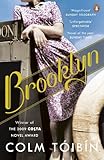
This is my review of Brooklyn by Colm Tóibín.

This deceptively slight novel has remained in my memory for several months. The clarity of Toibin’s writing captures the life of an inexperienced young girl in 1950s Ireland, where life is constrained by lack of opportunity, convention and the stranglehold of the Catholic church. The author shows great empathy in imagining a female perspective.

I was completely convinced by Eilis: her obvious intelligence, frustration at her inability to realise it, yet her ultimate acceptance of constraints – even to the extent of her agreement to emigrate alone to New York to obtain work, a move organised “in her own interests” by her sister Rose, who seems so independent but it equally bound by duty, and the string-pulling local priest.

I agree that the minute detail is at times tedious, say on the voyage out, although I am sure it is very realistic. The scenes in New York did not ring so true for me as those for Ireland – I have no firsthand experience of either, and I was not very convinced or moved by her love affair with Italian Tony and his in some ways too worthily good to be true family. This section of the story showed very clearly how, through force of circumstance, people can be uprooted from their familiar way of life and drift into a very different culture and existence.

What made the book for me was the well-structured ending. After lulling the reader into a false sense of complacency with its measured pace, the story changes gear. In the fast-moving final part, Eilis returns to Ireland as a relatively sophisticated young woman, and catches the eye of a man who did not give her a second glance in the past. We see a spark of real passion for once – however shallow-rooted it may be – and Eilis has to make a hard choice between two ways of life – but then, the tentacles of the old oppressive, controlling culture catch up with her in a final excellent twist – and she has no choice at all!

⭐⭐⭐⭐ 4 Stars

Stone Dead

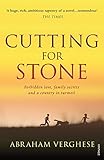
This is my review of Cutting For Stone by Abraham Verghese.

I normally enjoy books which transport the reader into another culture – in this case Ethiopia – with the authentic ring of local knowledge. However, from the outset "Cutting for Stone" – a pun on the name of a surgeon – failed to hook me.

I agree with those who found the focus on medical details and operations quite tedious. As is too often the case with family sagas, the style was plodding with a lack of real drama or tension to carry me through. I could not engage with the characters such as the twins, children of a nun – an unlikely event stated too casually on the opening page.

The novel compares unfavourably with, say "The Kite Runner", again written by a man who has moved to the west and trained in medicine, but with a real flair for creating moving characters and intriguing plots, thereby giving real insights into Afghanistan and issues of adaption to life in the US.

⭐⭐ 2 Stars

Harrowing but memorable

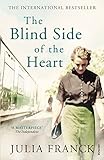
This is my review of The Blind Side of the Heart by Julia Franck.

I thought it would be interesting to read a novel about the impact of the two World Wars on the lives of German women. I assume that the "blind side of the heart" refers to people's inability to express normal love and emotion when they have been traumatised by the effects of war, both in grinding their lives down to a question of mere survival, and in taking away or maiming those they love. In this case, the main character Helene is reduced to a kind of automaton, caring for the sick in her role as a nurse, but unable to relate properly to her son. A complication is that the main factors destroying Helene have little to do with war as such – the loss of a lover and the callous and brutal behaviour of her husband, not to mention her own mother's irrational cruelty.

The focus on the minute details of daily life and on passing thoughts is often well-observed e.g. the description of Helene as a young girl studying every mole and blemish on her sister's back. However, I was disappointed by the lack of focus on the "bigger picture" to show how Germany evolved from a period of humiliation and punitive reparations after World War 1, through hyperinflation and political instability to World War 2 under Hitler.

I was repelled by the graphic descriptions of bodily functions, maladies and wounds. Helene's and at the end her son Peter's observation of the world with such a stark lack of emotion – for the "good characters" to be so hard – is shocking. I am unsure too what extent this excessive objectivity is deliberate but it reduced my capacity to empathise with the characters. I also found some of them quite unconvincing such as Helene's eccentric, often cruel mother, and her oddly passive father, and the strange relationship between these two. Helene's husband Wilhelm was painted too crudely in negative terms.

The book may have suffered seriously in translation. I had to reread several sentences which persisted in not making sense or appearing to be "non sequiturs". Generally, there is a stilted note to the phrasing which interferes with my involvement in the tale. Some of the earnest conversations on literature and philosophy are too stiff and unnatural. With a sense of frustration, I wanted to rewrite large sections of potentially moving or interesting scenes.

The pace is a little too slow, with a lack of "narrative drive" and episodes or encounters which "drift away to nothing" – rather like real life, I suppose e.g. the scenes with the beautiful Martha's admirers and her own eventual "disappearance" from the story.

The story would have made a greater impact with pruning away of some lengthy passages which added little. The lesbianism, with hints of incest, seemed to me pointless distractions from the main story – except perhaps the love between Martha and Leontine serves to show a freedom of expression allowed in "fashionable circles" in the 20s but suppressed as decadent by the Nazis.

This story is too harrowing to be enjoyable, and it is certainly not a page turner, although I think memories of certain scenes will remain with me such as Helene's mushroom-hunting expedition in the forest, made horrific by her encounter with the cattle trucks carrying Jewish prisoners, which she cannot fully comprehend at the time, although the reader can, with the benefit of hindsight. The scene also foreshadows her appalling yet understandable abandonment of the son whom she loves, yet also finds a burden.

⭐⭐⭐ 3 Stars

A Flat Earth Experience

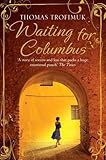
This is my review of Waiting for Columbus by Thomas Trofimuk.

The backcover blurb for this book intrigued me but from the second page I felt frustration. I realise that the man who claims to be Columbus is likely to be mentally ill, but the paragraph where he muses about the courage needed to sail when you don't know the sea (when I would have thought the reverse was true) left me confused, even after reading it a couple of times. Then there are the odd, jarring similes – the interruption of a busy doctor is described as like the icing on an annoyance cake – this is distracting because it is the opposite of what it should be, and you are not sure whether this is the author's intention. If he is trying to create an original simile, it doesn't work.

I also agree with what has already been described as the unconvincing mental institution with the dreamy, sensitive Consuela who is not at all like an overworked, down-to-earth nurse – in fact most likely to be male, when dealing with disturbed male patients. Plus some of the medication used doesn't sound right.

As I read on, the style seemed a bit mawkish with dull dialogues.

I am afraid that I did not take to "Waiting for Columbus" at all. I felt that I was being conned into spending time on a book with over-hyped literary merit together with a plot and set of characters who prove too disappointing to compensate for this.

⭐⭐ 2 Stars

Rooting for Defiance Against the Odds

This is my review of The Help by Kathryn Stockett.

The underlying grimness of the story is offset by the continual bubbling wit and humour in adversity, and the sheer rage over injustice which "The Help" inspires, until you begin to wonder uneasily if you are not guilty of other indefensible prejudices yourself.

It is easy to see what has made this a bestseller. Written confidently, with a clear, sound structure and pace for a first novel, "The Help" is a page-turner with its skilful coverage of human resilience and the sowing of the seeds of rebellion as prejudice begins to crack in 1960s Mississippi, told through the viewpoint of two black maids and an idealistic but naive young white woman with ambitions to become a writer. Since Stockett was raised in this state, I have to assume that the speech patterns are authentic, and they add to the evocation of life in the South, and the vigour and humour of the tale.

Many of the characters are stereotypes – the ghastly, officious white Hilly, with the power to ostracise any "friend" who dares to question her views, and to destroy the livelihoods of black servants (not merely her own!) who displease her;the saintly, shrewd yet downtrodden black maid Aibileen; the voluptuous Miss Celia, unable to comprehend that, obeying Hilly's orders, the other wives shun her as trailer trash.

Some of the more dramatic scenes are a little clunky, but grimness and injustice are leavened with the continual comedy and irony in the language and sequence of incidents – ludicrous scenes such as Minnie's attempts to hoover clean a dusty old stuffed bear, some old family trophy. The sense of fear over the risk of a black maid being seen "in the wrong place" without her uniform, of a white person caught consorting with blacks socially, not to mention any attempts at free expression of opinion, is very palpable, and justified by the occasional examples of harsh and unjust punishment. I thought at times that this book would be soft-centred, and lapse into a corny romance for at least one character, but this is not the case.

"The Help" succeeds in reminding or informing a wide range of readers of the claustrophobic convention and bigotry of the confederate states, which trapped both blacks and whites for generations – obviously, the former suffered more serious effects – the daily humiliation, insult of being treated as invisible or unclean, and the risk of being falsely accused sacked and blacklisted, or worse for even a whiff of defiance.

If you can remember the '60s, it is chastening to realise that so much inequality and exploitation still operated unchecked, and interesting to see events which the characters have yet to realise are the dawning of a social revolution : Martin Luther King's great speech, the outbreak of the Vietnam war, Bob Dylan and the Rolling Stones hitting the airwaves, and the mass production of the miniskirt.

This is a good choice for a book group since it is likely to trigger a lively discussion. Was Miss Skeeter right to produce as she did a set of firsthand accounts of the lives of black maids in Jackson? Who really gained and lost from this subversive act, and how? How could the sharp-tongued Minnie accept for so long being beaten by her husband?

⭐⭐⭐⭐ 4 Stars

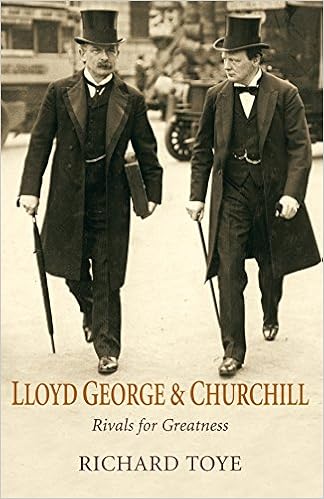
“Lloyd George and Churchill: Rivals for Greatness” by Richard Toye – The Goat and the Bulldog

This is my review of Lloyd George and Churchill: Rivals for Greatness by Richard Toye.

This for the most part very readable analysis of the surprising and complex “friendship” between two major political figures keeps to the point and, unlike many historical accounts summarises the key aspects of events very clearly, helping the reader to see the wood for the trees.
Lloyd George and Churchill lived through an unusually interesting and significant period: on an international scale, two world wars, the Russian Revolution, decline of the Turkish Empire, establishment of Israel, question of independence for India, to name a few. At home, there was the partition of Ireland, the attempts to reform the Lords, the rise of Labour, split and demise of the Liberals, attempts at coalition, votes for women, and first serious measures to provide pensions and unemployment benefit, leading to the creation of the welfare state. It is salutary to realise how many of these issues still remain to be resolved. The shifting relationships within the various coalitions seem very topical now. One should also mention the growing power and influence of the press barons – Northcliffe and Rothermere.

Against this background, which in many ways interested me most, we see the saga of the personal relationship between Churchill and Lloyd George. Initially the latter was “top dog”, a man whom Churchill admired, sought to emulate and surpass, and often relied upon, both as a means of getting office, and also as something of a mentor and emotional support. Largely because of the age difference, the tables were turned in World War 2: Churchill became the leader with power to offer Lloyd George a cabinet post, but the latter was “past it” – age having taken the edge off his ambition, and rendering him so pragmatic and “amenable to reason” that he seemed too much of an appeaser. For much of their political careers, both were widely despised and scorned as over-ambitious political troublemakers and schemers, although there was clearly a good deal of entertaining plotting and gossip from other quarters as well. Yet both seemed to have an energy and vision which were wasted when they were out of power.

Richard Toye has clearly set out to change the balance in modern public perception, which tends to revere Churchill more highly as the greater statesman, as exemplified by the dominance of his statue over Lloyd George’s at the Commons. Thus he consistently portrays Lloyd George as the subtler thinker and negotiator, more genuinely interested in social reform, not to mention his humour, charm and wit, whereas Churchill comes across as courageous to the point of foolhardiness, but a loose cannon, John “bull in the china shop”, whose reputation has been unduly inflated by his success as a rock-like war leader in the 1940s.

I recommend this biography with only two caveats: the passages quoting recollections of someone quoting someone quoting someone else are sometimes hard to follow, or tedious, plus for pages on end there are often references to the months when events occurred, but too few reminders of the year in question! Inevitably, Toye has left out a good deal of detail, but the rationale is his focus on the relationship between these two rivals.

⭐⭐⭐⭐⭐ 5 Stars

The Power of Language

This is my review of The Orchard Keeper by Cormac McCarthy.

This first novel by Cormac McCarthy hooked me with its striking, poetical prose – reminding me of Dylan Thomas but much darker and more uncompromising. Although I have never visited Tennessee, the author conjures it in vivid images of the remote, mountainous landscape, the weather, wildlife and local people living close to the breadline but capable of unexpected acts of kindness. He also captures the rhythm and wry humour of their dialect.

The mainly short scenes shift backwards and forwards in time so that it is often hard to work out who the subjects are, what is happening and why. McCarthy has a gift for creating tension: when the bootlegger Sylder is driving an unwelcome hitch-hiker back to Knoxville you know that it will end in violence. But for the most part the plot is thin, and the author seems mainly interested in describing in minute detail incidents of daily life which he must have observed – the sensation of driving along roads "ferruling through dark forests of owl trees, bat caverns, witch covens"; a boy laying his first traps; an old man's relationship with his dog. On a more dramatic note are the memorable descriptions of the balcony of the Green Fly Inn cracking under the weight of drinkers to crash into the canyon below, or later the old man under gun attack in his shack, for reasons yet to be revealed to the rearder.

The story is very male-dominated – focus on sleazy bars, hunting, seeking vengeance through violence, plus the at times corny rapport between tough men and the young boys they teach to track coons with dogs, and seek to guide with homely wisdom.

Some initial scenes of the sex-or-is-it-rape-in-a-church variety were so distasteful to me that I nearly gave up, but I am glad that I persevered. This book requires the investment of time, the rereading of some of the more original poetic passages, the suspension of any expectations. I came to understand that what happens to the petty criminal Sylder, the boy, John Wesley, who unbeknown to both of them is the son of the man he was forced to kill, and the ancient recluse Alan Ownby who happens to observe some of Sylder's activities, matters less than the power of nature around them.

In short, I would recommend this not for the plot, but as an exercise in astonishing writing.

⭐⭐⭐⭐ 4 Stars

“Dictionary of French Slang” (Barron’s Dictionaries of Foreign Language Slang) by Henry Strutz – L’Argot

This is my review of Dictionary of French Slang (Barron’s Dictionaries of Foreign Language Slang) by Henry Strutz.

This one-way dictionary from French to English is easy to use and informative. It could have included a few more idioms.

⭐⭐⭐⭐ 4 Stars

“Crimea” (Allen Lane History) by Orlando Figes – The Crime of Crimea

This is my review of Crimea (Allen Lane History) by Orlando Figes.

“Crimea” explains the power struggles of mid-nineteenth century Europe: the ramshackle Ottoman Empire, ironically dismissed by the Russian Tsar Nicholas 1 as “the Sick Man of Europe” as he falls prey to his growing obsession to liberate the Eastern Orthodox Christians from Turkish dominance; Austria, traditionally an ally of Russia, but now unwilling to go beyond “armed neutrality”, for fear that encouragement of uprisings of Slavs in Turkey will give its own minority groups ideas of rebellion. France is keen to gain victory against Russia after its earlier humiliation under Napoleon Bonaparte, and the English – concerned more about commerce than religious rights- wish to deflect the Russians from their suspected designs on India. This melting pot of conflicting aims causes one of the frequent wars between Russia and Turkey to boil over into the conflict which has left the fragmented legacy in our history of the “Lady with the Lamp”, Florence Nightingale (who gets scant mention here, including her failure to realise that soldiers were dying in droves because the local water supply was contaminated), the balaclava hat against the perishing winters and the heroic, misconceived charge of the Light Brigade (which was not quite the disaster it was portrayed).

Once he “gets into” the battles in the Crimea, Figes’ account is gripping. He brings out clearly the chaos, incompetence and misplaced courage under fire – yet frequent barbarism with looting of the dead, beheading them in the hope of monetary reward being one Turkish tradition . WW1 is foreshadowed, with the accounts of soldiers fraternising between onslaughts – the officers from opposing sides sometimes sipped champagne together as their men cleared away bodies so that the battle could continue.

Although I found interesting the first chapter on the unholy disputes between different religious factions in Jerusalem, and there is the intriguing incident of the Tsar travelling incognito (for fear of assassination) to England to persuade Queen Victoria and the Prime Minister to agree to a future carve-up of Turkey, not realising that Parliament might need to be consulted, the opening chapters are hard to follow in places, particularly the important section on “The Eastern Question”. Figes invites you to skip the first 130 pages, but the analysis of the background is important and it would have been better if he had simply provided better maps, a glossary of key characters, and a simple “time line” of critical events. I suppose this reflects the historian’s usual dilemma as to how much prior knowledge to expect of the reader.

The evaluation of the aftermath gives food for thought: the Russians focussed on their victories during the war, rather than their overall failure, and managed to recoup within 25 years their losses under the Paris Peace Treaty. They proceeded quite quickly to fight the Turks again, having made strenuous attempts to update their military organisation. The epilogue on the British commemoration of the Crimean War in rather sickly Victorian poetry is a bit of an anticlimax.

Overall, this is more digestible than many historical tomes, and I found much of it fascinating.

⭐⭐⭐⭐ 4 Stars

“Sunset Park” by Paul Auster – Insightful Introspection

This is my review of Sunset Park by Paul Auster.

Paul Auster has a gift for describing the thoughts and motivations of introspective people, written in lucid, page-turning prose. I like the way he reveals the story from the viewpoint of different characters, so that one can see their differing perspectives and assessments of each other. Although superficially quite slight and loose, the plot is actually quite carefully structured, with occasional highly dramatic events, made all the more so for being unexpected. At the end, I suddenly saw the relevance of the (for me somewhat tedious) anecdotes of past baseball heroes, whose hopes have been dashed by chance events.

I was struck by the accuracy of Auster’s insight into the mindset of young people who, despite their education, choose to squat in abandoned properties, rejecting the mindless materialism of modern day America, and opt to live “for the present” in a country for which they fear the future, with the recent horrors of 9/11, the war in Iraq, suppression of human rights, and the recent banking crisis.

In some ways the book is like a series of short stories or “pen portraits”, loosely held together by the charismatic but troubled Miles Heller, who drifts through life, traumatised by his guilt over the death of his step-brother. Some of the characters are more convincing than others, but I suspect readers would disagree on which are better drawn. I was bored by the constant reference to baseball and Ellen’s erotic drawing, and a bit irritated by the arguably pretentious, “you need to be in the know”, analysis of Becket’s “Happy Days” and the sections on “being a writer” – on which authors tend to dwell too much. The book is clearly based on thorough research, and I felt that at times it includes too many lists – lists of famous baseball players, names of deceased celebrities in a cemetery, and so on. I was intrigued to realise that “The Best Years of Our Lives” is a real and highly regarded film from the period after WW2, and Auster convinces me of its relevance in making a contrast between attitudes then and now.

Overall, I agree with the emerging view that this is worth reading, but somehow falls short of brilliance, perhaps because Auster is so brimming over with reflections and observations on life that it is hard to marshall them into a “perfect whole” without reducing the momentum and “narrative drive” of the work, as a novel.

⭐⭐⭐⭐ 4 Stars