The severed finger points

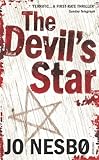
This is my review of The Devil’s Star: A Harry Hole thriller (Oslo Sequence 3) by Jo Nesbo.

I have a weakness for crime fiction and wanted to find out why Jo Nesbo has attracted so much attention. Devil's Star happened to be available, so I hope that it does not matter unduly not to have started at the beginning of the Detective Harry Hole saga with "The Redbreast".

This story has two interwoven threads. The main one is the tracking down of a serial killer with a sinister line in carved pentagrams, star-shaped blood diamonds and severed fingers. The second thread is Harry's obsession with the unmasking of a corrupt colleague.

The Norwegian setting interested me – I had not realised that Oslo can get so hot and humid in summer. The pace is quite fast and I did not mind what some have called the disjointed approach, although switching "points of view" means that one becomes less "emotionally engaged" with any one character.

The plot is ingenious, sown with clues which become apparent in due course, and the occasional red herring. It is reasonably watertight (no joke intended since a waterbed plays a part) although the details of the serial killings and some of the more dramatic scenes are often somewhat implausible. The story is genuinely exciting in places – will a major initiative to foil a murder and catch the killer succeed or how on earth will Harry Hole survive to feature in the next adventure.

The quality of some of the writing is good e.g. of the drunken Harry Hole smashing a church door, or the psychiatrist explaining the mind of a serial killer. Other passages struck me as slipshod – this may be due to the translator not having an ear for fiction.

I sometimes felt that we are not meant to take the story too seriously anyway, plus some of the details are frankly disgusting and probably included for sensational effect. These will be minus factors for some people.

What bothered me most was that the interesting second thread of Harry's relationship with his corrupt rival Waaler is not developed as fully and well as it could have been.

Overall, this is a good example of effective pot-boiler fiction to read on a train with an eye open for the next stop, but falls short of "great crime writing".

⭐⭐⭐⭐ 4 Stars

Impressive translation of memorable and insightful river of prose

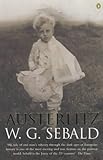
This is my review of Austerlitz (Penguin Essentials) by W. G. Sebald.

I would not have thought of reading a book with no paragraphs and few full stops if I had not been intrigued to understand what made "Austerlitz" so talked about when it was first published.

From the outset, I was carried along by the hypnotic power of the great wave of prose which describes the anonymous narrator's occasional, usually chance visits in railway stations or cafes with the eccentric loner, Jacques Austerlitz. I was also very taken with the strange, dark little photographs embedded into the text to illustrate certain points – these are meant to be part of Austerlitz's collection, but must have been acquired somehow from many sources by the author and the story adjusted to include them.

A lecturer in art history, Austerlitz launches into lengthy monologues without any sense that he might be boring his audience to death, which means that you need to have an interest in architecture to get through the opening pages. Realising that the narrator is the best listener he will ever find, Austerlitz proceeds to recount his odd, and rather sad childhood in Wales, as what turns out to be the fostered son of a fanatical clergyman and his wan wife. In the very striking descriptions of the Welsh countryside -like a Turner landscape in words, I began to see the author's power.

It is gradually revealed that Austerlitz was brought to Britain on the "Kindertransport" to escape the Nazis. After years of repressing his early memories, he realises that he has also avoided close emotional relationships with anyone, and feels a compelling need to trace his family, find out what befell his parents and see the places where he lived before his life was ripped apart by the Nazis. Some of the most moving passages cover his "detective work", meeting with his former "nanny" and recognition of places he must have seen before.

This novel is certainly original. It cannot be judged by normal standards in that plot is of no interest to Sebald. Although the stream of consciousness always makes perfect sense, passing impressions – such as the resemblance to strange landscapes of the shadows on a wall – are deliberately given more weight than significant events. Significant friendships are only implied in Austerlitz's emotionally stunted, autistic world – yet he can unburden himself to a near-stranger. The author is keen to convey his theory that time is not linear in our minds – in some atmospheric places – say, an old courtyard – one may experience now the time of a past age, and so on.

At times, I felt overwhelmed by the self-indulgent excess of some of the author's "verbal digressions". I found that I could only cope with a few pages at a time. There being no chapters to provide natural breaks, it was frustrating to have to put the book down mid-sentence because one could not bear to plough on to the next full stop, several pages further on.

I also wondered if the device of the narrator was necessary or even desirable, leading as it often did to the clunky "and so, as X told him, Austerlitz said….".

The sudden and arbitrary ending – making the point that the rambling account could have gone on for ever, also left me feeling flat and a little disappointed.

Overall, this is probably a flawed masterpiece. I did not need it to inform me of the horror of the Holocaust, but it makes an effective contribution to the body of work which reminds people of what no one should ever forget.

⭐⭐⭐⭐ 4 Stars

Compulsive Entertainment

This is my review of Spiral – Series 2 [DVD].

The second series of this fast-moving, dramatic Parisian police thriller with its complex "cogs spinning cogs" plot seems to me to be superior to the first, since the main plotline is more substantial, there are fewer distracting "side stories" and the end is more conclusive and less of a "damp squib".

This is very well acted, down to the smallest gesture or passing expression. The actors all seem to have distinctive faces to match them to their parts: the dedicated but often impulsive and reckless Capitaine Laure Berthaud, the suave Vice-Procurator Pierre Clement, the wily Judge Roban, the beautiful lawyer Josephine, who sells her soul for money to the corrupt senior advocate Szabo, and so on. The characters are very well-developed and convincing in their complex behaviour – the criminals often have redeeming features, while those trying to track them down are prey to ambition, hypocrisy, greed, bias or lack of self control – in short, human nature warts and all.

Although the storyline, based on drug dealing in the tight-knit Arab community, is often sordid and I hope the police methods of investigation are exaggerated, every episode is always compulsive watching throughout. The details of the French legal system are a bit hard to follow, but you can grasp the general idea. You also get a good insight into life in some of the immigrant communities in Paris.

I watched a version with French sub-titles which is good practice for an English speaker but hard going. I have certainly learned a good deal of slang I can never use on holiday in France! Since then I have watched a 2 DVD version with English subtitles – also good. but you have to read fast!

⭐⭐⭐⭐⭐ 5 Stars

Less is More – Minimalist Music in Words

This is my review of A Life’s Music by Andreï Makine,Andrei Makine.

With little in the way of plot – although it manages to build up quite a head of tension at times – , scant character development or dialogue – although it builds up clear impressions of most of the characters in only a few words- , this novella is a clear example of "less is more": it is more moving and insightful than many longer works in its portrayal of how human lives were damaged and destroyed by Stalin's Reign of Terror.

Alexei, on the brink of a career as a concert pianist, is warned by chance that the police have come for his parents. By chance, he assumes the false identity of a dead soldier and this sets a pattern for the random events which set him back at some points, but help him to survive at others.

Since this book is so short, you can concentrate on every word.

An example of the writer's insight on how self aware people in terrible situations may feel the delusion of being set apart from the crowd because they can analyse what is going on:

"I can put a name to our human condition and therefore escape from it. The frail human reed, that knows what it is and therefore….'Hah, that old hypocritical device of the intelligentisia'…"

A comment on what this book is all about:

"In this life there should be a key, a code for expressing in concise and unambiguous terms, all the complexity of our attempts, so natural and so grievously confused, at living and loving."

Or just a very apt and original description – which must also owe something to the excellent translation:

"In the frozen air the aggressive acidity of the big city stings the nostrils."

My only reservation is the device of having an anonymous narrator – who hardly seems necessary – introducing the idea of "longsuffering Soviet man" and describing the context of his meeting with Andrei, in chapters which "book-end" Andrei's account of his life.

I was interested to see that this was written originally in – and presumably translated directly from – French, although the author is Russian. I shall certainly look out for more of his work.

⭐⭐⭐⭐⭐ 5 Stars

Would have liked a wider survey

This is my review of Map of a Nation: A Biography of the Ordnance Survey by Rachel Hewitt.

I agree with the view that this is a (no doubt precociously shrewd) cashing in on a PhD thesis. The author really should have brought this history of the Ordnance Survey up to date with recent developments in map-making. I also found the links to Enlightenment thought and poetry inspired by the British landscape too waffly.

⭐⭐ 2 Stars

“Brilliant and maddening” – I’d like to give 6 stars

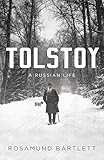
This is my review of Tolstoy: A Russian Life by Rosamund Bartlett.

I don't know why this biography is described on the back cover as "unorthodox" unless it is because of the author's frank, but very well supported criticisms of Tolstoy.

It is a relief to find a biography of a widely revered writer which reveals him warts and all. I was intrigued to read that the author finds Tolstoy an unappealing young man, sanctimoniously writing over-ambitious lists of worthy resolutions, only to spend a few days in prison for failure to attend lectures, or weeks in a clinic to be treated for venereal disease.

When a young man, he was forced to sell villages along with serfs to pay for his gambling debts, and then used some of proceeds together with bail-outs from long-suffering friends, to lose still more money.

He is portrayed as promiscuous – apparently quite common for wealthy young men of his day – controlling, for instance of the long-suffering wife who was a teenager, half his age, when he married her, and very opinionated, prone to falling out with friends – once, he even challenged his friend Turgenev to a duel.

It is interesting to learn that Tolstoy cared more for his "ABC" primer for children than his most famous novels. Although he spent many months researching them and trying out different plots, he was bored with "War and Peace" before it was finished, and struggled with "Anna Karenina" which became for him, a "banal.. bitter radish".

As his social conscience developed, Tolstoy tried to free his serfs, only to discover that they mistrusted his intentions and refused to cooperate. Then, he was one of the first to found a school for his serfs' children. It was remarkably child-centred for its day. Yet, he left it after only a few matter of months to research educational practice in Europe, then closed it down completely in order to move on to other interests. This kind of flitting from one obsession to another was typical. To be fair, from the age of 7 X 7 = 49 (he was very superstitious), he was consistent in his attempt to lead an ethical life, passing through the phases of "religious maniac" to "Holy Fool". Tolstoy's run-ins with the ludicrous censor make fascinating reading. Eventually, he was excommunicated for his inflammatory writing in an extraordinary procedure in which he was declared "anathema" but this only aroused yet more interest in him, by then far more popular than the Tsar.

We are told that the only reason the Tsar did not consign the outspoken Tolstoy to a remote monastery in later life was because he did not want to give him the oxygen of the publicity.

Even Tolstoy ceased to deny, in fact came to revel in, his weaknesses which included self-absorption and insensitivity, in particular to the wife ground down by childbearing, domesticity and isolation in the countryside, with whom he vainly tried to practise "sexual abstinence" but totally refused to use contraception. Yet he was a visionary thinker, genuinely concerned with inequality and the meaning of life and possessed a rash courage. It is interesting to speculate what would have happened to this pugnacious individualist if he had been born into a poor family.

Although the book sometimes gives too much space to minor details – such as which relatives came for Christmas one year – it is mostly very clear and readable – not only concerning how Tolstoy produced his books – with his wife copying out "War and Peace" several times by hand – and the complexity of his personality but also in bringing to life C19 Russia in a period of dramatic change.

The author raises the intriguing question of the extent to which Tolstoy's anarchic views triggered revolution. She highlights the sad irony of the speed with which the Bolsheviks adopted a schizophrenic approach – revering Tolstoy's novels whilst condemning his anarchic views and persecuting his followers even more fiercely than the Tsar's regime had done. How would Tolstoy have reacted to Stalinism? As the author suggests, he would no doubt have been promptly shot.

⭐⭐⭐⭐⭐ 5 Stars

“Natasha’s Dance: A Cultural History of Russia” by Orlando FigesInteresting but would have been better with a good edit!

This is my review of Natasha’s Dance: A Cultural History of Russia by Orlando Figes.

“Natasha’s Dance” weaves a dense canvas of information round the average reader’s ragbag of knowledge about Russia.

Figes begins with Peter the Great’s attempt to drag Russia into the mainstream of European culture with the imposition of the classical style city of St. Petersburg on the marshlands of the River Neva. He contrasts this with Moscow and “Old Russia” based on the Eastern Orthodox Church, onion domes and icons, and the close ties with the land, and the sometimes romanticised simple life of the serfs. He traces the early attempts of some aristocrats, radicalised by fighting alongside their serfs against Napoleon, to introduce the democracy which Russia has never really been able to achieve. Then there is the strong influence of Asia, brought partly by the Tartars sweeping in across the vast steppes.

The chapter I enjoyed most was “Russia through the Soviet lens” in which the authorities rejected “art for art’s sake” and tried to use it as a tool to transform workers into efficient and compliant machines. The sense of loss of those who were forced into exile is moving, as is Stalin’s crazy persecution of those who remained.

Although I am very interested in the subject matter, I found this book hard going. It is quite longwinded and repetitious, as if the author himself sometimes loses sight of the wood for the trees in the vast amount of information he has gathered. There are too many overlong extracts from novels and romantic poems which now seem quite dated. However, I liked the inclusion of Akhmatova’s poetry, perhaps because it conveys so vividly what it was like to live under the Soviet regime.

Figes refers to a large number of lesser known writers and composers, no doubt in the interest of academic rigour but this is off-putting for the general reader – the names are hard to take in and we learn too little about them for it to be worth the effort. Perhaps this type of detail would have been better in a glossary at the end.

Coverage of major figures is quite fragmented which can be confusing. The author’s choice of whom to cover and in what depth seems quite arbitrary. I now have a much better appreciation of Stravinsky but Tchaikovsky gets far less mention than the female poet Tsetaeva who is no longer widely known.

Although the book would have benefited from a thorough edit, on balance I recommend it for the wealth of fascinating anecdotes. To do it justice, it needs to be read a second time, possibly after a few months at least, to give time to absorb more of the detail – say to get a better grasp of the roles of Prokofiev as opposed to Shostakovitch.

⭐⭐⭐⭐ 4 Stars

And we forget because we must

This is my review of The Hand That First Held Mine by Maggie O’Farrell.

You could easily miss "And we forget because we must", which is the author's quotation for this book. Perhaps it should have concentrated more on Ted, whose lost memories lie at the heart of the story.

"The Hand That First Held Mine" adopts the same technique as "The Vanishing Act of Esme Lennox" : two threads run in parallel, with episodes alternating between the present and the recent past of a previous generation. However, the former has a more rambling plot, with few links between the two threads until the final denouement. This latest book is also less dramatic and shocking, since some key events are described rather than "acted out" on the page, plus O'Farrell has an annoying habit of telling you what is about to happen – say when someone is due to die.

The strongest sections of the book for me are those centred on Elina, the young Finnish artist as she struggles with the post-natal trauma of her son's birth, when she almost dies, combined with the total disruption of every aspect of her life, practical, personal and creative by a demanding baby whom she both loves but also find a burden. Some may find the endless details of childcare tedious – they are somewhat exaggerated, but often relieved by humour and likely to bring back wry memories or make the present more bearable.

I suspect this book will appeal mostly to women, although Ted's feelings about fatherhood and its effects on his relationship with his partner Elina are covered sensitively. The abrupt triggering of Ted's puzzling childhood memories did not seem quite plausible for me, although it makes for a mystery to keep one reading on.

The thread based on Lexie, the free spirit at the dawn of the Swinging Sixties is less satisfying. Her dizzy life in the world of publishing is entertaining, but left me for the most part unmoved. The sinister Margot and her ghastly "twirling" mother Gloria seem particularly unconvincing, with inadequately developed roles, which matters as they are crucial to the plot. I also find aspects of Felix's behaviour very unlikely.

I often felt I was reading "exercises in creative writing" – as when O'Farrell rewinds time in order to move Lexie back to an earlier scene. Then there is the detailed description of the cafe which had once been the offices of Innis Kent's magazine. O'Farrell likes to dwell with nostalgia on how buildings have been altered, and their occupants have changed over time.

I was irritated by the narrator's occasional arch collusion with the reader in the Lexie thread – "Here is Lexie"…."This is where the story ends" etc.

The book has a fragmented quality, since it has several styles and themes which perhaps could have been woven together more effectively. It verges at times on chick lit or worse. Yet, I can see why many women will love all the feelings and memories to which they can relate and be intrigued by the plot.

⭐⭐⭐⭐ 4 Stars

Aim High with Kites in the Pursuit of the Blue

This is my review of Les Cerfs-Volants (Folio) by Romain Gary.

"Les cerfs-volants" (The Kites) is a good read for those wishing to brush up their French, say from A Level. This novel by Romain Gary, who won prizes under both this pseudonym and that of "Emile Ajar", presents the reminiscences of Ludo Fleury who grows up between the Wars in a Normandy village under the care of his eccentric Uncle Ambroise, celebrated throughout France for his skill in making kites of famous historical characters, and leading men of his day.

After a slow start, I gradually became caught up in the story, as Ludo falls for Lila, the self-centred and over-indulged daughter of a Polish count who hires a house for his family in the neighbourhood during the summer. Although Lila appears to return Ludo's love, she also enjoys the adoration of two other youths, and enjoys playing one off against the other, so the relationship seems doomed. I feared a kind of over-sentimental variation on "Le Grand Meaulnes", but once World War 2 breaks out and the French, much to their mortification, are so easily overrun by the Germans, the story gathers pace and depth. Ludo uses his reputation for being a bit mad to be an active member of the resistance. I liked the very French theme of the local restaurateur's controversial attempt to "cock a snook" at the invaders, by treating them to the highest quality French cuisine, thereby showing the unbeatable superiority of the French where it really matters.

Although the plot is quite clunky in places and not all the characters seem entirely realistic – Lila's father, for instance – there are some striking visual and atmospheric descriptions e.g. Bruno playing the piano on the shore. I like the scenes where Ludo so much wants to be with Lila that he imagines her presence. The story is strengthened by the fact that Ludo is not blind to Lila's faults, and uses a good deal of irony in his conversations with her.

Perhaps the ending is a little idealised, but it is comforting to end such a dreadful period on a note of hope.

It is therefore all the more shocking to learn that Gary committed suicide soon after completion of the work.

⭐⭐⭐⭐ 4 Stars

Glass Half Empty

This is my review of The Girl with Glass Feet by Ali Shaw.

As someone who is not a fan of magic realism, I had to suspend my prejudice to read this book for a group discussion.

Although the description of Ida turning to glass at the end – I don't think this is giving too much away! – is well-written, much of the rest seems quite amateurish or immature. The plot is thin, with scenes which serve no purpose, underdeveloped characters and unconvincing dialogues. It appears that, apart from the basic idea of a girl turning to glass in a sad love affair with a unhappy adolescent boy, the author does not really know where to take the story. A short story on this theme might have been more powerful.

A few trivial details riled me, such as the unlikely combination of geographical features in the Scottish (?) island on which it is set, and the fact the author describes cooking a breakfast when he has clearly hasn't done so – starting on the eggs before the sausages!

⭐⭐ 2 Stars