Subtle Version of Much-filmed Enduring Classic

This is my review of Jane Eyre [DVD] [2011].

Why should anyone want to make yet another film of "Jane Eyre"? It is not just that this classical page-turner lends itself to the big screen with the harsh, menacing beauty of the Yorkshire moors (particularly with a backdrop of dark bands of rain on a red horizon), the sharp-witted heroine with the inner strength to survive against the odds, and the irresistibly attractive but tortured Mr Rochester.

This version of the tale brought out aspects I had forgotten, or perhaps failed to notice as a teenage reader. There is Jane's sense of being trapped in her life, the desire to see the world beyond her limited experience. Rochester's passion for Jane is more than merely physical. He recognises in her the purity and innocence which he imagines can save him: "It is your soul I want, Jane."

The film helps you to see how remarkable the story was for its day. How did the daughter of a strict parson, brought up in such isolation, come to formulate such radical thoughts? Although Jane cannot bring herself to live with Rochester as his mistress, there is the implication that a relationship outside the convention of an unhappy marriage may be the better course. Similarly, there is the strong suggestion of the possibility of equality, regardless of class or gender.

The film does not neglect the subtle touches of say, the unexpected kindness of the housekeeper Mrs Fairfax (Judi Dench), far from the simple-minded old woman that the arrogant Rochester supposes, or of Jane capturing in her idle sketch of the clergyman St.John Rivers a sense of the uncompromising fanatic beneath his kindly exterior.

With creative writing courses as yet unheard of, how did Charlotte Bronte come to know "all the tricks of the trade" plot wise , as regards, for instance, the growing sense of menace (something nasty in the attic) and the two great twists of the revelation of Rochester's guilty secret, and the final drama which enables Jane to remain with him?

Some reviewers have felt that this latest version "lacks something" and comes across as rather "soulless and heartless". This may be to miss the point that, faithful to the book, the film respects the conventions of the nineteenth century. It is true not only to the complex, yet very expressive language of the day, but also to the habit of being dutiful and repressing strong feelings.

This film is worth seeing both as an entertaining, well-acted and beautifully filmed drama and also for the discovery or reminder of Charlotte Bronte's great talent as a writer of both "Jane Eyre" and other moving novels.

⭐⭐⭐⭐⭐ 5 Stars

Cold War revisited with Subtle Menace

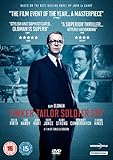
This is my review of Tinker Tailor Soldier Spy [DVD] [2011].

This film requires intense concentration, as the scenes switch back and forth in time, and are often so momentary that you could miss an important piece of information. As is so often the case these days, the quality of acting is excellent – I could hear every word – together with the artistry of the photography and the careful construction of scenes with background music to bring back a sense of the 1970s.

Although one of the actors has warned in an interview that the film is hard to follow if you are unfamiliar with the plot, I think I "got" most of it. In some ways, not knowing the details beforehand may have been an advantage as I could not get annoyed over any omissions or new twists. My slight disappointment over the denouement – unmasking of the suspected mole in MI6 – may be because, when pared down to fit into two hours, the essential plot seems rather slight with a few of the usual "But what about?" flaws. It rose in my estimation when I was reminded that Le Carré has been a real spy, and that his novel, on which the film is based, was inspired by the defection of Kim Philby. If the mole's reasons for treachery seem rather unconvincing, they are no more shallow than those of the real-life traitor – I gather that this privileged lover of the good life had a hard time adapting to the grim reality of Soviet Moscow.

Although some scenes are slow in pace, perhaps to reflect the bureaucracy and stuffiness of M16, the need for a spy to watch and wait patiently, there is a persistent sense of menace and impending violence. Played by Gary Oldman, the ruthlessness behind George Smiley's impeccable manners and measured approach is subtle yet very apparent, as is his repressed grief over his wife's infidelity. In another subtle touch, Ann Smiley is never seen fully, just "in flagrante" in a shady conservatory during a party, or as a shadow returning home – enough to arouse a rare, barely visible smile as Smiley comes back to work at "the Circle". Oldman acts out very well his recollection of a meeting when he tried to "turn" Karla, the "Moriati" of the KGB. Would this have been better as a flashback with Karla "in person"?

I suspect that the story may have suffered from being squeezed into two hours but the film is worth seeing, if only to bring back memories of the Cold War and prompt you to go and read one of Le Carré's novels or look at the DVD of the 1970s TV version of "Tinker Tailor" with Alec Guinness.

⭐⭐⭐⭐ 4 Stars

Bridging the cultural divide

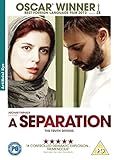
This is my review of A Separation [DVD] [2011].

At a time of great ignorance in the west of life in modern Iran this film provides some useful insights. I was struck by how similar the issues are in some ways to those of a British couple facing separation, yet also by the extent of the cultural differences. The wife wants to leave the country with her daughter, but her husband has the power to forbid it. The perceptive teenage daughter is caught between her parents, and chooses at first to stay with her father in a desperate attempt to keep her parents together. The wife goes off to live with her own parents, leaving her estranged husband with the problem of how to obtain day care for his father, who suffers from dementia. The woman who is hired for this task through a casual arrangement proves unable to cope. There is a fascinating scene in which, concerned for the old man who is incontinent, she phones an imam for advice as to whether it is permissible for her to help her charge to clean himself. The husband returns home to find the flat empty and his father in a state, and matters turn violent when the carer comes back without a good explanation. In the ongoing dispute, the complexity of the issues is clearly shown, with right on both sides, and one’s sympathies are divided.

This is a tightly plotted and entertaining drama, despite the at times grim theme – a kind of middle eastern update of Kramer versus Kramer (American film about a divorced couple with Meryl Streep and Dustin Hoffman) and in my view much deeper. We are thrust into the midst of some very convincing dramatic exchanges. The Iranian justice system is intriguing as we see the various protagonists crammed into an office, arguing loudly with each other and with the official whose task it is to decide on what seems an arbitrary basis who should be charged and who should be held in jail pending trial. Although harsh, Iranian society seems in some ways more deeply moral and concerned with fairness and right versus wrong than our own. Ironically, as in Britain, the better educated and wealthier couple’s rights win out over those of the poorer family.

“Separation” is not just a drama with an appeal which crosses cultural boundaries. It also increased my understanding of Iranian culture and deserves to be more widely viewed to break down our ill-founded prejudices.

⭐⭐⭐⭐⭐ 5 Stars

Heritage of Folktales makes sense of War-torn Former Yugoslavia

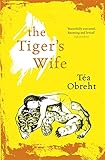
This is my review of The Tiger’s Wife by Tea Obreht.

It is easy to see why this book won the 2011 Orange Prize for Fiction. It has an unusual theme and approach, weaving together a grandfather's tall stories based on Balkan-style folktales and the experience of Natalia, a young doctor trying to cope with the aftermath of the grim war which caused the recent fracture of the former Yugoslavia, and with the death of her much-loved grandfather. Still only in her mid-twenties, the author is a gifted storyteller with an impressive command of English learned as a second language. I am not sure whether she sometimes misuses words by mistake, or is just trying to be original and poetical, but you cannot deny Tea Obreht's striking and unusual use of language.

Although I am no lover of magic realism, I was most impressed by the storytelling, in particular the tale of the "deathless man" who cannot be killed, even if shot through the head or drowned – a sceptical scientist, Natalia's grandfather is tantalised by the mounting evidence for this which flies in the face of reason. Obreht clearly loves animals, of which there are some wonderful descriptions – the tiger leaving footprints in the snow, round as dinner plates, or the elephant recaptured after its escape from the war-damaged zoo.

At first I was irritated by the lack of clarity as to exactly which country we are in – Montenegro, Croatia. Bosnia ? – which border we are close to, and so on. Then I realised that this is not the point. Obreht simply wants to create a sense of the superstition and prejudice, the deep-seated and irrational hatred between Christians and Moslems, the brutality and unthinking futility of war, and the residue of damage for the survivors. Then there is of course the simple expression of grief over the death of a close relative, regardless of whether there is peace or war.

I found the descriptions of Natalia's work the least satisfying, too many minor scenes of little interest, and in need of editing. Some of the later tales told to Natalia by her grandfather become rather tedious and rambling, getting bogged down in excessive back story about the early lives of Luka the sadistic butcher, Darisa the bear hunter and the village apothecary.

From the outset, Obreht skilfully manages to arouse the reader's interest by covering events through a series of separate scenes which move back and forth in time. Natalia's attempt to find out more about her grandfather's death and to obtain his belongings has a touch of the detective novel. Towards the end, the plot loses structure and pace. Again perhaps deliberately, it becomes even more fragmented and further parts company with reality, proving a little too fey and nebulous for my taste, although there is a persistent rather odd attempt to provide rational explanations for implausible events.

⭐⭐⭐ 3 Stars

Did Garibaldi do Italy a Great Disservice?

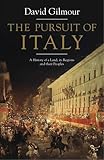
This is my review of The Pursuit of Italy: A History of a Land, its Regions and their Peoples by David Gilmour.

"Italy," complained Napoleon,"is too long." It is hard not to warm to a book that begins in this vein. I think that Gilmour's aim is to show not only how Italy came into existence as a single nation state, but why it has proved so difficult both to achieve and sustain unification. Even now, the economic and social divide between north and south remains far stronger and more bitter than that of England.

The author uses his obvious knowledge and enthusiasm for Italy to create a popular history in which each chapter is like a self-contained essay, drawing not only on key events but also on the diverse geography, different regions, peoples and cultures of Italy. For instance, after World War 2, five peripheral regions had to be given special status, including a good deal of autonomy to stem strong separatist demands based on physical separation, as for Sicily and Sardinia, or different languages, as in northern areas speaking mainly French, Italian or Slovene. There are some useful maps to help identify the various regions.

I appreciate why Gilmour felt that a full analysis required him to go back in time to the Bronze Age traders travelling through Alpine passes. After an initial chapter to spell out the physical and social diversity of Italy, he moves systematically forward in time, with a unifying theme for each chapter e.g. the various empires which dominated Italy, starting with the Romans; the growth of city states from the Middle Ages or the period from C15 when Italy was a battleground for foreign warring armies.

Some chapters e.g. 5 on "Disputed Italies" proved hard to follow without a level of background knowledge which would have made it unnecessary to read the book in the first place! I can see that Gilmour wanted to avoid getting bogged down in facts, but perhaps needed to think himself more into the position of a willing reader who may not know enough about the history of say, the Hapsburgs in Austria and Spain versus the French dynasties to understand their complex activities, warring and installing puppets on Italian soil, from 1494 to the early 1800s.

I resorted to reading the chapters in reverse order. Perhaps because they interest him most, Gilmour seems to write best about more recent events such as the modern resurgence of "centrifugal Italy" and the rapid rise of the racist and divisive Northern League under Bossi. Once I had absorbed all the fascinating events from say, Garibaldi through Mussolini to Berlusconi, I had the motivation to go back further in time and make the effort to understand the more distant, important yet often less engaging detail which underpins the current situation.

Overall, this is quite an ambitious work, which might benefit from a slightly clearer stated aim, and sometimes becomes too fragmented in its attempts to provide a synthesis, but on balance it is for the most part informative and readable.

It ends on a provocative note. Despite creating "much of the world's greatest art, architecture and music and…one of its finest cuisines" and possessing "some of its most beautiful landscapes and many of its most stylish manufactures", united Italy has never lived up to its founders hopes, "predestined" by its history and geography "to be a disappointment….never as good as the sum of its people".

⭐⭐⭐⭐ 4 Stars

Slight of Hand

This is my review of The Prestige by Christopher Priest.

The term "prestige" refers to the product of a magic trick – the rabbit pulled out of a hat.

"The Prestige" is the tale of a feud between two rival magicians in the late Victorian age, the working class Borden who makes good use of his skills as a cabinetmaker to conceal people during tricks, and the aristocratic Angier, forced by the poverty of being a younger son to make a living out of a hobby. Told largely through extracts from their journals, starting with Borden's viewpoint, this makes for a clunkily plotted read. Many incidents are reported, which detracts from the drama, and the tone is often stilted, although this may be an attempt to adopt a suitably Victorian style. At any rate, the characters come across as rather wooden.

Borden's prize act is "The Transported Man", for which the obsessive desire to work out an explanation drives Angier to distraction. The only possible solution seems to be that Borden has a double, but there is no evidence for this. In his desire to outdo Borden, Angier is driven to devise a transportation trick of his own, making use of the new power of electricity to move himself instantly from one place to another, although the process gives rise to a certain persistent problem… I was interested to learn that the electrical engineer Tesla really existed and had a laboratory at Colorado Springs, with a contraption called a "magnifying transmitter" which emitted arcs of electricity 7 metres in length. However, I share the disappointment of readers who prefer a story of magic where the suspense lies in working out how it is done, rather than one which relies on science fiction to create effects. This raises a real problem in reviewing the book fairly, since scifi is by its nature generally implausible. You just have to like it (which I don't) or judge it for its originality. On this count, the book scores quite highly, but it would have worked better with more skilful development of the plot.

I agree with those who think that the modern storyline of the magicians' descendants, wrapped round the basic plot, proves to be a further twist too far. This may be why it has been dropped totally in the film version of the book, which I happened to see a few years ago before reading "The Prestige" for a book group. I also think the film version works better because the visual recreation of the various tricks and acts of sabotage is obviously more entertaining than a series of descriptions. Interestingly, I enjoyed the film right up to the end when the multiple cloning of men and black cats by electrical transmission seems too ludicrous. This particular twist is not in the book.

Although I would say that the story works better as a film, you could argue that the book version of "The Prestige" has two advantages. It includes analyses of what motivates magicians and of the nature of magic, and insights on the relationships between the main characters which are lacking in the film. These combine to make it more thought-provoking, yet this quality sits uneasily with an ending which could be said to "go off the rails".

⭐⭐⭐ 3 Stars

Another Case of Truth more Dramatic than Fiction

This is my review of The Sinking of the Laconia and the U-Boat War: Disaster in the Mid-Atlantic by James Duffy.

A recent television drama on the sinking of the Laconia during WW2 prompted me to obtain this book. With the aim of putting the already well-documented Laconia incident in context, it provides plenty of examples to show that Hartenstein, Captain of the U-boat U-156 which torpedoed the Laconia, was not alone in putting himself out in the attempt to rescure survivors once they had ceased any attempt to retaliate. German U-boat crews regularly pulled people out of the water, helped them into lifeboats or even on board the submarine, provided food, blankets, medical aid when needed and gave directions to the nearest coast, helped to repair lifeboats, even towed them to passing ships that would take them to safety.

What has made the Laconia incident so striking is the sheer number of survivors, meaning that Hartenstein did not have the capacity and enough supplies to meet their needs without calling for help. As photographs bear out, at one point the entire deck of the sub was crowded with some 200 survivors. There is also the issue of their composition: the Laconia was found to be carrying up to 1800 Italian prisoners of war. The fact that many were trapped below decks as the Laconia sunk was likely to cause diplomatic tension between the Germans and their Italian allies, so Hartenstein was under pressure to do what he could to save the rest.

If Hartenstein had been able to carry out his plan of calling on available U-boats and enemy "Allied" craft to relieve him of his human burden, virtually all those surviving the inital onslaught would have been saved. Sadly, an American bomber on the mid-Atlantic refuelling base of Ascension Island was given by officers who were probably not in full possession of the facts the terse and fateful order "Sink sub at once". Hartenstein had no option but to order the survivors to jump overboard, cut loose the lifeboats, and make a rapid dive for his own crew's survival.

Although the level of detail is sometimes too much for a general reader to take, this book is full of fascinating information. To reduce the risk of attack, ships used to follow a zigzag course, very wasteful of fuel. Only on moonless nights could they risk travel in a straight line, with all lights blacked out. The subs used diesel fuel at the surface but battery power under water. They faced risks on a daily basis when it was necessary to rise to the surface to use diesel power to recharge these batteries.

After the Laconia incident, Admiral Donitz was obliged to issue the infamous "Laconia Order" forbidding U-boats from taking enemy survivors on board. For this he suffered opprobrium, and was imprisoned after the war for his aggressive attacks on Allied shipping. However, Donitz probably refused in the sense of managing not to obey Hitler's order for U-boat commanders to kill the crews of sunken ships, even if they were on lifeboats.

This book leaves it to us to debate the morality of launching a torpedo with the aim of killing as many people as possible, but then risking one's own life to save the survivors of this action. Hartenstein, a brave and humane man with the misfortune to live under the authority of a crazy dictator lost his own life when the U-156 was blown up a few months later.

⭐⭐⭐⭐ 4 Stars

An Unexpected Success

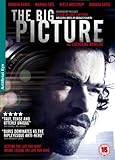
This is my review of The Big Picture [DVD].

I went to see this film with no expectations, and was pleasantly surprised. Duris plays a successful but outwardly cocky and insensitive young lawyer who harbours regrets over failing to pursue a youthful passion for photography. When he is forced to accept that his wife wants a separation, the fact that her lover is a photographer adds to his pain. An encounter with the man turns violent. As a result, the course of the "hero's" life is dramatically changed, at last he is able to pursue his art, but at a huge personal cost.

The film is well-acted, with Duris a charismatic leading man. His grief over losing contact with his children – his son is irresistibly appealing – is moving. The scenery when he hides away in Montenegro is beautiful, as is his photography, catching a ship in dock from dramatic angles, or groups of workers, half spontaneous, half wary of the camera. The plot maintains a sense of tension in which "anything could happen" and often does. I like the playing around with dream and reality, in which some dramatic scenes turn out to be imagined.

You can enjoy this story as an exciting adventure yarn – with a few implausible twists to be swallowed – or on a deeper level – an art house film as already suggested in an earlier review – as a study of man's instinct and capacity for survival, the price to be paid for one's actions, or the way that fulfilment may lie in creativity and a simple life – as exemplified by Duris's barren dwelling above a lake in a valley of incomparable beauty.

Finally, the open ending leaves you to imagine the hero's future fate as you will.

⭐⭐⭐⭐ 4 Stars

The Skin I live in – Skin Deep

This is my review of The Skin I Live In [DVD] [2011].

Almodovar is so celebrated as a film director that one expects any criticism to be construed by “connoisseurs” of his art as a sign of one’s own lack of sensibility.

I can live with a ludicrous plot and tolerate a certain level of sex and violence for a good reason, but I want something more as well. In this case, a criminally insane surgeon, grief-stricken by the loss of his wife in a car which caught alight, is bent on developing a skin immune to burning. He uses as a guinea pig a beautiful young woman called Vera who is a prisoner in his house, continuously observed via camera on vast screens. How and why does she resemble so much his dead wife? Is the surgeon falling in love with his own creation, thus making himself too vulnerable? So far so good, but the plot proceeds in jerky steps and unrealistic scenes so that I began to lose interest. At one point, the maid has to explain to Vera what is going on, a crude device for relieving the audience of its growing perplexity.

It is true that scenes are often visually very striking. With infinite care, Almodovar has paid attention to every detail of a shot. In particular, he displays his love of fabrics, colours, textures and costumes. The arrival of the maid’s violent son, dressed as a tiger, provides a cue to indulge this love. This also provides an example of the bizarre, sinister, no holds barred physicality beloved by Almodovar. Fabrics also give rise to striking images – the dummies in the shop window of a fashion store – where we encounter Vicente, another key character in Almodovar`s crazy weaving of violent sexual fantasies with rational explanations.

Eventually the strands of the plot twine together to achieve an ending which reviewers have described as a twist, although it seemed to me quite predictable.

Even admirers of Almodovar admit this film is “tosh” but love it for the visual effects. Doesn’t a film need to be more than a beautifully embroidered duvet cover in an unsettling (when you know the facts) sex scene, the guzzling of scraps of torn dresses in a hoover nozzle, the curves of a slender body in a yoga pose, or a startling red gown in a shop window?

“A Clockwork Orange”, although withdrawn by Kubrick himself for its “gratuitous violence” shows by comparison how a bizarre and visually striking tale can also have a coherent plot and a thought-provoking message.

⭐⭐⭐ 3 Stars

Why is this disappointing?

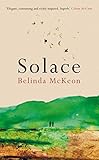
This is my review of Solace by Belinda McKeon.

The following is an attempt to analyse why a book which has been well reviewed so far disappointed me.

This slow-paced novel commences with descriptions of places – the Irish countryside – and small incidents – buying a ball of twine. The reader is left to work out who the main protagonists are, what the characters are like and what is going on, and that is fine. We meet Tom the farmer, his son Mark who has returned to assist him, with an infant daughter Aoife in tow. Where is the child's mother? Is Mark's excessive anger over his father taking the child with him to buy twine without telling him a cover for some deeper-seated resentment? There are all the ingredients for the unwinding of some moving Irish tale and my expectations are suitably kindled, but nothing much happens over and above what is given away on the flyleaf.

As the book progresses, I find it hard to engage with any of the characters. I think this is because the differences in their personalities are not very clearly drawn and sustained. The most dramatic incidents seem strangely muted. The description of someone discovering she is pregnant, another of someone dying in an accident – the events and people's reactions, none of this moves me as it should. Likewise the old grievance between the fathers of Mark and Joanne does not strike me with sufficient force, given the flyleaf's reference to "spectacular…wrongs" and "betrayal". I think part of the problem is that, once the book gets under way, there is too much "telling" rather than "showing". Also, events seem too disjointed.

Pehaps the plot is too slight to sustain a book of this length in the absence of a strong narrative drive. I feel that I am reading the words of someone with an ambition to write, who loves putting words down on paper or the keyboard but does not as yet have much to say.

Yes, the simplicity is to be admired, but needs to provide new insights or find ways of expressing truths that we cannot produce for ourselves.

For examples of "less is more" I cite the work of the late Brian Moore and also William Trevor.

⭐⭐ 2 Stars