This site will share with you hundreds of book and film reviews written since 2009. Also a chance to discuss these reviews together with some of my creative writing to be added.
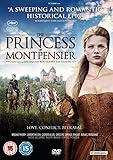
Visually very beautiful and well-acted, this is the tale of how the innocent young Marie De Mezieres falls for the handsome, swashbuckling Henri De Guise but is forced for political reasons to marry the cold and unappealing young Prince of Montpensier. Still very young, she continues to receive lessons from the Prince's tutor, and some of the most moving and occasionally tense aspects of the film arise from the older man's love for her, which has to remain suppressed and unexpressed.
Many of the characters are two-dimensional, prone to sudden unconvincing changes in behaviour, or are caricatured (the tutor came across to me as the most "real" person), and the scenes are often too stylised for one to be deeply affected by the drama. I found myself more moved by the tutor's plight than the fate of the princess, which I do not think was the author's intention. Lacking a grounding in French history, I found some of the details hard to follow, but the bitter mistrust between the Catholics and Protestants forms an interesting background and overall it is quite entertaining.
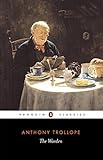
The first story in the “Chronicles of Barchester” is a slim novel with such an apparently slight plot that it may seem all too easy to slip into the category of “classics I never got round to reading”, but that would be a mistake.
The Rev Septimus Harding enjoys a pleasant life in his role as warden at Hiram’s Hospital, with the welfare of twelve aged men in his care. His peace is shattered when John Bold, a local reformer bent on “stopping injustice” begins to question the financial arrangements that give the warden too high a salary and the old men too small a pension. Is Bold’s action foolhardy or noble, since he is jeopardising his prospects of marrying Harding’s daughter Eleanor?
In a climate of attacks on the religious establishment, the issue escalates. The machinations of Harding’s outraged control freak son-in-law, Dr Grantly are of little avail outside the cosy world of Barchester, and the matter even gets reported in “The Jupiter”, the highly influential organ of the national press. A decent and kindly man, Harding is mortified to find himself personally vilified. A further problem is his growing sense that he is not really entitled to his salary. Normally keen to avoid arguments and supine in the face of Grantly’s domination, is this to be the one occasion when Harding takes a stand and, if so, what form will it take?
In all this, the characters are so real, both in their conversations and the shifting inner thoughts that Trollope describes so acutely that, if one could meet them now, direct communication would be possible – as might not be the case for some of Dickens’ caricatures or Jane Austen’s mannered heroines (both writers whom I appreciate and respect in other ways).
The book is full of sly humour, as Trollope shows Abel Handy, the old men’s self-appointed spokesman, using all the manipulative arts of a modern union leader to induce his colleagues to “make their marks” (since they can’t write) on a petition. Likewise, we see how Mrs Grantly plays the accepted game of the dutiful wife in public, but controls her husband behind the scenes as he does others in public. Then there is the description of Harding, playing the “air violoncello” in moments of deep concentration or stress, to the bemusement of people who do not know him well. We can also identify with Trollope’s tongue-in-cheek musing on the power of the Jupiter, a kind of Victorian forerunner of Murdoch’s power to make and break people, at least until recently.
The only parts to which I cannot relate are when Trollope gives way to the fashion of his times to launch into a flowery essay on, say, the behaviour of people at social gatherings. When the language becomes arch and peppered with classic allusions I do not know, I lose patience. These passages are mercifully quite few, except towards the end when the plot moves to London.
What I like most is the way that, in his focus on the small, quiet lives of very ordinary people, Trollope has the gift of summoning a sense of grief and loss as moving as in any great tragedy, but also of maintaining a sense of proportion and showing people’s capacity to adjust and survive, as is part of the human condition.
This is an exciting drama which also manages to be much more moving than I had expected, and to raise some complex moral issues, rather than be simplistically pro-Mossad as I had feared.
Intense concentration is required to catch all the details and nuances, as the plot is revealed in brief, fast-moving scenes switching back and forth between the 1960s and the 1990s. It is hard to summarise the plot without giving away too much, as I think some previous reviewers may have tended to do.
Essentially, in the '60s, three driven young members of Mossad have been tasked to capture a notorious Nazi doctor,"the surgeon of Birkenau", now practising gynaecology, of all things, in an East Berlin hospital, and to bring him back for trial in Israel. Although there are some major hitches, the three claim to have managed to kill him and are feted as heroes for the next three decades. This accolade is of course questionable since the man has been denied a fair trial, which would have shown the Israelis to be morally superior to their oppressors.
It becomes apparent that the facts are not quite what they seem. The film becomes less of a righteous if fanatical Nazi hunt and more of a psychological drama – the relationship between the three agents, two men and a beautiful woman. The "leader" Stephan is ambitious, David is traumatised by the loss of his entire family, and Rachel also often appears too emotionally vulnerable for the task.
Under pressure, the trio begin to behave in often all too understandably flawed and "human" ways. We see how the captured Doctor Vogel plays on this. I disagree that he comes across as "too nice" because he seems to love his wife: in his lack of real remorse for past crimes, his crude anti-semitism and his ability to manipulate and goad his youthful captors, he is particularly chilling and sinister.
There is also plenty of scope to debate the three agents' various motives for their actions, which cover a wide range: fear, altruism, ambition, personal advantage, to maintain status and the love of others, or simple pragmatism. How should they have behaved at each stage? How would we?
Although some plot details do not hold water when you think about them afterwards, I do not agree that the film tries to cover too much. The complexity seems to me to add to its value and effectiveness. I also do not feel that it loses its way at the end when the fifty-something Rachel sets off for the Ukraine to honour "a debt" and conclude unfinished business. The end of the film is not what you would expect, and leaves matters slightly open for you to draw your own conclusions, which is often the mark of a good film.
I plan to include a fair review of the play itself, but need to point out that the "Reclam" edition, although attractive price-wise, includes footnotes and an "afterword" only in German, which I failed to see until it was too late to return the book and get a refund.
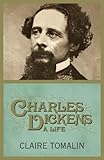
This is very much in the mould of Claire Tomalin's biographies: very detailed and well-researched yet highly readable, revealing with honesty, empathy and wry humour the complexity of Dickens's personality, warts and all.
We gain a sense of the huge, perhaps manic, energy which made him so prolific a writer, known to work on two great novels at the same time. Walking for miles most days gave him time to observe people and to form ideas. Tomalin tells us that he needed to pace the streets – the limited scope of the Swiss countryside (despite its beauty!) only frustrated him. It is a shock to realise that he died in his late fifties – probably at least partly as a result of the smoking and heavy drinking which must also have contributed to his outbursts of explosive anger and emotion.
I was impressed by his precocious determination to overcome adversity. Forced when barely in his teens to leave the school where he excelled to work in a blacking factory because his father was in jail for debt, Dickens divided his meagre weekly earnings into seven piles, to make sure he did not overspend. Despite the lack of a university education and disrupted schooling, this clearly very intelligent young man rapidly became a self-made success, as first a journalist and then an exceptionally popular author. His charisma and dramatic skills (he wanted initially to be an actor) assisted him in promoting his work through his readings – the murder of Nancy by Bill Sykes was a possibly overdone favourite theme.
The author shows how Dickens made positive use of every aspect of his life in his writing. His childhood in Kent gave him a great love for that area, and became the setting for "Great Expectations" which Tomalin regards as in some ways his most "perfect book". His father's chronic debt helped shape the attitudes of Mr Micawber, but also scenes for Little Dorrit set in the Marshalsea Prison.
Tomalin describes how he produced his stories largely in monthly episodes, which required remarkably little rewriting, although his approach may account for some of the overwrought and "hammy" passages in his books, which she freely acknowledges, together with his rather bland female characters. It seems that he followed an overall plan, particularly in the later works.
Although sociable and gregarious, which might suggest easy-going, Dickens was a man of strong principles in certain respects. He was a staunch republican – one reason why he admired the French so much – and gave many readings of his works to highlight the parlous conditions of the poor.
Of course, one area in which his morality fell short was in his callous treatment of his long-suffering but probably rather dull wife. He may have married too young, settling for safe domesticity after the failure of a passionate love affair. However, in successful middle age he embarked on his long relationship with the actress Nelly Tiernan, covered so well in another of Tomalin's biographies. The enforced secrecy of this liaison may have added to some of its appeal. I was also intrigued to learn of the strong friendship between Dickens and his sister-in-law, which Tomalin believes to have been platonic on his side, one of blind loyalty and admiration on hers.
As further evidence of his capricious and unpredictable emotional responses, we learn how Dickens was often hard on his sons, but even after being let down many times by his feckless father, found him a job and praised him in extravagant terms on his death.
This blend of biography, literary comment and evocation of the Victorian world has certainly inspired me to take another look at Dickens's work. I have always admired his intentions as a social reformer, but found many of his characters too caricatured the general tone too sentimental.
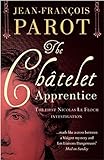
This first novel in the Nicholas Le Floch detective series, set in C18 France, reminds me of William Sansom's Shardlake series because of its attention to the details of social history and its intricate plotting. There is a whiff of Agatha Christie in the denouement to which Nicholas invites all the interested parties – still left alive- and summarises the situation: this was helpful in confirming that I had not "lost the plot".
Nicholas is an attractive hero, saved from the irritation that his good looks and charm might provoke by a refreshing capacity to commit blunders as well as the thoughtful and introspective side to his nature. This seems to stem from his experience as an orphan of unknown parentage, who has often met with resentment because of the generous support of his godfather, le Marquis de Ranreuil.
Armed with a letter of introduction from this benefactor, Nicholas travels to Paris and is taken on by the capricious and calculating Monsieur de Sartine, newly appointed Lieutenant General of Police and a rising star with King Louis XV himself. After his initial training, despite his youth, Nicholas is given the assignment to find what has befallen a missing colleague, and the complicated plot spins off from this point.
Apart from some rather gruesome corpses, the sex and violence in this book would not shock a maiden great-aunt – except perhaps for the hero's casual but probably true-to-life relationship with a prostitute. Some scenes are unlikely and a bit clunky, as when the brothel keeper, La Paulet, provides sensitive information too readily without checking Nicholas out, or when he eavesdrops on a revealing conversation involving de Sartine by entering a room without being noticed! His victory over an arch-villain in a swordfight is also implausible.
On the other hand, I enjoyed the "Frenchness" of it all – the obsession with eating well, the discussions about the pros and cons of haute cuisine, the details of how to cook pigs' trotters, a tasty working man's dish. Also, Parot often demonstrates his classical education "as a matter of course" , taking it for granted that the reader will understand an allusion, or be pleased to be told about it.
Although some of the cast e.g. the promiscuous Louise Lardin are a bit caricatured, Nicholas is an interesting character with quite a complex personality. I was a bit irritated by the Sherlock Holmes ploy of having him work out a solution on very slim evidence, but not reveal it to the reader for some time!
The translation may not quite do justice to Parot's literary talents, but the slightly stilted style fits with the period. I recommend this for those in search of a new detective series in an admittedly old-fashioned mode with an essentially predictable end if you want to try to work it out.
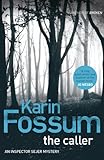
In the spate of crime novels pouring out of Scandinavia, the Norwegian Karen Fossum's "The Caller" is more of a Barbara Vine-style psychological study than the frenetic action combined with political messages to be found in Stieg Larsson, or the self-absorption of Mankell's angst-ridden Wallander.
We know from the outset that the "caller" is Johnny a disturbed adolescent who gains a sense of power from carrying out cruel pranks on strangers. Fossum shows how these often quite elaborate hoaxes have unexpected, disproportionately adverse effects on the mental state of each victim.
Yet, she also succeeds in revealing the appalling parenting which has sent the highly intelligent but immature Johnny down the wrong path, distorting his "normal" sense of compassion. This is not totally absent: he shows great kindness to his sick grandfather, and to his pets.
Fossum skilfully makes us feel some sympathy for Johnny, even to the extent of wanting him to escape harsh punishment, out of a morally ambiguous sense that maybe these pranks are "not that bad". Once one has realised they tend not to cause physical harm, one can be lulled into taking them less seriously, and in being mainly intrigued to find out what the next ingenious trick will be.
Yet, there is always an underlying sense of menace – eventually a prank must backfire with some unintended calamity. The story grows darker towards the climax of the novel, creating the death toll normally associated with a crime thriller. Although I guessed a key twist at the end, the denouement is unlikely to be totally predictable.
The ending may seem a little too neat, possibly too rapid and condensed, and therefore less moving, but "The Caller" is, in short, an entertaining, well-written morality tale, which reveals the complexity of cause and effect, good and evil, and the risk of unintended consequences.
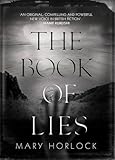
Set on Guernsey, this debut novel interweaves the lives of two characters: bright but unpopular and emotionally disturbed teenager Cathy, revealed through the black comedy of her diary , and her deceased Uncle Charlie, whose suffering under the German occupation is recorded in interviews with his brother Emile, also Cathy's father. Before his recent death, Emile was a local historian, obsessed with exposing the truth, but he may have been unable to cope with facts that proved unexpected, or impossible to prove beyond doubt.
In the first few pages Cathy confesses to the murder of her former best friend, but we know she is an unreliable witness. Other reviewers have been repelled by her coldness, but I see it as a kind of defence against a lack of parental affection and bewilderment over the loss of a father whom she clearly admires, but who died before she could "get to know him".
I found the genre hard to place – psychological drama, perhaps? Some scenes are very amusing. At times, it reads like a teenage cartoon strip, yet there is always an underlying sense of the grim legacy of the Nazi occupation. Guernsey is presented in a negative light – somewhat leavened by humour – as claustrophobically small, overrun by tax-dodging foreigners, with a local population concealing their guilty secrets over collaboration with the Germans. The web of lies makes it hard to know the truth, and triggers a chain of misunderstandings and long-term wrongs.
The story held my attention, despite the distracting footnotes, intended to show Cathy's precocious attempts to write like an academic historian, but many of the comments could easily have been included in the main body of the two parallel story lines.
Although I expected to be disappointed by the denouement, it is potentially better than I had feared. I like the ideas of an ambiguous ending, but some of the final revelations seem unnecessarily rushed and I was left too unclear as to exactly what role Cathy's mother has played. I also dislike the note of moral blackmail on which the book ends – it is neat, but overly cynical. I want the book to be more than just a clever construction.
Perhaps the portrayal of the malevolent Nic could have been more nuanced, although she is of course seen from Cathy's distorted viewpoint. Also, you may feel that sometimes the author steps in and inserts a little too much mature self-knowledge into Cathy's adolescent diatribes.
Overall, the novel is like a Chinese meal, giving short-term gratification but leaving you a little unsatisfied and wanting something more substantial.
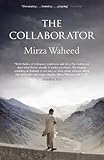
This novel exposes the plight of muslims living in the Indian-controlled sector of Kashmir, doomed to suffer whether or not they are militant. It has the ingredients for a powerful and moving tale, narrated by the anonymous son of a village headman in the wild, beautiful mountains close to the disputed border. One by one, members of his close-knit group of teenage friends disappear, leaving him haunted with questions. Why did they not include him in their plans to leave? Have they really crossed the border to join Pakistani training camps? How many have been killed in attempts to infiltrate back as terrorists? When, sickened by military reprisals, all the villagers have decamped apart from his stubborn father and long-suffering mother, the narrator is forced to become a "collaborator", searching the mutilated corpses of infiltrators to collect ID cards and weapons. Is his main motivation just to earn money for his family, or does he seek to find the bodies of his friends?
Although I wanted to be gripped and impressed, I found this book very hard to read. The plot is too slight to sustain a full-length novel, without very skilful writing. In the lengthy first part, the author rambles through the chapters like a traveller without a compass. Despite the vivid descriptions of the striking landscape and the villagers' simple lives, when it comes to the relations between characters, the style becomes stilted and wooden. I found it hard to distinguish individual characters or to care about them. The narrator's endless speculation over his friends' fates becomes repetitious and tedious.
The narrator's "voice" is inconsistent: sometimes, he is a confused teenager, at other times he sounds more like the author, describing the village as "settling down to stasis". The writer's penchant for flowery writing works quite well for passages on spiritual matters, the burning of corpses to save them from desecration, and so on. However, when describing incidents, the style often becomes quite clumsy, with prose inadequate to the task and a frequent jarring misuse of words – I had to resist the urge to seize a red pen and correct it.
To give just one example of how the clotted prose undermines the dramatic effect:
"…Ramazan Choudhury's elder son – the same man who had worked on the mosque and whose two children I had seen at Noor's shop buying éclairs and whose full name, Ishaq Jan Choudhary, I only got to know now when we were paired together in the hunt for X's body – and I were scouring the area around the dirt track that goes away from the village and tails off into the footpath to the valley, when we saw X's ..body lying near a narrow stream running down from the mountain."
What were the editors fulsomely cited at the end, not to mention the author himself who is a BBC editor, thinking of?
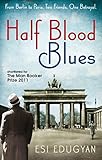
Since I don’t care for jazz and have little in common with hard-drinking Black American male musicians, why was I so quickly hooked on “Half Blood Blues”? At first, it was the dry, wisecracking wit, and the rhythm of the Black American speech patterns which didn’t grate as I would have expected – “he stood..leaning like a brisk wind done come up” or “Man, Sid, ain’t you ever going to clean up? You live in plain disrepair” and so on.
Then, I was struck by the spate of vivid, original similes. “He got oddly thin lips, and with the drink still glistening on them they looked like oysters”.
I realised too that there is scope for a compelling drama in a situation where a group of jazz musicians, some black, realise that the world of swing in 1930s Berlin has suddenly turned dark as the Nazis brand it “degenerate art” and begin to beat up black artists.
The author knows how to create tension. From the opening sentence, “Chip told us not to go out”, the first chapter builds up a sense of impending calamity, as the narrator Sid reluctantly accompanies Hiero, a youthful prodigy on the trumpet, in his unwise quest for a drink of milk in occupied Paris, where his high visibility as a Black German combined with a lack of the right papers place him at risk of deportation to a death camp.
Esi Edugyan takes risks in introducing the real-life Louis Armstrong to the plot, but carries it off convincingly. She also succeeds in helping me to understand the appeal of jazz music. She finds apt words to describe in detail how Hiero’s playing sounds to Sid.
“Hiero thrown out note after shimmering note, like sunshine sliding over the surface of a lake, and Armstrong was the water, all depth and thought, not one wasted note. Hiero, he just reaching out, seeking the shore; Armstrong stood there calling across to him. Their horns sounded so naked, so blunt, you felt almost guilty listening to it, like you eavesdropping.”
This is not just a tale of a jazz group under pressure, surviving violent fist fights with the brutal “boots” (Nazi soldiers) but also a subtle psychological study of the interplay between the members of a group, providing a keen insight into personal and professional jealousy. Almost until the end, we are unsure whether Sid betrayed Hiero long ago, exactly how, and if he is a reliable narrator.
Some of the minor scenes drag a little and I found a few points implausible e.g. would it really take so many weeks to make a single record, without actually completing it, would/could the seductive singer Delilah make a headscarf out of a stiff, dusty theatre curtain? Despite this, overall “Half Blood Blues” is an original, well-plotted and beautifully written work. I shall certainly look out for Edugyan’s future novels.
⭐⭐⭐⭐⭐ 5 Stars
Half Blood Blues: Shortlisted for the Man Booker Prize 2011


 Antenna Reviews