Something in the Air – What it is to be young

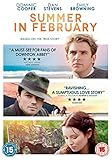
This is my review of Something in the Air [DVD].

Apparently semi-autobiographical for the director Olivier Assayas, and entitled “Après mai” in the original French, this film recaptures the sense of confused anger and scattergun resistance against injustice which persisted after the famous Paris riots of May 1968.

Gilles is in his final year at the lycée with ambitions to be an artist, also caught up in street protests, demonstrating against the police and pasting up militant posters. We gain a vivid sense of being young in the 1960s, the sudden sense of freedom to question and attack the accepted values of society, to travel, drop out, and play with fire – a constant theme in the film – experimenting with drugs at the risk of self-destruction. It shows the uncertainty and fragility of first relationships, which one may come to value when it is too late, or, in the case of the women in the film, even when thought to have been freely chosen, prove to be a trap into some aspect of stereotyped or conventional behaviour

The film is visually very beautiful – the view over the valley where Gilles meets his first girlfriend, the apparently liberated artist he would like to be. It is also very French in portraying the heated philosophical debates and the ambience of the dry, traditional approach to teaching in school, the chickens running along the street past the old stone houses, the leafy courtyard gardens with paint peeling on the sills as the men discuss making films to show soldarity with the workers. It is well-acted and most of the main relationships are quite sensitively developed.

On the downside, apart from being about thirty minutes too long with a clear need to edit some scenes sharply, the storyline is too fragmented and meandering, at times hard to follow. Some of the political discussions to do with say, relationships between students and workers, or between workers in different countries, or the issue of how to use film to promote ideas, are presented in a rather oblique or rushed and unclear way. I also agree with reviewers who have criticised the glossing over of the irony that most of the young people clearly come from unusually wealthy and privileged backgrounds.

I left the film irritated by the sense that potentially fine ingredients had been scrambled into a dog’s breakfast. On further reflection, I am left with a growing sense of the beauty of the film, some highly amusing scenes and the portrayal of the uncertain nature of youth, half-drifiting, half-striving in search of a goal, which may end in success, annihilation or nonentity.

⭐⭐⭐ 3 Stars

“Within a moment of great rebellion”

This is my review of Perilous Question: The Drama of the Great Reform Bill 1832 by Lady Antonia Fraser.

Bubbling over with knowledge of the period, Antonia Fraser kindles our interest in what may seem a dry old piece of legislation by relating it to the events and personalities of the day. In a Parliament dominated by aristocrats, even the Whigs' desire to give some political representation to rapidly growing industrial cities like Birmingham was based on a pragmatic aim to avoid public revolt, after the grim precedent within living memory of the excesses of the French Revolution. Any thoughts of universal suffrage or a secret ballot were still the dangerous ideas of the "Radicals". It is startling to discover that the Reform Act only extended the franchise from 3.2% to 4.7% of the population!

Although other reviewers have praised the "novel-like" style of the book, I found the continual digressions into the family connections, appearances and verbatim comments of the main – and some minor – characters quite hard to digest. A glossary would have been really useful. More seriously, these often rambling discursions tended to get in the way of a proper understanding of the three Reform Bills which led to the 1832 Act itself. At no point does the book clearly explain exactly what was in each Bill and why. Neither is there a full explanation of the conditions which made the Reform Act necessary, with an indication of earlier efforts to improve the electoral system. Antonia Fraser's celebrity raises one's expectations, so that it is disappointing that this may also elevate her above being asked to submit her work to a thorough edit.

The book improved for me from Chapter 9, the point where England explodes into widespread riots after the Lords' first rejection of the Bill, largely because of opposition from the Bishops. To think how much ordinary people cared about it, when our latest widespread riots were largely about looting chain stores! Chapter 10 is particularly gripping with accounts of anarchy in Bristol, where soldiers held back out of sympathy for the mob. The official death toll was twelve, "but the number of rioters who died was probably more like 400". In view of some recent media scandals, I was struck by the scurrilous press attacks on the German Queen Adelaide who was thought to have influenced King William IV against reform. The extent of his power is intriguing – he could refuse to create the extra peers necessary to get the Bill passed. Yet, 180 years on, some continue to argue for the maintenance of unelected peers, and appointed lords still occupy key posts in our Government…..

⭐⭐⭐⭐ 4 Stars

A visual display that makes you want to read the book

This is my review of The Great Gatsby [DVD] [2013].

The reviewer Peter Bradshaw's description of Baz Luhrmann as "a man who can't see a nuance without calling security for it to be thrown off his set" is quite telling, but if you accept that the director's trademark is flamboyant excess, you could argue that the extravagant parties thrown by the wealthy Gatsby, the wild, escapist behaviour of "the bright young things" in the Jazz Age following the privations of World War 1, and the unthinking self-indulgence of the very rich, all lend themselves to Luhrmann's bombastic approach.

He is faithful to the details of the story, which is a "good yarn" as well as being a comment on the snobbery and corruption of 1920s American society which he develops to some extent. With events seen through the eyes of the narrator Nick Carraway (unclear why he is so poor when his cousin Daisy clearly comes from an established family accustomed to wealth), we do not at first understand his huge respect for Gatsby, to the extent of labelling him "great". We gradually come to grasp the irony of Gatsby's use of vast, recently gained wealth to try to rekindle an old love, his delusion that money can be used to regain the happiness of a past infatuation and the poignancy of "true love" blighted by the fate of "bad timing" yet still providing opportunities for honourable personal sacrifices which may go unnoticed.

I accept that this may be a shallow interpretation to those who know and love the novel, but if the film succeeds in introducing people to it, and inspires some, like me, to read Scott Fitzgerald for the first time, Luhrmann has achieved something more than simple entertainment, as he did with Romeo and Juliet.

⭐⭐⭐ 3 Stars

A quoi on sert?

This is my review of Les chemins de Katmandou by Rene Barjavel.

Beautiful but mentally fragile, Jane is shattered to catch her father with his lover. Anchorless, she drifts on the hippy trail to Katmandu. The young Frenchman Olivier travels there as well, but for very different reasons. He is an angry young man, the bitterness over his unknown father and affectionate but neglectful mother twisted into an aggressive desire for change, leading him to fight on the barricades in the violent Paris student demonstrations of 1968, which leave him disillusioned.

Nostalgia for the '60s drew me to this novel, although Barjavel, who was almost sixty when he wrote this, has an older man's contempt for the hippies' self-delusion in seeking mystical peace and love in drugs. At first, I felt unengaged by the fragmented storyline and scenes of gratuitous violence involving characters I had not been given time to know. Then, I was hooked by the highly visual descriptions of Nepal. These aspects all seem to stem from the fact that the novel was in fact based on the 1969 film for which Barjavel wrote the script.

Often gripping and moving, sometimes ludicrous, even a little crass, this book is "a good read", but it has a thread of negativity – "What's the point of anything?" I took from this book the message that life is transient, we are all "dust to dust". Western materialist, "can do" culture may be pointless and eastern fatalism and acceptance closer to the mark, but once you have gained a sense of the rational, and the need to act, it is hard to lose it.

⭐⭐⭐⭐ 4 Stars

Talented writing, plot wanting

This is my review of The Impostor by Damon Galgut.

In the interests of positive discrimination, Adam loses his job to the young black intern he has trained. I was looking forward to a South African writer's take on the reality of the curdled idealism of life in the post-apartheid system. Certainly, there are telling observations of a corrupt policeman, a beautiful young black woman now able to make her fortune as a white man's wife, older black servants whose lives situations remain remarkably unchanged, and a thug in fear of reprisals from former colleagues he has sold out in his confession to a truth and reconciliation committee. Yet, the book turns out to be more of a psychological drama involving Adam's dealings with a former pupil at his school who seems to have become an unlikely successful entrepreneur.

I admire the clear, uncluttered prose which provides vivid impressions of the South African landscape, some convincing dialogues which reveal, say, Adam's uneasy relationship with his brother, and an insight into Adam's complex state of mind as he goes through a mid-life crisis. I also like the way in which most of the main characters are to some degree "impostors".

However, I agree with the reviewer who finds Galgut's writing somehow "bloodless", promising more than it delivers. In this case, I just did not believe in Adam's ill-judged friendship with Canning, his acceptance of the old nickname "Nappy", nor in Canning's enigmatic wife, nor his magical estate of Gondwana. There were some tense and moving moments, but the ending left me underwhelmed. There are all the ingredients here for a good novel, but the whole ends up less than the sum of the parts.

⭐⭐⭐ 3 Stars

Capturing the leopard

This is my review of The Last Leopard: A life of Giuseppe Tomasi di Lampedusa by David Gilmour.

If Lampedusa, who in due course became the Duke of Palma, comes across as rather dull, it was partly due to his intense introversion with strangers and also because his life seemed to revolve round consuming literature, history and cakes in prodigious quantities. The author succeeds in showing how Lampedusa's only published novel,"The Leopard", sadly rejected until just after his early death from cancer, was the fruit of decades of musing about his aristocratic family, the state of Sicily and the reading which must have developed his sense of style.

The most interestig part of the book are the final chapters on "The Leopard", which you need to have read beforehand, with an exploration of the extent to which the leading character Don Fabrizio was modelled on Lampedusa's great-grandfather Prince Giulio during the Risorgimento in the 1860s, which brought about the unification of Italy and the break up of the old feudal estates, or on the author himself. Like Don Fabrizio, Giulio was a keen astronomer, but he was probably less of an autocrat. As regards his "sceptical intelligence ….. long periods of abstract thought… and pessimistic view of Sicily and Italian unity….. Don Fabrizio is more autobiography than invention", but he is also "transformed into the person the writer would like to have been".

On the author's own admission, the charming Tancredi is based partly on his adopted son Gio, although "as for his morals….Gio is fortunately much better than him". Yet Tancredi also seems to be an amalgam of some of the young Sicilan aristocrats who joined Garibaldi, for excitement rather than out of conviction.

The huge, violent and mixed reaction to "The Leopard" also makes fascinating reading. Many who thought they knew Lampedusa were astonished that this polite, self-effacing man could hold such cynical and negative opinions. One of the strangest criticisms was that, in being readable with clear characters and conventional syntax, the book failed to achieve the kind of "avant-garde experimentalism" which was in vogue in 1950s Italy.

Another critic even attacked Lampedusa for writing about animals in a "silly" way when in fact the portrayal of the faithful hound Bendico is one of the most humorously touching aspects of the novel, revealing the love of dogs, above people, which Lampedusa displayed in real life.

His marriage is intriguing: he braved his possessive mother's wrath by marrying a formidable pyschoanalyst, who also happened to be a wealthy Latvian aristocrat, but soon settled into what seems to have been a largely intellectual relationship with her, choosing to live with his mother until her death rather than with his wife, since the two women could not get on. Gilmour comments that "flames for a year, ashes for thirty" seems to have been both Don Fabrizio's and Lampedusa's view of love for their wives.

I would have liked the final chapters to have been longer, and more on the socio-political events which formed a background to both Lampedusa's life and his famous novel. The photographs which I discovered at the end of my kindle version are well-chosen.

⭐⭐⭐⭐ 4 Stars

Tone curl

This is my review of Gone Girl by Gillian Flynn.

"Everyone knows it's always the husband": Nick is the obvious main suspect when his wife Amy disappears on their fifth wedding anniversary. Yet what kind of a mixed-up mess is she, after a lifetime of providing the model for her parents' money-spinning set of stories about "Amazing Amy", a modern Pollyanna designed to entrance both children and parents?

Gifted with a rampant imagination, Gillian Flynn has devised an intriguing situation with a labrynthine plot which hooked me because I sensed both that what I was being led to believe was false and that what I thought I was being clever in anticipating would prove a red herring as well. I like the gradual revelation of events in which truth and lies are hard to disentangle, the shifting relationships between the main characters, some sharp script-writerly dialogue, moments of real comedy in what seems to be mainly a black farce, and the continual parodying of the media-driven, hokey, faddish side of American culture. I liked it less when I started to suspect that the author herself might be too much part of this so that some of these parodies were imagined on my part.

Too often, the style lapses into a cheap magaziny tone, abetted by the author's love of creating adjectives ending in "y". I became irritated when the spate of quirky wit and imagination sank into slapdash banality. Are the false notes of trashiness unintentional or part of a plan to lure readers along with just enough but not too much violence and soft porn?

Although the commonly used device of alternating chapters between first person Nick and Amy works well, they both indulge in too much "telling" of their self-knowledge. Then, there is the continual underlying voice of the same caustic-tongued yet also often tweely sentimental female – incongruous for Nick in the midst of all his macho lingo and activities culled by the author from an obliging husband. I learned the latter in the acknowledgements at the end, which I mistook at first for Amy's play-acting of what an author's falsely modest, saccharine sign-off should be.

The nature of the final twist seems quite apt to me, but I was disappointed by its execution. I agree with reviewers who have found the final chapters too rushed and weakly developed – including some major flaws on the plausibility front.

Overall, I can see why this is a best-seller, probably one in a run of many. It is a page turner, good distraction for an economy airline flight, and a trigger for lively discussion at a book group if this does not cause an irrevocable rupture between the pulp fiction addicts and blue stocking readers, but with a little more care over style it could have been brilliant.

⭐⭐⭐ 3 Stars

The madness of reason

This is my review of Proof by David Auburn.

Although professional critics have marked this play down as shallow, I found it absorbing and moving – likely to prove challenging and rewarding for both the four actors involved and their audiences.

Clearly influenced by the at times tortured life of the mathematician John Nash whose intriguing blend of madness and genius has been portrayed in the probably better known "A Beautiful Mind", "Proof" focuses more on the effects of mental instability on other family members. Although mathematics lies at the heart of this play, we are never given a specific theory or real analysis but this does not matter since, apart from the fact it would be incomprehensible to most of the audience, the details are not the point.

The strength of this play is that you can take from it what you wish. What about the daughter who has sacrificed her own mathematical talents in order to care for her sick father? Has she inherited both his genius and his malady? Is this what helps her to empathise with him so strongly? Should we blame her pragmatic sister for going off and making a life of her own? She has at least supported the others financially, but are her good intentions unforgivably insensitive? How sincere is the young man so keen to trawl through the sick man's notes in search of some revolutionary proof? Is he motivated by a respect for academic achievement, or something more self-serving?

I suppose you could argue that to raise so many issues without providing any resolution of them is a weakness, but I would say that this play gives you a chance to understand and reflect on aspects of human behaviour and relationships which most people do not encounter, or, if one does have to deal with madness, this provides some thought-provoking, even comforting points of connection and reference. Despite a theme that may sound depressing, the dialogue is often funny and never dull while a slight plot is skilfully developed through a strong structure.

⭐⭐⭐⭐ 4 Stars

Releasing truth

This is my review of Cassandra at the Wedding (New York Review Books Classics) by Dorothy Baker.

How do you react when your identical twin sister announces her intention to get married? Particularly if you have spent your entire childhood in the self-contained bubble of a rural backwater, with an academic philosopher for a father, encouraging you to dissect every thought, and a novelist mother to feed your preoccupation with words? What if your parents have laboured to make you different in superficial matters, overlooking the fact that you differ in the deep sense that one twin wishes to share the same life forever whilst the other wishes to break free into adulthood?

This recipe for high drama is a gripping page turner. I could not wait to get to the end, knowing that I would need to go back later to milk Baker's keen prose for the full sense of all her sharp and original observations. It often reads like the plays for which the author was well-known, with the advantage that a novel gives scope for the deeper introspection and exploration of the characters' inner thoughts.

The book is written from the alternating viewpoints of the two sisters: Cassandra and Judith, which gives you in time their very different takes on the same situations. Cassandra is neurotic, manipulative, a keen observer of others, with a biting wit, but an utterly unreliable narrator who lacks a sense of proportion, a source of huge irritation but also great sympathy to the reader. This is a tragi-comedy with many moments of great humour, and a light touch which adds to the pathos of the sadder events without making them too heavily dreary or depressing. Unlike some reviewers (including Lowri Turner in the introduction to my copy, which was a total spoiler so I am glad I did not read it beforehand), I did not find the ending disappointing – rather neat yet also satisfyingly ambiguous in some ways.

It is surprising that such a modern-seeming novel should have been written fifty years ago by someone born in 1907. It does not seek to shock, because it does not need to do so to stand out, with its subtle and distinctive approach. I am sure that, if written today, it would be on all the major prize shortlists.

⭐⭐⭐⭐⭐ 5 Stars

Too refractory

This is my review of Promised Land [DVD] [2012].

Reminiscent of Erin Brockovich but not nearly as effective, this is one of those dramas on a topical environmental theme. Matt Damon plays Steve Butler, a salesman whose success in persuading hard-up American farmers to sign contracts with a major fracking company is based on personal experience. When the closure of a caterpillar assembly plant brought depression to his own home town, it was the cheques from a fracking firm's gas extraction that gave the local farmers the opportunity to buy their kids a decent education and escape to a better life.

Inevitably, the time comes when Steve encounters major local opposition. Although it is surprising that he and his pragmatic female colleague Sue Thomason seem so ill-prepared for this, the drama develops quite well, managing to portray the pair as both sympathetic and morally compromised. Despite other reviewers' criticisms of the ending, I found it contained a neat twist which prevented the film from ending up too corny or predictable.

There are entertaining scenes and wry touches but, perhaps because fracking is a dry subject, some incidents seemed pointless padding intended to "lighten things up" yet missing the mark. The direction struck me as wooden at times, and I often felt unengaged, although interested in the issue.

A sense of rural America comes across strongly. I particularly liked the homemade shop sign proclaiming, "Guns, Groceries, Guitars and Gas". The use of folky-sounding music in the background which proved to be Milk Carton Kids' tracks like "Snake Eyes" proved a welcome discovery.

I was left feeling this was a missed opportunity to create what could have been a gripping film, with the relationships between the main characters and the arguments on both sides more strongly developed. It was as if the director was scared of boring the audience and, lacking the courage of his convictions, undestimated them.

⭐⭐⭐ 3 Stars