A good way to start

This is my review of TALK RUSSIAN (BOOK & CDS) NEW EDITION by Georgina Martin,Svetlana Furlong.

This course follows a standard format which I have already used for Italian. It is an attractive and accessible format, and I have not found a better way of starting a language quite cheaply, although I have a few complaints. If you have the discipline to work hard at the exercises, moving on to avoid getting bogged down but repeating them until the knowledge is embedded, you can learn a good deal from this book.

Bearing in mind the difficulty for an English speaker of learning the Russian alphabet, the approach used here is probably as good as any: showing the alphabet in full, but highlighting a few letters to learn at a time, starting with the easiest. It was probably a sensible decision to focus on the printed form of Russian and invite students to jot down the meanings of word in English, but I would have liked a lesson devoted to writing in Russian.

Again, the complexities of grammar are probably skirted round quite well at this basic stage e.g. saying that some words like "open" and "closed" must agree with the words they describe, and showing whether words are masculine, feminine or neuter.

I was a bit irritated by the need to keep flipping to the back to check the answers to exercises. I suppose this forces the student to make a real effort to answer without cheating, and it would probably add to the production cost to integrate answers clearly into the questions and tasks.

My main criticism is that I would like every Russian word or phrase in the booklet to be recorded for practice on the CD e.g. on page 52, a list of facilities in a town centre like supermarket or chemist is left for you to work out, possibly using the index, which is fine, but the words are not spoken for you to hear. Cutting out the repetitive jingle would give more space on the CD for this!

Also, some of the conversations are quite fast, which is good practice, but I would like a greater number of them to provide more opportunities to develop competence e.g. more examples of different types of drink you might order, more chance to practise numbers which I find quite hard, more opportunities to listen and talk about the things you may really need like directions, use of public transport, situations in hotels and restaurants.

⭐⭐⭐⭐ 4 Stars

There but for fortune

This is my review of The Class [DVD] [2008].

Based on the autobiography of an idealistic and individualistic young French teacher who plays himself in the film and drawing on many hours of improvisation with pupils in a "tough" multi-ethnic Parisian school, so skilfully directed that it makes a drama seem like a fly-on-the-wall documentary, "Entre les Murs" or "The Class" will strike a chord if not raise goose bumps in anyone who has taught in this environment. The film captures to perfection the claustrophobic, unrelenting, intense, absorbing, frustrating, exhausting, addictive world of teaching in an inner city secondary school. Most of the teachers are young and casually dressed by Govian standards. Yet perhaps unrealistic rules of iron lie beneath the velvet glove. By turns hilarious and disturbing, this could trigger many debates on teaching methods, what to teach adolescents, how far to accommodate different cultures, the pros and cons of integrating "bright kids" into diverse social groups at the price of failing to stretch them.

We see Monsieur Marin's patient persistence in encouraging his pupils to think and express themselves effectively, continually trying to find ways round their hostility to traditional French culture and realising that his ignorance of theirs is a frequent cause of misunderstanding. The camaraderie of the staffroom is often fractured by fundamental differences in opinion: the teacher who wants Marin's class to read a French novel to tie in with history lessons on the Enlightenment, which Marin tactfully suggests the students will find "tough"; the same teacher's absolute views of rules to be followed, whereas the liberal Marin prefers a more flexible approach. A staff meeting, demonstrates the familiar situation in which teachers seem more exercised over the cost of the coffee machine than agreement of a penalty system for naughty pupils.

There are examples of "political correctness" delivered with a mask of courteous objectivity which may unintentionally lead to injustice. In one scene, teachers discussing student grades are distracted by but do nothing to reprove two giggling student representatives elected to listen to the process, apparently without a clear code of conduct as to how they should behave in the meeting and afterwards. This seemed to me the one serious false note in the film. Or does it reflect French school practice?

A storyline gradually emerges, focusing on a moody Arab boy who cannot manage his anger. Despite Marin's empathy for him, and even a small heart-warming breakthrough on a piece of work, an unfortunate chain of events leads to a climax which Marin, in a rare lapse which I found a little hard to believe, has inadvertently helped to trigger.

A near perfect film, highly recommended.

⭐⭐⭐⭐⭐ 5 Stars

When least is most

This is my review of Offshore by Penelope Fitzgerald.

At first, “Offshore” seems like a farcical soap opera involving an eccentric little community of barge-dwellers on the Thames near Blackheath Bridge in the early 1960s. Penelope Fitzgerald’s own experience of living on a houseboat which sank gives her vivid descriptions of changing tides, varying qualities of mud, and parts of boats an authentic air. When “amiable young” Maurice realises that self-appointed leader Richard calls all residents by the names of their boats, he quickly gives “Dondeschiepolschuygen IV” his own name. This quirky bit of humour along with some much more subtle, wry examples soon had me hooked along with the author’s gift for conveying implicitly a great deal about her characters’ situations and personalities. I also enjoyed her launches into unexpected little scenes, as when the child Tilly leaps between abandoned objects precariously stranded in the river mud at low tide to prise out examples of beautiful antique tiles which she and her sister can sell to buy Cliff Richards records at the local Woolworths.

From the outset, the author distances herself a little from the barge-dwellers to observe them as “creatures neither of firm land nor water” who “would have liked to be more respectable than they were… but a certain failure to be like other people caused them to sink back with so much else that drifted or was washed up into the mud moorings”. This approach reduces our own sense of involvement with the characters, so we tend to regard them as mere sources of entertainment. By the middle, I started to get a little bored with them and to think, wrongly, that having established her cast, the author was drifting on the ebb tide with little plot in mind. Some details feel a bit false, like the reference to two “family planning shops” close together in the same high street (doesn’t sound right for 1961-2). At six, Tilly, seems far too articulate and knowing, but I later concluded that, with her own highly educated and perhaps somewhat unorthodox and rarified background, Penelope Fitzgerald may indeed have known or even produced children as precocious as this.

As the book worked up to an ending which shocks you with its abruptness, but on reflection seems the most appropriate one possible, I began to see how the threads of the story all prove to have a purpose, link and mesh tightly together. In the process, my sympathy for the characters grew. Like other readers, and unaware from my kindle of the brevity of the book, I made the mistake of reading too fast, rather than savour the striking prose and non sequiturs which hit home if you spend a little time on them.

This book is an acquired taste, but, although it might now seem too dated to do so, I can well understand why it won the Booker Prize in 1979.

⭐⭐⭐⭐⭐ 5 Stars

Grasshopping

This is my review of The Fateful Year: England 1914 by Mark Bostridge.

Clearly written to tie in with the centenary of the outbreak of World War 1, “The Fateful Year England 1914” reminds me as regards format of Bill Bryson’s “One Summer: America 1927”. The “helicopter” approach may surprise you with all the events that were occurring simultaneously, although the author’s selection is inevitably somewhat arbitrary. Everyone is likely to learn something different from the book: in my case, about the “strike schools” where, influenced by the high level of industrial unrest, pupils protested against dogmatic and repressive school boards or about the slashing of “The Rokeby Venus” along with other works of art by militant suffragettes. The photographs of the period are also interesting.

On the other hand, I found the coverage too fragmented and superficial. The decision to devote an early chapter to a highly publicised murder of the day struck me as a rather crude and unnecessary hook (Bryson does the same), whereas the complex but less exciting topic of resistance to Irish Home Rule was so condensed as to be hard to follow. The chapter “Premonitions” is particularly bitty, in its “catch all” attempt to skate over evidence of increased anti-German feeling, fed by the press and Erskine Childers’ “The Riddle of the Sands”’, Hardy’s anti-war “Channel-Firing” poem, Holst’s composing of “Mars, The Bringer of War” and the aggression of the Vorticists. The seven chapters of Section 3 on the effects of the war in England are the most cohesive and fully developed, but out of kilter with the rest of the format.

⭐⭐⭐ 3 Stars

Satisfying need and greed

This is my review of India Rising: Tales from a Changing Nation by Oliver Balch.

Themed under the headings of Enterprise, Aspiration and Change, the ten chapters of interviews with a wide range of Indians can be picked and mixed in any order. With the stated “overarching goal..to gain a flavour of the place… the approach is unapologetically subjective” and anecdotal. In this, the author succeeds, but is it enough? I admire Balch’s enthusiasm and confidence, but found myself crying out for more context and analysis, as I searched for nuggets of information in the often banal padding and attempts to showcase Balch’s budding skills as a journalist.

Some of the least likely chapters are the best, as in “Actor Prepares” where the author tracks down Naval, the wannabee Bollywood director who has broken with tradition by giving up the course financed by his father, without telling him. In the process, Balch describes the urban tragedy of the hideous, jerry-built concrete housing blocks in unfinished suburbs where recent migrants to Mumbai are crammed without the money or knowhow to equip themselves adequately.

After visiting the artificial bubble of a western style shopping mall, which girls can only attend chaperoned or with friends, Bauch interviews the retail millionaire who feels that aspiration levels, even amongst the poor of India, are now too high to halt the growing tide of consumption: “material things are rewards for performance”. Can Gandhi’s opposing philosophy of the importance of inner peace and harmony survive against this? It is interesting to read how the ingenious poor of India are beginning to set about achieving their ends. There is the “microfinance” (controversial in view of the interest rates levied) which enables groups of women in the slums to borrow money for small-scale activities, guaranteeing repayments for each other as necessary. Similarly, in remote villages off the beaten track, it is again women who operate like “Avon ladies” selling small packets and jars of cleaning agents. When asked if she is happy with her purchases, an old lady gives the telling response, “Before, we washed our dishes with ash”.

On page 250, a rare piece of analysis asserts, “India is travelling at multiple speeds as in multiple directions. New India is a story of fits and starts, not linear progression.” And in the conclusion: “India is too diverse, too full of paradoxes, too confident ever to be homogenised” or swallowed up by global capitalism. But is this too simplistic? India is clearly in transition, with the poverty of the majority highlighted in the process: state-funded space research versus stagnant villages and mushrooming slums in filthy, lung-searing, gridlocked cities. Will the sheer scale of the economy create such pressures of pollution and instability that India plays a major part in the destruction of our global civilisation as we know it? “India Rising” never probes as deeply as this.

⭐⭐⭐ 3 Stars

No kinder people and no crueler

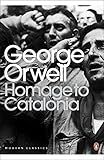
This is my review of For Whom The Bell Tolls by Ernest Hemingway.

Idealistic American Robert Jordan has joined an International Brigade fighting the fascists in 1930s Spain, although this means accepting orders from Russian Communists. He is ordered to destroy a bridge in the mountains, despite the lack of resources and an effective communication system. Can he trust Pablo, the brutal, now disillusioned leader of the republican guerrilla group on whom he must rely?

Although Hemingway was clearly excited by the risk-taking and violence of battle and bullfighting, and there are many tense moments in this novel, you may be disappointed if a pure action thriller is what you have in mind. The density of the prose, with the constant switches of thought, new ideas and unusual modes of expression slow the reader down, even at the moments when the suspense drives you to keep turning the pages.

Drawing on his first-hand experience as a journalist covering the Spanish Civil War, Hemingway was keen to explore it from many angles, such as the incompetence of officers at all levels, or the fact that committing atrocities was not confined to the fascists. The female guerrilla Pilar (who, despite being tough, takes on the cooking), describes in vivid detail how all the men of property in a captured town were assumed to be fascist and forced across the square over a precipice: it is a shock to learn that this was based on real events in the now picturesque tourist centre of Ronda. Hemingway attributes Spanish violence to the fact `this was the only country the reformation never reached…Forgiveness is a Christian idea and Spain has never been a Christian country'.

Hemingway also takes Robert into repetitious stream-of-consciousness reveries over the meaning of life, and how best to spend what may be one's last three days. My idea of Hemingway as the master of the minimalist, pared-down style was shattered by the wearisome detail of many descriptions, from eating a sandwich with onions to constructing a makeshift bed or loading a gun. I grew tired of Robert running his hand through the `wheatfield' of his lover Maria's cropped hair. The frequent references to drinking wine, whisky and absinthe are also a bit repetitive, perhaps reflecting Hemingway's own reputation as a heavy drinker. Sometimes, the great outpouring of words, in particular hyphenated adjectives like `empty-calm' reminds me of Dylan Thomas and is perhaps the product of a creativity loosened by alcohol.

In a dialogue that is often amusing, the speech of the guerrillas is very odd, a stilted style of remarkable sophistication, peppered with `thees' and `thous'. Can you imagine a gypsy saying, `Thou art a veritable phenomenon'? Then there is the exaggerated blasphemy, `I obscenity in the milk of my shame', oaths at times shortened to `Thy mother!'

This is a masterpiece, if a little dated, as in the submissive character of Maria, and despite passages of violence which are hard to stomach. Most poignant of all is the knowledge that all this courage and sacrifice were in vain since the republicans lost.

⭐⭐⭐⭐⭐ 5 Stars

The Art of Concealment

This is my review of The Invisible Woman [DVD] [2014].

Worth watching, this film is fairly true to Claire Tomalin’s respected biography of Nellie Tiernan, the eighteen-year-old from a talented but hard up acting family, who caught the eye of Dickens at the height of his fame in his mid-forties. Perhaps inevitably, the film loses an element of subtlety in making explicit what Tomalin only surmises, such as the fact that Nellie miscarried a child by Dickens.

Ralph Fiennes conveys a strong sense of Dickens’ charisma, his hyperactivity, and callous treatment of his wife once he became obsessed with Nellie. Felicity Jones portrays well the qualities that captivated Dickens: not just her beauty and youthful enjoyment of life, but a sensitive and reflective intellect that made her a real companion, able to discuss his work with him. One of the most poignant parts of the film is where we see how she is knowingly trapped like a fly in amber, a kept woman in an overlarge house from which a view of Windsor Castle ‘seems to float’ as in a dream. She has to become invisible to safeguard the great man’s reputation.

It does not add to the tale of the relationship to sandwich it in lengthy flashbacks between scenes of Nellie in later life as the wife of a schoolmaster in 1880s Margate, haunted by memories of Dickens. Part of the problem is that she looks too young (she was in her forties by then). However, I was interested to discover that in 1876, six years after the death of Dickens, she married at the age of thirty-seven a man twelve years her junior, passing herself off as twenty-three i.e. she must have looked youthful for her age.

I was surprised that the film does not make clear the thirteen year duration of her relationship with Dickens, until his death. More could have been made of her role as a possible inspiration for some of his later heroines, not just Estella in Great Expectations. The greatest missed opportunity seemed to me the omission of Dickens’ death: according to Tomalin, he became ill at Tiernan’s house and, to avoid a scandal, had to be put in a cab to be taken to his home, where he died in the presence of his family, as convention demanded.

⭐⭐⭐⭐ 4 Stars

Un Secret by Philippe Grimbert: Therapeutic autobiography outweighs fictional aspect

This is my review of Un secret (Ldp Litterature) by Philippe Grimbert.

Growing up in Paris just after World War 2, a sickly only child imagines having the kind of athletic, successful brother in whom his father could have taken pride. Keen to integrate into French society, to the extent of changing “Grinberg” to “Grimbert”, his Jewish parents ironically conform to an Aryan stereotype of physical beauty and fitness. It is not until his mid-teens that the narrator learns “a secret”, which dramatically alters his perception of his family.

Based on a true story, although you have to research this fact for yourself, it presents a poignant, at times harrowing, situation, perhaps too short on detail for a simple autobiography. Grimbert is creative to the extent of imagining two alternative paths by which his parents met, fell in love and married. He imagines them on one hand living relatively unscathed through the Nazi occupation of France, on the other suffering the ignominy of having to wear yellow stars and seeking escape to the “Zone Libre”. He also chooses to change the identity of the person who reveals the secret to him.

Although I admired the stark brevity of his style, and appreciated the full horror of the family tragedy, some aspects disappointed me. Grimbert does not feel the need to develop the personalities of his parents’ relatives, so they remain a sometimes confusing set of names. The story is based on a large amount of “telling” of events, with little revelation through dialogue or acting out of scenes. In the process, a good deal of potential drama is left untapped.

So, I rate it highly not as a piece of fiction but rather as a mixture of autobiography and therapeutic exercise by a man whose experience of psychological trauma in his own family prompted him to become a psychoanalyst as an adult. This story lends itself to study at school to enable teenagers to understand moral dilemmas particularly in Nazi-occupied France

⭐⭐⭐⭐ 4 Stars

More Enid Blyton than Raymond Chandler

This is my review of L’Absence De L’ogre by Dominique Sylvain.

The mysterious death of a rock singer in the Parisian parc Montsouris seems to have some connection with the plan to sell off a convent as luxury apartments. Although his motivation is unclear, suspicion falls on the "absent ogre", a chainsaw-toting gardener and sometime friend of American Ingrid Diesel, with the rather implausible occupations of masseuse and striptease artist. Her attempts to solve the crime are aided by her wine-guzzling retired detective friend Lola Jost, with whom she has worked in earlier novels, but are a constant irritant for Sacha Duguin, the driven detective who finds it hard to delegate, yet is of course irresistibly attracted to the feisty Ingrid. A nostalgic thread runs through all this in the form of extracts from the journal of the wandering C18 botanist who stocked the convent garden, the wonderfully named Louis-Guillaume Giblet de Montfaury.

The author Dominique Sylvain is very popular in France, and I certainly found the book good for improving my knowledge of French idioms, clichés and "argot". I managed to avoid confusion by noting down the names and roles of all the characters as I met them. However, I found the plot quite boring. The book is rambling and corny, with too many stereotypes, too much "telling", too little development of some key characters and several implausible links in the clunky chain of events.

⭐⭐⭐ 3 Stars

Another man of constant sorrow

This is my review of Inside Llewyn Davis [DVD] [2014].

As you would expect from a Coen brothers film, this is a poignant, yet often funny, quirky take on the life of a young man trying to establish himself as a solo folk singer in early 1960s New York. The haunting opening song, "Hang me, Oh hang me" displays his talent and individuality, but also the problem that it is not the type of music that makes money. His often negative, cynical and grouchy personality does not help.

Penniless and homeless, Davis is obliged to cadge each night's sleep on the couch – or floor – of yet another friend whose goodwill he has not yet abused beyond recall. The recent death of his singing partner may give him reason to be depressed and moody, but one senses he has always been uncompromising and prickly. Yet, his concern not to abandon an appealing ginger cat that gets locked out of a friend's apartment shows he is not totally self-absorbed. Despite his many shortcomings, we are somehow made to want him to succeed. Will he remain a loser or will the Dylan sound-alike who appears at the end mark the beginning of a more receptive climate for his music?

There is just one section of this film that does not work for me. I understand the need to portray the tedium of a long drive across dead flat land to Chicago in the company of a shrewd but boorish old jazz man played by John Boorman and his handsome but dull chauffeur-cum-factotum and perhaps something more, but this went on far too long. Then a potentially interesting situation in which Davis agrees to drive a stranger back to New York so he can sleep but takes a detour on the way to see an old flame ends so abruptly it as if a section of the plot has been crudely cut.

The film will appeal for its soundtrack alone to lovers of 1960s folk music.

⭐⭐⭐⭐ 4 Stars