This site will share with you hundreds of book and film reviews written since 2009. Also a chance to discuss these reviews together with some of my creative writing to be added.
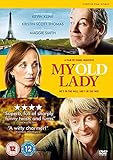
Penniless American Mathias Gold, whose baggage is largely that of understandable neuroses, travels to the upmarket Parisian apartment left to him by his estranged father. He is shocked to find that the flat was purchased cheaply on a “viager” or life annuity basis, which means that he has inherited the obligation to pay the previous owner and long-term resident Mathilde a substantial monthly fee for the rest of her natural life. Although aged ninety-two, she seems robust enough to live for quite a few more years. Mathias’s attempts to find the money for the payments in the short run and solve the problem in the long-term, obstructed by Mathilde’s spiky daughter Chloé, form the theme of this bitter-sweet comedy, which turns quite dark at times as Mathias discovers more about his past.
Although this is not a great film, and I was left at the end confused over some aspects of the chronology of past events, it is well acted as one would expect from such luminaries as Maggie Smith, Kristen Scott-Thomas and Kevin Kline. There are some amusing scenes, poignant moments and picturesque shots conveying the ambience of the district of Le Marais au bord de la Seine. For me, this was sufficient to compensate for some of the corny aspects.
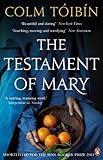
In this novella, Mary the mother of Jesus – although he is never referred to by name – recalls aspects of her son's life, the preaching, miracles and his crucifixion. Her take on events is original, and may offend some believers. It does not trouble me that Tóibín may have altered the order of events and inserted some "inaccuracies" in what is anyway a controversial reality.
According to Mary, the disciples were misfits and her son used his talents to lead them into trouble. She implies that he raised Lazarus from the dead with reluctance, as if he knew it to be a misuse of his powers. Certainly, Lazarus's sister Martha was "afraid that what she had asked for was being granted" and it is clear that Lazarus is unnerved and bewildered by his experience of death, and no one feels at ease with him afterwards, wanting but not daring to ask questions.
Mary perceives her son's talk in public as "high flown" and "riddles, using strange proud terms to describe himself and his task in the world", a kind of manic grandiosity when he describes himself as the Son of God.
Mary describes how, to her abiding shame, she ran from the scene of the crucifixion before her son was dead, to avoid the risk of being captured herself. Afterwards, she is dogged by earnest men, I assume the gospel writers, who wish to extract every word of her first hand testament for posterity. One of them is delighted by her dream of seeing her son raised from the dead, which implies that her memories will be twisted to suit the facts of a new religion, or discarded if they do not fit. Hiding in Ephesus from the authorities who killed her son, Mary is drawn to the goddess Artemis who gives her a sense of release. When her minders assure her that her son has redeemed the world through his death she responds that "It was not worth it".
The prose style is striking, eloquent, often poetical – not the first person "voice" of a simple, illiterate woman living in the middle east two thousand years ago, but rather that of the writer. This had the effect of distancing me somewhat from Mary's grief, although I found the work gripping. It seemed to lose its way a little after the crucifixion, but comes to a clear conclusion.
In my attempt to confirm what the Irish Catholic, at least by upbringing, author meant to convey, I discovered that this book was first produced as a stage monologue, in the Broadway production of which, "Mary is seen smoking what appear to be joints of marijuana and swigging from a commercially labelled liquor bottle". This concerns me as so much of the strength of the piece seems to lie in the quality of prose writing to be read and reflected upon individually, rather than declaimed with dramatic effects. I appreciate that the lyrical style lends itself to being spoken aloud, which may appeal more to some people.
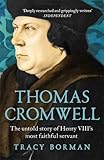
Thomas Cromwell is perhaps best known for the Dissolution of the Monasteries, both to raise money for Henry Vlll and to disband subversive centres of loyalty to the Pope. He also masterminded the legislation required to make the King head of the Church of England and to declare invalid his first marriage to Catherine of Aragon.
Tracy Borman portrays Cromwell as a man of contrasts. He was ruthless in disposing of enemies by "act of attainder" which meant they could be convicted and executed without the right to put their case in court. He used torture to extort a probably false confession that the circle of young men surrounding Anne Boleyn, including her own brother, had been her lovers. Yet when his friend the poet Thomas Wyatt was inadvertently arrested in this affair, Cromwell found the time to reassure and get him released. There is irrefutable evidence that Cromwell took bribes, for instance in return for letting farmers stay on their lands affected by dissolution of religious houses. When enlarging his property at Austin Friars, he moved the garden fences to encroach twenty-two feet on neighbours' land, confident that no one would dare to challenge a rising star in the King's service. Yet he regularly ensured that dozens of poor people were fed at his gate, and often helped friends and acquaintances in trouble.
Largely self-taught, highly intelligent with a remarkable capacity for hard work, Cromwell also possessed a perhaps unexpected wit and charm. In the poisonous, back-stabbing hothouse of the Tudor court where Cromwell was despised for his working class origins as a blacksmith's son, he had to be a tough risk-taker to achieve what he did, although arguably he went too far in frustrating and humiliating his nemesis the mighty Duke of Norfolk. Ostensibly Cromwell's undoing was the unfortunate choice of an unattractive fourth bride for Henry, "the Flanders mare", Anne of Cleves. In fact, he overreached himself in deviating from his usual pragmatism to follow a sincere belief – his continued support for the introduction of Protestantism, one of his main achievements being the installation of an bible in English in a large number of churches. This alarmed a King who was at heart a conventional Catholic (papacy apart) and allowed himself to be convinced that Cromwell was plotting his downfall. Capricious and paranoid with advancing age, "a little over seven months after the former chief minister's execution" the king was heard to reproach his ministers for having persuaded him "upon light pretexts" to execute " the most faithful servant he ever had".
Tracy Borman has made a complex history accessible to those with no prior knowledge, also providing enough fresh detail to hold an informed reader. My sole criticism is the lack of consistency in including some quotations in modern spelling, others in the written anarchy of the day which make them hard to read, together with the way many words have changed in usage. Cromwell's spelling seems particularly mangled: " your most….obbeysand ….subiett and most lamentable seruant and prysoner".
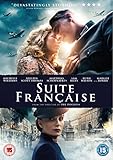
The lukewarm reviews lowered my expectations for a film which proved to be moving, over and above the poignancy of knowing the fate in a Nazi concentration camp that awaited the Jewish author Irène Némirovsky. She lived long enough to see the humiliation of the rapid French defeat in 1940, the brutal German bombardment of the helpless refugees toiling along the main roads out of Paris and the exposure of true character under pressure – some hoarding their wealth, others risking their lives to give what little they had to help others.
The film dramatises "Dolce", the second of the two parts to be completed out of the five intended for "Suite Française". Unlike Part 1, "Tempête en juin", which follows the fortunes of several very different sets of people fleeing the capital, "Dolce" has a tighter storyline. Lucille has led a quiet life, dominated by her mother-in-law, Madame Angellier (a spiky Kristen Scott-Thomas), as she waits for news from the Front of the husband she was pressured into marrying "for security". When the country town of Bussy is overwhelmed by the arrival of the victorious German occupiers, even Mme Angellier cannot refuse to billet an officer. Inevitably, Lucille is caught in the dilemma of being drawn to an "enemy" she has been instructed to cold shoulder, yet feeling obliged to help a neighbour whose stand against an abusive German has put his life in jeopardy.
Many characters may be stereotypes, but we see how the contrasting reactions of resistance, collaboration and passive acceptance are fed by social divisions: the arrogant local Viscountess, who hates the peasants enough to shop one of them to the Germans, with devastating results; the tenant's daughter driven to abject poverty by the rent-grabbing Madame Angellier, who sleeps with an enemy soldier for the material gain it may bring; the townspeople who seize the opportunity to spit at Lucille when they think she is doing the same thing.
The film-makers seem to have found the original climax of the book too subtle, and so spiced it up with a final chain of events which did do not quite "ring true" yet it is overall a thought-provoking, well-acted and atmospheric film which captures a strong sense of the times.
High-flying US economist “gone native”, Joseph Stiglitz provides a blistering attack on “the government of the 1% by the 1% for the 1%” in which this privileged minority has gained a massive proportion of national income and wealth, at an increasing rate, using its influence to “frame” the perceptions of the rest of the population who think it “fair” for the top 20% to have 30% of the wealth, without realising that the actual figure is 85%. The American dream of “the land of opportunity” is, he claims, a myth.
British readers are reminded strongly of our own situation as he describes the increase in poverty at the bottom end of the scale with cuts in benefits and income supplements, the hollowing out of middle class employment and polarisation of the workforce between “high” and “low” skills. The young are particularly affected by the burden of debts for university courses of often dubious quality which have led not to well paid jobs but rather ill-paid zero hours contracts.
Perhaps writing this at a time of undue optimism over the uprising of youth in the Arab Spring, he cites the parallel “Occupy” movements in the West which suggested people have had enough of the inequality which inevitably results in a less stable and, ironically, productive society. Matters were brought to a head by the financial crisis of 2007-8, stemming from the failure to regulate banks, and their cynical predatory lending of sub-prime mortgages to those unable to repay, which led in turn to the costly government bail-out of banks “too large to fail” – yet another example of the unfair protection of the wealthy at the expense of the poor. As Stiglitz points out, it would have been cheaper and more equitable to give state assistance directly to the struggling mortgage holders, enabling them to stay in their homes, thus maintaining communities, and to pay the lenders a proportion of the equity when they eventually come to sell. This may of course be an example of the perhaps Utopian approach Stiglitz follows in his ultimate set of proposals for “the way forward” in a better alternative world.
He has some intriguing revelations, such as the fact that despite Ben Bernanke’s stated support for transparency, the Federal Reserve was forced to admit that before the 2008 crisis it had even been lending money to foreign banks. “In the months after Lehman brothers collapsed, large banks like Goldman Sachs were borrowing large amounts from the Fed, whilst simultaneously announcing publicly that they were in excellent health.”
I was interested in his assertion that, rather than use austerity measures against the poor to cut deficits, it makes more sense to reduce some of the causes of the debt, such as the inflated cost of government procurement e.g. of military supplies, or the excessive charges demanded by pharmaceutical firms for the drugs needed by Medicare for the aged.
Stiglitz has a gift for explaining economic principles – excessive deregulation, “rent-seeking” by the rich, the inequity of monopoly, the underestimated costs of “negative externalities” like pollution – in very clear and accessible terms. My only criticism on this score is that the whole tortuous business of derivatives, flash trading and Credit Default Swaps could have been explained a little more clearly for the general reader, together with the way taxation of companies can be manipulated to increase fairness.
His wide-ranging reform agenda at the end is a little rushed and compressed, with some policies such as “maintenance of full employment” (which he argues to be more important than focusing on inflation) or “correcting trade balances” or “legal reform to increase democratic access to justice” being complex topics each deserving a book in its own right. He is effectively advocating a form of democratic socialism which may be more familiar to Europeans yet revolutionary to free market individualistic “stand-on-your-own-feet” Americans. I keep wanting to tell him that all this has been attempted, but is much harder than he makes it sound, to the extent that many well-intentioned politicians have rowed back on their idealism. However, it is refreshing to find an eminent American economist so full of conviction with his heart in the right place – he must really irritate some of his former right-wing colleagues of the 1%.
Shami Chakrabarti’s media appearances always win my admiration for her passionate sincerity, eloquence and the humour bubbling up beneath the intense conviction. So, I had high expectations of this account of more than a decade of employment, mostly as Director, of Liberty, formed in 1934 as the National Council of Civil Liberties in response to the brutal police handling of the Jarrow hunger marchers.
The author concentrates for the most part on her work, rather than personal life, reminding us in the process of the wide-ranging erosion of our civil liberties during the turbulent first decade of this century, which we too readily forget in the face of the rise of the Islamic State which we failed to foresee, the strangling of the Arab Spring in countries like Egypt, the tragedy of Syria and ongoing appalling treatment of the Palestinians.
Often, it is not until the section of a new law is implemented that its lack of clarity or potential to cause injustice is exposed. So it is that Liberty has campaigned against police restrictions on the right to demonstrate peacefully; extradition of British citizens to countries where they may find it impossible to mount a defence and be subject to harsher law; the holding without charge of non-UK nationals suspected of terrorism – Liberty’s mantra is “Charge or release”. Shami Chakrabarti deplores the reduction in legal aid for the poor, and mocks the blunt use of ASBOs rather than measures to address the causes of delinquency. She cites Tony Blair’s own anecdote of the youth who explained that he couldn’t vote for him as he had been banned from the school where the ballot was to be held, plus the sadder ludicrous example of the suicidal woman banned from setting foot on bridges.
Shami Chakrabarti has particularly harsh comments for the Labour Party which might have been expected to protect liberties more than the right: Tony Blair’s desire for six month “Control Orders” on suspected terrorists was eventually wittled down to a twenty-eight day detention power, far longer than that permitted in the States or France, and a flagrant contradiction of the Common Law principle of a person being innocent until proved guilty. These Orders, like the attempts to return suspected terrorists to countries of origin where they might be tortured were all based on the fear and security concerns triggered by 9/11.
Shami Chakrabarti likes clichés, and alternates a chatty style with some tortuous sentences (possibly written in a hurry) which I sometimes struggled to understand. Since even strong supporters of Liberty will take issue with some of the stances she has taken, I would have liked more recognition on her part of considered differing viewpoints, such as the problem that some asylum seekers are really economic migrants, and that too fast a pace of entry puts an excessive stress on UK infrastructure, housing supply and the indigenous poor.
Liberty’s work is controversial since it may defend the rights of criminals and bogus claimants , but that is not the point. As Shami Chakrabarti reiterates, what matters is that justice, fairness and equality under sound laws are upheld, on the basis that if they are not, eventually one’s own rights will be at risk. “You don’t know what you had till it’s gone.”
The fact that the author, like his "anti-hero" Alexander, left Berlin just before the fall of the Wall, gives an authentic ring to this saga of four generations of a family living in East Germany under Communism and later unification. The chapters switch back and forth, adopting different viewpoints between 1952 and 2001. This allows us to see the characters' estimation of each other, and adds the intriguing spice of knowing how their lives will turn out, but not yet how or why.
Each chapter is like a short story – for me, the most perceptive and entertaining were the accounts of self-absorbed and semi-senile former Communist party activist Wilhelm's ninetieth birthday. He cold shoulders a couple whose son has defected to the West, unaware that his grandson has just done the same. In the eyes of his great-grandson Markus, whose desire to be an animal keeper is fated to remain unachieved, Wilhelm resembles a sharply observed pterodactyl, who on a generous impulse gives him his stuffed iguana.
Although I was fascinated by the theme and wanted to admire this book, it proved hard going. Perhaps owing to the translation, the style often seems leaden. Scenes are continually overloaded with mundane, wordy descriptions, which is doubly irritating since some of the major incidents are never fully explained. There is a tendency to recall events rather than enact them, although the shifting timeframe would readily permit this more dramatic approach. So, it is merely conveyed in the odd paragraph how Kurt ruined his own health and inadvertently brought about his brother Werner's death by sending him a mildly subversive letter which landed them both in a Soviet camp. Any sense of guilt that Kurt may feel, the traumatic effect on his mother Irina, are never explored in any depth.
I looked mostly in vain for the sense of menace combined with crass futility of life under the Stasi that one finds in, for example, the superb film, "The lives of others". The most sinister scene for me is when, returning to Berlin after a period of exile in Mexico, Charlotte becomes convinced that the plum job which has lured her back is a trick. The smoker in a dark leather coat who keeps directing probing glances her way is the first of several who will eventually lead her and Wilhelm into custody, signed confessions and ultimate disappearance. "Where were the people whose names are never mentioned anymore? Who not only didn't exist but had never existed?" Yet, when we next meet them, Charlotte and Wilhelm are comfortably employed in their promised posts, in a world of servants, string-pulling and relative luxury.
For me, a real sense of the grimness of East Germany rarely comes through, as in the powerful scene in which Kurt pursues his rebellious son Alexander through the rundown streets in the vain search for a restaurant that will serve a decent meal. "A subway train rattled by – but the subway trains here ran on an overhead line, while the suburban trains ran underground. The world turned upside down …….. passengers like cardboard cut-outs descending into hell."
A potentially brilliant novel which for me does not quite come off.
A prolific expert on the Enlightenment, Jonathan Israel tends to produce books of daunting length, so this is relatively short at about 240 pages. He is keen to prove that historians have tended to neglect, even deny, the profound ideological influence of radical Enlightenment C18 thinkers on the outbreak of the French Revolution. Only the diffusion of works by such writers as Diderot and d'Holbach, designed to achieve a revolution of ideas as the first step to real change, can explain the events triggered by the meeting of the Estates General in 1789.
Jonathan Israel explores in detail the "irreconcilable" division between the Radical and Moderate Enlightenments. The former believed in the use of reason, with a secular morality divorced from the distorting effects of superstitious religions, although some radical thinkers appreciated ethical Christian teaching. They called for equality, which required a representative democracy, freed from the self-seeking tyranny of kings and aristocrats, for tolerance and freedom of expression. To the moderates, this was at best over-optimistic and naïve. Tradition and the existing order were essential to maintain the fabric of society and God-given moral values. It is interesting to realise that the revered Voltaire belonged to this camp, corresponding with Frederick the Great of Prussia to deplore the idea of giving "enlightenment" to ordinary people who would be unable to cope with it. Similarly, the "moderate" Locke's support for the equality of the soul but not of physical status, meant that he could invest in the North American slave trade with a clear conscience and advocate the establishment of a new nobility in the Carolinas.
Ironically, members of the Counter-Enlightenment converged with the bloody French dictator Robespierre in condemning the Radical Enlightenment as a clinical, mechanistic approach to society, seeking to subvert natural human sentiment.
Frequent convoluted sentences and condensed ideas together with a tendency to list philosophers or their works call for prior knowledge and make for a challenging read. I found the best way to deal with the book was to skim through once for an overview, and then to work back through more slowly to grasp some of the more complex ideas, such as Spinoza's controversial and fundamental theory that mind and body are "one substance" or material, thus "reducing God and nature to the same thing, excluding all miracles and spirits separate from bodies, and evoking reason as the soul guide to human life, jettisoning tradition".
The result is that I have learned a good deal about the complexity of the Enlightenment and the conflicting ideas of its main protagonists. Writers on this fascinating theme tend to focus on different aspects, presenting contrasting views of philosophers and ranging over a wide field in a discursive and often confusing fashion, so piecing one's knowledge together from a variety of sources feels like gluing together a collection of shattered pots with intriguing designs.
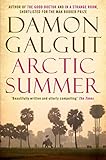
E.M.Forster, known as Morgan, hates the stuffy conventions and snobbish prejudices of middle-class Edwardian society, yet is unable to break away from living with his mother who reaches the ripe old age of ninety. He recognises his sexuality, but for years is only able to express it abroad, in Egypt or India, by forming risky unequal relationships with young men from the other side of the race and class divides. In similar vein to Colm Tóibín's novel, "The Master", based on Henry James, Damon Galgut has chosen to fictionalise Forster's life rather than produce a biography, no doubt because this gives free rein for his creative imagination to get inside the author's head and embroider facts to suit his interpretation. He is at liberty to pick and choose what he wishes to include and emphasise.
Although I often found Morgan's furtive fumblings quite tedious, it is undeniable that Galgut's subtle prose has the power to enable heterosexual readers to understand the complex, shifting feelings of a sensitive and introspective gay man seeking fulfilment at a time when this was against the law, or the topic of mocking gossip. In one telling scene, an English official in Egypt is prepared to help get one of Morgan's young native friends out of a scrape, but is desperate to counsel him against the liaison, without ever managing to overcome his reticence to speak plainly. "Tall and dry, composed of jointed segments like a large, untidy bird, Robin seemed always uncomfortable, but more than usually so at this moment".
The title "Arctic Summer", re-using that of a novel which Forster was unable to complete, conveys the concept of being "blocked" in two senses – as a writer, and a man. In the kind of profound insight in which Damon Galgut excels, it is only in the final pages that he uses the term "Arctic summer" to describe how Morgan catches sight of himself in a café mirror, in which the angle of the light makes him seem to "stand alone in the middle of an immense whiteness – nothing moving, nothing alive". This coincides with his pain at overhearing the gossip of two strangers who have recognised him as a famous author, "He's a timid soul. They say he hasn't really lived at all, except in his mind."
Another important thread is the often painful process of writing, in particular Morgan's struggle to complete what came to be regarded as his masterpiece, "A Passage to India". Inspired by his first visit to that land, he knows that he must write about it, but for years cannot see how to bring it to fruition. Impressed by the "spiritual hostility" of the Kailasa cave, he is convinced he has found what he has been searching for, "a terrible incident, a crime of some kind. But when he tried to focus on what it was, it became unclear, all of it retreated from him".
Galgut also conveys the strong sense of place that makes Morgan a successful travel writer: walking back from an evening with a poet who has described the history of Alexandria, Morgan realises for the first time how old the city is although there is little trace of its history beneath the "ordinary and banal" modern buildings – this highlights, of course, the tragedy of the recent loss of ancient buildings and carvings in countries like Syria.
My only criticism of the book is that some of characters, like Morgan's English male friends, seem undeveloped and two-dimensional, but this may be intentional to show how little they really impinge on Forster's introspective world – plus they all seem to let him down by getting married as a way out of their dilemma.
With his well-crafted, expressive prose, full of insight, flashes of humour (I enjoyed the one-sided row with the combative D.H. Lawrence) and poignancy, Damon Galgut is an unusual writer who deserves to be more widely read and praised.
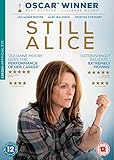
Alice is a highly regarded academic at Columbia University, celebrated for her publications, who has managed to find time to raise three children with her similarly talented husband. Her obsession with playing word games on her phone and her conspicuous inability to find a vital word during an important lecture are the first hints of the onset of “early stage Alzheimers”, all the more devastating since she is barely fifty and unusually ambitious and driven in what she still wants to achieve. The supreme irony is that her specialism is linguistics, her fascination with words and communication.
Julianne Moore deserves her Oscar in showing Alice in a succession of emotions from disbelief and rising anxiety, through fear and frustration to a kind of ultimate acceptance. The film is realistic in showing the differing reactions of her children, both to her and each other as regards how best to treat her. Her changing relationship with her husband is also convincing: he promises to be there for her, but to what extent can he be expected to give up his own intellectual activities and career prospects as she finds herself not only unable to work, but incapable of concentrating on anything – wanting only to spend her last months of lucidity with him on the beach where they enjoyed their first romance thirty years before.
This often unbearably moving film considers subtly the question of the point at which we cease to be ourselves and may reasonably have our lives organised by others to suit their priorities. The drama ends on as positive a note as can be hoped. Perhaps some of our sadness in watching it is the knowledge that some similar fate may lie in store for us, but with less loving support.