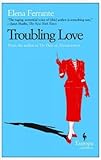
“Troubling Love” by Elena Ferrante.Played false by memories

This is my review of Troubling Love by Elena Ferrante.

In this short, pacy novel of often overpowering intensity, “Troubling love” refers to the narrator Delia’s ambiguous feelings for her mother Amalia, a mixture of love and hate, brought to a head by her death by drowning, an apparent act of suicide. Delia is not only driven to find out how her mother died but also to make sense of the chain of confused, even false memories which have blighted her life. Was Amalia the innocent victim of violent abuse at the hands of a jealous husband, in a Naples where casual sexual harassment seems to be the norm, or was she responsible for provoking him with her flirtatious manner and possible adultery with his former business partner Caserta?

Apart from her unlikely career drawing comic strips, and the fact that, approaching forty, she seems to be unattached and childless, we learn little about Delia’s adult life, but she appears to be mentally unstable. Apparently traumatised by her upbringing, did some childish action on her part make matters worse and how reliable a witness is she now?

Part of the magnetic pull of the writing stems from the way in which the facts, which initially seem bizarre or dreamlike, are revealed or made clear, like the pieces of a jigsaw fitting into place. A strong sense of Naples is created: the heat, furious commotion, squalor, decay, and sea like a “violet paste”. The book has been made into a film, and I found it much easier to read once I grasped the cinematic quality of many of scenes, with their emphasis on visual detail through which deeper meaning may become apparent. For instance in a sustained incident in which various characters pursue each other through the streets of Naples and onto a funicular, there is a purely visual image of someone “as if… skating on the metallic grey of the pavement, a massive yet agile figure against the scaffold of yellow painted iron bars at the entrance to Piazza Vanvitelli”. Alighting at the “dimly lit concrete bunker” of Chiaia Station, Delia imagines or perhaps partly remembers how it was nearly forty years ago, with her mother waiting there, mesmerised by three figures advertising clothes, symbolising the freedom of another world, and wondering how she and her daughter could escape into it.

Particularly for a first novel, this is original and brilliant, but bleak. It also repelled me in its gratuitous focus on the sordid side of life: too much about the mess of menstruation, masturbation and sexual beatings. What lies behind the author’s dedication of this novel “for my mother”? Is it a mark of admiration or a reproach? A reviewer’s humorous comment, “My money is on Elena Ferrante being male, with slightly perverted sexual tastes” also strikes a chord. The brutal passion and frankness of the writing may illustrate the cultural difference between Italian and British literary fiction.

This compulsive read assaulted my senses, and left me feeling tainted.

⭐⭐⭐⭐ 4 Stars

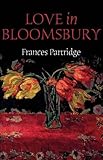
“Love in Bloomsbury” by Frances Partridge.Dashing and flashing and splashing and clashing

This is my review of Love in Bloomsbury by Frances Partridge.

Frances Partridge is probably best known for loving and in undue course marrying Ralph Partridge, already part of an infamous ménage à trois: the homosexual Lytton Strachey loved and relied on the practical, handsome Ralph, whom the talented if neurotic painter Dora Carrington had agreed to marry as a means of hanging on to Lytton, with whom she lived and was infatuated. This set- up symbolises some of the key aspects of the Bloomsbury group – their lack of concern about conventions, emphasis on “rationality” which could be used to justify egotism and also, a point which I have been slow to appreciate, the deep bonds of friendship which endured despite shifting love affairs and gossip.

Born in 1900, the author opens a window on Edwardian childhood in a prosperous middle-class family with a wide circle of well-connected friends and “advanced ideas”, despite employing maids to toil “up and down the great flights of stairs… with coal-scuttles and hot-water jugs”. She also provides fascinating, first-hand observation of a group of individuals who were often creative, original thinkers and vulnerable in their failings, leaving us to infer the degree to which they were over-privileged, self-absorbed and sometimes disappointingly trivial.

From an early age Frances questioned accepted views. Eavesdropping on two visitors’ “ribald breakfast-time conversation” which involved discussing God as if he were a human being, she realised that this meant not only that they did not believe in him but neither did she. A similar “moment of truth”, closest to the “mystical experience” described by friends, came towards the end of her schooldays, with the “blinding conviction” that whatever she might be forced to do, her “ideas and beliefs” were her own, and nothing could make her think against her “own grain”.

Clearly intelligent and physically active, choosing to attend the free-thinking Bedales school, at Cambridge she revelled in both philosophy and dancing to a jazz band. A private income gave the freedom to treat work as an interesting pastime rather than a necessity. Economising on the many trips abroad meant travelling third class rather than first. She turned down a job researching why Lyons’ waitresses dropped so much china for employment at the book shop set up by her brother-in-law Bunny Garnett with his friend Francis Birrell. This belonged to some past idyllic cloud-cuckoo land: since buyers objected to the fingerprints and tobacco ash left on pages by the staff, the clientèle was mostly confined to friends who were also members of the Bloomsbury group. Even after moving in with Ralph, she seems to have spent many evenings dining out at restaurants with admiring male friends, and although her days seemed to her very full combining work with “household preoccupations” she writes: “Who bought the bacon, the butter, the fish? I suspect it was our faithful Mabel. Certainly I have no recollection of doing it myself.”

Perceptive comments are often laced with a caustic humour: Lady Ottoline Morrel “in tawdry satin finery” chasing “avidly with claw-like hands over the floor” a bun she had dropped. A French waiter described in meticulous detail is then dismissed with “a face that might be a criminal or a philosopher’s, but most likely a half-wit’s”.

She deemed a “hermaphrodite” fancy-dress party “a sad come-down, a sign of decadence” compared with the elaborate performances which earlier parties had featured. To set against the boozy socialisting, is the moving account of the battlefields of northern France revisited as an antidote to Ralph’s grief over his failure to prevent Carrington’s suicide through her inability to live without the deceased Strachey. Fourteen years after the event, “the few trees still standing were gaunt skeletons riddled with bullets, and one had only to take hold of a branch and there was a rattle of shrapnel falling to the ground”.

Part 2 of the Book relies heavily on diary entries, using print too small to read comfortably in the paperback version, and sometimes tedious because of the large amount of name-dropping. The author may have painted Ralph in an unduly glowing light, and played down her own self-gratification. Yet overall, this very readable book is full of insight on the experience of being alive and fills one with the urge to do so as fully as did Frances Partridge.

⭐⭐⭐⭐⭐ 5 Stars

When chocolate with 90% cacao was about 30% too much

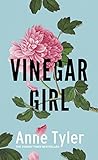
This is my review of Vinegar Girl: The Taming of the Shrew Retold by Anne Tyler.

In this modern take on Shakepeare’s “The Taming of the Shrew”, having been thrown out of university for insulting her professor, spiky, forthright Kate Battista has spent the past decade in a dead-end job as preschool assistant, whilst trying to act as a mother-substitute for her flirty, far from dumb blonde, adolescent sister Bunny, and keeping house for her impractical academic and frankly control-freak father. When his selfishness leads him to overstep the mark, by trying to manipulate Kate into marrying his brilliant East European research assistant Pyotr, so that he can stay in the States after his visa has run out, Kate understandably rebels.

This is the basis of an often very funny, shrewdly observed novel, superficially lightweight with an ending sewn up a little too neatly for my taste, yet suggesting darker currents beneath the surface. Even minor characters are given some depth, with a mixture of good points and human failings. I must have enjoyed the book since I sat up to 2 a.m to finish it in one sitting, but had a few reservations, which I suppose at least have the merit of provoking discussion.

Is it, for instance, likely, that a strong-minded, independent young woman with the intellect to study science at university would have put up for so long with the constrained world of the Little People’s School, or have avoided being sacked long ago for her lack of “tact, restraint and diplomacy”? By the same token, would she have accepted for so long her father’s rules about cooking meat mash to last a week and not emptying dishwashers in the interest of his theories on health and efficiency? Is her outspokenness not so much a sign of independence, but rather the result of a lack of socialisation into “social norms”, owing to a depressed, prematurely deceased mother (driven to despair by her incompatible husband?) and an often absent father with inadequate parenting skills?

A minor point is that Kate’s four-year-old charges seem rather advanced for their age, but since Anne Tyler has clearly observed children very closely, perhaps she has struck the right note.

When Kate suggests at one point that men are at a disadvantage compared to women because “they think they should be in charge, in control; they don’t dare show their feelings” this reminds me of the “behind every successful man there’s a strong woman” unfeminist twisting of arguments with which I was brought up in the pre-equality past. Kate’s argument that a woman should let a man into her more “empathic country” to give them both space to be themselves, sounds somewhat patronising and smacks of self-justification. Does Anne Tyler mean us to accept this at face value, or to take it with a pinch of cynicism? Still, I believe that Shakespeare’s Kate was initially simply too stroppy to make a “good wife”, and never meant to be a feminist, as we understand the term, at all.

⭐⭐⭐⭐ 4 Stars

Less is more

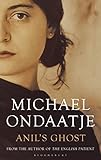
This is my review of Anil’s Ghost by Michael Ondaatje.

Having left Sri Lanka to train in the West, forensic anthropologist Anil Tissera has been selected by an international human rights group to investigate possible atrocities committed by the Sri Lankan government in its attempt to control insurgents in the north and separatist guerrillas in the south. This involves working with Sarath Diyesena, the enigmatic archaeologist whom she is unsure how far to trust, because one of his relatives may be a government minister. For whatever reason, he discourages her from reading too much into the skeleton nicknamed “Sailor”, which she is convinced belongs to a recent victim, hidden amongst older human remains at a site not open to the public. Admittedly, there are some grounds for Sarath’s cynicism over short-term visitors from the West who, based in luxury hotel rooms, make casual assumptions about the country, distorted by “false empathy and blame”. “I’d believe your arguments more if you lived here,” he tells her. “You can’t just slip in, make a discovery and leave”.

The opening chapters led me to expect a political thriller in the mould of Graham Greene, but since the author is in fact more of a poet than a novelist, the narrative drive, which has a low priority for him, soon splinters into a disjointed, sometimes dreamlike sequence, swerving back and forth in time, between different viewpoints. These include: Sarath’s brother Gamini who has become obsessed with caring for war casualties, high on the drugs he needs to keep himself going; Ananda, sometime painter of eyes on the face of carved Buddhas; Palipani, translator of ancient scripts and rock graffiti who seems to have ruined his reputation by fabricating a text, when in practice perhaps he had found “hidden histories intentionally lost”, a parallel for the suppression of truth in the recent history of Sri Lanka.

I appreciate that a stream of consciousness may reveal more about the complex interweaving of culture and individual relations in the real-life struggles of a war-torn country than a straightforward documentary approach, but I found this book hard-going, mainly because of the written style. I assume that Ondaatje undertook impressive reseach of, for instance, forensics and medical practice, but this tends either to be presented in rather unnatural dialogue and passages of condensed information, like the notes for a novel rather than the work itself, or through grim scenes of death and treatment of hospital patients which tend to drift into inappropriate sentimentality.

Perhaps the weakest aspects of the story are the flashbacks to Anil’s unsatisfactory relationships with a married American writer called Cullis and a female former work colleague called Leaf. Their sketchiness and irrelevance to the drama of Sri Lanka may of course be intentional, suggesting the disjunction between Anil’s westernised persona and her native roots.

Although Ondaatje is clearly capable of writing realistic dialogue, too often it does not ring true. The wording of sentences often jars, as if written by someone with an imperfect grasp of English, but the author has spent most of his life in England and Canada. Many incidents verge on the implausible or ludicrous, such as the verging on necrophilic scenes involving the skeleton Sailor who is at various points laid out to communicate with the stars, danced with, or his former occupation deduced from the most tenuous evidence.

Despite its huge potential and originality, there is in general a self-indulgent, rambling, pretentious quality to the novel which grates on me. I accept that this view is a question of taste, and many readers may be entranced by, say, the flash forward images of Palipana’s niece honouring his death:

“She had already cut one of his phrases into the rock…which she had held onto like a raft in her years of fear. She had chiselled it where the horizon of water was, so that depending on tide and pull of the moon, the words in the rock would submerge or hang above their reflection or be revealed in both elements. Now she stood waist deep in the water cutting the Sinhala letters….He had once shown her such runes, finding them even in his blindness, and their marginalia of ducks, for eternity….In the tank at Kaludiya Pokuna the yard-long sentence still appears and disappears..” and so on in Kubla Khanish vein. Except that Coleridge did not mix up his romantic poetry with the exposure of political corruption and the rootless alienation of a young woman caught between different cultures, in an infusion that fails to coalesce.

⭐⭐⭐ 3 Stars

More is less

This is my review of Anil’s Ghost by Michael Ondaatje.

Having left Sri Lanka to train in the West, forensic anthropologist Anil Tissera has been selected by an international human rights group to investigate possible atrocities committed by the Sri Lankan government in its attempt to control insurgents in the north and separatist guerrillas in the south. This involves working with Sarath Diyesena, the enigmatic archaeologist whom she is unsure how far to trust, because one of his relatives may be a government minister. For whatever reason, he discourages her from reading too much into the skeleton nicknamed “Sailor”, which she is convinced belongs to a recent victim, hidden amongst older human remains at a site not open to the public. Admittedly, there are some grounds for Sarath’s cynicism over short-term visitors from the West who, based in luxury hotel rooms, make casual assumptions about the country, distorted by “false empathy and blame”. “I’d believe your arguments more if you lived here,” he tells her. “You can’t just slip in, make a discovery and leave”.

The opening chapters led me to expect a political thriller in the mould of Graham Greene, but since the author is in fact more of a poet than a novelist, the narrative drive, which has a low priority for him, soon splinters into a disjointed, sometimes dreamlike sequence, swerving back and forth in time, between different viewpoints. These include: Sarath’s brother Gamini who has become obsessed with caring for war casualties, high on the drugs he needs to keep himself going; Ananda, sometime painter of eyes on the face of carved Buddhas; Palipani, translator of ancient scripts and rock graffiti who seems to have ruined his reputation by fabricating a text, when in practice perhaps he had found “hidden histories intentionally lost”, a parallel for the suppression of truth in the recent history of Sri Lanka.

I appreciate that a stream of consciousness may reveal more about the complex interweaving of culture and individual relations in the real-life struggles of a war-torn country than a straightforward documentary approach, but I found this book hard-going, mainly because of the written style. I assume that Ondaatje undertook impressive reseach of, for instance, forensics and medical practice, but this tends either to be presented in rather unnatural dialogue and passages of condensed information, like the notes for a novel rather than the work itself, or through grim scenes of death and treatment of hospital patients which tend to drift into inappropriate sentimentality.

Perhaps the weakest aspects of the story are the flashbacks to Anil’s unsatisfactory relationships with a married American writer called Cullis and a female former work colleague called Leaf. Their sketchiness and irrelevance to the drama of Sri Lanka may of course be intentional, suggesting the disjunction between Anil’s westernised persona and her native roots.

Although Ondaatje is clearly capable of writing realistic dialogue, too often it does not ring true. The wording of sentences often jars, as if written by someone with an imperfect grasp of English, but the author has spent most of his life in England and Canada. Many incidents verge on the implausible or ludicrous, such as the verging on necrophilic scenes involving the skeleton Sailor who is at various points laid out to communicate with the stars, danced with, or his former occupation deduced from the most tenuous evidence.

Despite its huge potential and originality, there is in general a self-indulgent, rambling, pretentious quality to the novel which grates on me. I accept that this view is a question of taste, and many readers may be entranced by, say, the flash forward images of Palipana’s niece honouring his death:

“She had already cut one of his phrases into the rock…which she had held onto like a raft in her years of fear. She had chiselled it where the horizon of water was, so that depending on tide and pull of the moon, the words in the rock would submerge or hang above their reflection or be revealed in both elements. Now she stood waist deep in the water cutting the Sinhala letters….He had once shown her such runes, finding them even in his blindness, and their marginalia of ducks, for eternity….In the tank at Kaludiya Pokuna the yard-long sentence still appears and disappears..” and so on in Kubla Khanish vein. Except that Coleridge did not mix up his romantic poetry with the exposure of political corruption and the rootless alienation of a young woman caught between different cultures, in an infusion that fails to coalesce.

⭐⭐⭐ 3 Stars

Live not by lies

This is my review of The Invention of Russia: The Journey from Gorbachev’s Freedom to Putin’s War by Arkady Ostrovsky.

In his quest to understand how Russia got from the dissolution of the Soviet Union in 1991 to the aggressive, chauvinist state of Russian under Putin in 2015, the Russian-born author takes us back to Krushchev’s denunciation of Stalin’s repression in 1956, paving the way for Gorbachev’s formal launch of “Perestroika” or restructuring from 1985.

Ostrovsky focuses on the media’s key role in both assisting and obstructing change. In the 1960s, newspapers and television were dominated by intellectuals bent on “cleansing” Communism of the distortions Stalin had imposed. They had not yet progressed to demanding economic freedom. It took leading journalists like Alexander Yakovlev years to realise that “the Bolshevik religion was false” and that “socialism with a human face” might not be feasible under communism. Following the crushing of the 1968 “Prague Spring”, journalists like “Yegor” (also a Yakovlev, but “no relation”), felt alienated by the use of Soviet tanks, but continued to compromise, not speaking the truth in the belief that they could achieve more “from the inside”, not to mention their concerns for self-preservation.

Yet the irony was that eventually, “words rather than tanks” meant that the generation which had intended to vindicate the ideals of fathers purged by Stalin ended by unintentionally destroying socialism. “Glasnost” and the opening up of minds through the media proved more important in effecting change than “altering the means of production”. Unrest grew as the media helped people to perceive their relative lack of consumer goods, or the failure of the Afghan War. When Gorbachev dithered over economic liberalism, “Moscow News” had the confidence to urge him to act decisively or resign.

Under his successor Yeltsin, there was a generational shift from men like Yegor to his son Vladimir who founded the magazine Kommersant to promote capitalism of a primitive kind, operating in a moral vacuum. The “oligarchs” who benefitted from the “loans for shares” scheme saw the influence to be gained from owning TV channels: Gusinsky took over the TV channel NTV which established a reputation for honesty in, for instance, its reporting on the Chechnyan war. When his oligarch acquaintances urged him to sell the station that was putting their business at risk, or make it non-political, his journalist Malashenko resisted, pointing out that NTV had the strength to survive under a weak and dysfunctional state. The truth was of course that freedom of speech was fragile, dependent on Yeltsin’s goodwill.

This became clear after Putin’s appointment as a decisive and authoritative heir to the ailing Yeltsin. Gusinsky was ordered to sell NTV to Gazprom, after “the last straw” of parodying Putin on the Russian equivalent of the political satire “Spitting Image”. By 2004, the state-controlled “Channel One” was reduced to showing mainly soap operas during the Chechnyan crisis in Beslan, playing down the number of casualties, pretending hostages were safe when more than 300 were dead, and showing scenes from military dramas of terrorists being beaten.

Ostrovsky claims that by 2014, the Russian media had become not just a metaphorical but a real weapon causing genuine destruction, not just distorting reality but inventing it “using fake footage” to report on conflict in, for instance, Ukraine, even using actors: “sometimes the same actor would impersonate both the victim and the aggressor on different channels.” Nemtsov, the charismatic politician who warned against the use of TV to produce “patriotic hallucinations” was himself murdered outside the Kremlin shortly afterwards. For Russians, violent newsreels have become a form of entertainment: “the vast majority of Russians now contemplate the possibility of a nuclear war …..and 40 per cent of the younger ones believe that Russia can win, as though it were a video game”. The once brash Vladimir Yakovlev now warns that people live in a crazy illusion tha the country is surrounded by enemies… The information war is first and foremost destroying ourselves”.

The subject matter is fascinating and the bibliography impressive, but some clear and striking analysis is buried in the at times frenetic journalese which makes for hard reading, along with the large cast of characters with unpronounceable names, for a non-Russian reader. I was also surprised to find so little mention of the economic hardship I believe to have been endured by many ordinary Russians post 1991.

⭐⭐⭐⭐ 4 Stars

Gripping, bleak yet hopeful

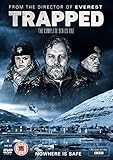
This is my review of Trapped [DVD].

This Icelandic contribution to Scandi Noir proved for me to be the most successful so far. The absorbing plot is essentially more plausible and realistic than is often the case, involving a slowly folding almost Shakespearean tragedy on the stage set of the remote coastal town of Seyðisfjörður, where some of the inhabitants are driven to crime through a complex brew of motives: panic induced by the shock of Iceland’s financial collapse in 2008, simple greed, or a gut desire for revenge. In the gradual revelation of the facts, all the main characters were developed as real people with flaws, conflicting emotions but often redeeming features at unexpected moments. The drama has the power to arouse our sympathy, if only rarely, for less appealing characters, even villains, along with flashes of impatience over, say, Andri’s self-centred ex-wife. Events unfold against the backdrop of the astonishing quantities of snow, burying cars and walls almost up to roof level, the bleak beauty of the white mountain slopes rising abruptly up from the the icy waters of the bay, the danger of an avalanche engulfing the town, which can be diverted by a dynamite explosion, itself a risky venture.

Andri Olafssun, the Reykjavik detective who has been banished to Seyðisfjörður for some misdeameanour, comes across at first as a shambling oaf, until the power and magnetism of the actor rapidly win us over. When blizzards cut the town off from the rest of civilisation, preventing the arrival of a team from the capital headed by Andri’s rival Trausti, he is forced to press ahead with investigations of the discovery of a mutilated torso, apparently connected with the arrival of a Danish ferry. This is way beyond the experience of Andri’s two junior colleagues who represent the woefully inadequate manpower at his disposal in a community in which serious crime has been a rare event. Both the earnest, quietly ambitious Hinrika and more impulsive Ásgeir, addicted to chess on the office computer after years of inaction, rise to the challenge of the sudden wave of crises. At the same time he has to deal with the stressful situation about which his parents-in-law have felt unable to forewarn him: the arrival of his ex-wife with new boyfriend, with plans to take his two young daughters back to Reyjkavik with them.

A further complication is the controversial plan for the leaders of the town to acquire land for a possible deal with the Chinese to develop Seyðisfjörður as a port, although it is unclear how, if at all, this has any bearing on the crime.

The drama combines action and suspense with a focus on showing people’s reactions to a wide range of emotions: fear, anger, regret or grief. Both the dialogue, even with sub-titles, and the acting are excellent. Often trapped in both a physical and mental sense, the characters seem like real people, not chosen for their good looks, often with crooked teeth and sagging skins, plus thick baggy jumpers to keep out the almost palpable cold. A sense of the thoughtfulness, stoicism and integrity of the Icelandic character (however illusory it may be) comes through

A few loose ends leave scope for a series to which I look forward, although doubting whether such a well-constructed and coherent drama can be created again. This drama passes the acid test of not leaving one feeling cheated at the end. My sole reservation is over Andri’s habit of running round in freezing weather with his jacket unzipped.

⭐⭐⭐⭐⭐ 5 Stars

“The Bloomsbury Group” by Frances SpaldingHow they reverberated

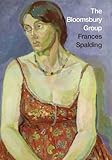
This is my review of The Bloomsbury Group by Frances Spalding.

Written by the “leading authority” Frances Spalding, this fascinating and very readable book which manages to cover in only a hundred pages an astonishing amount of information without seeming overloaded, begins with a brief explanation of the famous Bloomsbury Group before embarking on thumbnail biographies of many of its key members, each accompanying a full-page illustration of a painting from the National Portrait Gallery in London.

I have been forced to modify my view of the Bloomsbury Group (so-named after the district into which Vanessa Bell, as she was to become moved, together with her siblings including Virginia who was to marry the publisher Leonard Woolf. Having regarded them as a group of self-absorbed intellectuals, somewhat self-indulgent in the justification of their casual switching of partners, I now realise that their earnest discussion and experimentation was an important and inevitable response to the stultifying grip of Victorian moral conventions and unquestioning acceptance of religious teaching which linked ethics with behaviour. “Fresh questions had to be asked as to how and why they should be connected. What was the nature of good? How should you live? What philosophy could be found to support and justify the good life?” The Bloomsbury Group believed in honest personal relationships, and the value of enduring friendship, which could transcend a love affair which had lost its meaning. Virginia Woolf praised her Bloomsbury friends for “having worked out a view of life which still holds…after twenty years; and no amount of quarrelling or success, or failure has altered this”.

It is revealing how many of the photographs and paintings show the characters reading: the oddly charismatic, sedentary “man of letters” Lytton Strachey, was “often shown in a state of complete relaxation, a condition conducive to a life of intense mental activity”. This inspired the hopeless love of the probably somewhat neurotic artist Dora Carrington, whose portraits impressed me with their quality and realism: namely that of the handsome expert on Spain, Gerard Brenan, who in turn carried a torch in vain for her, and of E.M. Forster who shared Bloomsbury values while remaining on the margins of the group. The clarity and lifelike quality of Roger Fry’s self-portrait together with those of Bertrand Russell (whose mathematical mind and contempt for homosexuality may have distanced him from the Bloomsbury network, which he could not avoid because his wife Alys’s nieces married into it) and of Clive Bell, the longsuffering husband of Vanessa are at odds with Fry’s pioneering work “crusading passionately on behalf of Cézanne, Gauguin, Van Gogh and Matisse,” to raise awareness in Britain of the Impressionist movement.

The author’s many insights into the lives and time of the Bloomsbury Group, are lightened by many anecdotes, such as the magnetic “cornflower-blue”-eyed David Garnett watching the weighing of Angelica, newborn daughter of Vanessa Bell and Duncan Grant with whom he lived in a menage à trois, and “conceiving the idea of marrying her” which he duly did more than twenty years later.

⭐⭐⭐⭐⭐ 5 Stars

“Tales of the Jazz Age” by F. Scott Fitzgerald.Where all the best girls round here marry fellas and go off somewhere

This is my review of Tales of the Jazz Age (Alma Classics) by F. Scott Fitzgerald.

This is a collection of short stories produced by a still youthful Scott Fitzgerald before he fell prey to the alcoholism which befuddled so many of his characters. The list of contents is accompanied by the author’s own explanatory comments, written at the point when they were assembled in 1922 from different magazines where they had been originally published. He was clearly a natural story teller, capable of producing a piece at great speed, such as “The Camel’s Back” which he wrote in a day.

His style can be quite pedantically C19: “So gaily and noisily were the peace and prosperity hymned by the scribes and poets of the conquering people that more and more spenders had gathered from the provinces to drink the wine of excitement, and faster and faster did the the merchants dispose of their trinkets and slippers until they sent up a mighty cry for more trinkets and more slippers in order that they might give in barter what was demanded of them”. At times, Scott Fitzgerald reminds me of PG Wodehouse or Jerome K Jerome, but without the humour, in fact, with a darker thread beneath the flippancy. I found the stories, set mainly in the well-heeled middle class world of 1920s urban America, quite dated, and grew rapidly tired of the boozy – if skilfully lampooned – US version of Hooray Henries, and the shallow, over-protected young daughters of Aluminium Men, Iron Men or Brass Men, etcetera, destined only for the marriage market.

Although I appreciate the author’s fluency and wit, I could only take so much of these stories, choosing to focus on those with more original and creative plots, such as “The diamond as big as the Ritz” which imagines the consequences of discovering a diamond so huge that to advertise one’s find would immediately destroy the scarcity value and therefore monetary benefit of the stone. This is also a reflection on the corrupting effect of power in a secret, self-contained world financed by judicial exploitation of the diamond.

“The Curious case of Benjamin Button”, recently made into a film, is also an interesting story, inspired by Mark Twain’s remark that “it was a pity that the best part of life came at the beginning and worst part at the end”, although I’m not sure everyone would agree that babyhood is the best part. Benjamin Button duly starts off as an old man, who find most companionship with his grandfather, ending up as a small boy who enjoys going to kindergarten and playing with his grandson. The best part of his life is the brief period in which his capacity and appearance match his actual age, so that he can be a successful soldier, a useful means of avoiding the wife who has become too old for his taste. Apart from the snobbery, there are frequent little flashes of racism which, although an aspect of the times, are a bit disconcerting now, as when Benjamin Button’s father, traumatised by the birth of a son who looks like an old man, passed “the bustling stores, the slave market (it’s the 1860s) and “for a dark instant wished passionately that his son was black”.

Despite its rather chauvinist ending, I liked the farcical ” The Camel’s Back”, about a young man who goes partying in a camel suit, with his taxi driver serving as the back legs, after a row with his fiancee who is reluctant to commit to marriage – this sounds very Bertie Woosterish. I was most impressed by “May Day” which in portraying the frenetic life in the New York of 1920, “in the general hysteria of that spring which inaugurated the Age of Jazz” also manages to convey grim undercurrents beneath the hectic partying, with soldiers trying to adjust to life as peacetime nonetities and the hounding of socially conscious “communists” foreshadowing the McCarthyism to come.

⭐⭐⭐⭐ 4 Stars

The real land of fire and ice

This is my review of Top 10 Iceland (DK Eyewitness Travel Guide) by DK Travel.

I used this compact guide as a supplement to a four nights’ package holiday in the Reykjavik area of south-west Iceland, where four of the recommended “top 10 highlights” are located and lived up to expectations, namely: Þingvellir National Park (anglicised to Thingvellir) and the site of the original 36 chieftains’ annual national assembly; the Geysir Hot Springs including Strokkur, Iceland’s equivalent of Old Faithful; the magnificent Gullfoss waterfall where it is possible to get terrifyingly close to the thundering water and spray; Blue Lagoon with its warm continually replenished geothermal waters, cloudy with supposedly health-giving chemicals and good for floating

As is typical of Eyewitness Guides, it is beautifully presented with plenty of photographs giving an accurate impression of the country, useful maps (including one fold-out map of the whole island and a handy laminated pull-out map) and concise, relevant information. It is set out very clearly, by both area and comprehensive range of topics and would be helpful for a longer self-organised tour of say, 7-10 days.

Apart from emphasising that everyone working in the service sector seems to speak good English (at least in Reykjavik where there also seems to be a good deal of migrant labour) with credit cards readily accepted, an omission is the failure to mention the at times mind-boggling prices for British tourists, with items often costing two, even three times more than they would in the UK. Admittedly I changed my pounds into króna at possibly the worst possible time just after Brexit. It was ironical that we were able to explore free of charge the fascinating (if possible white elephant folly) Harpa Concert Hall and Conference Centre, baled out for completion with government money after the financial crisis of 2008, but decided not to pay the equivalent of more than £12 each for a 15 minute video shown there about Iceland.

⭐⭐⭐⭐⭐ 5 Stars