This site will share with you hundreds of book and film reviews written since 2009. Also a chance to discuss these reviews together with some of my creative writing to be added.
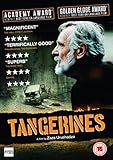
This subtle, film, for the most part slow-paced and low-key, with occasional flashes of violent action, proves to be a searing indictment of war.
The outbreak of war in 1992-3 has driven away the expatriate Estonian community from a remote village in Abkhazia, a Russian-supported separatist enclave in Georgia. The political geography may be unfamiliar, but it is clear that only Margus has stayed behind to harvest his valuable tangerines, together with his carpenter friend Ivo who provides the wooden crates, but perhaps has an additional unrevealed reason for his reluctance to leave.
A shoot-out on their doorstep between two Muslim Chechen mercenaries fighting for the Abkhazian separatists and a trio of Georgians leaves only two injured survivors, one from each side. This is clearly a recipe for high tension, requiring all the pacifist Ivo’s skills to manage. Yet even as a bond forms between the four men, they are at risk from marauding bands of soldiers from both camps who may turn up at any moment, pumped up with adrenalin to shoot on the slightest pretext.
This film contrives to convey a sense of the value of rural life in its calm, natural rhythm, a growing empathy with all the four main protagonists, with their differing viewpoints and personalities, an awareness of the arbitrary nature of survival and conviction as to the utter folly and waste of war as it impinges on innocent parties.
A near perfect film in its development of characters and storyline, with excellent, naturalistic acting, this is all the more striking for being unexpected and deserves to be more widely seen.
Since it is widely known that historian David Irving lost his libel suit against the Jewish American academic Deborah Lipstadt who had branded him a “Holocaust denier” in her book published by Penguin, I was at first reluctant to watch a film on a harrowing theme about which I considered myself already reasonably well informed.
In fact, I gained quite a few fresh insights from what proved to be a well-acted fact-based drama with a powerful script by David Hare, which manages to both moving and peppered with wry humour.
A feisty and outspoken woman, Deborah is perplexed to discover that, under English law, the burden of proof rests on the defendant, so her lawyers must satisfy the judge that Irving lied in his work, deliberately distorting evidence to show Hitler in an unduly favourable light and to present false evidence to “prove” the Holocaust had never occurred. Deborah’s outrage boils over when it becomes clear that, not only is she to be prevented from taking the stand, but the concentration camp survivors desperate to honour the memory of the dead by giving evidence will also be excluded. The lawyers know that a dispassionate approach, using painstaking historial research to find the flaws in Irvine’s work, will prove more effective than emotional scenes which Irvine, who is representing himself, will twist into theatre to play to the gallery.
The screenplay avoids the pitfalls of getting bogged down in a morass of detail, with a focus in the trial scenes focus on a few striking pieces of evidence to give a flavour of the complex proceedings.
I realised for the first time that the existence of gas chambers at Auschwitz is hard to prove, since the Germans bulldozed them causing barrister Richard Rampton to exclaim in despair over the lack of impartial, systematic forensic analysis of the site over the half century following the Holocaust. So, for instance, mavericks have been able to concoct false analysis of the levels of Zyklon B in the brickwork.
There is a double denial in the title: not merely Irving’s deceit, but the fact that, to gain justice, holocaust victims must remain silent while the legal team ferrets out the points which will discredit Irving.
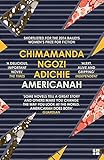
Bright and from an early age too outspoken for her own good, Ifemelu is made aware of racial differences for the first time when she leaves Nigeria to study in the States, where, after a rocky start, she achieves success with a Princetown fellowship and much-read “lifestyle” blog with a focus on American race relations.
We know from the outset that, a more than a decade on, Ifemelu decides to dump her latest longterm lover and comfortable life in America , in order to return to Nigeria. It gradually becomes clear that this is just another example of her apparently capricious tendency to disrupt an enviable situation because “There was a feeling I wanted to feel that I did not feel”. One suspects this is because her life can never be complete without the love of her first boyfriend Obinze, “the only person with whom she had never felt the need to explain herself”, who after an unsuccessful attempt to emigrate to Britain returns to become a successful businessman in Nigeria.
What could be reduced in summary to a corny love story becomes engrossing in the hands of a skilful storyteller, who develops a wide range of mostly convincing characters. For me, this is the kind of novel one does not wish to finish, absorbed by the vivid sense of place, strong often funny dialogues and sharp insights into both Nigerian society and different racial groups in America. The author made me appreciate for the first time the difference in outlook between American Africans, with a strong sense of their own culture, and African Americans burdened by the injustice of past slavery and current prejudice. I now look on African hair with new eyes, having been made aware of the dangers of chemicals used to straighten it and the effort required to create a natural-looking Afro style.
I agree that the book is technically too long (although I didn’t mind since I enjoyed reading it), the frequent verbatim blogs often seem contrived as vehicles for the author to express her personal observations on American society. Perhaps because there is an element of autobiography in the tale, she appears a little too forgiving of the at times ruthless Ifemelu who casually abuses a close friendship by making Ranyinudo’s personal life the subject of a blog for public consumption, and who seems to feel no compunction over breaking up a marriage, too easily justified by the belief it is built on sand. Some of the privileged American dinner party conversations seem artificial and pretentious, but may well be realistic. Nigerian society is painted in an unflattering light, as corrupt, materialistic, superstitious and socially divided as any western class system. There is a troubling moral ambiguity in the implication that Obinze’s emotional detachment from his lifestyle somehow absolves him from the guilt of enriching himself through working for a wheeler-dealing crook.
Very attractive, colourful presentation, well-illustrated to whet one's enthusiasm, also clearly set out and readable, dividing the island into four areas: the more scenic northwest and northeast, versus the arid south-east and beach-orientated south-west. There is a useful pull-out map of the whole island, a road atlas at the end and street plans of the main towns of Santa Cruz de Tenerife and Puerto de la Cruz in the north. This compact guide also provides a suggested itinerary and possible tours, with online links for more detailed information, together with basic travel information e.g weather, emergency call number 112, dates of annual festivals and events and useful phrases in Spanish.
There is little on the history of the island, or on accommodation, but it seems that the aim is to "keep to the essentials" to create a guide which is easy to carry. It therefore serves both as an aid to initial holiday planning, and for quick reference en route.
This seems ideal for an initial visit to Tenerife and good value for money.
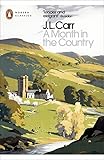
Shell-shocked by his high-risk role as a signaller in the carnage of the First World War trenches, and depressed by the break-down of his marriage, Tom Birkin immerses himself in the delicate task of revealing an ancient mural thought to be concealed beneath centuries of lime-wash in an ancient parish church. We see Tom’s growing identification with the artist who created what turns out to be a masterpiece. There are vivid descriptions of the different colours used – “Spaynishe white, Baghdad indigo, Cornish malachite, terre verte”, the relative durability of the paints, and the fine balance needed between cleaning the grime of a painted hand, or finding that “just another touch will shift the hand itself”.
The eccentric old lady who has financed his labours in her will, has also left a bequest for the location of the grave of an excommunicated forbear, who must have been buried outside the cemetery. This work is being undertaken by Charles Moon, beneath his ebullient exterior as damaged by his wartime experiences as Tom, but for different reasons. The two men become friends, with Birkin in particular entering into village life, gaining acceptance and renewed health in the process.
Fifty years later, Tom looks back on this brief period during the long, hot summer of 1920, spent in the close-knit North Yorkshire village, in its as yet unspoilt, idyllic setting . This short novel, drips with nostalgia, Hardy without the grim tragedy of Jude and Tess, an evocation of a past way of life, perhaps a little idealised in that the summer weather is too fine, and the gossip a little too affectionate.
At the core of the novel is the unspoken mutual attraction, the meeting of minds, between Tom and Alice Keach, the improbably lovely young “Botticelli’s Primavera” wife of the pale-eyed vicar, with a “cold, cooped-up look about him”. If Tom and Alice fail to grasp the opportunity for a relationship, will they regret it for the rest of their lives? Is their love derived from the dreamlike quality of a transient period, enhanced by memory, and would it fade and become banal if they acted upon it?
Many incidents are culled from Carr’s own life, since he did not baulk at basing his characters on real people, anonymously, of course. So, the village of Oxgodby is based on Carlton Miniott where he grew up. Birkin’s embarrassment at being sent off by the double-booked station-master-cum-Methodist preacher to lead a tiny congregation, is based on an ordeal imposed on the author by his own father. Alice Keach, unaware of her beauty, may well be modelled on some past love of Carr’s whom the secretive author never revealed.
Perfect in style, structure and pace, for such a short work, this atmospheric, bittersweet tale manages to pack in more moments of comedy alternating with poignancy, and perceptive reflections than many a longer novel. In his subtlety, J.L.Carr can even make us feel a little sorry for the Reverend Keach. This is the kind of book one is sad to finish and likely to read again over the years.
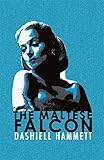
Private detective Sam Spade’s assignment to track a man on behalf of an alluring female client becomes a murder case in which the police regard Spade as a possible suspect. It soon becomes clear that the underlying driving force is the struggle to possess a priceless antique – the Maltese falcon of the title.
Although the name Sam Spade inevitably summons up an image of Humphrey Bogart, the opening paragraph gives a very different picture of a man with yellow-grey eyes (Dashiell Hammett was very keen on striking eye colour) whose features follow a "v-shaped motif", giving the impression of "a blond satan". It is also misleading that he reminds one of Philip Marlowe, since the latter was in fact a later creation, inspired by Raymond Chandler’s admiration for Dashiell Hammett.
Spade lacks Marlowe’s wry humour, and his coldness is emphasised by the fact we cannot know what he is really thinking, since he is described in the third person, always viewed externally. He comes across as an unappealing character: his sexism and homophobia may be accepted as the widely held attitudes of 1920s America, but he is also cynical, callous, and casually brutal. Spade displays no grief when his business partner Archer is gunned down, one of his first acts being to get his business nameplate altered. He strings Archer’s widow along when, having conducted an adulterous affair with Spade, she expects him to marry her. His loyal assistant Effie is shamelessly exploited, rewarded with affection he seems able to turn on like a tap. If a criminal gets up his nose, he is liable to beat him up with over-zealous sadism. Admittedly, he on more than one occasion gets his come-uppance. To achieve his ends, he is prepared to lie, bully, blackmail and bargain. He is prepared to fraternise with crooks to such a degree that the reader is uncertain as to his honesty, although his persistence, shrewdness and powers of deduction are not in doubt.
Perhaps I have read too many American crime novels to appreciate fully what is clearly a groundbreaking work, since its publication in 1930. Born in 1894, Hammett displays a literary style with elements of classical fiction but he also foreshadows the spate of novels about real ordinary people, some "low-life", criminals on the make, others simply struggling to survive in a seedy urban underworld. Chandler describes the author himself as “spare, frugal and hardboiled” and Hammett clearly drew on his own experience as a Pinkerton detective, one of a group of men infamous as strike breakers and union busters.
I like the vivid sense of place with the precise descriptions of the San Francisco streets, and fatty food bolted down at all times of day in cheap diners. After a long, somewhat implausible scene in which farce trumps suspense, the short novel ends fairly abruptly on an unexpected, surprisingly subtle (in view of some previous ham), suitably ambiguous but also rather sad note.
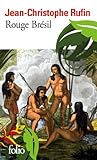
When Just and his younger sister Colombe are left by their soldier father in the care of an unscrupulous relative, she seizes the chance to send them off on an expedition to found a new French colony in Brazil, children being in demand as future interpreters because of their ability to pick languages up quickly. It is the mid-1500s, and France is keen to curtail Portuguese imperial ambitions in the New World, to gain access to resources, such as the red dye obtainable from Brazilian trees (hence the title) and to convert the savage Indians to Christianity. However, with the Reformation in full spate, what are they to be taught: the old Catholic faith, or which version of Protestantism including the extreme, apparently abstruse, doctrine of Calvin?
The crew on board ship are a motley bunch, including criminals and Protestants escaping persecution, including a crazed band of Anabaptists, so Colombe’s disguise as a boy probably provides much-needed protection. Once the pair’s aristocratic connections become known, they are taken under the wing of the charismatic but unstable commander Villegagnon, based on a real-life character. Having reached their destination in Guanabara Bay, the site of the present-day Rio de Janeiro, Just readily accepts the life of constructing a fortress and learning how to defend it against future attacks. More reflective, Colombe who has been sent to learn the local Tupi language, identifies strongly with the Indians, living in harmony with nature and free from sterile wrangling over Christian rituals and doctrine.
With his experience as a diplomat and human rights’ worker, including a decade spent living in Rio de Janeiro, Rufin has researched the historical period in depth. This novel is a variation on a theme which absorbs him: the dramatic effects of the meeting between very different cultures, and the sense which many of those involved feel of being in a state of limbo, not clearly belonging to either.
Although Rufin creates a convincing impression of life on board ship, I found the first half of this book intolerably tedious. He no doubt intentionally adopts the formal, literary style of a nineteenth century classical novel, peppered with the authentic terms for items of clothing or parts of a ship, culled from histories of the sixteenth century. However, there are too many over-detailed or unnecessary scenes which could have been pruned down or omitted altogether. Colombe is idealised, and seems too mature and articulate for her age. Most of the other characters are caricatures, dialogues wooden and often the action does not seem far removed from a “Boys’ Own” yarn.
However, when the Calvinists whom Villegagnon has requested to assist him prove to be religious bigots, while Colombe’s experience of life with the Indians highlights the hollowness of so-called European “civilisation”, I began to find my interest engaged. It is as if, having waded through to the point where he wants to be, analysing cultural relations, Rufin comes into his own and his writing takes off, presenting points of view from all angles, with the irony becoming sharper. Yet he can never quite avoid straying into the corny or sentimental at the expense of his serious intent.
The descriptions of the landscape, the great bay with the distinctive sugarloaf mountain and forest teeming with unfamiliar vegetation and wildlife are very vivid. There is some thought-provoking philosophy, as when Pay-Lo, the wise old European conveniently gone native, enabling him to explain Indian thought to Colombe, justifies cannibalism. He likens it to the European habit of killing one’s enemies: to eat one’s enemy is merely a logical part of a life lived close to nature in which everything is recycled and returned to the earth to regrow. Rufin has sanitised and glamorised the lives of the Indians somewhat, but they are clearly underestimated by the Huguenots who decide that trying to convert them is as futile as the attempt to bring an antelope to the knowledge of Christ.
Despite the unusual and potentially interesting subject-matter, the novel is too long and laboured. I would have preferred a well-written history of the period.
When Just and his younger sister Colombe are left by their soldier father in the care of an unscrupulous relative, she seizes the chance to send them off on an expedition to found a new French colony in Brazil, children being in demand as future interpreters because of their ability to pick languages up quickly. It is the mid-1500s, and France is keen to curtail Portuguese imperial ambitions in the New World, to gain access to resources, such as the red dye obtainable from Brazilian trees (hence the title) and to convert the savage Indians to Christianity. However, with the Reformation in full spate, what are they to be taught: the old Catholic faith, or which version of Protestantism including the extreme, apparently abstruse, doctrine of Calvin?
The crew on board ship are a motley bunch, including criminals and Protestants escaping persecution, including a crazed band of Anabaptists, so Colombe’s disguise as a boy probably provides much-needed protection. Once the pair’s aristocratic connections become known, they are taken under the wing of the charismatic but unstable commander Villegagnon, based on a real-life character. Having reached their destination in Guanabara Bay, the site of the present-day Rio de Janeiro, Just readily accepts the life of constructing a fortress and learning how to defend it against future attacks. More reflective, Colombe who has been sent to learn the local Tupi language, identifies strongly with the Indians, living in harmony with nature and free from sterile wrangling over Christian rituals and doctrine.
With his experience as a diplomat and human rights’ worker, including a decade spent living in Rio de Janeiro, Rufin has researched the historical period in depth. This novel is a variation on a theme which absorbs him: the dramatic effects of the meeting between very different cultures, and the sense which many of those involved feel of being in a state of limbo, not clearly belonging to either.
Although Rufin creates a convincing impression of life on board ship, I found the first half of this book intolerably tedious. He no doubt intentionally adopts the formal, literary style of a nineteenth century classical novel, peppered with the authentic terms for items of clothing or parts of a ship, culled from histories of the sixteenth century. However, there are too many over-detailed or unnecessary scenes which could have been pruned down or omitted altogether. Colombe is idealised, and seems too mature and articulate for her age. Most of the other characters are caricatures, dialogues wooden and often the action does not seem far removed from a “Boys’ Own” yarn.
However, when the Calvinists whom Villegagnon has requested to assist him prove to be religious bigots, while Colombe’s experience of life with the Indians highlights the hollowness of so-called European “civilisation”, I began to find my interest engaged. It is as if, having waded through to the point where he wants to be, analysing cultural relations, Rufin comes into his own and his writing takes off, presenting points of view from all angles, with the irony becoming sharper. Yet he can never quite avoid straying into the corny or sentimental at the expense of his serious intent.
The descriptions of the landscape, the great bay with the distinctive sugarloaf mountain and forest teeming with unfamiliar vegetation and wildlife are very vivid. There is some thought-provoking philosophy, as when Pay-Lo, the wise old European conveniently gone native, enabling him to explain Indian thought to Colombe, justifies cannibalism. He likens it to the European habit of killing one’s enemies: to eat one’s enemy is merely a logical part of a life lived close to nature in which everything is recycled and returned to the earth to regrow. Rufin has sanitised and glamorised the lives of the Indians somewhat, but they are clearly underestimated by the Huguenots who decide that trying to convert them is as futile as the attempt to bring an antelope to the knowledge of Christ.
Despite the unusual and potentially interesting subject-matter, the novel is too long and laboured. I would have preferred a well-written history of the period.
After the accident which befalls brilliant but troubled, aptly-named Will, his sister Hetta is driven to delve for the chain of events which may have led to it, and to understand its serious repercussions for some family members. The accident is remarkably similar to that suffered years earlier by his Uncle Nat.
Sally Vickers’ approach is ambitious – instead of providing a family saga over three generations or more, she inverts the process by switching between the viewpoints of three women who recall their memories, with distinct personalities and “voices”: Hetta, her aunt Bell, and grandmother Betsy. On reflection, it requires great skill to sustain this approach, gradually revealing facts as in a detective mystery, with the added interest of describing the same situation or character from different viewpoints, some clearly mistaken, or in possession of fewer "facts" than the reader.
The author admits to “plundering and imbibing” experiences from her parents who were lifelong communists, like Betsy’s husband Fred who casually put his political beliefs before the needs of his wife and children, but Sally Vickers’ insight as a psychiatric social worker and psychoanalyst are really what give this novel its “edge”.
Most likely to appeal to readers with an interest in psychological drama in which thought-provoking comments are more important than the plot, however superficially gripping, it is probably necessary to read this a second time to absorb and reflect on all the author’s observations and how they might apply to oneself. It is hard to do this on the first reading partly because intense concentration is needed to grasp all the details, never being quite sure which are important to remember, plus this is a page-turner as regards finding out how it will end, although at times the bleak intensity of it forced me to take a break. The conclusion proves quite philosophically up-beat, perhaps an appropriate reflection of how in reality one moves from anger and denial to positive acceptance.
I agree with readers who feel there are too many characters, some of whom could have been omitted, although others on the periphery who are given such a brief mention as to be forgotten turn out to be important, which suggests they should have been developed in more depth. There often seems to be too much “telling” of details from the past, which could make the reader glaze over mentally, but for the acute perceptions and flashes of wry humour which leap off the page without warning. Although there is less of the strong sense of place to be found in some of her previous novels, the Northumberland coast and Holy Island of St. Cuthbert fame form a recurring background.
The plot is well-structured, starting with the “hook” of Hetta’s conviction that Will is going to die, but we don’t yet know why, and gathering pace to a plausible but not too predictable or neat conclusion. Since the author is clearly so interested in how family members relate to each other, I am unsure to what extent she intends us to feel that their guilt is an unnecessary burden, responsibility for Will’s accident seeming to lie mainly with “outsiders”. I was disappointed that these are portrayed as two-dimensional, almost “pantomime” villains.
Occasionally, the novel strikes too sentimental a note for my liking as when Betsy suggests that the loss of his twin sister at birth meant that “life was never quite right” for Will because of the burden of being a survivor – evident from his newborn “strangely unchildlike”, “relentless frantic wail”.
Recommended overall, including as a book group choice to provoke discussion.
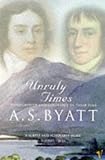
Daily life, the structure of society, political views, education and childhood, the literary world and the landscape: these themed chapters explore the response of Wordsworth and Coleridge, the two pioneers of the Romantic Movement, to the unsettled period in which they lived with the fear of political revolution and disruption of industrial development.
The introduction supplies some very astute analysis of the marked differences between their personalities: “Wordsworth, in his innermost self, proud, solitary, courageous and self-regarding was on the surface suspicious and awkward. Coleridge, who lacked self-respect or self-confidence at the deepest level, was on the surface charming, warm, welcoming and quick to relax and involve people…Wordsworth increased Coleridge’s sense of his own value” and Coleridge had a “humanizing influence” on Wordsworth. Both, initially excited by the French Revolution, were so appalled by its violent excesses that they both became much more politically conservative with age, but Wordsworth, as a respected national figure , became ever more “remote, arrogant, self-absorbed and self-praising”, while Coleridge, a much more profound thinker, found his life severely blighted by frequent illness and opium addiction, for which he was too often dismissed contemptuously.
This book is packed with entertaining anecdotes and fascinating observations. In his sincere if somewhat theoretical concern for the deserving poor, Wordsworth’s poem about “The Leech-gatherer” was based on research that they “did not breed fast and were of slow growth” because of dry weather and being gathered too much so that “formerly 2/6 per 100, they are now 30s”.
Both poets agreed that young children should be allowed to develop naturally, with education a process kindling natural curiosity. Coleridge’s observation of his small children makes moving reading (“a little child, a limber elf, singing, dancing to itself”), and his natural skill in teaching them through play sounds quite modern. It is therefore a shock to learn how he abandoned them for long periods, at one point preferring to stay in Germany where he was having a good time studying rather than return to England to comfort a wife grieving over the loss of their infant son.
Wordsworth questioned the desire of Utopian idealists to educate working class girls on enlightened lines since it was likely to make them “unsettled…..indisposed to any kind of hard labour or drudgery. And yet many of them must submit to it or do wrong”. This was arguably true, but not what one might hope for from a Romantic poet.
A.S. Byatt is clearly shocked by Wordsworth’s support for capital punishment on the basis that time spent in the condemned cell gave a fortunate opportunity to repent. Nimbyism is evident in the opposition to construction of railways in his beloved Lake District which would be spoilt by “droves” of working people from Lancashire who would not appreciate the mountains
He opposed the extension of the right to vote, as likely to produce frequent parliaments and “convert the representatives into mere slavish delegates, as they now are in America, under the dictation of ignorant and selfish numbers misled by unprincipled journalists”. In view of the recent shock of democracy producing a Trump victory, these ideas seem remarkably relevant today, even if one disagrees with his opinion.
Perhaps because he tended to consider issues from more angles, Coleridge comes across less clearly than Wordsworth, but as more engaging. Yet even he came to fear democracy as the misguided pursuit of an abstract idea: “the incorporation of individuals into one unnatural state, the deluded subjects of which soon find themselves under a dominion tenfold more oppressive and vexatious than that to which the laws of God and nature attached them”.
The many quotations are often inserted clunkily into the text, and assume more practice in interpreting poetry than most readers are likely to possess. The passages wrapped round these extracts are often indigestible, even disjointed, since they read as if condensed down from detailed notes.
Recommended, but best read with other texts, such as the biographies of Richard Holmes on the Lakeland poets.
⭐⭐⭐⭐ 4 Stars
Unruly Times: Wordsworth and Coleridge in Their Time