Wolf Hall – an entertaining and high class soap opera

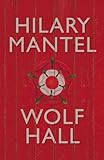
This is my review of Wolf Hall by Hilary Mantel.

Wolf Hall gives a different slant on the well-known tale of Henry VIII and Anne Boleyn by taking the viewpoint of Thomas Cromwell, and transforming him from a sinister, unappealing villain into a complex, intriguing character who, if not exactly likeable, commands respect. Hilary Mantel has clearly come to love her unlikely hero, even making him into something of an "homme fatal" with a stream of women appreciating his charms – or perhaps respecting his power – Mary Boleyn makes a (not very convincing) pass at him, Jane Seymour finds him sympathetic and so on. Although clearly materialistic, manipulative and ruthless, Cromwell has a soft spot for children, women who have hit hard times and young men in his service, he can engage with people at all levels, and has a natural desire to turn his hand to any practical task which is at times almost comical for a man of his hard-won status. We see how the king and the nobility come to use Cromwell – the super-competent, lateral-thinging, can-do fixer – whilst despising him for his low birth. Yet even when he is at the height of his powers, he hears the inner voice reminding him that he may be brought low, like the unseen fist which once felled him in his youth.

The book evokes powerful sensory images of life in the sixteenth century – the sounds and smells, the unfamiliar food and long-lost customs, the muddy roads, the appalling brutality of public executions. Many in the large cast of characters are well-developed as distinct personalities warts and all: the bluff, tactless Norfolk; unworldly, cerebral Archbishop Cranmer who somehow manages to acquire an illicit wife; Anne Boleyn, clever,calculating, yet driven to tantrums in her deep sense of insecurity. Mantel captures Henry's charisma, combined with the casual cruelty arising from his understandable fear of being deposed without a male heir, and qualms about breaking free from the Catholic church mixed with the irrestible temptation of tapping the wealth of the monasteries, made possible by Cromwell's genius for organisation.

The author's take on Thomas More was particularly interesting: a man normally portrayed as a principled saint is presented as a religious fanatic and sadistic torturer of those who do not hold his views, also cruelly sarcastic to his wife, critising her to his dinner guests in the Latin she cannot understand. His execution forms a moving climax to the end of the book, preceded by some well-written scenes in which Cromwell, whose complex feelings for More include some sympathy based on the length of their acquaintance, uses his powers of argument to try to induce More to recant: the pragmatist against the idealist.

I also found the dialogues very entertaining and play-like – witty and clever, often causing me to laugh out loud.

This book needs to be read slowly to appreciate it fully – a problem if you have borrowed it from the library with no prospect of renewal. My opinion of it improved as I read further and I would like to read it again – the highest accolade for a book BUT I share some of the criticisms made. The continual reference to Cromwell as "he" amongst all the others is very confusing. It is annoying to be obliged to reread a passage twice or more to get the sense. Also, some allusions to previous scenes require the reader to have picked up and retained some small detail which could easily have been overlooked. As a result, a few passages did not make sense to me – good editing would have prevented this. I also agree that the style was at times rather stilted. This was very noticeable in the early chapters, also to the extent of putting me off continuing. The dodging about in time – recording Wolsey's downfall before the events leading to it, and introducing the lords sent to arrest him before developing them as clear characters, created a sense of confusion which detracted from the overall book. I agree that it would have been worth knowing a little more about how Cromwell came to work for Wolsey.

Finally, the ending seemed rather limp – definitely leaving the way open for a sequel or two. And why was it called Wolf Hall (the home of the Seymours) which features very little in the book? – I assume it was to point to a sequel in which Cromwell, whilst drawn to Jane Seymour as a future bride sees the scope for her to be Henry's next victim -or perhaps the increasingly ruthless Henry steals her from under Cromwell's nose.

⭐⭐⭐⭐ 4 Stars

Stilted nostalgia – perhaps damaged in translation

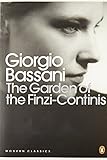
This is my review of The Garden of the Finzi-Continis (Penguin Modern Classics) by Giorgio Bassani.

This book probably needs to be read in Italian to be fully appreciated, since the prose comes across as over-flowery in translation. Despite this, the at times over-meticulous descriptions create evocative images with a sense of nostalgia for old Italian towns and the dusty estates of doomed aristocrats in 1930s Italy. The rise of Fascism, with its evils not yet understood, and the growing menace to the complex Jewish community are also outlined quite well, although it would have been more dramatic not to have had the fates of the key protagonists spelt out so baldly from the outset. By contrast, the way in which certain relationships were hinted at but left to the reader to guess was interesting.

The prologue to this translation, which I read last, informs us that Bassani struggled to write. Apart from such touching scenes as the hero's late night conversation with his father, or the details of some of his "squabbles" with the source of his infatuation, Micol, I found many of the exchanges quite stilted and the portrayal of relationships "underdeveloped". I therefore concluded that Bassani's style works quite well for describing scenes, but is less good for human relationships – although perhaps he is accurate in suggesting a certain formality in relationships in that period. I was puzzled that the hero seems quite "coy" in some ways in his relationship with Micol, but appears unphased by a quick visit to a prostitute, clearly implying this was not the first one but he saw no need to mention this before, and it struck me as odd that he passed over "the deed" in a brief clause.

The book makes no concessions, with many erudite references to Italian writers and works which can mean little to the great majority of readers. Again, this may reflect acccurately the nature of education for upper class people of the day.

Last but not least, the extremely long and complex sentences wore me down, to the extent I probably would not have finished the book if not obliged to do so for a reading group. I struggled on in the expectation of "something happening", but much of the book was about not a great deal. Bassani was forever announcing "some significant point" which proved to be nothing much.

My feelings are mixed. I see why this is a classic, but it could have been more dramatic, moving and unusual – the theme of "thwarted first love" is after all a well-worn one. I am left with a few insights e.g. in the opening chapter which describes a visit to Etruscan tombs, a child asks why we care so little about the long dead, and more about those recently so.

I realise that some of my reservations may be due to the quality of the McKendrick translation.

⭐⭐⭐ 3 Stars

Disgrace

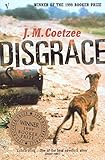
This is my review of Disgrace by J.M. Coetzee.

A friend's fulsome praise for the recently issued film of this book encouraged me to reread it partly because I was so embarrassed at being unable to recall the details of the plot. I now think this was because of the bleakness of the tale, as the main character sinks into a passive acceptance of his waning sexual and academic powers and influence as a result of ageing, and the "reversal of roles" in South Africa as black men gain ascendancy post-Apartheid. This beautifully written book works at several levels, as an examination of both personal morality and commununal responsibility or guilt for the exploitation of one group by another. With his history of preying sexually on young, inexperienced girls, is David Lurie any better than the black rapists who impregnated his daughter, either as a demonstration of new-found power, or through some instinctive desire to spread their seed?

What repelled me about the story was the degree of acceptance of "fate" by both Lurie and his daughter. Still only in his early fifties, he seemed too young to "give up", and even if he had been older, I would have wanted him to "rage against the dying of the light". I accept that the sheer weight of circumstance e.g. the ineffectiveness of the police in solving crimes made it hard to maintain one's resistance. Since Lurie clearly felt no great guilt about casual sex and seducing vulnerable women, it was unclear exactly what the extent of his disgrace was. A part of him seemed to feel that rapists and robbers should not get off scot free just because they might have been treated badly in the past. Yet, at the end, he seemed to compound his downfall, and give up too easily. His embracing of the "lowly task" of disposing of surplus dogs seemed too much of denial of the possibilities of life. The final choice of when a lame dog (which he could have kept as a pet) should be put down may have been an analogy for the state of his own life, but seemed too negative.

What exactly was the point of the scene where Lurie is invited to dine with the father of the student whom he "wronged"? What comparisions does the author wish us to draw between the course of Lurie's life and that of Byron, once a serial seducer but brought low towards the end of his life? There is a great deal to speculate upon, and to discuss in this book.

The plot seems to tail off and meander once Lurie accepts that he can no longer take refuge with his daughter, and drifts back to the city. Perhaps this is a deliberate reflection of the random nature of much of "real life".

Although I could not say I liked this book, I admired it.

⭐⭐⭐⭐ 4 Stars

After You’ve Gone

This is my review of After You’ve Gone by Joan Lingard.

This skilfully written and well constructed book, with many touches of humour and irony, held my attention to the end which, if fairly predictable, gained depth from leaving intriguing questions unanswered. The use of a real seaman's journal from the 1920s gave an authentic air to the extracts read aloud by the heroine from her husband's letters, which formed the heart of the story – letters which ideally would have bound them together only aroused her sense of dissatisfaction, thwarted ambition and suspicion, to the point at which her husband scarcely seemed to be a real person to whom she could relate and should feel loyalty or love. The interplay between the characters was interesting and the portrayal of working class life in Edinburgh seemed convincing. The moments of joy and pathos in the banality of "ordinary life" came through clearly. The plot had a good pace with some points of real tension. This book contained insights on a par with those found in more self-consciously highbrow literature.

⭐⭐⭐⭐⭐ 5 Stars

The Outlander

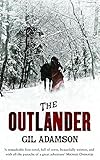
This is my review of The Outlander by Gil Adamson.

This book creates striking, poetic images of the Canadian wilderness and changing weather. It also captures the human will to survive in adversity, and what it must feel like to hallucinate – begin to die from starvation. The realities of living rough are also well described.

Interwoven with the slow place, and focus on introspection and memory, is the bones of quite a gripping plot. The reader knows from the first few pages that the main character is on the run from the two brothers of the husband she has killed. The reasons for this act of violence, and the details of the crime are leaked out judiciously to maintain the suspense. Even when life seems to be improving for the widow, as she is rather awkwardly called throughout, you know that her pursuers are still on the trail. There is sufficient brutality in the tale for you to be uncertain as to whether it will end happily- the author seems capable of bumping off any of the characters. Also, the widow has a certain ambiguity: she is clearly a flawed character, a kleptomaniac for instance, and her degree of guilt, the strength of extenuating circumstances, are unclear.

Although this book deserves praise, my main reservations lie in the fact that the author seems uncertain how to fill in the gap between the arresting beginning, and initially exciting but ultimately rather flat and contrived denouement. She peoples the plot with a number of rather unconvincing, two dimensional characters who are too often caricatures, and some rather tedious and uninteresting incidents. At times I was reminded of a feminist take on Huckleberry Finn e.g. the section spent in Frank with the Reverend, but occasionally it smacked of a kind of Western Mills and Boon – I refer in particular to the romantic passages, and the odd encounter with Henry the Indian and his too good to be true wife.

As already implied, I did not care for the ending (which I cannot give away). If I understood it correctly, it seemed like a somewhat gimmicky contrivance. And why did the ridgerunner need to be so called all the time?

I was also unsure about the depth of psychology intended. I think the author liked her main character, the widow, and we were meant to empathise with her. Yet, on one level, she seemed cold to the point of lacking normal emotions. Had she been "frozen" by her upbringing and driven temporarily insane by post-natal trauma? Her husband did not seem "bad enough" to justify killing him! She generally seemed too rational and calculating to have committed this act, as described.

To end on a positive note, some of the descriptions and turns of phrase to reflect on life were beautiful and memorable.

⭐⭐⭐ 3 Stars

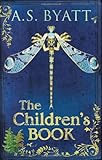
The Children’s Book

This is my review of The Children’s Book by A S Byatt.

The author's deep knowledge of the arts in Europe as the late Victorian age gave way to the Edwardian makes me hesitate to criticise this lengthy, complex work, and it is easy to see how it came to be shortlisted for the Man Booker. Although I found the opening pages wordy and slightly stilted, what I came to see as an erudite soap opera of a privileged circle whose lives revolved round art and writing gradually sucked me in as the darker forces began to emerge from beneath the idyllic surface. Without giving away too much, we are speaking of casual promiscuity, incest, and the exploitation of others, often in the name of art. Byatt manages to develop and differentiate a large cast of characters,each of whom are brought to the fore in turn as the story evolves. Some of the dialogue was sharp and revealing.

I found the story gripping for chapters at a time, and appreciate this as the kind of story in which a reader can become totally engrossed, entering another world, so as to be sorry when it ends. However, there were a few flaws which arguably cost it the ultimate Man Booker Prize. Byatt has a habit of telling you what is about to happen, rather than let the reader experience the suddent shock of revelation (when this is allowed to happen, it works well). Also, her narration of the historical and political background to the story can be rather didactic and too condensed to make much sense. An example of this is an almost incomprehensible and apparently superfluous description of Lady Asquith's correspondence with Lloyd George. I would have like less of this, giving more time for character development. Having said this, I felt "educated" by the book.

Am I the only reader whose heart sinks when confronted by the prospect of reading a lengthy fairy story? I realise fairy stories are important to the author, and they are relevant to a key character, and the "climax" of the plot but they are an acquired taste.

The length of this book, smacking of self indulgence at times and an inability to prune, makes this book compare unfavourably with the shorter and much more sharply focussed "The Glass Room" – another impressive item on the Man Booker shortlist.

With a more ruthless edit, this book would have been excellent rather than an impressively researched and enjoyable read.

⭐⭐⭐⭐ 4 Stars

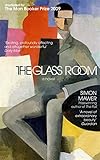
The Glass Room

This is my review of The Glass Room by Simon Mawer.

The quality of the writing justifies the inclusion of this imaginative work in the Man-Booker shortlist,and it would have made a worthy winner. Mawer's skill is wide-ranging: the meticulous description which conjures up striking images of, say, Von Abt's glass house, vividly described from his drawing, which gradually rises from the mud of the hillside; the sharp, witty dialogues; the subtle development of a cast of varied characters in all their complexity, strengths and flaws; the underlying sense of menace and insecurity. The intriguing plot soon caught my interest: from the first few pages, it was clear that the early optimisim and good fortune of the wealthy Landauers was doomed, the year being 1929, the husband being Jewish, and their homeland being the newly formed Czechoslavakia, soon to fall under Soviet control.

Although I have no great liking for modern architecture, this book succeeded in enabling me to appreciate the vision that the glass house represented, and something of what architects working in angular lines and non-traditional materials are trying to achieve. I particularly liked the way in which the appearance of the building changed over time as, rather like its occupants, it was battered by external forces.

My criticisms are minor. The initial prologue, foreshadowing the end, added little, and ran the risk of putting readers off, with its slightly mawkish tone, before there had been time for us to be intrigued by the construction of the unusual house and the inevitably eventful and probably tragic fate of its inhabitants.

Although the complex relationship between Liesl and Katalin was explored quite well, Victor's role in the ménage à trois could have been revealed in more depth.

The hints at lesbianism irritated me slightly, since I wondered whether they had been included for effect, and how well the male writer could really handle them.

The plot deteriorated for me towards the end (Part 4) when most of the original characters had slipped away, and, as other readers have noted, the pace seemed to speed up, presumably to "get to the end" without becoming too long-winded, but at the cost of the satisfying, in depth development of characters and situations which marked the early chapters. Tomas and Zdenka were pale shadows of Victor and Katalin, as lovers and "real people", and I would have liked more of Von Abt.

However, the final denouement works reasonably well, bringing together some of the "original" characters, full circle. Although many "loose ends" are tied, a few questions remain unanswered. What exactly happened to Katalin? This adds to the realism and pathos of the work.

I shall certainly look out for more of Mawer's work and appreciate the view that he ranks amongst our best current writers, and has been underestimated to date.

⭐⭐⭐⭐⭐ 5 Stars

When China Rules the World

This is my review of When China Rules The World: The Rise of the Middle Kingdom and the End of the Western World [Greatly updated and expanded] by Martin Jacques.

The fact that China will "overtake" the US in 2027 or thereabouts is clearly a topic of great importance to which we pay too little attention. Martin Jacques is very well-informed, and presents an impressive array of facts – many of which are no doubt already out-of-date in view of China's rapid pace of development. I was interested by his clear exposition of some key points to show how Westerners tend to underestimate the Chinese – the irrelevance to China of the Western-style "nation state" of fairly recent origin, the fact that China is a "civilisation state" which takes the tolerant view of "one civilisation, many systems", the influence of Confucius – even in a nominally communist state – the patient, long-term approach of its wiser leaders, and so on. However, it seemed to me that the same points were reiterated to the point of tedium, although this had the benefit that one could dip into the book at any chapter and get the gist of the whole, plus the repetition helped to fix points in one's mind.

I am not qualified to comment as an expert, but did feel that Jacques dismissed western values, particularly those of the US, in too simplistic a way – yes, it was the country which elected George Bush Junior, but it also gave refuge to Tom Paine, who wrote and debated ideas with Americans of the day in compelling language which still has the power to inspire. I know Jacques has been attacked in the press for glossing over the lack of democracy and neglect of human rights in China. He raises some valid arguments – the fact that the Chinese leadership has made the pragmatic decision to put economic development first, the fact that most western countries achieved development before they instituted democracy, and the fact that the extent of democracy in the west is debatable, particularly when practised on a large scale (as China would need to do) as in the EU. However, I think Jacques could have been more wide-ranging and reflective in his assessment of China. I recall no mention of corruption or brutality (unchecked by democracy!) or suppression of dissent – apart from brief reference to a threat to withdraw investment from Zambia if an election candidate persisted in suggesting that the country was being "colonised" by the Chinese.

On a brief visit to China, I was struck by the ugliness of much of what I saw – it seemed that much of the rich culture and beautiful artifacts of the past had been destroyed in the Cultural Revolution – I formed the impression that there is more beauty in Italy than the whole of China. This brings me to criticise Jacques' casual dismissal of the fall of the Roman and Greek empires, and what little they left, when I would have thought that their abiding influence on language, philosophy, architecture and so on was considerable. He kept referring, uncritically, to the sense of superiority of the Chinese. I would ask whether, even if in "reduced circumstances", western culture would not retain its own justified sense of the value of some things which Jacques seems to dismiss too briefly, such as the concept of the rule of law, or the ideas of the Enlightenment.

It also seemed to me that, by harping on differences, Jacques failed to acknowledge the sympathy which can arise between "thinking" members of different societies.

This potentially excellent book would have gained from a more even-handed approach…..

⭐⭐⭐ 3 Stars

The Wilderness

This is my review of The Wilderness by Samantha Harvey.

The beauty and perceptiveness of the writing gives an insight – insofar as I can judge- into the troubling topic of Alzheimer's, without filling the reader with a grim depression. It is impressive that a young woman can enter into the fragmenting mind of a much older man. Although the story lacks a strong plot as such – it is largely a series of memories and reflections looking back over a lifetime – my interest was held by the way in which information leaks out, with some "key" points not becoming "clear" until the final pages. The most compelling aspect of the book is its conveyance of the false nature of memory, in particular when the mind becomes clouded. The same incident or snatch of converstation is often described several times in different contexts, leaving a sense of confusion as to what has really occurred. Related to this is the way in which a small image – a recurring memory of a peg – can assume more importance thatn a major life-changing event. Then there are the frequent effective descriptions of the destructive effect of the endless confusion in Jake's life – contantly distracted during his attempts to make coffee, he eventually boils the coffee-maker dry.

Many of the descriptions are striking and memorable: the stark beauty of the moors, the evocation of Sara's Jewish culture, Jake's meeting with his adult daughter Alice when he steels himself to admit his Alzheimer's to her, only for us to be shown that the whole elaborate event is a probable figment of his imagination. Many scenes from the past have a dreamlike quality – their plausiblity or otherwise ceases to matter, yet they are deeply significant for our understanding of Jake's life and his condition.

Many of the dialogues are interesting and humorous, weaving in comments on such weighty themes as religion, the Palestinian-Israeli conflict and architecture without becoming sententious. Some of the real love and affection between the main characters – despite any infidelity- is portrayed well. Several themes are interwoven – the book is not just about Alzheimer's but about how people can love each other despite holding very different opinions, about the pain of unrequited love (Eleanor's) and the loneliness of living in an alien culture (Sara's). There is a good deal of wry humour – as in Jake's regular meetings with the coolly professional fox-haired woman doctor, in which he fails to pass her basic tests of his faculties, whilst maintaining an inner stream of complex, albeit twisted perception and logic.

My main reservation is that some of the characters are insufficiently developed and therefore not wholly convincing – the flamboyant Rook and his granddaughter Joy, also Henry as an adult. This is a pity as they clearly have the potential to come alive in our minds as well as Jake, his wife Helen and to some extent the long-suffering Eleanor. Also, although it is probably justified to show Jake's final disintegration, the final pages seem superfluous apart from "tying up a few loose ends" in a story that is all about loose ends.

At the beginning, I wondered whether it would have been better to let the reader deduce the nature of Jake's problem from his erratic behaviour. I felt at times that I had "got the point" and my interest waned – perhaps I was simply tired by the amount of mental energy this book requires. However, whenever I returned to it, I was impressed again by the sheer quality of the writing. This book merits being read quite slowly – or reread to absorb the imagery and dense mesh of ideas which the writer has woven in.

⭐⭐⭐⭐⭐ 5 Stars

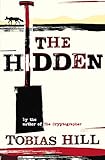
The Hidden

This is my review of The Hidden by Tobias Hill.

Hill's prose is unusual, striking and memorable – like poetry, some passages merit rereading. They convey with power and strong visual imagery- the feel and appearance of the landscapes of Greece. I also learned quite a few new words – did you know that "laniary" means canine and "ophidian" indicates "snake" – an apt description for one of the characters? Far from being dull, the inclusion of the anti-hero Ben's "notes for a thesis" are interesting and informative – reminding me of the Spartans' harsh, pragmatic approach to life, and evoking parallels with modern issues of fundamentalism, eugenics and the fanaticism of idealistic groups and cults. The experience of taking part in a dig is described well, again with some interesting insights, such as the fine line between the excitement of a valuable find, and the avaricious desire to possess and profit from it. Some of the dialogue is quite effective in capturing the personalities of the key characters, and their relationships.

On the downside, I agree with those who find the plot a little lacking. Certain critical events seem to happen abruptly, without the potential build up which increase both the tension and their plausibility. Ben seems to make sudden leaps of understanding on evidence which escaped me until then – although I quite enjoy being made "to work" as a reader, and not having everything spelt out too baldly. The final climax is not as shocking as other reviewers have led me to expect. The lack of inverted commas and "he said, she said" etc makes some of the dialogue hard to follow. Even after rereading some passages several times, I was unable to deduce who said what – and some observations seem very obscure. This is at times an unhelpful distraction.

Also, the characters are not developed very fully. and often seem two dimensional or unconvincing. I do not really care what happens to any of them. Some plot lines are left dangling as loose ends, in particular the time Ben spends working in an Athens restaurant, where the tensions built up between his work mates and the proprietor's son do not lead to any dramatic climax.

Overall the quality of the writing is excellent in parts, the story gripped me to the end, but more care over the portrayal of characters and the development of the plot would have made this the outstanding novel, which it falls short of being.

⭐⭐⭐⭐ 4 Stars