Pierre Lemaitre made his name as the author of macabre, ingeniously plotted psychological crime thrillers. He then switched to historical fiction in the form of an ambitious trilogy, covering France from the First to the Second World Wars. I was impressed by the originality of the first novel, “Au revoir là-haut” or “The Great Swindle” translated into English, which follows the fortunes of two young men from very different backgrounds who survive the trenches, despite the murderous intentions of their commanding officer which leave one of them badly disfigured. In the aftermath of the conflict, they see an opportunity to embark on a swindle as a way of making a living.
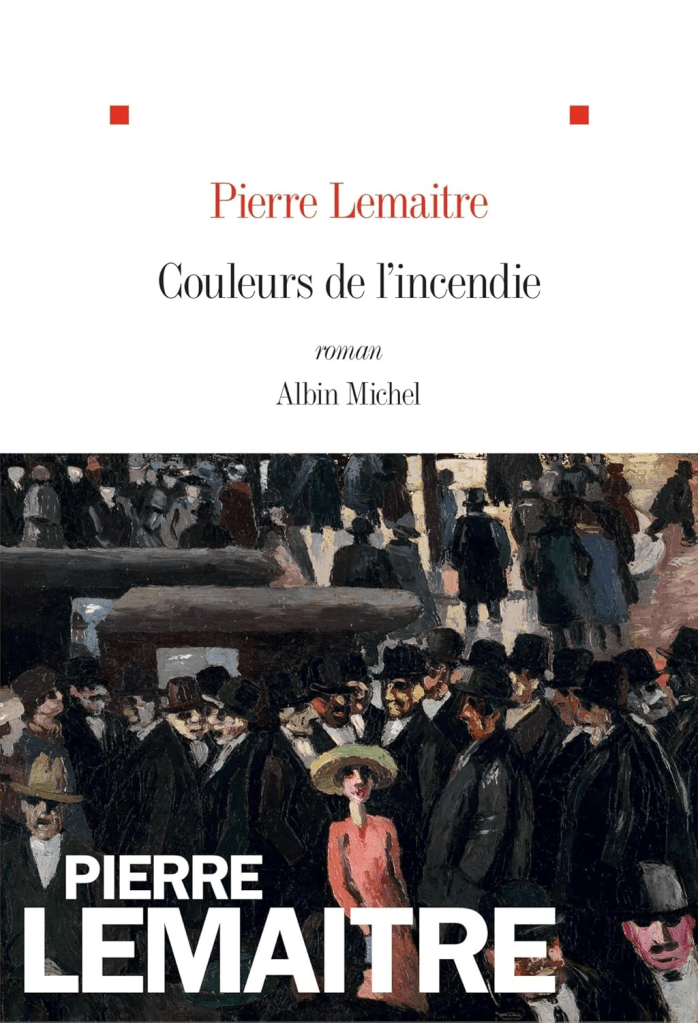
The sequel, “Couleurs de l’incendie” (“All Human Wisdom”) proved a disappointment. Although a couple of the main characters appear in the previous book, this can be read as a standalone novel, covering the period of the Wall Street Crash, the Great Depression and the rise of Hitler, with their impact on French society forming the background to personal dramas.
Marcel Péricourt is a sufficiently important banker for his funeral in 1927 to be attended by the President of France. The event is disrupted by the tragedy of his seven-year-old grandson Paul apparently throwing himself out of a first floor window to land on the coffin, leaving him wheelchair-bound for life. This leaves his mother Madeleine with a dual burden: the care of her son and the inheritance of a banking empire which she is totally unprepared to manage. Finding herself deceived and exploited by those whom she should be able to trust, Madeleine devises a convoluted long-term plan to exact her revenge, in a plot which has intentional parallels with Victor Hugo’s “The Count of Monte Cristo”. There are also parallels between the corruption, greed, and disfunction of the period and the present day – plus ça change.
This theme and background have great potential, but apart from leavening the bleak theme with touches of black humour, Lemaitre does not make the most of this. There are some moving scenes, mostly involving Paul, and some intriguing ones portraying some of Madeleine’s ruthless schemes.

However, the first part, essentially setting the scene, is too often longwinded, “telling” rather than “showing”. The latter part speeds up, juggling Madeleine’s various ploys in a way that often seems disjointed, even confusing when, to create more suspense, the reader is left unclear as to the identity of some new character and what is going on. There is a slightly sordid, sexist, male chauvinist undertone running through the tale which made me uneasy, although it could of course have been true to the attitudes of the day.
Too many characters seem to be stereotypes, too exaggerated, or underdeveloped for one to engage with them. Most of the plot twists are implausible, leading some reviewers to describe the novel as “burlesque” or a “racy romp” which only serves to make it harder to engage with it on a more thoughtful level. It may not be essential for a novel to fit a particular “genre”, but it feels unsatisfactory to have a historical background portrayed for the most part in dry descriptions, while the drama plays out in the far-fetched incidents of what is effectively a very long (more than 500 pages), over-complicated crime thriller.
Like some other reviewers, I was at some points tempted to abandon it after one ludicrous step too many, but kept going as a way of improving my French since Lemaitre uses a wide vocabulary with plenty of idioms. Had it been in the English translation, I might not have bothered to finish it.
 Antenna Reviews