At 750 pages, this is a megatherium of a historical novel, to cite the name of the giant fossilised sloth which Darwin comes across during his five- year exploration of South America while employed as a naturalist aboard the survey ship, HMS Beagle. In the span of almost four decades from 1828, it is hard to keep track of the vast cast of characters, many of whom only appear briefly from time to time. Women play a minor role, and tend to be passive stereotypes, but that reflects life at the time.
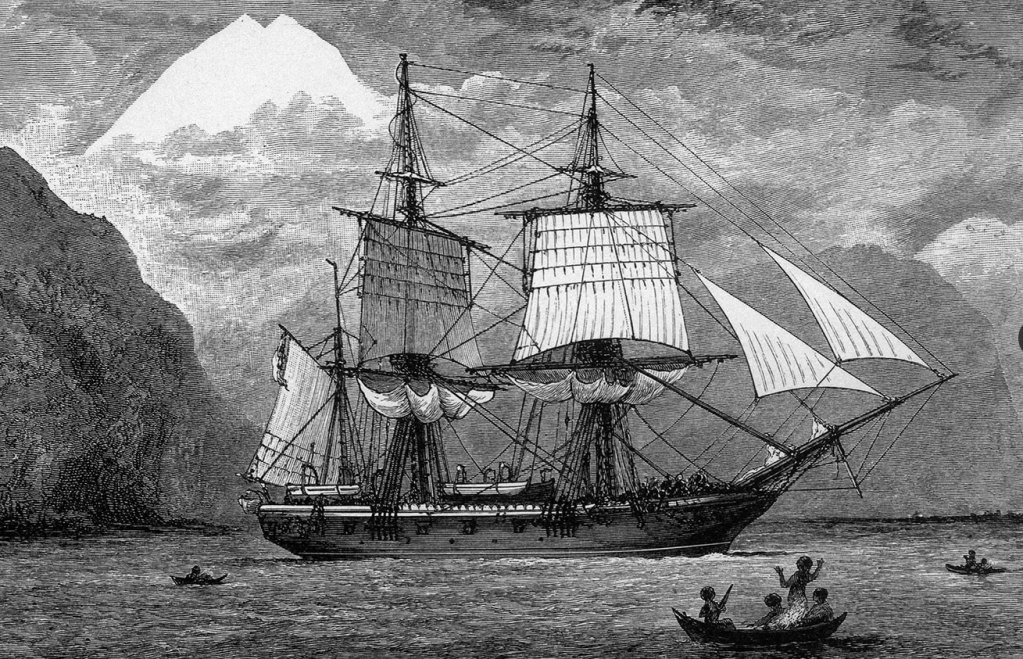
Although Darwin is the most famous, the focus is on Robert Fitzroy, appointed Captain of the Beagle at the age of twenty-three, not only for his aristocratic connections, but also his brilliant performance as a student at the Royal Naval College. His first task is to complete the survey of the complex coast of Patagonia, with the harsh climate which drove his predecessor mad. The novel brings home the enormity of the task of mapping a continent with the limited equipment available, the cultural gulf between the Europeans and the various tribes they encounter, and the human cost of the well-intentioned desire to achieve “progress” complicated by the innate human drives of competition, domination and greed.
A central theme is the relationship between Fitzroy and Darwin, forced into close companionship for months on end in the cramped confines of a sailing ship. A bone of contention between them is the explanation of the variations in the creatures observed on their travels, whether alive or preserved in layers of exposed rock. Initially destined to be a clergyman, and troubled by his conclusions, Darwin finds it increasingly hard to deny the existence of some kind of evolution, as we now call it. Fitzroy, despite his analytical mind, cannot give up his belief that surviving species remain as they were first created by God, with only limited changes through adaptation to different environments.

Frustrated by the government’s refusal to fund further voyages of the Beagle, he resolves to finance them himself, running up excessive debts in the process. Constantly dealing with dramatic changes in the weather, he begins to see patterns, and while employed in later life at the Board of Trade sets up a weather forecasting system to issue storm warnings which save lives. Pressure from the owners of fishing fleets, concerned by the loss of earnings when forecasts keep their boats in port, lead to abandonment of then daily weather reports. This proves the last straw for a man who has suffered throughout his adult life from periods of depression.
At times of stress, Fitzroy suffers brief but severe manic episodes, which put both him and his men at risk. At a time of such prejudice against madness, it is surprising that he is not demoted for that reason. The extreme loyalty he arouses in his crew may partly explain this. The practice of sending little boys, as young as ten (or twelve in his case) off to sea to learn the ropes may have aggravated his instability.
Darwin is more balanced, and ultimately more successful. Yet he is presented in an unflattering light. His fellow officers on The Beagle generously bring him examples of unusual creatures they have found, but when these are shipped off to England, it is Darwin who receives all the credit, never acknowledging their contribution.
This novel is based on such detailed research on sailing 19th century ships in often atrocious weather conditions, and on every aspect of the varied landscapes and society of South America at the time, as well as the contrasting vivid portrayal of London and the rural south of England, that I imagined the author must be some nerdish eccentric. In fact, Harry Thompson was a highly successful television producer and comedy writer, who produced, for example, “Have I Got News for You”. His sense of farce pervades this book with flashes of irony and dark humour which lighten the theme.
By the age of 45, he had also found time to write a string of books, including biographies and this debut novel, “This Thing of Darkness”, which arguably deserved to win the Booker Prize rather than merely be longlisted. Ironically, the winner was John Banville’s “The Sea”, so different that the two novels seem to defy comparison in the same contest.
What might Harry Thompson have gone on to achieve, had he not died prematurely of lung cancer, never having been a smoker? It is a pity that many people will lack the time to embark on this book, or be deterred by its length. Reading it proves an absorbing, immersive experience, creating a powerful sense of many different places, and enabling us to identify with characters despite the accepted attitudes, value and knowledge of their day. Admittedly , in some dramatic scenes of near-death experiences, the derring-do may seem overdone; otherwise, the tedium and hardship of long days at sea, or struggling over unfamiliar, harsh terrain feels oppressive, but authentic. The political corruption of the period is all too similar to that of today – plus ça change!
Thompson really succeeds in bringing a fascinating period of history alive. This novel is a remarkable achievement, moving and informative, that will linger in the mind.
 Antenna Reviews