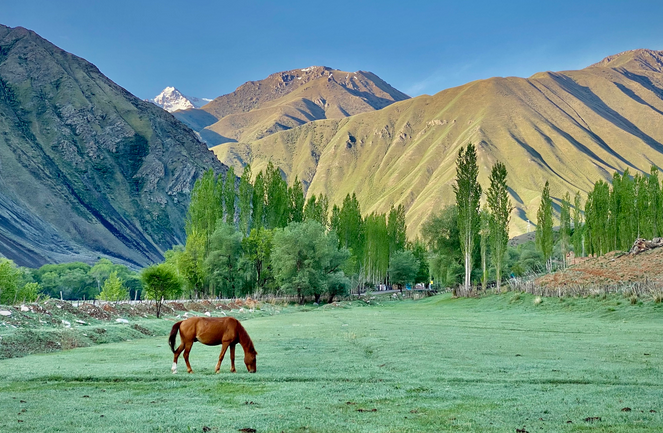
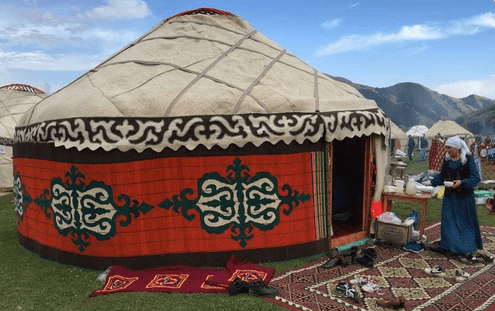
Confronted by her teenage son Samuel’s delinquency, Sibylle decides on a drastic solution which she may well have been considering for herself: to uproot him from Bordeaux to a different culture, closer to nature, where he can learn “true” values, by trekking on horseback through the mountains of Kirghizistan. Selling with apparent ease a conveniently inherited house, she is able to finance this scheme, and set off, despite her ex-husband Benoît’s strong objections, and Samuel’ sullen resentment.
The novel proceeds in a series of dramatic incidents, some quite improbable, covered in great detail, often in a “stream of consciousness” style which can become oppressive in its repetition and intensity. Events are punctuated with flashbacks including the rather hackneyed use of dreams, to reveal the past events of Sibylle’s life.
“Continuer” has been made into a film which apparently focuses on the relationship between mother and son, and the striking landscapes through which they travel, perhaps because these are the strongest aspects of the novel (despite the author reportedly not having set foot in Kirghizistan before writing it). But Mauvignier has sapped his theme with continual references to Sibylle’s underdeveloped backstory, some details of which have to be shoehorned into the somewhat rushed anti-climax of the ending.
“Continuer” seems to have been well-received in France, although I preferred Mauvignier’s earlier novel “Des Hommes” (“The Wound” in translation) which deals with the problems of coming to terms with the past faced by Frenchmen forced to fight in the Algerian war of independence. Both novels share what may be the hallmarks of his writing: distinctive style, unusual structure and inconclusive ending. Both novels convey a strong sense of place with minute descriptions of physical sensations, some of which can be absorbing, but in this case did not engage me fully.
 Antenna Reviews