It is common practice for a successful writer to fictionalise the life of some celebrated author from the past. In this case, Malaysian novelist Tan Twan Eng, three times long- or shortlisted for the Booker Prize, has focused on Somerset Maugham, the acerbic, acute observer of human failings, who became a bestselling novelist and famous playwright in the first half of the C20, but is now in the process of being forgotten – unless “The House of Doors” revives interest in him, especially if it is made into a film.

Born in Penang, qualified in law in London, Tan Twan Eng is well-placed to recreate the meeting of east and west in early C20 Malaya, against the backdrop of the Chinese mainland in turmoil. The focus is on a fortnight in 1921, when Maugham and his secretary/lover, the flamboyant Gerald Haxton, are the house guests of expat barrister Robert Hamlyn and his wife Lesley, who is unusual in having been brought up in Penang. Initially underestimating Lesley, Willie Maugham finds her to be the source of intriguing local stories, like the scandalous murder trial from the recent past, which will provide the material for him to restore his finances after a disastrous investment, and hopefully retain Gerald’s affections in the process.
This bald summary does not do justice to a complex tale with perhaps too many threads, quite skilfully interwoven, although the reader may find it hard to categorise. On the face of it, this is a book in which not much happens: at a deeper level, there are continual dramas at an international to personal level.
Lesley’s friendship with the visiting exiled political leader Sun Yat-Sen sometimes reads like a potted history of China on the brink of a Communist revolution, but at least I was made aware of his significance for the first time.
With his sham marriage, Willie portrays the stress of leading a double life, behind a mask, forever fearful of being exposed and disgraced like Oscar Wilde. Lesley represents the other side of the coin: a women who has to find a way of coming to terms with her husband’s infidelity with another man, in an era when divorce was not an option socially. Ironically, this situation leads to her discovering a greater degree of personal fulfilment than might otherwise have been possible.
Apart from the meticulous plotting, with the habit of dropping clues which only become clear much later on, so one has to keep concentrating, it is the written style which sets this novel apart. I sense that the author has aimed to write in the style of Maugham, inevitably using the type of incident which he would have found intriguing and likely to appeal to his readers.
The unusual choice of verbs, original metaphors and similes, although occasionally overdone, are generally very effective, particularly in creating through the mind’s eye scenes of places one has never visited. Even small incidents are described with care. Take the simple action of unwrapping a book: “I cut the twine with my fruit knife, inserted its tip into a fold of the wrapping and with two or three brisk strokes filleted the package open”…. “The blackened kettle was brooding on a charcoal stove, steam whispering from its spout”.
When “Willie pressed his palm to the hard, crocodilian bark” of the three hundred years old raintree in Robert’s garden, “the intricate filigree of branches and leaves reminded him of the network of bronchiole and alveoli in a set of lungs”, a clear reference to his previous career as a doctor.

Tan Twan Eng’s own legal training gives the cross-examination in the murder trial an authentic ring, and may also account for his close attention to detail, for example when introducing us to Malaysian cultures. The precision of his descriptions of the traditional c18 shophouses in Penang with their distinctive “five foot way” paved with brightly patterned terracotta tiles at ground level, and the timber louvred shutters above can be confirmed by countless photos on the internet. The ink and watercolour drawings of particular streets, also viewable online, are a model for the paintings Lesley drew in her youth. Even the “kerongsang”, set of three brooches used to fasten the “kebaya” is described fully, when Lesley’s new mood of assertiveness leads her to wear traditional dress.
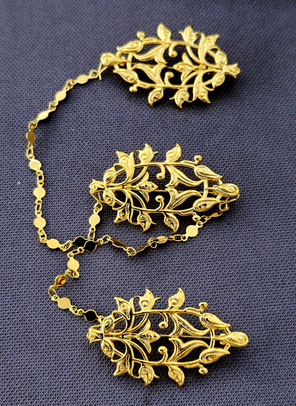
It may have been a combination of deep reflection over the “the right word” and the structure of the story, not to mention the need for a suitably rich and inspiring theme that have led Tan Twan Eng to produce “only” three novels in a span of sixteen years. Yet the resulting combination of quality of writing, insights into human nature and thought-provoking themes makes “The House of Doors” worth reading.
 Antenna Reviews