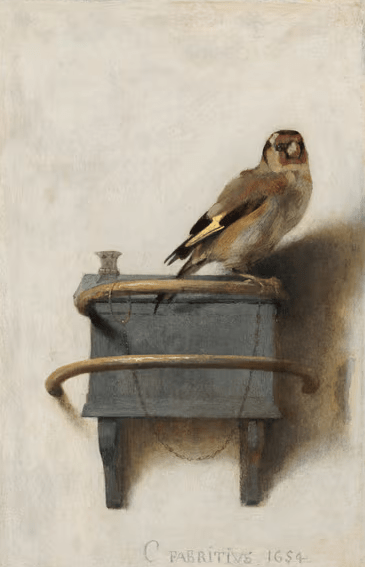
The well-known painting, “The Goldfinch” was the work of the little-known Carl Fabritius, whose life was cut short in the devastation of the Dutch city of Delft in 1654 by the explosion of a gunpowder store – the “Thunderclap” in the title of art critic Laura Cumming’s “memoir of art and life and sudden death”.
Having been fascinated by her study of the painter Velasquez, “The Vanishing Man”, and found her attempt to piece together the facts of her mother’s childhood quite atmospheric and poignant, perhaps my expectations were too high for an original take in this case. It soon became apparent that, even with the most forensic research and deepest speculation which characterise the author’s past work, the facts are too thin to justify a full-length book devoted to Fabritius. So it is filled out not only with observations on Dutch art, but recollections of the author’s own father, a talented Scottish artist who fed her appreciation of Dutch art. She flits between these themes in chapters which read more like articles from The Observer on which she has worked for years – chapters which can be read in any order.


Regretting the lack of an index, and deciding it was Fabritius who really interested me, I combed the book for information about him, actually starting from the later chapters where the largest photos of his few known paintings are displayed with the most accompanying information and observations. So, the focus is on not only “The Goldfinch”, but a couple of self portraits of the artist himself, an intriguing view of a sleeping sentry with his dog, and the even more riveting “A View of Delft”. A small oil painting, only about eight inches by fourteen, this appears to be a product of the painter’s interest in perspective, so that the picture was designed to be attached to a curved surface and viewed through a peephole to give a more three dimensional effect in the days before photography or film.

Although, to be honest, I found the book overly repetitive, disjointed and rambling, the author has enabled me to appreciate Fabritius more fully, and to regret that such talent should have been curtailed so abruptly, at the age of only thirty-two (1622-54). How much more might he have painted, and would it have made his legacy more celebrated?

 Antenna Reviews