
It is an achievement to concoct the diary of a man from fifteen-year-old schoolboy in the early 1920s to death six decades later aged 85. It must have involved a good deal of research to select the series of C20 events to form the backdrop, and the book is possibly more appealing to readers of retirement age who can recall or have heard a lot about them in the past.
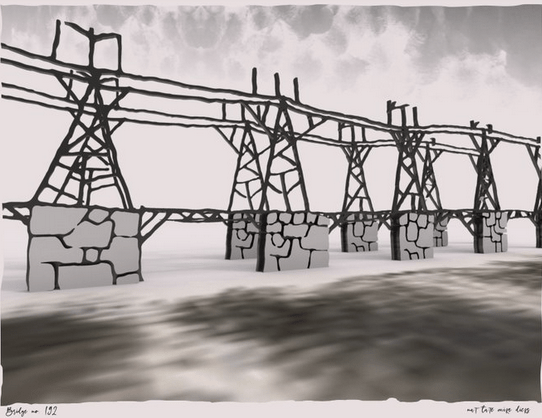
Logan Mountstuart has a comfortable childhood since his father is manager of a meat company, producing corned beef in Uruguay. On his return to England, a master at his minor public school who has taken a fancy to him steers Logan into an Oxford College from which he emerges with a third class degree, which matters not since his ambition is to become a writer. He has modest success in getting published quite quickly, but feels trapped after making the mistake of marrying an earl’s shallow daughter, on the rebound from rejection by a more intriguing woman. And so he embarks on a chequered life, where in the attempt to make the journal more interesting, his imaginary acquaintances mix with a succession of the rich and famous, movers and shakers, the likes of Hemingway, Picasso, Ian Fleming, even the Duke of Windsor and Wallace Simpson. All of these seem taken with Logan, at least initially. Then there is the US painter Nat Tate, whom some critics have been fooled into thinking actually existed.
However, all the name-dropping quickly becomes tiresome, and I suspect the book may appeal more to men, since it is written very much from a male perspective. William Boyd has explained that Logan was inspired by the journals dating from the 1920s of writer and critic Cyril Connolly, whom he describes as “selfish, promiscuous, talented, hard up, lazy, an epicurean and a particular kind of English intellectual (his tastes were refined but narrow), and I found something about his flawed personality deeply beguiling”. As a female reader, I do not.
Particularly in early life, Logan is not a very likeable character. He can’t resist sleeping with his best friend’s fiancée, he drinks far too much, and lusts after countless women, most of whom conveniently seem to find him attractive. Yet he has odd flashes of integrity, as when he refuses to plant incriminating evidence on a man whom the Duke of Windsor wants “out of the way”, and so years later still bears a grudge against him – Wallace hissing the word “traitor” at a chance meeting.
Logan is at his best in times of adversity. When unjustly imprisoned in Switzerland, which at least ensures he survives World War ll, he distracts himself with a small farm of insects found in his room – woodlice, a cockroach and ants which he “herds together in a small packet” but they keep escaping, which gives him “a vicarious sense of freedom”. Sometimes he is so impoverished that he has to live on tins of dog food, for which he develops a taste, but always lands on his feet. His home may be sold because he is believed dead, but in another stage of life someone will bequeath him a house, admittedly in a rundown state.
He may have to flee the US since he is suspected of underage sex with a girl he didn’t realise was only sixteen, but ends up with a cushy teaching post in Nigeria, where he has a chance to show his decency in trying to free a servant who has been pressganged into an army during the Biafran war. Boyd’s own childhood experience of living in Nigeria may have contributed to this section’s authentic ring.
There is wry, even black humour, in the scenes when, especially in old age, he decides it is not too late to take up a cause like joining a Socialist Patients’ Collective, after experiencing the shortcomings of the NHS, or finding out who is defacing a plaque to a hero of the Resistance in the French village where he has taken up residence – this altruism invariably backfires.
The disadvantages of the diary format is that the entries are often quite short and fragmented. There are too many banal sections, involving lists and humdrum events: how many made to measure summer suits Logan bought, just how much he boozed one night, how he furnished his flat. This may be realistic in terms of what a diary is like, but is pretty tedious. While skimming through the duller patches, it is easy to overlook the names and professions of people in passing, so that when they turn up again three hundred pages later one cannot be bothered to check who they are.
What often feels inevitably unstructured, because it is representing the course of life, and also unbearably long – I felt better disposed to it as my Kindle recorded 80 per cent read – is actually full of many imaginative incidents which could have been developed more fully, and some expressive pieces of writing which one would not normally find in a diary. In other words, would a series of short stories on particular events in the stages of Logan’s life had been more satisfying? Still, this book was longlisted for the 2002 Booker Prize, has been adapted for a television series, and has sold well, so who am I to carp?
 Antenna Reviews