
For his first novel, Guy de Maupassant sought the advice of his mentor Flaubert, and there are similarities between his heroine Jeanne and Madam Bovary – both underoccupied, privileged C19 women of whom little is expected except to be married and follow a conventional path with no self-fulfilling goals to give them a sense of purpose. It took Maupassant more than five years to complete Une Vie, by which time Flaubert was dead. Meanwhile, he was producing a spate of short stories and plays, often on risqué themes which would titillate the public and bring him commercial success.
Yet “Une Vie” took more time because it was meant to be different, with its slow-paced focus on the on the inner life of an unremarkable individual. At first, I was a little bored by the banality of Jeanne’s life, as she returns from the narrow education of a convent to the family home where her head is full of naïve, romantic notions. The plot becomes more interesting when she marries the handsome Julien, but her honeymoon in Corsica turns out to be her one true adventure, and indication of how her life might have been. Julien soon proves to be mean with her family’s money, which was probably his reason for marrying her, and unfaithful as well.
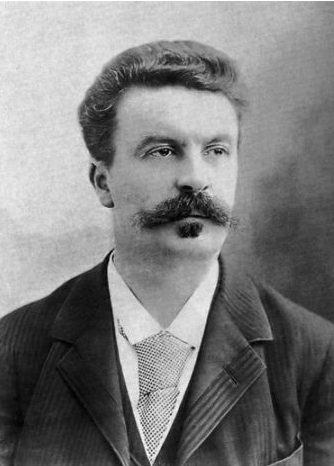
Maupassant is particularly successful in entering into the mind of a woman, describing her emotions, even the experience of childbirth. He also creates a strong sense of place in the descriptions of the countryside on the Normandy coast, and some atmospheric scenes. He develops the psychology of his characters to good dramatic effect, as when, during her wedding party, Jeanne’s father is forced to tell her the facts of life, which he does in the most oblique and ineffectual way possible, because her mother cannot bring herself to do it. Then there is the cynical worldliness of the local priest when she confesses to him that she wants another child: part of his advice is to suggest that she pretends to be pregnant as a way of effectively tricking her husband, taken off his guard, into giving her the child that she longs for, but he really does not wish to have.
Jeanne’s acute sensitivity makes her ill-equipped to cope with the relentless sequence of misfortune which dogs her, and in turn unsurprisingly weighs the reader down. Maupassant may well have been unaware of this effect on us, since he was prone to periods of deep depression, being influenced by the philosophy that it is the destiny of mankind to suffer, because the faulty will is more powerful than reason, causing us to make bad decisions.
The author’s own mother also had a philandering husband and suffered depression, but was less passive than Jeanne, and made the decision to separate from him. This, plus the fact that Maupassant had a younger brother who kept getting into debt through gambling, show how much the author used his close relatives as models for Jeanne, Julien and their son Paul.
The essentially rather gloomy “novel of mourning” is leavened with a few somewhat melodramatic events, each of which could have made one of his intriguing short stories. Although not exactly an enjoyable read, this is an interesting experiment, which prompts reflection and lingers in the mind.
 Antenna Reviews